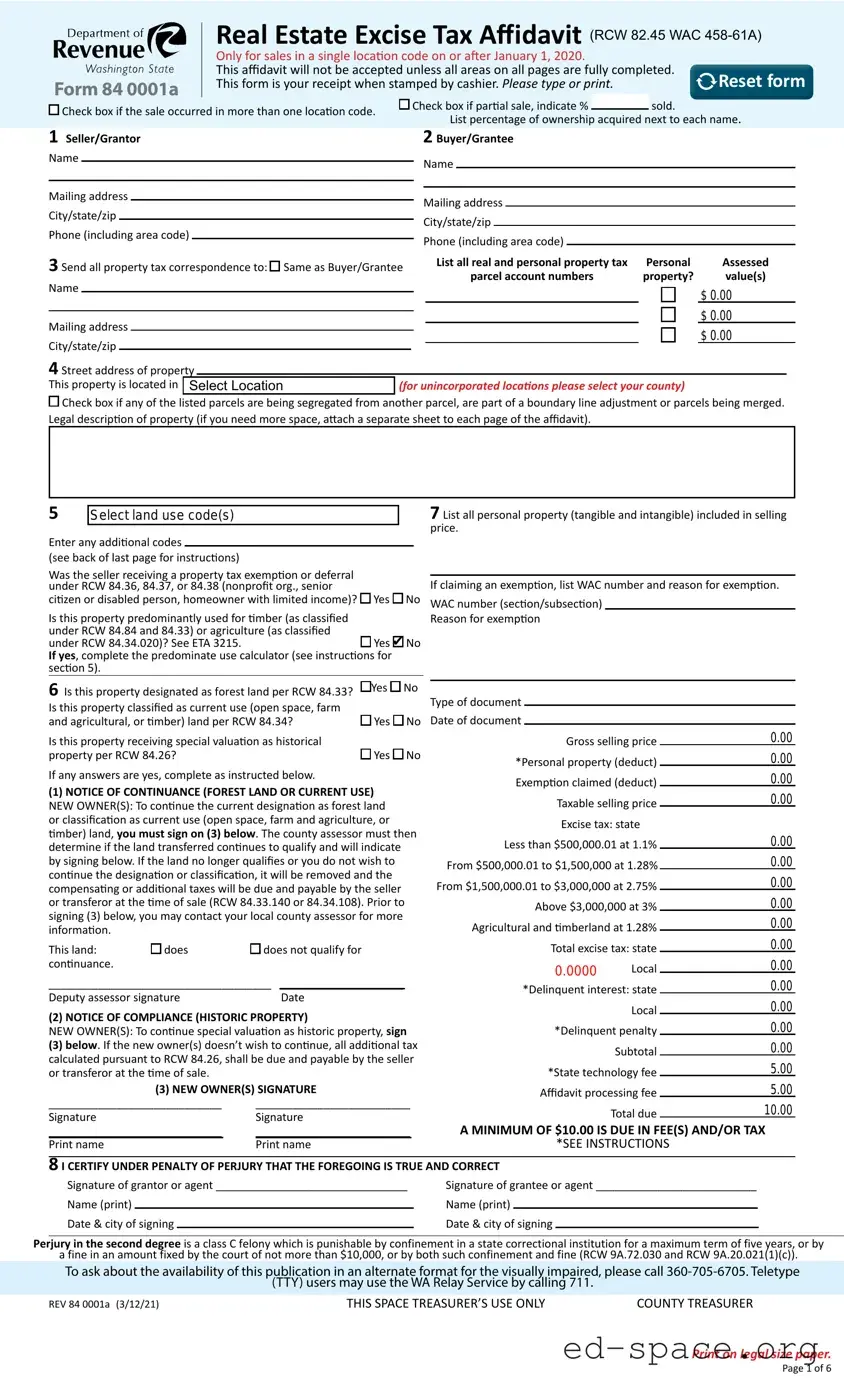
The Washington Real Estate Excise Tax Affidavit form plays a crucial role in real estate transactions within the state. When a property is sold, this form is required to report the sale and ensure that the appropriate excise tax is collected. Buyers and sellers alike must complete this affidavit, which captures essential information about the transaction, including the sale price and the parties involved. Additionally, the form provides a space to indicate any exemptions that may apply, which can significantly affect the tax amount due. Accurate completion of the affidavit is vital, as it helps maintain transparency in property sales and ensures compliance with state tax regulations. By understanding the key components of this form, individuals can navigate the complexities of real estate transactions more effectively, paving the way for smoother closings and fewer legal complications.
|
|
|
|
|
|
|
|
Real Estate Excise Tax Affidavit (RCW 82.45 WAC |
||||||||||||||||||
|
|
|
|
|
|
|
|
|||||||||||||||||||
|
|
|
|
|
|
|
|
Only for sales in a single location code on or after January 1, 2020. |
|
|
|
|
|
|
|
|||||||||||
|
|
|
|
|
|
|
|
This affidavit will not be accepted unless all areas on all pages are fully completed. |
|
|
|
|
|
|||||||||||||
|
|
|
|
|
|
|
|
|
Reset form |
|
||||||||||||||||
|
Form 84 0001a |
This form is your receipt when stamped by cashier. Please type or print. |
|
|
|
|
||||||||||||||||||||
|
|
|
|
Check box if partial sale, indicate % |
|
|
sold. |
|
|
|
|
|
||||||||||||||
|
Check box if the sale occurred in more than one location code. |
|
|
|
|
|
|
|
||||||||||||||||||
|
|
|
|
List percentage of ownership acquired next to each name. |
||||||||||||||||||||||
|
|
|
|
|
|
|
|
|
|
|
|
|
|
|||||||||||||
|
1 Seller/Grantor |
|
|
|
|
|
2 Buyer/Grantee |
|
|
|
|
|
|
|
||||||||||||
|
Name |
|
|
|
|
|
|
|
|
|
|
|
Name |
|
|
|
|
|
|
|
|
|
|
|
|
|
|
|
|
|
|
|
|
|
|
|
|
|
|
|
|
|
|
|
|
|
|
|
|
||||
|
|
|
|
|
|
|
|
|
|
|
|
|
|
|
|
|
|
|
|
|
|
|
|
|||
|
|
|
|
|
|
|
|
|
|
|
|
|
|
|
|
|
|
|
|
|
|
|
|
|
|
|
|
Mailing address |
|
|
|
|
|
|
|
|
|
|
|
|
|
|
|
|
|
|
|
|
|
|
|
||
|
|
|
|
|
|
|
|
|
|
Mailing address |
|
|
|
|
|
|
|
|
|
|
||||||
|
|
|
|
|
|
|
|
|
|
|
|
|
|
|
|
|
|
|
|
|||||||
|
City/state/zip |
|
|
|
|
|
|
|
|
|
|
|
|
|
|
|
|
|
|
|
||||||
|
|
|
|
|
|
|
|
|
|
City/state/zip |
|
|
|
|
|
|
|
|
|
|
|
|||||
|
|
|
|
|
|
|
|
|
|
|
|
|
|
|
|
|
|
|
|
|
||||||
|
Phone (including area code) |
|
|
|
|
|
|
|
|
|
|
|
|
|
|
|
|
|||||||||
|
|
|
|
|
|
|
|
Phone (including area code) |
|
|
|
|
|
|
|
|
|
|||||||||
|
|
|
|
|
|
|
|
|
|
|
|
|
|
|
|
|
||||||||||
|
3 Send all property tax correspondence to: |
|
|
|
|
|
|
|
|
|
|
|
|
|||||||||||||
|
Same as Buyer/Grantee |
|
|
|
List all real and personal property tax |
Personal |
Assessed |
|||||||||||||||||||
|
Name |
|
|
|
|
|
|
|
|
|
|
|
|
|
parcel account numbers |
property? |
value(s) |
|||||||||
|
|
|
|
|
|
|
|
|
|
|
|
|
|
|
|
|
|
|
$ 0.00 |
|
|
|
||||
|
|
|
|
|
|
|
|
|
|
|
|
|
|
|
|
|
|
|
|
|
|
|||||
|
|
|
|
|
|
|
|
|
|
|
|
|
|
|
|
|
|
|
|
|
|
|
|
|
|
|
|
|
|
|
|
|
|
|
|
|
|
|
|
|
|
|
|
|
|
|
|
|
|
$ 0.00 |
|
|
|
|
Mailing address |
|
|
|
|
|
|
|
|
|
|
|
|
|
|
|
|
|
|
|
|
|
||||
|
|
|
|
|
|
|
|
|
|
|
|
|
|
|
|
|
|
|
|
$ 0.00 |
|
|
|
|||
|
|
|
|
|
|
|
|
|
|
|
|
|
|
|
|
|
|
|
|
|
|
|||||
|
City/state/zip |
|
|
|
|
|
|
|
|
|
|
|
|
|
|
|
|
|
|
|
|
|
|
|
||
|
|
|
|
|
|
|
|
|
|
|
|
|
|
|
|
|
|
|
|
|
|
|
|
|
||
|
|
|
|
|
|
|
|
|
|
|
|
|
|
|
|
|
|
|
|
|
|
|
||||
|
Street address of property |
|
|
|
|
|
|
|
|
|
|
|
|
|
|
|
|
|
|
|
|
|||||
|
|
|
|
|
|
|
|
|
|
|
|
|
|
|
|
|
|
|
|
|
||||||
|
This property is located in |
Select Location |
|
(for unincorporated locations please select your county) |
|
|
|
|
||||||||||||||||||
Check box if any of the listed parcels are being segregated from another parcel, are part of a boundary line adjustment or parcels being merged. Legal description of property (if you need more space, attach a separate sheet to each page of the affidavit).
5 |
|
Select land use code(s) |
Enter any additional codes
(see back of last page for instructions)
Was the seller receiving a property tax exemption or deferral under RCW 84.36, 84.37, or 84.38 (nonprofit org., senior
citizen or disabled person, homeowner with limited income)? Yes No
Is this property predominantly used for timber (as classified under RCW 84.84 and 84.33) or agriculture (as classified
under RCW 84.34.020)? See ETA 3215.Yes No If yes, complete the predominate use calculator (see instructions for section 5).
7 List all personal property (tangible and intangible) included in selling price.
If claiming an exemption, list WAC number and reason for exemption.
WAC number (section/subsection) Reason for exemption
6 Is this property designated as forest land per RCW 84.33? |
Yes |
No |
|
|
|
|
|
|
|
|
|
||||
|
Type of document |
|
|
|
|
|
|||||||||
Is this property classified as current use (open space, farm |
|
|
|
|
|
|
|
|
|
||||||
|
|
|
|
|
|
|
|
|
|||||||
|
|
|
|
Date of document |
|
|
|
|
|
|
|||||
and agricultural, or timber) land per RCW 84.34? |
Yes |
No |
|
|
|
|
|
|
|||||||
|
|
Gross selling price |
|
0.00 |
|||||||||||
Is this property receiving special valuation as historical |
|
|
|
|
|
|
|
|
|
||||||
property per RCW 84.26? |
|
Yes |
No |
|
|
*Personal property (deduct) |
|
0.00 |
|||||||
If any answers are yes, complete as instructed below. |
|
|
|
|
|
0.00 |
|||||||||
|
|
|
|
|
Exemption claimed (deduct) |
|
|||||||||
(1) NOTICE OF CONTINUANCE (FOREST LAND OR CURRENT USE) |
|
|
|
|
0.00 |
||||||||||
|
|
|
|
|
|
|
Taxable selling price |
|
|||||||
NEW OWNER(S): To continue the current designation as forest land |
|
|
|
|
|
|
|
|
|||||||
|
|
|
|
|
|
|
|
|
|||||||
or classification as current use (open space, farm and agriculture, or |
|
|
|
|
|
|
|
Excise tax: state |
|
||||||
timber) land, you must sign on (3) below. The county assessor must then |
|
|
|
|
|
0.00 |
|||||||||
|
Less than $500,000.01 at 1.1% |
|
|||||||||||||
determine if the land transferred continues to qualify and will indicate |
|
|
|
|
|||||||||||
|
|
|
|
0.00 |
|||||||||||
by signing below. If the land no longer qualifies or you do not wish to |
|
|
|
From $500,000.01 to $1,500,000 at 1.28% |
|
||||||||||
continue the designation or classification, it will be removed and the |
|
|
|
|
0.00 |
||||||||||
|
|
|
From $1,500,000.01 to $3,000,000 at 2.75% |
|
|||||||||||
compensating or additional taxes will be due and payable by the seller |
|
|
|
|
|||||||||||
|
|
|
|
0.00 |
|||||||||||
or transferor at the time of sale (RCW 84.33.140 or 84.34.108). Prior to |
|
|
|
|
Above $3,000,000 at 3% |
|
|||||||||
signing (3) below, you may contact your local county assessor for more |
|
|
|
|
|
|
|
0.00 |
|||||||
|
|
|
Agricultural and timberland at 1.28% |
|
|||||||||||
information. |
|
|
|
|
|
|
|
|
|||||||
|
|
|
|
|
|
|
|
0.00 |
|||||||
This land: |
does |
does not qualify for |
|
|
|
|
|
|
|
Total excise tax: state |
|
||||
|
|
|
|
|
|
|
|
|
|||||||
continuance. |
|
|
|
|
|
|
0.0000 |
Local |
|
0.00 |
|||||
____________________________________ ____________________ |
|
|
|
0.00 |
|||||||||||
|
|
|
|
*Delinquent interest: state |
|||||||||||
Deputy assessor signature |
Date |
|
|
|
|
|
|
|
|
|
Local |
|
0.00 |
||
(2) NOTICE OF COMPLIANCE (HISTORIC PROPERTY) |
|
|
|
|
|
|
|
|
|
|
|||||
|
|
|
|
|
|
|
|
|
|
0.00 |
|||||
|
|
|
|
|
|
|
*Delinquent penalty |
|
|||||||
NEW OWNER(S): To continue special valuation as historic property, sign |
|
|
|
|
|
||||||||||
(3) below. If the new owner(s) doesn’t wish to continue, all additional tax |
|
|
|
|
|
|
Subtotal |
|
0.00 |
||||||
calculated pursuant to RCW 84.26, shall be due and payable by the seller |
|
|
|
|
|
|
|
5.00 |
|||||||
|
|
|
|
*State technology fee |
|
||||||||||
or transferor at the time of sale. |
|
|
|
|
|
|
|
|
|
||||||
|
|
|
|
|
|
|
|
|
5.00 |
||||||
|
(3) NEW OWNER(S) SIGNATURE |
|
|
|
|
|
|
|
Affidavit processing fee |
|
|||||
____________________________ |
_________________________ |
|
|
|
|
|
|
|
Total due |
|
10.00 |
||||
Signature |
|
|
Signature |
|
|
|
|
|
|
|
|
|
|
||
|
|
|
|
|
|
|
|
|
|
|
|
|
|||
____________________________ |
_________________________ |
|
|
A MINIMUM OF $10.00 IS DUE IN FEE(S) AND/OR TAX |
|||||||||||
Print name |
|
|
Print name |
|
|
|
|
|
|
|
|
*SEE INSTRUCTIONS |
|
||
8 I CERTIFY UNDER PENALTY OF PERJURY THAT THE FOREGOING IS TRUE AND CORRECT |
|
|
|
||||||||||||
Signature of grantor or agent _______________________________ |
|
Signature of grantee or agent __________________________ |
|
||||||||||||
Name (print) |
|
|
|
|
|
|
|
Name (print) |
|
|
|
|
|
||
|
|
|
|
|
|
|
|
|
|
|
|
||||
Date & city of signing |
|
|
|
|
|
|
Date & city of signing |
|
|
|
|
||||
|
|
|
|
|
|
|
|
|
|
||||||
Perjury in the second degree is a class C felony which is punishable by confinement in a state correctional institution for a maximum term of five years, or by
a fine in an amount fixed by the court of not more than $10,000, or by both such confinement and fine (RCW 9A.72.030 and RCW 9A.20.021(1)(c)).
To ask about the availability of this publication in an alternate format for the visually impaired, please call |
||
|
(TTY) users may use the WA Relay Service by calling 711. |
|
84 0001a (3/12/21) |
THIS SPACE TREASURER’S USE ONLY |
COUNTY TREASURER |
Print on legal size paper.
Page 1 of 6
| Fact Name | Details |
|---|---|
| Purpose | The Washington Real Estate Excise Tax Affidavit form is used to report the sale of real property and calculate the excise tax owed. |
| Governing Law | The form is governed by Washington State law, specifically RCW 82.45. |
| Filing Requirement | All sellers of real estate in Washington must file this affidavit when a property is sold. |
| Tax Rate | The excise tax rate varies based on the sale price of the property, typically ranging from 1.1% to 3%. |
| Deadline | The affidavit must be filed within five days of the sale closing date. |
| Who Files | Typically, the seller or their agent files the form, but it can also be submitted by the buyer. |
| Exemptions | Certain transactions, such as transfers between family members, may be exempt from the excise tax. |
| Form Availability | The form is available online through the Washington State Department of Revenue's website. |
| Signature Requirement | The form must be signed by the seller or an authorized representative to be valid. |
| Record Keeping | It is advisable for sellers to keep a copy of the filed affidavit for their records, as it may be needed for future tax purposes. |
Completing the Washington Real Estate Excise Tax Affidavit form is an important step in the real estate transaction process. Once you have filled out the form, you will be ready to submit it to the appropriate authorities along with any required documentation.
What is the Washington Real Estate Excise Tax Affidavit form?
The Washington Real Estate Excise Tax Affidavit is a form required when transferring real estate in Washington State. This form helps report the sale and ensures that the appropriate excise tax is calculated and paid. It is an essential document for both buyers and sellers involved in real estate transactions.
Who is responsible for filing the affidavit?
The seller of the property is typically responsible for filing the Washington Real Estate Excise Tax Affidavit. However, in some cases, the buyer may also file it, especially if agreed upon in the purchase contract. It’s important for both parties to understand their responsibilities to avoid any delays in the transaction.
When must the affidavit be filed?
The affidavit must be filed at the time of closing the real estate transaction. This means it should be submitted to the county auditor’s office when the deed is recorded. Timely filing is crucial to ensure that the excise tax is properly assessed and paid.
What information is required on the affidavit?
The affidavit requires various details, including the names of the buyer and seller, the legal description of the property, the sale price, and any exemptions that may apply. Accurate information is vital to prevent issues with tax assessment and compliance.
Are there any exemptions from the excise tax?
Yes, certain transactions may qualify for exemptions from the excise tax. For example, transfers between family members or certain government transactions might be exempt. It is important to review the specific criteria for exemptions and ensure that the affidavit reflects any applicable exemptions.
What happens if the affidavit is not filed?
If the affidavit is not filed, the county may impose penalties, and the excise tax may still be assessed. This can lead to complications for both the buyer and seller, including potential legal issues and additional costs. Filing the affidavit promptly helps avoid these problems.
Where can I obtain the affidavit form?
The Washington Real Estate Excise Tax Affidavit form can be obtained from the Washington State Department of Revenue's website or directly from your local county auditor's office. It is advisable to use the most current version of the form to ensure compliance with state regulations.
Inaccurate Property Description: Many people fail to provide a complete and accurate description of the property being sold. This includes not only the address but also the parcel number. Missing or incorrect details can lead to delays or complications in processing the affidavit.
Omitting Seller and Buyer Information: Some individuals neglect to include all necessary information about both the seller and the buyer. This includes full names, addresses, and contact details. Incomplete information can result in confusion and may require additional follow-up.
Incorrect Tax Calculation: Calculating the excise tax incorrectly is a common mistake. People often misinterpret the tax rates or fail to account for exemptions. This error can lead to underpayment or overpayment, both of which can create issues down the line.
Failure to Sign the Affidavit: It's surprising how often individuals forget to sign the affidavit. A missing signature can render the document invalid, causing delays in the transaction. Always double-check to ensure that all required signatures are present before submission.
The Washington Real Estate Excise Tax Affidavit is an important document used during real estate transactions in Washington State. Along with this affidavit, several other forms and documents are commonly required to ensure a smooth transfer of property ownership. Here’s a brief overview of four key documents often used alongside the affidavit.
Each of these documents plays a crucial role in the real estate transaction process. Being familiar with them can help buyers and sellers navigate their responsibilities and rights more effectively.
When filling out the Washington Real Estate Excise Tax Affidavit form, it’s important to get it right. Here’s a helpful list of things to do and avoid.
Following these guidelines will help ensure a smooth process when dealing with your real estate transactions.
The Washington Real Estate Excise Tax Affidavit form can be confusing. Here are ten common misconceptions about this form:
Not every real estate transaction requires this form. It is typically needed for sales or transfers of real property, but there are exceptions.
Both buyers and sellers may need to complete the affidavit. It serves to report the sale and determine tax obligations.
Filing the affidavit is mandatory for most real estate transactions. Failing to file can lead to penalties.
The excise tax rate can vary based on the sale price and location of the property. It’s important to check the current rates.
Commercial properties also require this form when they are sold or transferred.
The affidavit must be filed at the time of closing or within a specific timeframe after the transaction.
If there are errors, you can amend the affidavit. It’s crucial to ensure all information is accurate.
While agents can assist, anyone involved in the transaction can fill out the affidavit.
Different counties may have their own specific requirements or forms. Always check local regulations.
The affidavit also provides important information about the property transfer, not just tax calculations.
When dealing with the Washington Real Estate Excise Tax Affidavit form, there are several important points to keep in mind. Below are key takeaways that can help ensure a smooth process.
By following these guidelines, individuals can navigate the Washington Real Estate Excise Tax Affidavit form with greater confidence and clarity.