In an age where visual content reigns supreme, the Video Release form emerges as an essential tool for creators and producers alike. This document serves to obtain permission from individuals featured in video recordings, ensuring that their likeness and voice can be used legally and ethically. By clearly outlining the rights granted to the producer, the form helps prevent potential disputes over image rights and privacy concerns. It typically includes vital information such as the scope of usage, duration of consent, and any compensation involved, thus protecting both parties. Furthermore, it may address the distribution channels for the video, whether for promotional purposes, commercial use, or social media sharing. By establishing clear terms, the Video Release form not only safeguards the interests of creators but also respects the rights of individuals, fostering a more transparent and collaborative environment in the realm of video production.
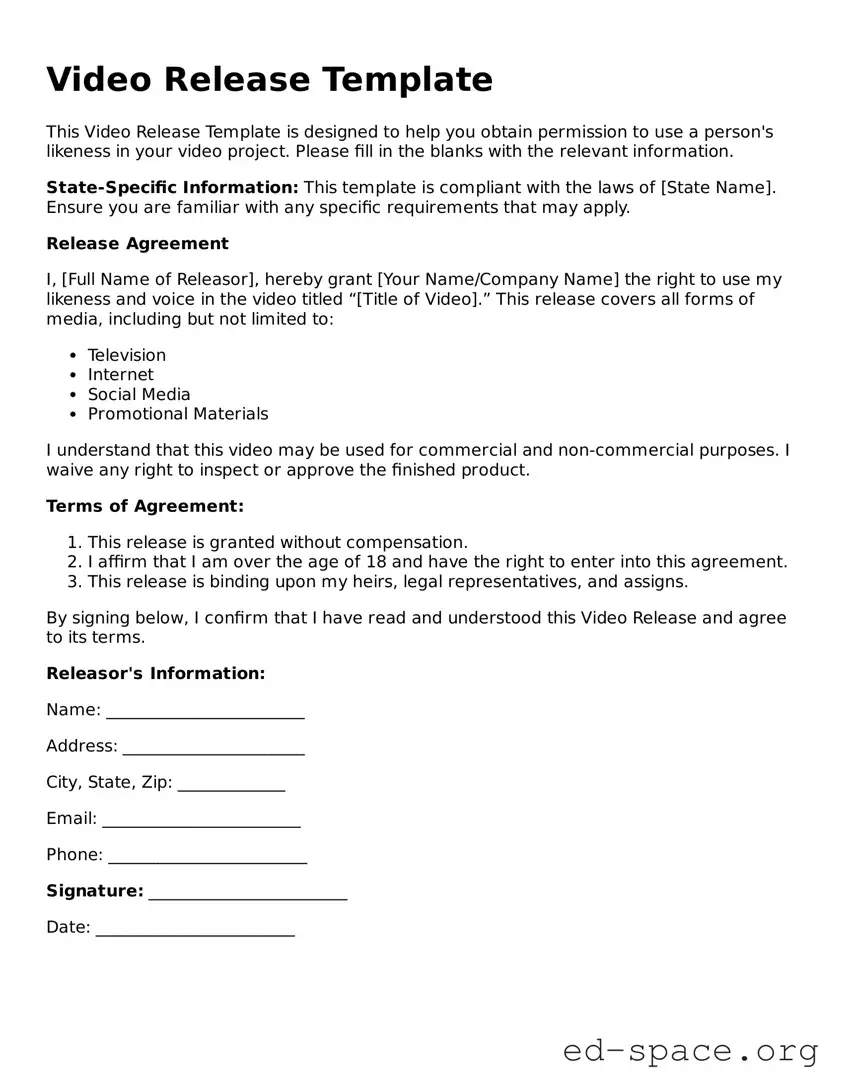
Video Release Template
This Video Release Template is designed to help you obtain permission to use a person's likeness in your video project. Please fill in the blanks with the relevant information.
State-Specific Information: This template is compliant with the laws of [State Name]. Ensure you are familiar with any specific requirements that may apply.
Release Agreement
I, [Full Name of Releasor], hereby grant [Your Name/Company Name] the right to use my likeness and voice in the video titled “[Title of Video].” This release covers all forms of media, including but not limited to:
I understand that this video may be used for commercial and non-commercial purposes. I waive any right to inspect or approve the finished product.
Terms of Agreement:
By signing below, I confirm that I have read and understood this Video Release and agree to its terms.
Releasor's Information:
Name: ________________________
Address: ______________________
City, State, Zip: _____________
Email: ________________________
Phone: ________________________
Signature: ________________________
Date: ________________________
| Fact Name | Description |
|---|---|
| Purpose | The Video Release form grants permission for the use of an individual's likeness in video recordings, ensuring that the individual understands how their image may be used. |
| Consent Requirement | Obtaining consent is crucial. Without a signed Video Release form, the use of someone's likeness may lead to legal disputes regarding privacy rights. |
| State-Specific Forms | Different states may have unique requirements. For instance, California's Civil Code Section 3344 governs the use of likenesses and requires explicit consent for commercial use. |
| Revocation of Consent | Individuals may have the right to revoke their consent under certain conditions, but this typically does not apply once the video is publicly released unless otherwise stated in the form. |
Completing the Video Release form is a straightforward process. By following these steps, you will ensure that all necessary information is accurately provided. Make sure to review your entries before submitting the form.
What is a Video Release form?
A Video Release form is a legal document that grants permission for the use of an individual's image or likeness in video recordings. By signing this form, the individual allows the creator of the video to use their appearance in various media, such as promotional materials, websites, or social media platforms. This form is essential for protecting both the creator's rights and the rights of the individuals featured in the video.
Why is it important to have a Video Release form?
Having a Video Release form is crucial for several reasons. First, it helps to avoid potential legal disputes over the use of an individual's likeness. Without explicit permission, the creator may face claims of invasion of privacy or misappropriation of likeness. Second, it provides clarity regarding how the video will be used, ensuring that all parties understand the scope of the agreement. Lastly, it can enhance the credibility of the creator, showing that they respect the rights of individuals featured in their work.
Who should sign a Video Release form?
Any individual who appears in a video should sign a Video Release form. This includes actors, interview subjects, and even bystanders who may be unintentionally captured in the footage. For minors, a parent or guardian must sign on their behalf. It is essential to obtain consent from everyone featured in the video to ensure compliance with legal standards and to maintain ethical practices.
What should be included in a Video Release form?
A comprehensive Video Release form should include several key elements. First, it should clearly identify the parties involved, including the individual granting permission and the creator of the video. Second, it should specify the purpose of the video and how it will be used. Additionally, the form should outline any compensation, if applicable, and include a statement confirming that the individual waives any rights to royalties or other compensation. Finally, the form should have a signature line and date to validate the agreement.
Incomplete Information: One common mistake is failing to provide all required details. Ensure that names, contact information, and the date are fully filled out. Missing information can lead to delays or complications.
Not Understanding the Terms: Many individuals overlook the importance of reading the terms and conditions. It is crucial to understand how the video may be used. Misunderstanding these terms can result in unintended consequences.
Neglecting to Sign: A signature is essential for the release form to be valid. Forgetting to sign can render the entire document ineffective. Always double-check that the signature is present before submission.
Failing to Keep a Copy: After submitting the form, individuals often forget to retain a copy for their records. Keeping a copy is important for future reference. It can help clarify any disputes or questions that may arise later.
When working with video content, a Video Release form is essential for obtaining permission to use someone's likeness. However, several other documents often accompany this form to ensure all legal bases are covered. Here’s a brief overview of some key forms that might be used alongside the Video Release form.
Having these forms in place can prevent misunderstandings and legal issues down the line. Always ensure that you have the necessary permissions documented before proceeding with any video project.
The Video Release form is important for protecting the rights of individuals and organizations involved in video production. Here are seven other documents that share similarities with the Video Release form:
When filling out a Video Release form, it's essential to ensure that you do it correctly. Here’s a list of ten things to keep in mind, including what to do and what to avoid.
Following these guidelines will help ensure that your Video Release form is completed correctly and efficiently.
Many people misunderstand the purpose and implications of a Video Release form. Here are seven common misconceptions:
When filling out and using a Video Release form, keep these key takeaways in mind: