Homepage Blank Verification Rental PDF Form
Content Overview

The Verification Rental form serves as a crucial tool in the rental application process, helping landlords assess the reliability and history of potential tenants. This form is designed to collect essential information from previous landlords about a tenant's rental history, providing insights into their behavior and responsibility. It includes key sections that ask for details such as the dates of tenancy, monthly rent amounts, and whether rent was paid on time. Additionally, it inquires about the tenant's adherence to rules, any complaints from neighbors, and the overall condition of the rental unit. Landlords are also prompted to evaluate the tenant's behavior, including care for the property and any damages incurred during their stay. The form wraps up with a few important questions regarding the return of the security deposit and the willingness of the previous landlord to rent to the tenant again. By gathering this information, landlords can make informed decisions, ensuring a smoother rental experience for all parties involved.

Document Preview

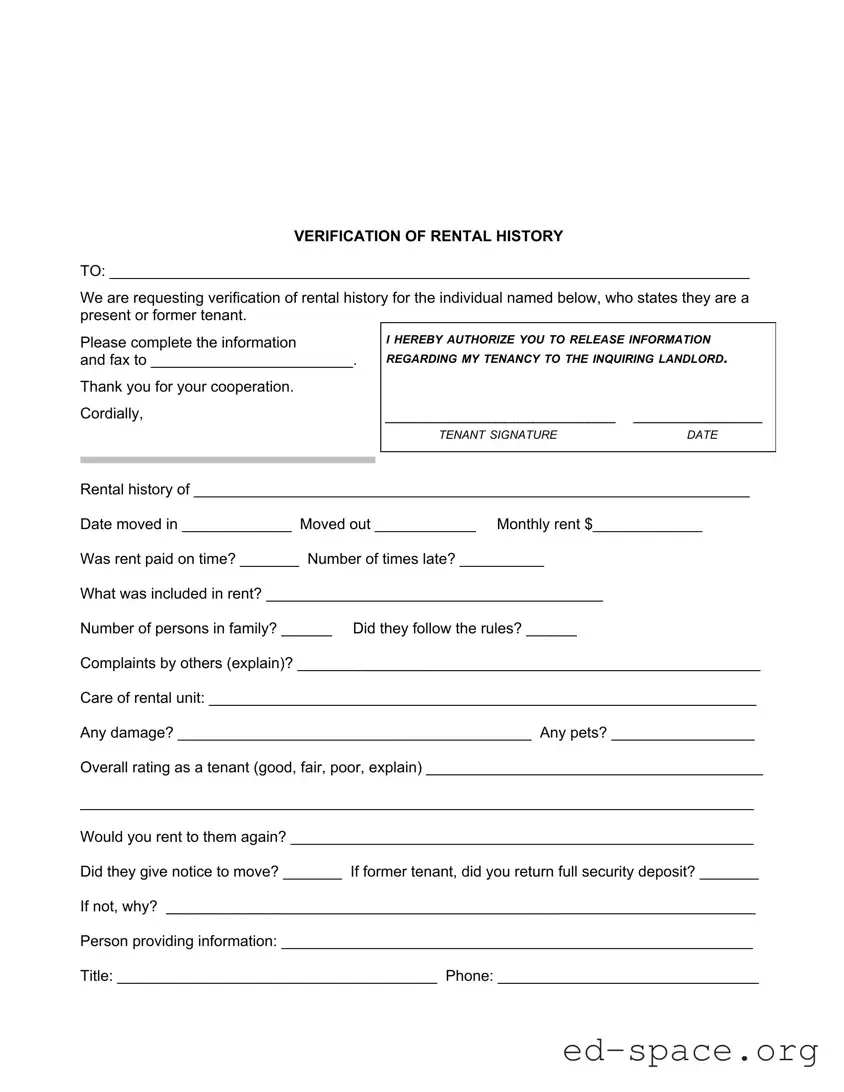
VERIFICATION OF RENTAL HISTORY
TO: ____________________________________________________________________________
We are requesting verification of rental history for the individual named below, who states they are a
present or former tenant.
Please complete the information
and fax to ________________________.
Thank you for your cooperation.
Cordially,
Rental history of __________________________________________________________________
Date moved in _____________ Moved out ____________ Monthly rent $_____________
Was rent paid on time? _______ Number of times late? __________
What was included in rent? ________________________________________
Number of persons in family? ______ Did they follow the rules? ______
Complaints by others (explain)? _______________________________________________________
Care of rental unit: _________________________________________________________________
Any damage? __________________________________________ Any pets? _________________
Overall rating as a tenant (good, fair, poor, explain) ________________________________________
________________________________________________________________________________
Would you rent to them again? _______________________________________________________
Did they give notice to move? _______ If former tenant, did you return full security deposit? _______
If not, why? ______________________________________________________________________
Person providing information: ________________________________________________________
Title: ______________________________________ Phone: _______________________________
I HEREBY AUTHORIZE YOU TO RELEASE INFORMATION
REGARDING MY TENANCY TO THE INQUIRING LANDLORD.
_________________________ ______________
TENANT SIGNATURE DATE

Form Specifications

Fact Name Description
Purpose The Verification of Rental History form is used to confirm a tenant's rental history with a previous landlord.
Authorization The tenant must authorize the release of their rental information by signing the form.
Information Required The form requests details such as move-in and move-out dates, monthly rent, and payment history.
Tenant Evaluation Landlords provide an overall rating of the tenant, which can be good, fair, or poor, along with an explanation.
State-Specific Forms Some states may have specific requirements for rental verification forms, governed by local landlord-tenant laws.
Complaints The form includes a section for noting any complaints made by others regarding the tenant's behavior.
Security Deposit If the tenant is a former tenant, the form asks whether the full security deposit was returned and why if it was not.

Verification Rental: Usage Guidelines

Completing the Verification Rental form is essential for providing a clear picture of a tenant's rental history. This form will be sent to the landlord or property manager to obtain necessary information about the tenant's past rental experiences. Follow these steps carefully to ensure all required information is accurately provided.

  1. Begin by filling in the name of the individual whose rental history is being verified in the space provided under "TO."
  2. Next, write the name of the tenant who is authorizing the release of their information.
  3. In the designated area, include the fax number where the completed form should be sent.
  4. Have the tenant sign the form and date it in the appropriate fields.
  5. Fill out the rental history section, starting with the tenant's name and the dates they moved in and out.
  6. Indicate the monthly rent amount in the provided space.
  7. Answer whether the rent was paid on time and how many times it was late, if applicable.
  8. Describe what was included in the rent, such as utilities or amenities.
  9. State the number of persons in the tenant's family.
  10. Indicate whether the tenant followed the rules and if there were any complaints from others, providing explanations if necessary.
  11. Assess the care of the rental unit and note any damages or issues encountered.
  12. If applicable, mention whether the tenant had any pets.
  13. Provide an overall rating of the tenant (good, fair, poor) and include any explanations for this rating.
  14. State whether you would rent to this tenant again.
  15. If the tenant has moved out, indicate whether they gave notice and if the full security deposit was returned, including reasons if it was not.
  16. Finally, fill in the name and title of the person providing this information, along with their contact phone number.

Your Questions, Answered

What is the purpose of the Verification Rental form?

The Verification Rental form is designed to collect information about a tenant's rental history. It serves as a tool for landlords to assess the reliability and behavior of potential tenants. By requesting details such as payment history, adherence to rental agreements, and overall conduct, landlords can make informed decisions when considering new applicants. This form also facilitates communication between current or former landlords and the inquiring landlord, ensuring a smooth verification process.

Who should fill out the Verification Rental form?

The form should be completed by the current or former landlord of the tenant seeking to rent a new property. This individual is responsible for providing accurate and honest information regarding the tenant's rental history. The tenant must authorize the release of this information by signing the form, which grants permission for the landlord to disclose relevant details about their tenancy.

What information is typically required on the Verification Rental form?

The form requests various pieces of information that provide insight into the tenant's history. Key details include the tenant's move-in and move-out dates, monthly rent amount, payment punctuality, and any complaints from neighbors. Additionally, landlords are asked to evaluate the tenant's overall behavior and care of the rental unit. This comprehensive information helps the inquiring landlord understand the tenant's reliability and suitability for a new rental agreement.

How does the verification process work once the form is submitted?

Once the Verification Rental form is completed and submitted, the inquiring landlord will review the provided information. They may contact the previous landlord for any clarifications or additional details if necessary. The verification process is crucial, as it allows the inquiring landlord to assess the tenant's past behavior and determine whether they would be a good fit for their property. This step helps minimize potential issues in the future and fosters a positive rental experience.

What should a tenant do if their rental history is not favorable?

If a tenant is aware that their rental history may raise concerns, it is advisable to be proactive. They can discuss their situation openly with potential landlords, explaining any issues and demonstrating how they have learned and grown from their experiences. Providing references or documentation that showcases positive aspects of their rental history can also be beneficial. Transparency and honesty can help build trust with prospective landlords, potentially mitigating any negative perceptions stemming from their rental history.

Common mistakes

  1. Incomplete Information: Failing to fill out all required fields can lead to delays in processing the verification. Ensure that every section is addressed, including dates and rental amounts.

  2. Incorrect Tenant Details: Providing inaccurate information about the tenant's name or rental history can cause confusion. Double-check all personal details before submission.

  3. Missing Authorization: Not signing the authorization section may prevent the landlord from obtaining the necessary information. Always include the tenant's signature and date.

  4. Vague Responses: Offering unclear or ambiguous answers, especially regarding complaints or care of the rental unit, can lead to misunderstandings. Provide specific examples when possible.

  5. Ignoring Contact Information: Omitting the contact details of the person providing the information may hinder follow-up inquiries. Always include a valid phone number and title.

  6. Neglecting to Review: Submitting the form without a final review can result in overlooked errors. Take a moment to proofread for accuracy and completeness before sending.

Documents used along the form

The Verification Rental form is an important document used to gather information about a tenant's rental history. However, it is often accompanied by several other forms and documents that provide additional context or support. Below is a list of some commonly used documents that can complement the Verification Rental form.

  • Rental Application: This document is filled out by prospective tenants and includes personal information, rental history, and references. It helps landlords assess the suitability of applicants.
  • Credit Report: A credit report provides insight into a tenant's financial history, including credit scores, outstanding debts, and payment history. Landlords often review this to evaluate financial responsibility.
  • Employment Verification Letter: This letter, typically from an employer, confirms a tenant's employment status, income, and job stability. It assures landlords of the tenant's ability to pay rent.
  • Previous Landlord Reference: A reference letter from a former landlord can provide valuable insights into a tenant's behavior, payment history, and overall reliability as a tenant.
  • Security Deposit Receipt: This document shows that a tenant has paid a security deposit. It is important for both parties to keep records of these transactions for future reference.
  • Lease Agreement: The lease outlines the terms of the rental arrangement, including rent amount, duration, and rules. It serves as a binding contract between the landlord and tenant.
  • Move-In/Move-Out Inspection Report: This report details the condition of the rental unit at the beginning and end of a tenancy. It helps to assess any damages and determine the return of the security deposit.

Each of these documents plays a role in establishing a clear picture of a tenant's history and reliability. Together, they help landlords make informed decisions about potential tenants.

Similar forms

The Verification Rental form is an important tool for landlords and property managers to assess a tenant's rental history. Several other documents serve similar purposes, each offering insights into a tenant's background and behavior. Here are eight documents that share similarities with the Verification Rental form:

  • Tenant Reference Letter: This document is often written by a previous landlord or property manager, providing an overview of the tenant's rental history, payment habits, and overall conduct during their tenancy.
  • Rental Application: A rental application collects information directly from the prospective tenant, including employment history, income, and references, which can help landlords gauge the tenant's reliability.
  • Credit Report: A credit report provides a comprehensive view of a tenant's financial behavior, including payment history on loans and credit cards, which can indicate their ability to pay rent on time.
  • Background Check Report: This document includes information about a tenant's criminal history and eviction records, offering landlords a deeper understanding of the tenant's background.
  • Lease Agreement: The lease agreement outlines the terms of the rental arrangement and may include clauses related to payment, maintenance, and rules, reflecting the expectations set during the tenancy.
  • Move-In/Move-Out Inspection Report: This report documents the condition of the rental unit at the start and end of the tenancy, helping to assess the tenant's care of the property.
  • Payment History Record: A detailed record of all payments made by the tenant, this document can help landlords verify whether the rent was paid on time and in full.
  • Eviction Notice: An eviction notice, if applicable, provides information about any legal actions taken against a tenant, shedding light on potential issues during their rental period.

Each of these documents contributes to a more complete picture of a tenant's rental history, allowing landlords to make informed decisions.

Dos and Don'ts

When filling out the Verification Rental form, it is essential to approach the task with care and attention to detail. Here is a list of things you should and shouldn't do:

  • Do ensure that all fields are filled out completely to avoid delays.
  • Do provide accurate information regarding the tenant’s rental history.
  • Do sign and date the form to confirm its authenticity.
  • Do include your contact information for follow-up questions.
  • Do maintain confidentiality by only sharing relevant details.
  • Don't leave any sections blank, as this may lead to incomplete verification.
  • Don't provide misleading information about the tenant’s behavior or rental payments.
  • Don't forget to mention any significant complaints or issues with the tenant.
  • Don't use vague language; be specific in your assessments.
  • Don't rush through the process; take the time to ensure accuracy.

Misconceptions

Misconceptions about the Verification Rental form can lead to confusion for both tenants and landlords. Here are seven common misunderstandings:

  • It is mandatory for landlords to fill it out. Many believe that landlords must complete the form, but it is voluntary. Landlords can choose whether or not to participate.
  • The form guarantees approval for a rental application. Completing the form does not ensure that the tenant will be approved. It merely provides a history of rental behavior.
  • Only current landlords can provide information. Former landlords can also fill out the form. Their insights can be valuable in assessing a tenant's history.
  • All information provided is confidential. While landlords should handle the information responsibly, it is important to note that some details may be shared with prospective landlords.
  • Rent payment history is the only factor considered. The form covers various aspects of tenancy, including adherence to rules and overall care of the rental unit.
  • Tenants cannot dispute the information provided. Tenants have the right to address any inaccuracies. They can discuss discrepancies with their former landlords.
  • It is only relevant for low-income tenants. The Verification Rental form is applicable to all tenants, regardless of income level. It serves as a standard tool for assessing rental history.

Key takeaways

When utilizing the Verification Rental form, there are several important aspects to keep in mind. This form serves as a crucial tool for landlords seeking to understand a potential tenant's rental history. Below are key takeaways to consider:

  • Authorization is Essential: The tenant must provide their signature and date on the form, authorizing the release of their rental history. This ensures that the information shared is done so with the tenant's consent.
  • Comprehensive Information Required: The form requests detailed information about the tenant's rental history, including dates of residency, payment history, and any complaints. This thoroughness helps landlords make informed decisions.
  • Assessment of Tenant Behavior: Landlords are asked to evaluate the tenant's behavior, including adherence to rules and care of the rental unit. This subjective assessment can significantly impact a landlord's willingness to rent to the individual again.
  • Follow-Up on Security Deposits: If the tenant has moved out, the form inquires about the return of the security deposit. Understanding the reasons for any deductions or the failure to return the full deposit can be crucial for future rental considerations.

In summary, the Verification Rental form is a vital document that requires careful completion and thorough responses. It serves to protect both the tenant's rights and the landlord's interests in the rental process.