Homepage Blank Vehicle Payoff Authorization PDF Form
Content Overview

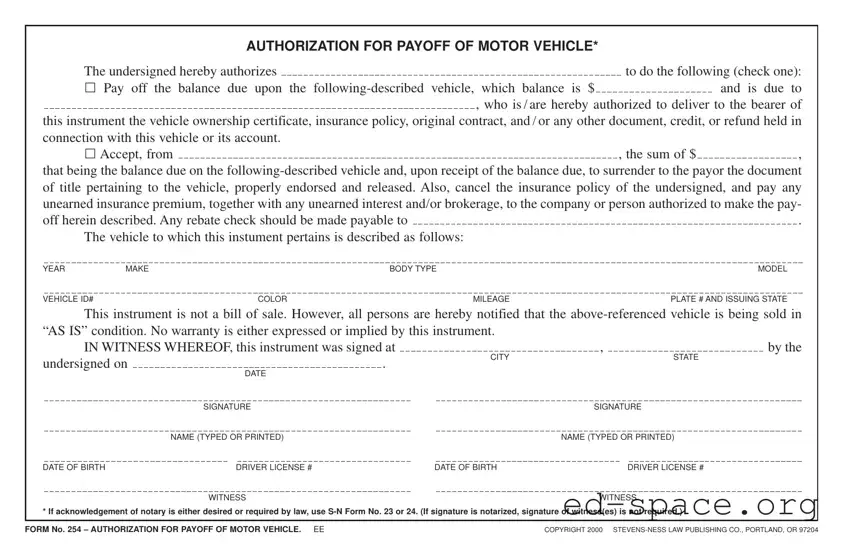
The Vehicle Payoff Authorization form serves as a crucial document for individuals looking to settle the outstanding balance on a motor vehicle. This form allows the vehicle owner to authorize a designated party to either pay off the remaining balance due or accept the payment for the vehicle. It specifies important details such as the vehicle's make, model, and identification number, ensuring clarity in the transaction. The form also outlines the responsibilities of the parties involved, including the surrender of the vehicle's title and the cancellation of any related insurance policies. Importantly, it clarifies that the vehicle is sold "AS IS," meaning the buyer accepts it without any warranties. The signature section of the form requires both parties to provide their names and relevant identification, reinforcing the legal validity of the authorization. Understanding the purpose and implications of this form is essential for anyone navigating the complexities of vehicle transactions.

Document Preview

AUTHORIZATION FOR PAYOFF OF MOTOR VEHICLE*
The undersigned hereby authorizes to do the following (check one):
a Pay off the balance due upon the following-described vehicle, which balance is $ and is due to
, who is / are hereby authorized to deliver to the bearer of
this instrument the vehicle ownership certificate, insurance policy, original contract, and / or any other document, credit, or refund held in
connection with this vehicle or its account.
a Accept, from , the sum of $ ,
that being the balance due on the following-described vehicle and, upon receipt of the balance due, to surrender to the payor the document
of title pertaining to the vehicle, properly endorsed and released. Also, cancel the insurance policy of the undersigned, and pay any
unearned insurance premium, together with any unearned interest and/or brokerage, to the company or person authorized to make the pay-
off herein described. Any rebate check should be made payable to .
The vehicle to which this instument pertains is described as follows:
YEAR MAKE BODY TYPE MODEL
VEHICLE ID# COLOR MILEAGE PLATE # AND ISSUING STATE
This instrument is not a bill of sale. However, all persons are hereby notified that the above-referenced vehicle is being sold in
AS IS” condition. No warranty is either expressed or implied by this instrument.
IN WITNESS WHEREOF, this instrument was signed at , by the
CITY STATE
undersigned on .
DATE
SIGNATURE SIGNATURE
NAME (TYPED OR PRINTED) NAME (TYPED OR PRINTED)
DATE OF BIRTH DRIVER LICENSE # DATE OF BIRTH DRIVER LICENSE #
WITNESS WITNESS
* If acknowledgement of notary is either desired or required by law, use S-N Form No. 23 or 24. (If signature is notarized, signature of witness(es) is not required.)
FORM No. 254 – AUTHORIZATION FOR PAYOFF OF MOTOR VEHICLE. EE COPYRIGHT 2000 STEVENS-NESS LAW PUBLISHING CO., PORTLAND, OR 97204

Form Specifications

Fact Name Fact Description
Purpose The Vehicle Payoff Authorization form allows an individual to authorize the payoff of a motor vehicle loan.
Authorization Options Users can choose to either pay off the balance due or accept the sum owed for the vehicle.
Documents Included The form allows for the delivery of the vehicle ownership certificate, insurance policy, and other related documents.
Vehicle Description Specific details about the vehicle, including year, make, model, and VIN, must be provided.
Condition of Sale The vehicle is sold in “AS IS” condition, meaning no warranties are provided.
Witness Requirement A witness signature is not required if the signature is notarized.
State-Specific Forms Different states may have specific forms or requirements; check local laws for compliance.
Notarization If notarization is desired or required, a specific form (S-N Form No. 23 or 24) should be used.
Governing Law The form is governed by state laws regarding vehicle sales and loan payoffs, which can vary by state.
Signature Requirements Both parties involved must sign the form, along with the date of birth and driver's license number.

Vehicle Payoff Authorization: Usage Guidelines

After completing the Vehicle Payoff Authorization form, you will need to submit it to the appropriate party, usually the lender or financial institution holding the vehicle title. This step is crucial for ensuring that the payoff process proceeds smoothly and that all necessary documents are exchanged.

  1. Begin by entering the name of the party authorized to handle the payoff in the designated space.
  2. Check the appropriate box to indicate whether you are authorizing a payoff or accepting a balance.
  3. If you selected "Pay off the balance," fill in the balance amount due and the name of the creditor.
  4. If you selected "Accept the sum," enter the amount being paid and the name of the payer.
  5. Provide details about the vehicle: year, make, body type, model, vehicle ID number, color, mileage, and license plate number along with the issuing state.
  6. Indicate the name of the person or entity to whom any rebate check should be made payable.
  7. Sign and date the form in the designated areas. Ensure that both signatures are included if there are multiple parties involved.
  8. Include the typed or printed names of all signatories below their signatures.
  9. Fill in the date of birth and driver’s license number for each signatory.
  10. If required, have a witness sign the form. If notarization is needed, consider using the appropriate notary acknowledgment form.

Your Questions, Answered

What is the Vehicle Payoff Authorization form?

The Vehicle Payoff Authorization form is a document that allows an individual to authorize a party to pay off the remaining balance on a motor vehicle loan. This form includes details about the vehicle, the balance due, and the parties involved in the transaction.

Who needs to fill out the Vehicle Payoff Authorization form?

This form is typically filled out by the vehicle owner or borrower. It is necessary when the owner wants to authorize another individual or entity, such as a dealership or financial institution, to handle the payoff of the vehicle loan on their behalf.

What information is required on the form?

The form requires specific information, including the vehicle's year, make, model, vehicle identification number (VIN), color, mileage, and license plate number. Additionally, it requires the balance due, the name of the lender, and the names and signatures of the parties involved.

What does it mean to sell the vehicle "AS IS"?

When a vehicle is sold "AS IS," it indicates that the buyer accepts the vehicle in its current condition without any warranties or guarantees from the seller. This means the seller is not responsible for any future repairs or issues that may arise after the sale.

Can I cancel my insurance policy using this form?

Yes, the form includes a provision for the cancellation of the insurance policy associated with the vehicle. It authorizes the recipient of the payoff to cancel the policy and to pay any unearned premiums back to the appropriate party.

What happens to any unearned insurance premiums?

Any unearned insurance premiums will be refunded to the party authorized to make the payoff. This ensures that the vehicle owner receives any funds owed from the insurance company after the policy is canceled.

Is a notary required for this form?

A notary is not always required, but if it is desired or required by law, the form should be notarized. In such cases, a witness signature is not necessary if the signature is notarized.

What if I need to make changes to the form after it has been signed?

Once the form has been signed, it is generally considered a binding document. Any changes should be made before signing, or a new form should be completed to ensure accuracy and legality.

How do I submit the Vehicle Payoff Authorization form?

The completed form should be submitted to the lender or the party responsible for processing the vehicle payoff. Ensure that all required signatures are present and that the form is filled out completely to avoid any delays in processing.

Common mistakes

  1. Leaving the Balance Due Field Blank: Failing to fill in the amount owed can lead to confusion and delays in processing the payoff.

  2. Incorrect Vehicle Information: Providing inaccurate details about the vehicle, such as the year, make, model, or Vehicle ID number, can result in complications during the transfer of ownership.

  3. Not Specifying the Recipient: Forgetting to indicate who the payment is being made to can cause the authorization to be ineffective.

  4. Omitting Signatures: Both parties must sign the form. Neglecting to include one or both signatures can invalidate the authorization.

  5. Ignoring the Insurance Policy Cancellation: Failing to request the cancellation of the insurance policy may lead to continued charges for coverage that is no longer needed.

  6. Not Providing Witness Information: If a witness is required, leaving this section blank could result in the form being rejected.

  7. Incorrectly Completing the Date Fields: Filling out the date incorrectly or leaving it blank can create confusion regarding when the transaction is authorized.

  8. Missing Notary Acknowledgment: If required, not having the form notarized can render it legally ineffective, especially in certain states.

  9. Failing to Include Payment Instructions: Not specifying how the payment should be processed can lead to delays or miscommunication.

  10. Not Keeping Copies: Failing to make copies of the completed form for personal records can lead to issues if disputes arise later.

Documents used along the form

When dealing with the Vehicle Payoff Authorization form, several other documents may be required to ensure a smooth transaction. These documents help clarify ownership, facilitate the transfer process, and protect the interests of all parties involved. Below is a list of commonly used forms and documents that complement the Vehicle Payoff Authorization.

  • Title Transfer Form: This document officially transfers ownership of the vehicle from the seller to the buyer. It must be completed and submitted to the appropriate state agency to update the vehicle's registration records.
  • Bill of Sale: This form serves as proof of the sale and includes details about the vehicle, the sale price, and the parties involved. It can be useful for tax purposes and as a record of the transaction.
  • Release of Lien: If there is a lien on the vehicle, this document is necessary to show that the lender has released their claim on the vehicle after the payoff is completed.
  • Insurance Cancellation Form: This form is used to officially cancel the vehicle's insurance policy once the vehicle has been sold. It ensures that the seller is no longer liable for insurance coverage.
  • Power of Attorney: In some cases, a power of attorney may be needed to authorize someone else to act on behalf of the seller or buyer during the transaction. This document grants specific legal authority to the designated person.
  • Notarized Affidavit: This document may be required to verify the identity of the parties involved or to confirm the authenticity of signatures on other documents. Notarization adds an extra layer of security to the transaction.
  • Loan Payoff Statement: If the vehicle was financed, this statement provides the exact amount needed to pay off the remaining loan balance. It ensures that the seller is aware of the total amount due to the lender.

Having these documents ready can streamline the vehicle payoff process and help avoid potential issues. Each document plays a vital role in ensuring that the transaction is clear and legally sound.

Similar forms

  • Power of Attorney: This document grants someone the authority to act on your behalf in various matters, including financial transactions. Like the Vehicle Payoff Authorization form, it requires your consent and specifies the powers being granted to the authorized person.
  • Title Transfer Form: When a vehicle is sold, this form is used to officially transfer ownership from the seller to the buyer. Similar to the Vehicle Payoff Authorization, it involves the surrender of the vehicle title and requires proper endorsements to ensure a legal transfer.
  • Bill of Sale: This document serves as proof of the sale of a vehicle. It outlines the terms of the sale and includes details about the vehicle, much like the Vehicle Payoff Authorization form, which also references the vehicle's specifics and conditions of sale.
  • Insurance Cancellation Form: This form is submitted to cancel an existing insurance policy on a vehicle. It parallels the Vehicle Payoff Authorization in that it involves notifying an insurance company of a change in ownership and may require the return of any unearned premiums.

Dos and Don'ts

When filling out the Vehicle Payoff Authorization form, it is important to follow certain guidelines to ensure accuracy and compliance. Below are some key do's and don'ts to keep in mind:

  • Do provide accurate information about the vehicle, including the year, make, model, and Vehicle ID number.
  • Do clearly state the balance due and the name of the entity to whom the payment is owed.
  • Do sign and date the form in the designated areas to validate the authorization.
  • Do ensure that all parties involved are aware of the transaction and have consented to it.
  • Don't leave any sections blank; incomplete forms can lead to delays or complications.
  • Don't use vague language when describing the vehicle or the terms of the payoff.
  • Don't forget to include any necessary documentation, such as proof of identity or previous contracts related to the vehicle.

Misconceptions

Understanding the Vehicle Payoff Authorization form is crucial for anyone involved in the vehicle payoff process. However, several misconceptions can lead to confusion. Here are five common misconceptions:

  • This form serves as a bill of sale. The Vehicle Payoff Authorization form is not a bill of sale. It authorizes the payoff of a vehicle's balance but does not transfer ownership.
  • Signing the form guarantees a warranty on the vehicle. The form explicitly states that the vehicle is sold "AS IS," with no warranties expressed or implied.
  • All documents related to the vehicle are automatically transferred. Only specific documents, such as the vehicle ownership certificate and insurance policy, are included in the authorization. Others may require separate handling.
  • The form is only necessary for private sales. This form can be used in various transactions, including dealership payoffs and private sales, making it versatile.
  • Notarization is always required. Notarization is not mandatory unless specified by law or desired by the parties involved. If notarization is needed, other forms should be used.

Awareness of these misconceptions can help streamline the vehicle payoff process and ensure all parties are informed and prepared.

Key takeaways

When filling out and using the Vehicle Payoff Authorization form, there are several important aspects to consider. These key takeaways can help ensure a smooth process.

  • Complete Vehicle Information: It is crucial to accurately provide details about the vehicle, including the year, make, model, vehicle identification number (VIN), color, mileage, and license plate number. This information helps identify the vehicle in question.
  • Choose the Right Authorization: The form allows you to authorize either the payoff of the vehicle or the acceptance of the payoff. Make sure to check the appropriate box to indicate your intention clearly.
  • Payment Details: Clearly state the balance due and the recipient of the payment. This ensures that the funds are directed to the correct entity and that the transaction can proceed without complications.
  • Understand the “AS IS” Condition: The form indicates that the vehicle is being sold in “AS IS” condition, meaning there are no warranties involved. Be aware of this to avoid any misunderstandings regarding the vehicle's condition after the sale.

By keeping these takeaways in mind, you can navigate the Vehicle Payoff Authorization process more effectively and with greater confidence.