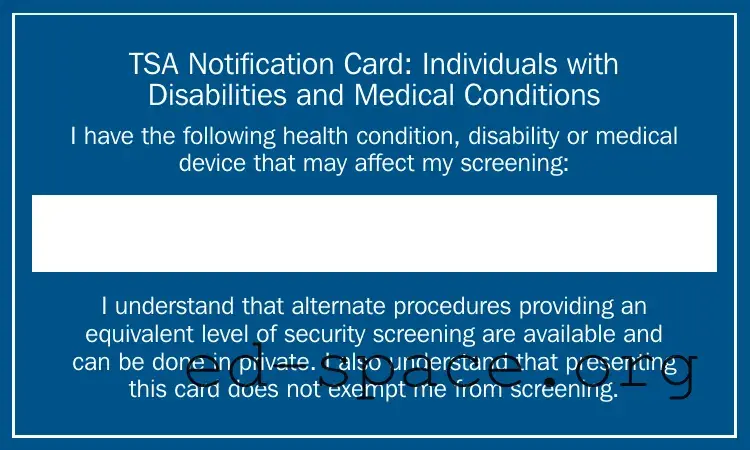
The TSA Notification Card is an essential tool designed for individuals with disabilities and medical conditions who may require special accommodations during airport security screening. This card allows travelers to communicate their specific health conditions or medical devices that could impact the screening process. It is important to note that while the card facilitates a more tailored screening experience, it does not exempt travelers from undergoing security checks. The TSA provides alternate procedures that maintain a high level of security while ensuring privacy for those who need it. For assistance, travelers can reach out to TSA Cares at 1-855-787-2227, available weekdays from 8 a.m. to 11 p.m. ET, and weekends or holidays from 9 a.m. to 8 p.m. ET. The service is multilingual, offering automated information in twelve languages. To enhance the travel experience, individuals are encouraged to call 72 hours in advance to request the help of a Passenger Support Specialist at the checkpoint. If this specialist is unavailable, travelers can always ask for a Supervisory TSA Officer for further assistance.


| Fact Name | Description |
|---|---|
| Purpose | The TSA Notification Card is designed for individuals with disabilities and medical conditions to inform TSA personnel about their specific needs during screening. |
| Alternate Procedures | Individuals using the card can request alternate screening procedures that maintain security while accommodating their needs. |
| Privacy Assurance | Screening procedures can be conducted in private, ensuring the dignity and comfort of the individual. |
| Screening Requirement | Presenting the TSA Notification Card does not exempt individuals from the screening process; it simply facilitates accommodations. |
| Contact Information | For assistance, individuals can reach TSA Cares at 1-855-787-2227, available weekdays and weekends at specified hours. |
| Language Support | The TSA offers automated information in 12 languages, making it accessible to a wider audience. |
| Advance Notice | Travelers are encouraged to call 72 hours before traveling to request the assistance of a Passenger Support Specialist at the checkpoint. |
| Supervisory Assistance | If a Passenger Support Specialist is unavailable, individuals may request a Supervisory TSA Officer for further assistance. |
| Feedback Channels | The TSA provides channels for compliments and complaints, ensuring continuous improvement in their services. |
| Governing Law | The TSA Notification Card is governed by federal regulations pertaining to disability rights and air travel security, including the Air Carrier Access Act. |
After completing the TSA Notification Card form, you will be prepared to present it during your screening process. This will help ensure that your specific needs are communicated to TSA personnel, allowing for a smoother experience at the airport.
If you have any questions or need assistance, consider reaching out to TSA Cares at 1-855-787-2227. They are available during specific hours to provide support.
What is the TSA Notification Card?
The TSA Notification Card is a tool designed for individuals with disabilities and medical conditions. It allows travelers to communicate their specific needs during the security screening process at airports. This card helps ensure that appropriate accommodations are made for a smoother travel experience.
Who should use the TSA Notification Card?
This card is beneficial for anyone with a health condition, disability, or medical device that may affect their screening process. If you have concerns about how your condition might impact security procedures, using this card can help convey your needs to TSA personnel.
Will presenting the TSA Notification Card exempt me from screening?
No, presenting the TSA Notification Card does not exempt you from the screening process. However, it does inform TSA agents about your specific needs, allowing them to provide alternate procedures that maintain security while accommodating your situation.
How can I request assistance when traveling?
You can request assistance by calling TSA Cares at 1-855-787-2227. It is recommended to call at least 72 hours before your travel date to ensure that a Passenger Support Specialist (PSS) is available to assist you at the checkpoint.
What should I do if a Passenger Support Specialist is not available?
If a PSS is not available when you arrive at the checkpoint, you can ask for a Supervisory TSA Officer. They will be able to help address your needs and ensure that you receive the necessary accommodations during your screening.
What kind of assistance can I expect from TSA personnel?
TSA personnel can provide alternate screening procedures that maintain security while accommodating your needs. This may include private screening options or modifications to standard procedures based on your specific health condition or disability.
What if I have a complaint or compliment regarding my experience?
If you have a complaint or would like to share a compliment about your experience with TSA, you can reach out to them directly. You can contact TSA through their email at [email protected] or call them during their operating hours for assistance.
What languages is TSA assistance available in?
TSA offers automated information in 12 languages. If you need assistance in a language other than English, make sure to specify your language preference when you contact TSA Cares for help.
What are the operating hours for TSA Cares?
TSA Cares is available on weekdays from 8 a.m. to 11 p.m. ET and on weekends or holidays from 9 a.m. to 8 p.m. ET. Be sure to reach out during these times to get the support you need.
Failing to clearly state the specific health condition, disability, or medical device. It is crucial to provide detailed information to ensure proper accommodations.
Not understanding that presenting the card does not exempt one from screening. Many individuals mistakenly believe that the card guarantees a bypass of security procedures.
Ignoring the importance of requesting assistance in advance. Passengers should call at least 72 hours prior to traveling to secure the help of a Passenger Support Specialist.
Overlooking the need for privacy during screening. While alternate procedures are available, it is essential to communicate any preferences or needs regarding privacy.
Neglecting to include contact information. Providing a way for TSA to reach you can facilitate smoother communication and assistance.
Submitting the form without reviewing it for accuracy. Mistakes in the form can lead to misunderstandings or delays at the checkpoint.
Failing to ask for a Supervisory TSA Officer if a Passenger Support Specialist is unavailable. Knowing this option can help ensure that your needs are addressed promptly.
The TSA Notification Card is an essential tool for individuals with disabilities and medical conditions during the screening process at airports. To ensure a smooth travel experience, several other forms and documents may also be necessary. Here’s a list of those documents, along with a brief description of each.
Having these documents ready can significantly ease the travel experience for individuals with disabilities and medical conditions. It's always a good idea to prepare in advance and communicate any specific needs to ensure a smooth process at the airport.
The TSA Notification Card form is important for individuals with disabilities or medical conditions. It helps ensure that they receive the necessary assistance during screening. Here are nine other documents that are similar to the TSA Notification Card, along with a brief explanation of how they relate:
Each of these documents serves a unique purpose but shares a common goal: to facilitate a smoother travel experience for individuals with specific needs. Having them ready can make a significant difference during the screening process.
When filling out the TSA Notification Card form, there are several important considerations to keep in mind. Below is a list of things you should and shouldn't do.
By following these guidelines, individuals can help ensure a smoother screening experience while maintaining security protocols.
Misconceptions about the TSA Notification Card can lead to confusion for travelers. Below are six common misconceptions and clarifications regarding the card:
Understanding these misconceptions can help individuals better navigate the security screening process while traveling.
The TSA Notification Card is designed to assist individuals with disabilities and medical conditions during the security screening process. Here are some key takeaways regarding its use: