Homepage Blank Truck Driver Job PDF Form
Content Overview

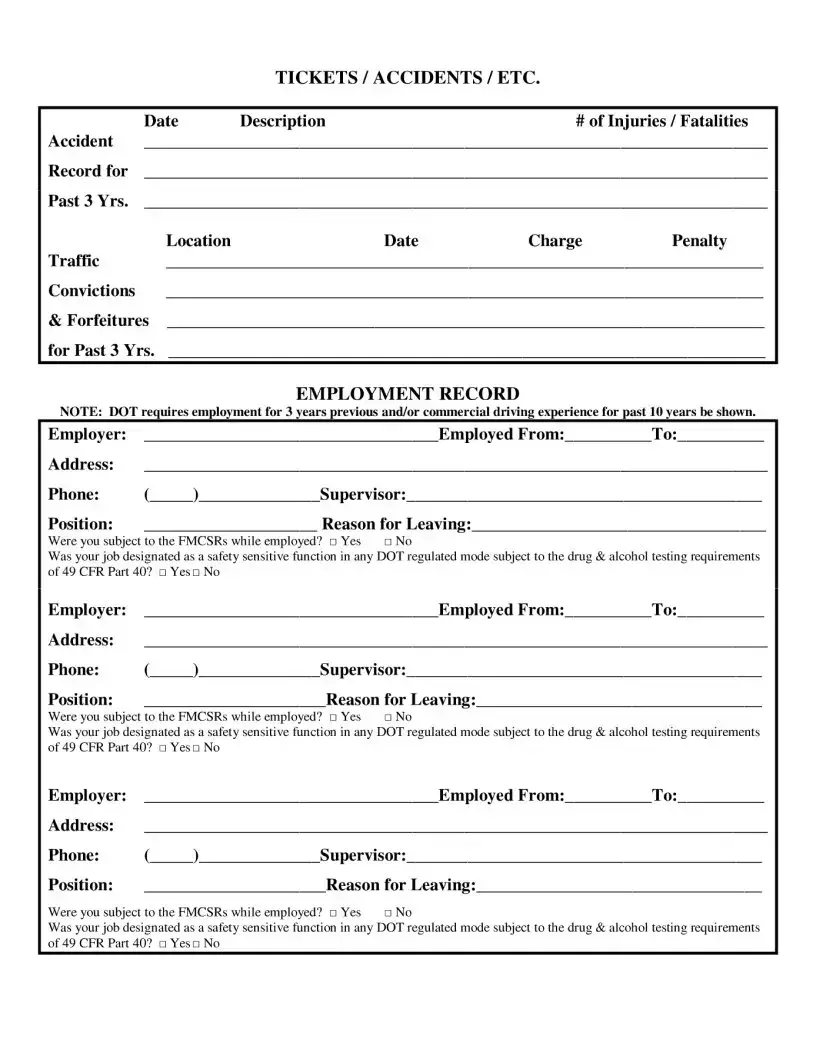
When applying for a truck driver position, the Truck Driver Job form serves as a vital tool for both applicants and employers. This comprehensive application collects essential information that helps to evaluate a candidate's qualifications and suitability for the role. Applicants begin by providing personal details, including their name, current and previous addresses, and contact information. The form also requires the applicant's date of birth and Social Security number, ensuring that the employer can verify identity and eligibility. A significant section focuses on the driver's license information, where candidates must indicate their state of licensing, license number, type, and expiration date. Additionally, the form delves into the applicant's driving experience, requiring a detailed history of employment over the past three years, along with any commercial driving experience from the last decade. This section includes questions about previous licenses, any suspensions or revocations, and the nature of past employment, particularly concerning safety-sensitive functions under Department of Transportation regulations. Lastly, the form addresses any tickets or accidents, providing a holistic view of the applicant's driving record. By gathering this information, the Truck Driver Job form not only streamlines the hiring process but also helps ensure that only qualified individuals are entrusted with the responsibility of operating commercial vehicles.
Document Preview

Form Specifications

Fact Name Details
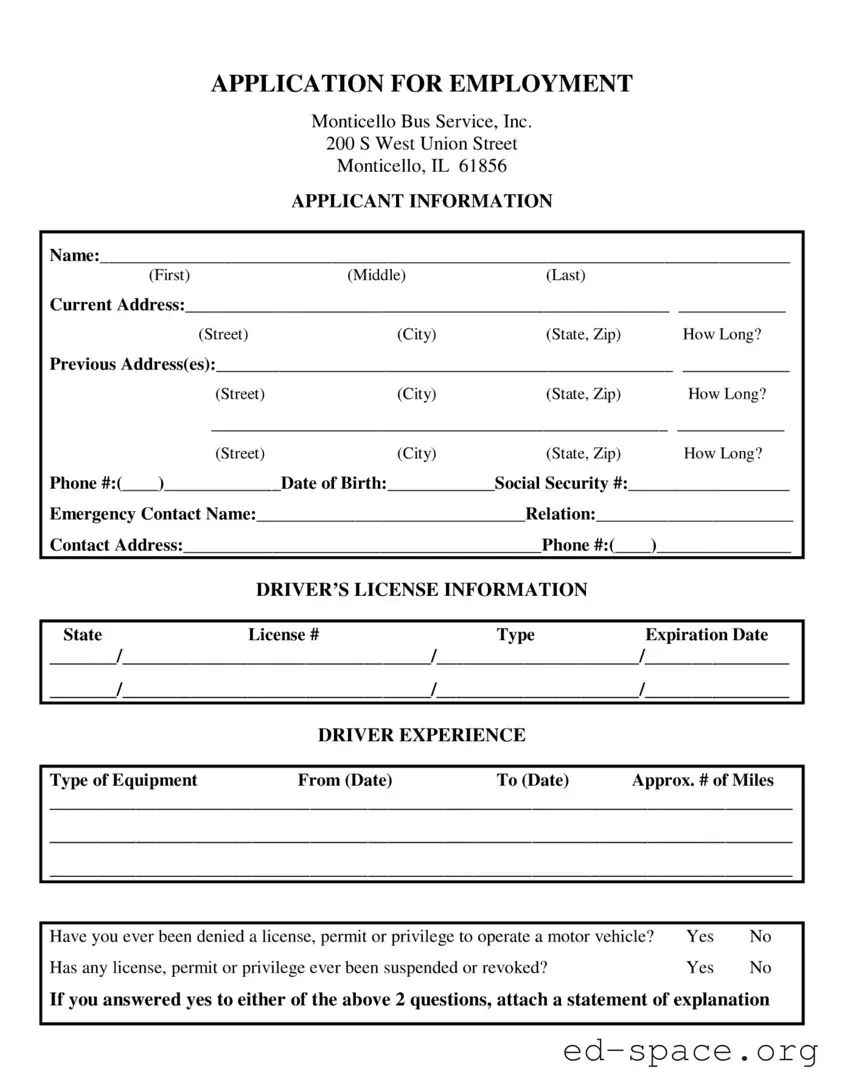
Applicant Information The form requires personal details such as name, current address, previous addresses, phone number, date of birth, and social security number.
Driver’s License Information Applicants must provide their state, license number, type, expiration date, and type of equipment they are qualified to operate.
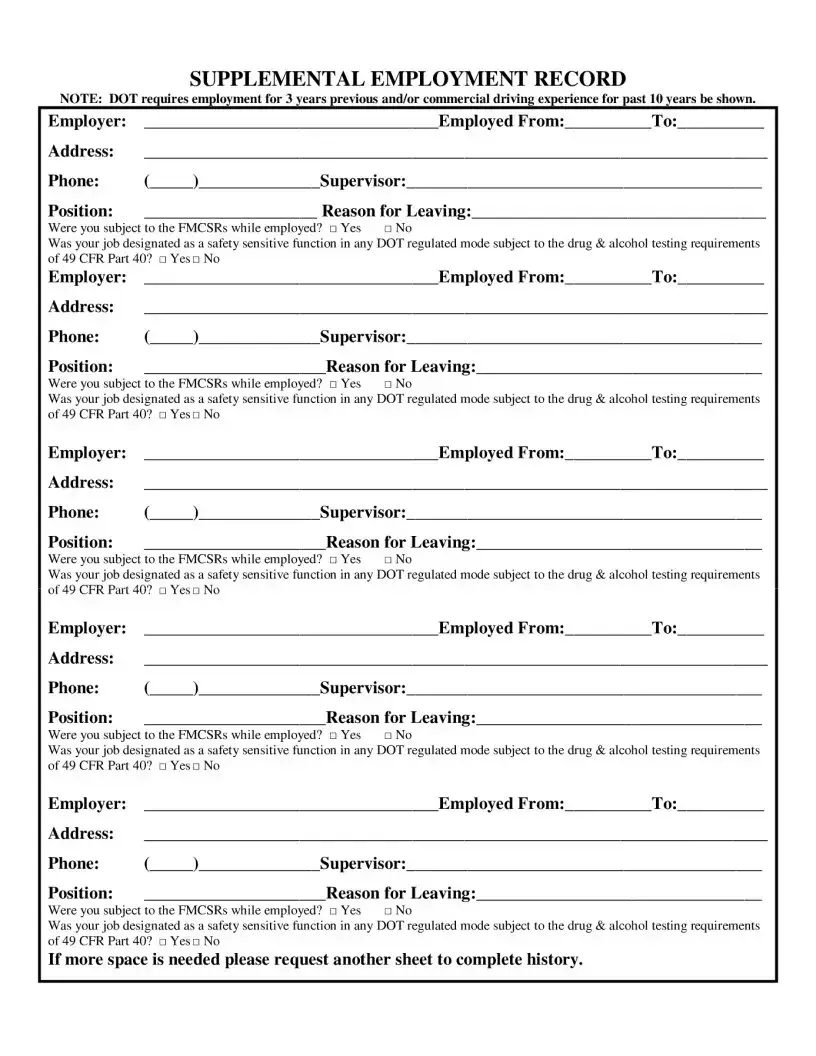
Employment Record DOT regulations mandate that applicants disclose employment history for the past three years and commercial driving experience for the past ten years.
Governing Laws This form is governed by the Federal Motor Carrier Safety Regulations (FMCSRs) and 49 CFR Part 40 regarding drug and alcohol testing requirements.

Truck Driver Job: Usage Guidelines

Completing the Truck Driver Job form requires careful attention to detail. Each section must be filled out accurately to ensure that all necessary information is provided. After submitting the form, the review process will begin, and applicants may be contacted for further steps in the hiring process.

  1. Begin with the Applicant Information section. Fill in your first name, middle name (if applicable), and last name.
  2. Provide your current address, including street, city, state, and zip code.
  3. List any previous addresses, including how long you lived at each location.
  4. Enter your phone number and date of birth.
  5. Provide your Social Security number and emergency contact information, including the name, relation, contact address, and phone number of your emergency contact.
  6. Move on to the Driver’s License Information section. Indicate the state where your license was issued, your license number, type, and expiration date.
  7. Detail your driving experience in the Driver Experience section. Include the dates of employment, approximate number of miles driven, and answer the questions regarding license denial or suspension.
  8. In the Employment Record section, list your previous employers, addresses, phone numbers, positions held, dates of employment, supervisor names, reasons for leaving, and whether you were subject to FMCSRs or drug and alcohol testing.
  9. Repeat the previous step for each employer, ensuring that you provide the required information for up to three years of previous employment or ten years of commercial driving experience.
  10. If additional space is needed, request another sheet to complete your employment history.

Your Questions, Answered

What information do I need to provide on the Truck Driver Job form?

When completing the Truck Driver Job form, you will need to provide several key pieces of information. This includes your full name, current and previous addresses, phone number, date of birth, and social security number. Additionally, you must list your emergency contact's name, relationship to you, contact address, and phone number. It is also essential to include your driver's license information, including the state, license number, type, and expiration date. Lastly, you will need to detail your employment history, including previous employers, positions held, and reasons for leaving.

What should I do if I have had a license denied or suspended?

If you have ever been denied a license, permit, or had your driving privileges suspended or revoked, it is crucial to answer these questions honestly on the form. You will need to attach a statement explaining the circumstances surrounding the denial or suspension. This transparency is vital for the review process and helps establish your driving history.

What is the FMCSRs and why do I need to know about it?

The Federal Motor Carrier Safety Regulations (FMCSRs) are regulations that govern the operation of commercial motor vehicles in the United States. When filling out the form, you will be asked if your previous jobs were subject to these regulations. This information is important as it helps determine your eligibility and experience in safety-sensitive positions, which may require compliance with specific drug and alcohol testing protocols.

How far back do I need to provide employment history?

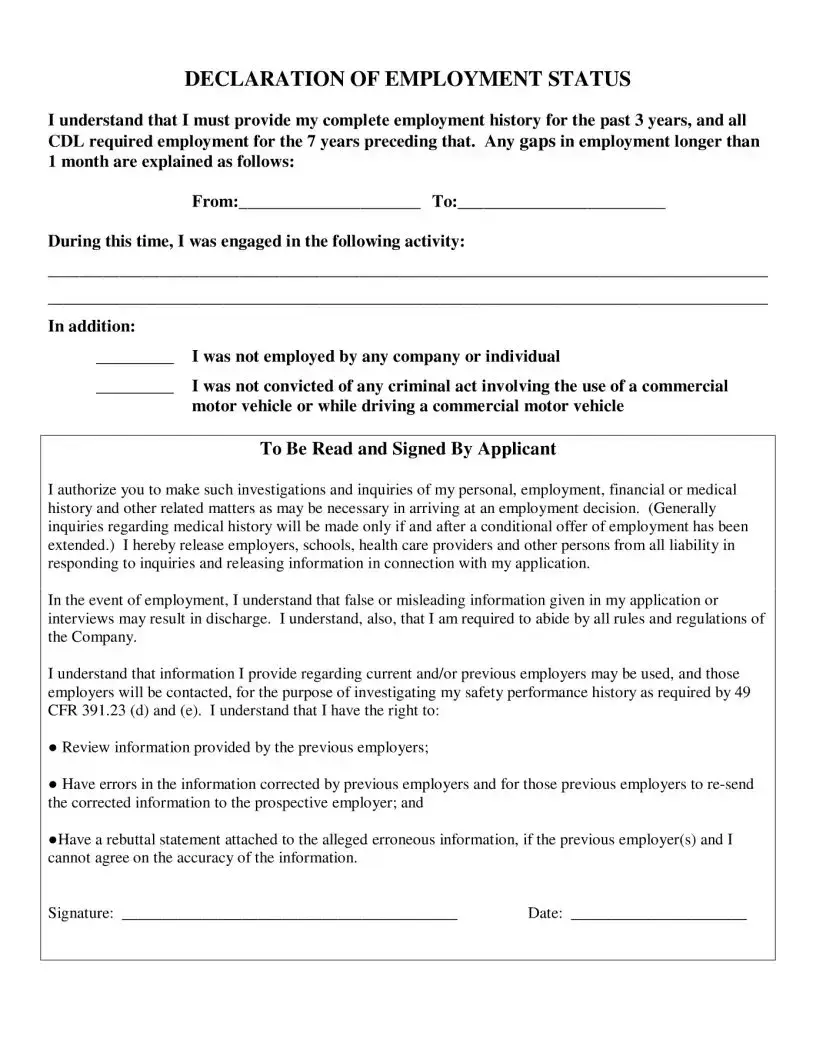
The form requires you to provide employment history for the past three years, specifically for jobs related to commercial driving. If you have commercial driving experience, you will need to include details from the last ten years. This comprehensive employment record ensures that your experience aligns with the qualifications needed for the position.

What if I need more space to complete my employment history?

If you find that you need additional space to provide your employment history, you can request another sheet to continue your information. It’s important to ensure that all relevant details are included, as this information is critical for the hiring process.

Common mistakes

  1. Incomplete Personal Information: Many applicants forget to fill in all required fields, such as their full name, current address, or phone number. This can lead to delays in processing the application or even disqualification.

  2. Neglecting to Provide Accurate Employment History: It’s crucial to list all previous employers accurately, including the dates of employment and reasons for leaving. Missing or incorrect information can raise red flags for potential employers.

  3. Overlooking the Driver’s License Section: Applicants often fail to double-check their driver’s license information, including the license number and expiration date. Errors in this section can result in immediate disqualification from consideration.

  4. Ignoring the Questions About Driving History: Some individuals mistakenly skip the questions regarding past license denials or suspensions. Failing to disclose this information can be viewed as dishonesty, which can jeopardize the application.

Documents used along the form

When applying for a truck driver position, several key documents often accompany the Truck Driver Job form. These forms help employers gather comprehensive information about the applicant's qualifications, driving history, and overall suitability for the role. Below are four important forms and documents that are typically used alongside the job application.

  • Motor Vehicle Record (MVR): This document provides a detailed account of an applicant's driving history. It includes information about traffic violations, accidents, and license status. Employers use the MVR to assess the applicant's driving record and ensure they meet safety standards.
  • DOT Medical Examination Report: A completed medical examination report is necessary to ensure that the driver meets the health standards set by the Department of Transportation (DOT). This report confirms that the driver is physically fit to operate a commercial vehicle, which is crucial for safety on the road.
  • Employment Verification Form: This form is used to verify the applicant's previous employment history, especially in commercial driving. It helps employers confirm the accuracy of the information provided in the job application and assess the applicant's experience and reliability.
  • Drug and Alcohol Testing Consent Form: Given the regulations surrounding safety-sensitive positions, this consent form allows employers to conduct drug and alcohol testing as required by federal law. It ensures that the applicant understands and agrees to comply with these testing requirements.

By submitting these additional documents along with the Truck Driver Job form, applicants can provide a well-rounded view of their qualifications. This not only helps employers make informed hiring decisions but also enhances the applicant's chances of securing the position. A thorough and complete application process is beneficial for both parties involved.

Similar forms

  • Employment Application Form: Like the Truck Driver Job form, this document collects personal information, work history, and qualifications of an applicant. It is essential for employers to assess candidates for various positions.
  • Commercial Driver's License (CDL) Application: This application is similar as it requires personal details, driving history, and information about any previous licenses. Both forms ensure that applicants meet the necessary qualifications for driving commercial vehicles.
  • Background Check Authorization Form: This document often accompanies job applications, including the Truck Driver Job form. It allows employers to verify an applicant’s history, ensuring they meet safety and legal requirements.
  • Motor Vehicle Record Request: This form is used to obtain an applicant’s driving record from the state. It shares similarities with the Truck Driver Job form in that both focus on the applicant's driving history and any infractions.
  • DOT Medical Examination Report: This report is required for commercial drivers to ensure they meet health standards. It parallels the Truck Driver Job form by addressing qualifications and safety requirements for drivers.
  • Drug and Alcohol Testing Consent Form: This document is often required for drivers, similar to the Truck Driver Job form, which asks about safety-sensitive functions and compliance with testing regulations.
  • Job Offer Letter: Once a candidate is selected, this letter outlines the terms of employment. It is similar in that it confirms the applicant’s qualifications and employment history as stated in the Truck Driver Job form.
  • W-4 Employee's Withholding Certificate: This form is used for tax purposes when an applicant starts a job. Like the Truck Driver Job form, it collects personal information necessary for employment and compliance with regulations.

Dos and Don'ts

When filling out the Truck Driver Job form, it is essential to approach the task with care and attention to detail. Here are some important dos and don'ts to keep in mind:

  • Do read the entire form before starting to fill it out.
  • Do provide accurate and up-to-date information.
  • Do double-check your contact information for errors.
  • Do include all relevant driving experience and employment history.
  • Don't leave any sections blank unless instructed to do so.
  • Don't provide false information or omit critical details.
  • Don't forget to sign and date the application.
  • Don't hesitate to ask for clarification if you are unsure about any part of the form.

Misconceptions

  • Truck driving is an easy job. Many people think that driving a truck is simple. In reality, it requires skill, focus, and the ability to handle various situations on the road.
  • Truck drivers work alone all the time. While long-haul drivers often spend significant time alone, many drivers work as part of a team, especially in regional or local routes where they interact with dispatchers and other staff frequently.
  • All truck drivers are paid the same. Pay varies significantly based on experience, type of cargo, and the company. Factors such as location and the driver's specific skills can also impact earnings.
  • You don’t need a special license to drive a truck. A Commercial Driver’s License (CDL) is required to operate large trucks. This involves passing specific tests to ensure safety and compliance with regulations.
  • Truck driving is a dying profession. On the contrary, the demand for truck drivers continues to grow. The rise in e-commerce and global trade has increased the need for reliable transportation services.
  • All truck drivers are away from home for weeks. Many truck driving jobs allow for more home time than people realize. Local and regional routes can enable drivers to return home daily or weekly.
  • Truck drivers don’t have benefits. Many trucking companies offer benefits such as health insurance, retirement plans, and paid time off. This is especially true for full-time drivers working with established companies.

Key takeaways

Here are some key takeaways for filling out and using the Truck Driver Job form:

  • Provide Complete Information: Ensure all sections are filled out accurately, including your name, address, and contact details.
  • Driver’s License Details: Include your state, license number, type, and expiration date. This information is crucial for your application.
  • Employment History: List your previous employers for the last three years, or include commercial driving experience from the past ten years.
  • Safety-Sensitive Function: Indicate whether your previous job was subject to drug and alcohol testing regulations. This is important for compliance.
  • Accurate Dates: When listing employment periods, use exact dates to avoid any discrepancies.
  • Explanation for Denials: If you have been denied a license or had any suspensions, attach a statement explaining the circumstances.
  • Emergency Contact: Provide a reliable emergency contact name and phone number to ensure safety while on the job.
  • Request Additional Space: If you need more room for your employment history, don’t hesitate to ask for another sheet.