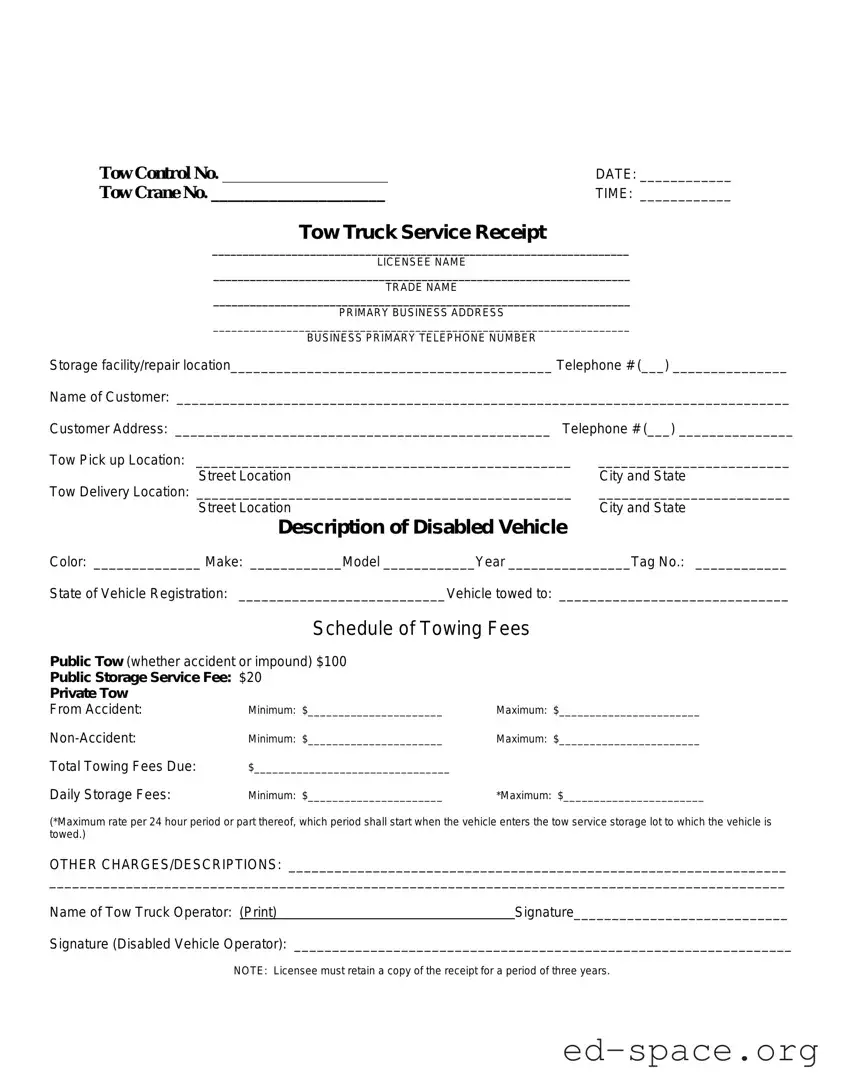
When a vehicle is towed, the Tow Truck Receipt form serves as a crucial document that outlines the details of the towing service provided. This form captures essential information such as the date and time of the tow, the identification of the tow truck and crane used, and the specific locations involved in the pick-up and delivery of the disabled vehicle. It also includes the name and contact information of the towing company, ensuring transparency and accountability in the transaction. The receipt itemizes the fees associated with the towing service, including public and private towing charges, daily storage fees, and any additional costs that may apply. A clear breakdown of these charges helps customers understand what they are being billed for, while also providing a record for the towing company. Furthermore, the form requires signatures from both the tow truck operator and the vehicle owner, solidifying the agreement and confirming the completion of the service. Retaining a copy of this receipt is not only a best practice for the towing company but also a requirement for a period of three years, ensuring that both parties have access to a record of the transaction should any disputes arise.

| Fact Name | Details |
|---|---|
| Minimum Fee | The minimum fee for towing services is specified but varies by state regulations. |
| Tow Control Number | Each receipt must include a unique Tow Control Number for tracking purposes. |
| Licensee Information | The receipt requires the name, trade name, and primary business address of the towing company. |
| Customer Details | Customer information, including name, address, and telephone number, must be recorded on the receipt. |
| Storage Fees | Daily storage fees are charged and must be clearly stated, with a maximum rate per 24-hour period. |
| Retention Requirement | Licensees are required to keep a copy of the receipt for a minimum of three years. |
Filling out the Tow Truck Receipt form requires careful attention to detail. Each section of the form must be completed accurately to ensure proper documentation of the towing service provided. After completing the form, it should be retained for record-keeping purposes.
What is the purpose of the Tow Truck Receipt form?
The Tow Truck Receipt form serves as an official record of the towing service provided. It details the transaction between the towing company and the customer, including information about the vehicle towed, fees charged, and the locations involved. This receipt is important for both parties, as it can be used for billing, insurance claims, or legal purposes.
What information is required on the Tow Truck Receipt?
The form requires several key pieces of information. This includes the date and time of the tow, the licensee's name and contact details, the customer’s name and address, and specifics about the vehicle such as its color, make, model, year, and registration details. Additionally, it outlines the tow pick-up and delivery locations, as well as the fees associated with the service.
How are towing fees determined?
Towing fees are typically based on the type of tow performed. For instance, public tows, whether due to an accident or impoundment, have a set fee of $100. Additional charges may apply for storage and other services. It’s crucial to refer to the schedule of fees listed on the receipt for a comprehensive breakdown of costs.
What should I do if I disagree with the charges on the receipt?
If you believe the charges are incorrect or unfair, first review the receipt and the services rendered. Contact the towing company to discuss your concerns. If a resolution cannot be reached, you may consider filing a complaint with your local consumer protection agency or seeking legal advice.
How long should I keep the Tow Truck Receipt?
It is advisable to retain a copy of the Tow Truck Receipt for at least three years. This is important for record-keeping, potential disputes, or insurance claims. Keeping it in a safe place will ensure you have access to it when needed.
Can I use the Tow Truck Receipt for insurance claims?
Yes, the Tow Truck Receipt can be used for insurance claims. It provides essential details about the towing service, including the fees incurred and the circumstances of the tow. Be sure to provide a copy of the receipt to your insurance company when filing a claim.
What happens if I lose my Tow Truck Receipt?
If you lose your Tow Truck Receipt, contact the towing company as soon as possible. They may be able to provide you with a duplicate or a record of the transaction. Having this documentation is important for any future claims or disputes.
Are there any additional charges I should be aware of?
Yes, aside from the basic towing fees, there may be additional charges for services such as storage, which typically incurs a daily fee. The receipt outlines these charges, but it’s wise to ask the towing company for a complete breakdown of potential fees before service is rendered.
Inaccurate Information: One common mistake is providing incorrect details about the vehicle or the customer. Ensure that the vehicle's make, model, year, and tag number are accurate. Double-check the customer’s name and address as well.
Missing Signatures: Forgetting to obtain signatures can lead to disputes later. Both the tow truck operator and the disabled vehicle operator should sign the receipt. This validates the transaction.
Omitting Charges: Failing to list all applicable fees can create confusion. Be sure to include all towing fees, storage fees, and any other charges that may apply. Transparency is key.
Neglecting to Date the Receipt: Without a date, the receipt loses its relevance. Always fill in the date of service to establish a clear timeline for the transaction.
Not Keeping a Copy: The licensee must retain a copy of the receipt for three years. Many forget this crucial step, which can lead to complications if questions arise about the service provided.
The Tow Truck Receipt form is often accompanied by various other documents that support the towing process and ensure compliance with regulations. Below is a list of related forms and documents that may be used in conjunction with the Tow Truck Receipt.
These documents play a crucial role in the towing process, ensuring that all parties involved have a clear understanding of their rights and responsibilities. Proper documentation helps facilitate communication and can prevent disputes related to towing services.
When filling out the Tow Truck Receipt form, attention to detail is crucial. Here’s a list of things you should and shouldn’t do to ensure accuracy and compliance.
By following these guidelines, you can help ensure that the towing process goes smoothly and that all parties are protected. Accuracy is key in these situations, so take your time when completing the form.
Misconception 1: The Tow Truck Receipt form is only necessary for accidents.
Many people believe that a tow truck receipt is only required when a vehicle is involved in an accident. In reality, the receipt is essential for any towing service, whether it’s due to an accident, impoundment, or a non-accident situation. Keeping a record of the service helps both the customer and the towing company maintain transparency.
Misconception 2: All towing fees are fixed and cannot vary.
Some assume that towing fees are set in stone. However, fees can vary based on several factors, including the type of tow (public vs. private), the distance towed, and additional services like storage. Understanding the fee structure outlined on the receipt can help customers prepare for the costs associated with towing.
Misconception 3: The receipt does not need to be kept for long.
Another common belief is that once the vehicle is retrieved, the receipt can be discarded. This is not the case. It is important to retain the receipt for at least three years, as it serves as proof of service and may be needed for insurance claims or disputes.
Misconception 4: Only the towing company needs a copy of the receipt.
Some individuals think that only the towing company should keep a copy of the receipt. In fact, both the customer and the towing service should have a copy. This ensures that both parties have access to the same information regarding the service provided, which can be crucial in case of any misunderstandings.
When filling out and using the Tow Truck Receipt form, keep these key points in mind: