When seeking a letter of recommendation, expressing gratitude to the person who has taken the time to support your endeavors is essential. A Thank You Note for a Letter of Recommendation form serves as a structured way to convey appreciation. This form typically includes key components such as the recipient's name, the date the letter was received, and a personalized message reflecting your gratitude. It may also provide space for specific details about the recommendation, allowing you to highlight how it has positively impacted your career or academic journey. By using this form, individuals can ensure that their acknowledgment is both heartfelt and professional, reinforcing the relationship with the recommender while also setting a positive tone for future interactions. Ultimately, this simple gesture can strengthen connections and foster goodwill, which can be invaluable in various professional contexts.
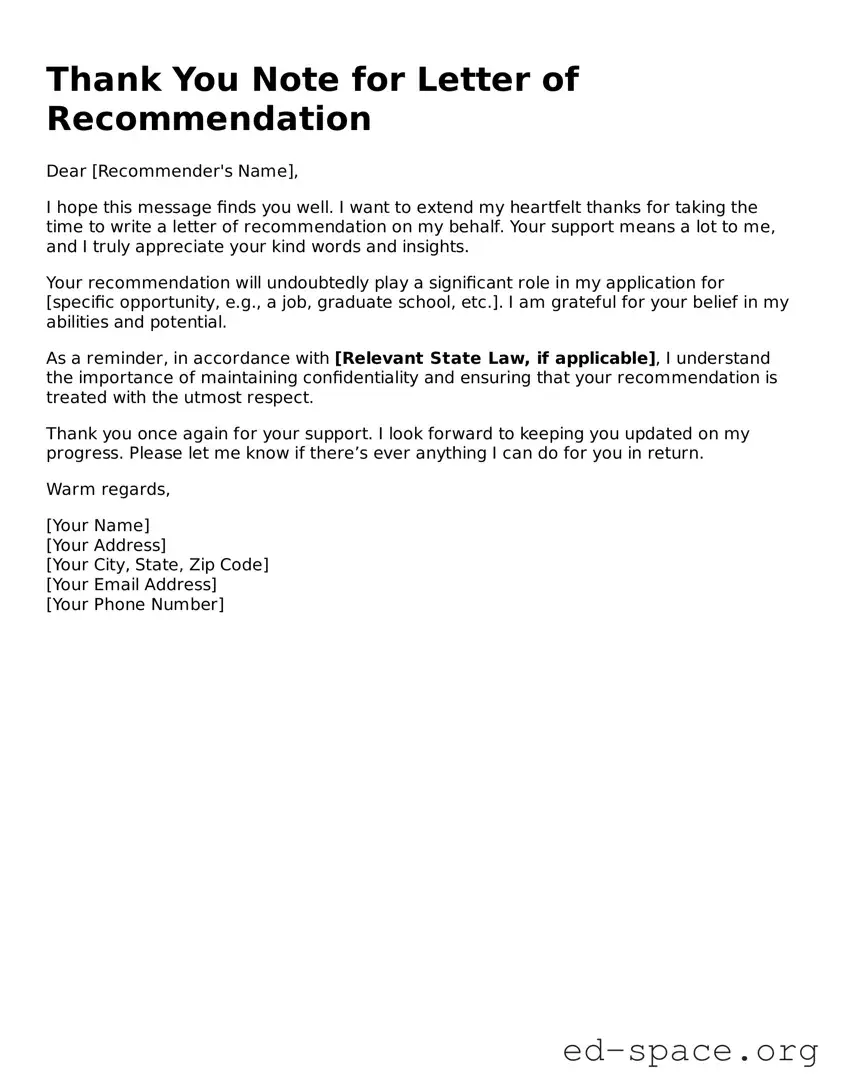
Thank You Note for Letter of Recommendation
Dear [Recommender's Name],
I hope this message finds you well. I want to extend my heartfelt thanks for taking the time to write a letter of recommendation on my behalf. Your support means a lot to me, and I truly appreciate your kind words and insights.
Your recommendation will undoubtedly play a significant role in my application for [specific opportunity, e.g., a job, graduate school, etc.]. I am grateful for your belief in my abilities and potential.
As a reminder, in accordance with [Relevant State Law, if applicable], I understand the importance of maintaining confidentiality and ensuring that your recommendation is treated with the utmost respect.
Thank you once again for your support. I look forward to keeping you updated on my progress. Please let me know if there’s ever anything I can do for you in return.
Warm regards,
[Your Name]
[Your Address]
[Your City, State, Zip Code]
[Your Email Address]
[Your Phone Number]
| Fact Name | Description |
|---|---|
| Purpose | A Thank You Note for a Letter of Recommendation expresses gratitude to the individual who provided a recommendation, acknowledging their support and effort. |
| Timing | It is best to send the thank you note shortly after receiving the recommendation, ideally within a week, to show appreciation promptly. |
| Format | The note can be sent as a handwritten card or an email, depending on the relationship with the recommender and the formality of the situation. |
| State-Specific Considerations | While there are no specific governing laws regarding thank you notes, maintaining professionalism and courtesy is universally encouraged across all states. |
After completing the Thank You Note for a Letter of Recommendation form, you will submit it to express your gratitude to the individual who provided the recommendation. This gesture not only shows appreciation but also helps maintain a positive relationship for future interactions.
What is the purpose of the Thank You Note for a Letter of Recommendation form?
The Thank You Note for a Letter of Recommendation form is designed to help individuals express their gratitude to those who have taken the time to write a recommendation letter on their behalf. Acknowledging the effort and support of your recommenders is important. This form provides a structured way to communicate your appreciation, reinforcing positive relationships and encouraging future support.
Who should I send a thank you note to?
You should send a thank you note to anyone who has written a letter of recommendation for you. This includes professors, employers, mentors, or colleagues who have contributed to your professional or academic journey. Acknowledging their help is a thoughtful gesture that shows you value their support and time.
What should I include in my thank you note?
Your thank you note should include a few key elements. Start with a sincere expression of gratitude. Mention the specific opportunity for which they wrote the recommendation. You may also want to share any updates on your progress or outcomes related to the recommendation. Personal touches, such as recalling a specific conversation or lesson learned, can make your note even more meaningful.
Is it necessary to send a thank you note if I receive the opportunity?
Yes, it is still important to send a thank you note even if you receive the opportunity. This reinforces your appreciation and acknowledges the role your recommender played in your success. A thank you note can strengthen your professional relationship and leave a lasting positive impression, which could be beneficial for future interactions.
Failing to personalize the note. Many individuals use a generic template instead of tailoring the message to reflect their specific relationship with the recommender. A personal touch can make a significant difference.
Neglecting to express gratitude adequately. Some people simply state "thank you" without elaborating on how the recommendation has impacted their opportunities. Acknowledging the effort put in by the recommender is essential.
Forgetting to mention specific qualities or experiences. It's important to highlight what aspects of the recommendation were particularly helpful. This shows appreciation for the recommender's insights and contributions.
Not sending the note in a timely manner. Delays can diminish the impact of the thank you note. Sending it promptly demonstrates professionalism and respect for the recommender's time.
When requesting a letter of recommendation, it’s often helpful to accompany your Thank You Note with additional documents. These forms can provide context, streamline the process, and enhance the overall experience for both you and the recommender. Below is a list of commonly used forms and documents that can be beneficial.
Including these documents along with your Thank You Note can make the process smoother and more effective. Each piece serves a purpose and contributes to a well-rounded request for a letter of recommendation.
The Thank You Note for a Letter of Recommendation form serves as a thoughtful gesture to express gratitude. It shares similarities with several other documents that also aim to convey appreciation or maintain professional relationships. Here’s a look at eight documents that share this purpose:
Each of these documents serves to strengthen relationships and express gratitude, highlighting the importance of appreciation in professional interactions.
When filling out a Thank You Note for a Letter of Recommendation form, it's important to keep a few key points in mind. Here’s a list of things you should and shouldn't do:
Thank you notes for letters of recommendation are often misunderstood. Here are nine common misconceptions about them:
Understanding these misconceptions can enhance the effectiveness of thank you notes and promote positive interactions in both personal and professional contexts.
When filling out and using the Thank You Note for a Letter of Recommendation form, consider the following key takeaways: