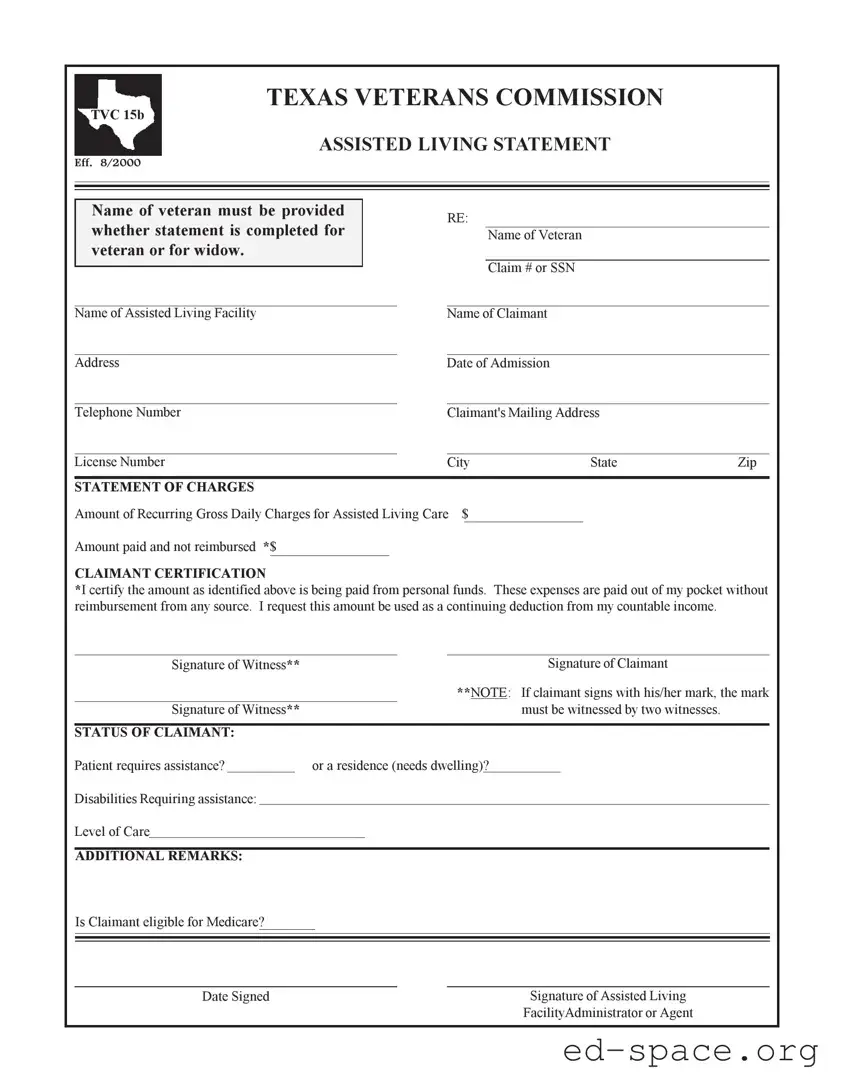
The Texas Veterans Commission form, known as TVC15b, serves as a vital document for veterans and their families seeking assistance with assisted living expenses. This form requires essential information such as the veteran's name, the name and address of the assisted living facility, and contact details, ensuring that all relevant parties are accurately identified. Claimants must also provide their Social Security Number or claim number, along with details about the date of admission and their mailing address. A critical section of the form outlines the statement of charges, where claimants list the recurring gross daily charges for assisted living care. It is essential to specify the amount paid out-of-pocket that has not been reimbursed by any source. The claimant must certify that these expenses are being paid from personal funds, affirming that they are not receiving any financial assistance for these costs. The form also includes sections for the signature of the claimant and a witness, and if the claimant is unable to sign, their mark must be witnessed by two individuals. Additional information regarding the claimant’s status, such as the need for assistance or specific disabilities, is also required. Lastly, the form prompts for any additional remarks and inquires about Medicare eligibility, rounding out the comprehensive information needed to process claims effectively.
| Fact Name | Description |
|---|---|
| Form Title | TEXAS VETERANS COMMISSION TVC15b ASSISTED LIVING STATEMENT |
| Effective Date | This form has been in effect since August 2000. |
| Required Information | The name of the veteran must be provided, regardless of whether the statement is completed for the veteran or the widow. |
| Governing Law | This form is governed by Texas Administrative Code, Title 40, Part 1, Chapter 460. |
Filling out the Texas Veterans Commission form is a straightforward process. Ensure you have all necessary information at hand before starting. This form requires specific details about the veteran or claimant, the assisted living facility, and charges associated with care. Follow the steps below to complete the form accurately.
What is the purpose of the Texas Veterans Commission form?
The Texas Veterans Commission form, specifically the TVC15b Assisted Living Statement, serves to document the expenses associated with assisted living care for veterans or their widows. This form helps ensure that the costs incurred for such care can be considered for deductions from the claimant's countable income, potentially impacting their eligibility for certain benefits.
Who needs to fill out this form?
This form must be completed for either the veteran or the widow of a veteran. It is essential that the name of the veteran is provided, regardless of who the statement is being completed for. This ensures that the correct individual is associated with the claim and any potential benefits.
What information is required on the form?
Key information required includes the name of the assisted living facility, its address, telephone number, and license number. Additionally, details about the veteran, such as their claim number or Social Security number, date of admission to the facility, and the claimant's mailing address must be provided. The form also requires a statement of charges, including the amount of recurring gross daily charges for assisted living care.
What does the claimant certification section entail?
The claimant certification section is crucial as it confirms that the expenses stated are being paid from personal funds without reimbursement from any source. The claimant must sign this section, and if they are unable to write their name, their mark must be witnessed by two individuals. This certification is important for validating the claim and ensuring transparency in the financial details provided.
What should be included in the 'Status of Claimant' section?
In the 'Status of Claimant' section, the form asks whether the patient requires assistance or needs a dwelling. Additionally, it requests information about any disabilities that necessitate assistance and the level of care required. This information helps assess the needs of the claimant and ensures that they receive appropriate support.
Is there any additional information that needs to be provided?
Yes, the form includes a section for additional remarks, where any pertinent details regarding the claimant's situation can be included. Additionally, it inquires whether the claimant is eligible for Medicare, which may influence their overall care and funding options.
Who is required to sign the form?
The form must be signed by the claimant and a witness. If the claimant cannot sign their name, their mark must be witnessed by two individuals. Furthermore, the administrator or agent of the assisted living facility is also required to sign the form, providing official acknowledgment of the information presented.
Failing to provide the name of the veteran. It is essential to include the veteran's name, whether the form is completed for the veteran or their widow.
Omitting the name of the assisted living facility. This information is critical for processing the claim accurately.
Not including the telephone number of the assisted living facility. This detail is necessary for any follow-up communications.
Leaving out the license number of the facility. This number verifies that the facility is authorized to provide care.
Incorrectly stating the amount of recurring gross daily charges for assisted living care. Ensure this amount is accurate to avoid delays in processing.
Failing to indicate the amount paid and not reimbursed. This information is crucial for determining eligibility for deductions.
Not signing the claimant certification section. This signature confirms that the claimant understands and agrees to the terms outlined.
Neglecting to have the signature of the witness completed correctly. If the claimant uses a mark, it must be witnessed by two individuals.
The Texas Veterans Commission form is often accompanied by several other documents that help provide a comprehensive view of a veteran's needs and eligibility for benefits. Each of these documents serves a specific purpose and is essential for processing claims effectively.
Each of these forms plays a vital role in ensuring that veterans receive the benefits they are entitled to. Properly completing and submitting these documents can significantly impact the outcome of a claim.
VA Form 21-2680: This document, known as the Examination for Housebound Status or Permanent Need for Regular Aid and Attendance, serves to determine a veteran's need for assistance with daily living activities. Similar to the Texas Veterans Commission form, it requires information about the veteran's condition and living situation.
VA Form 21-526EZ: This is the application for disability compensation and related compensation benefits. Like the Texas form, it collects essential information about the veteran, including personal details and claims for financial support, often related to care costs.
VA Form 21-4142: This document is used to authorize the release of information. It is similar in that it facilitates the sharing of medical records and other pertinent data necessary for processing claims, much like how the Texas form requires verification of care expenses.
VA Form 21-534EZ: This form is for applying for Dependency and Indemnity Compensation (DIC) benefits. It parallels the Texas Veterans Commission form by requiring information about the veteran's service and the claimant's relationship to the veteran, which is crucial for benefit eligibility.
Medicaid Application: This application is used to determine eligibility for Medicaid benefits, including long-term care. Similar to the Texas Veterans Commission form, it assesses the financial situation of the claimant and the specific needs for care, ensuring that the necessary support is provided.
When filling out the Texas Veterans Commission form, it is essential to follow certain guidelines to ensure accuracy and compliance. Here are six important dos and don’ts:
When dealing with the Texas Veterans Commission form, there are several misconceptions that can lead to confusion. Understanding these can help ensure that veterans and their families navigate the process more smoothly.
Many people believe that this form is exclusively for veterans. However, it is also applicable to widows or dependents. The name of the veteran must be provided regardless of who is completing the statement.
There is a common belief that any expenses listed will be reimbursed. In reality, the form requires a certification that the amounts claimed are paid from personal funds and are not reimbursed from any other source.
Some individuals think that only the claimant's signature is necessary. In fact, if the claimant signs with a mark, two witnesses must also sign to validate the claim. This ensures that the process is transparent and verified.
Another misconception is that if a claimant is eligible for Medicare, they do not need to complete this form. However, the form serves a different purpose and is essential for establishing the claim for assisted living expenses, regardless of Medicare eligibility.
When filling out the Texas Veterans Commission form, there are several important points to keep in mind. Understanding these key takeaways can help ensure the form is completed correctly and efficiently.
By keeping these takeaways in mind, individuals can navigate the process of filling out the Texas Veterans Commission form more effectively.