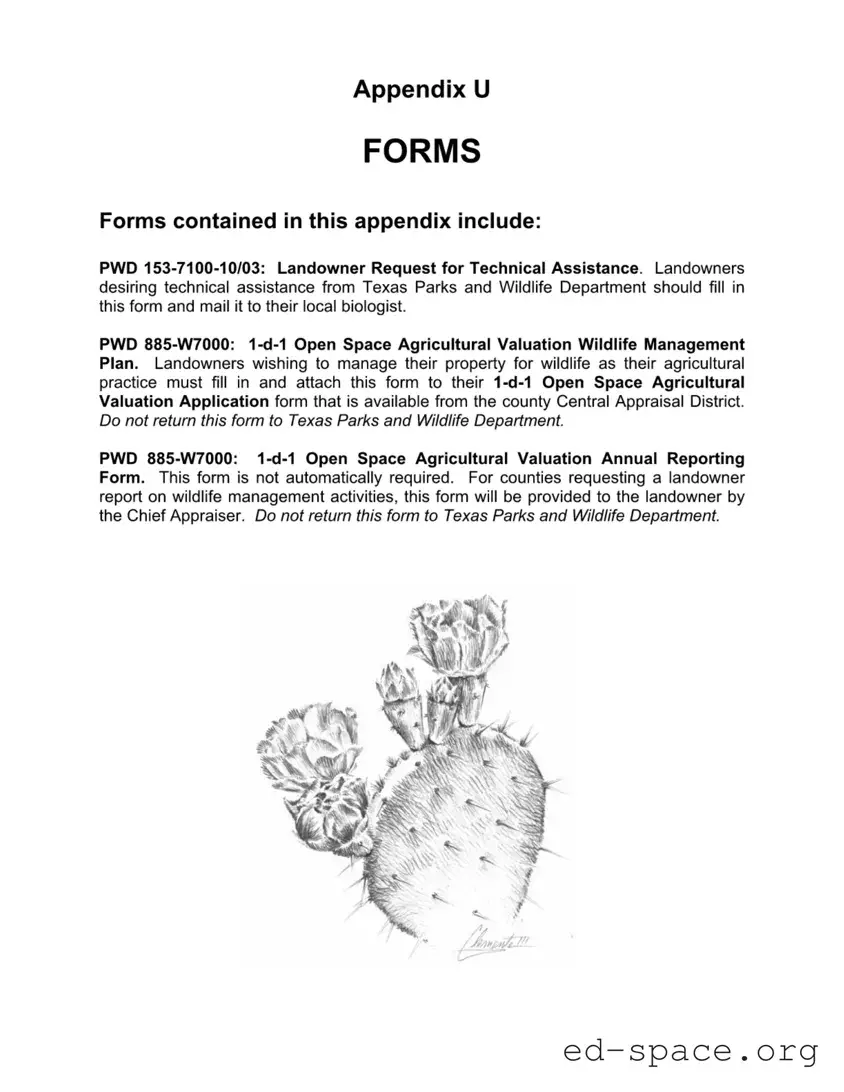
Homepage Blank Texas Pwd PDF Form
Content Overview

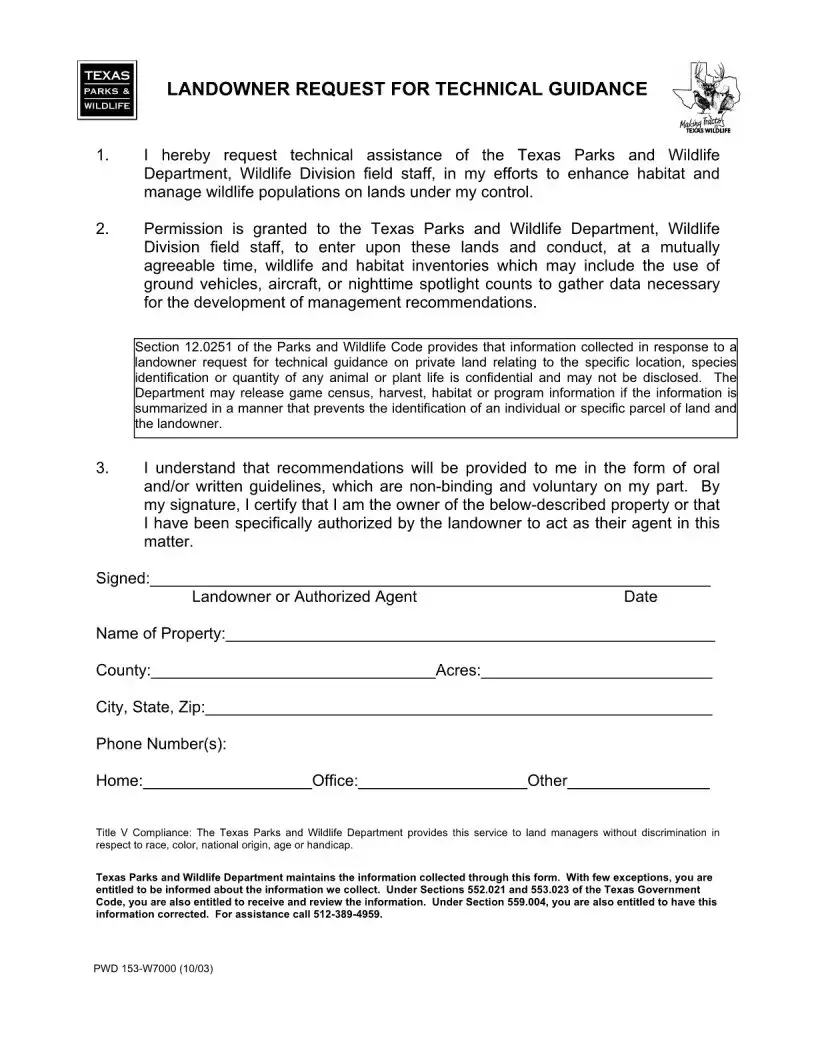
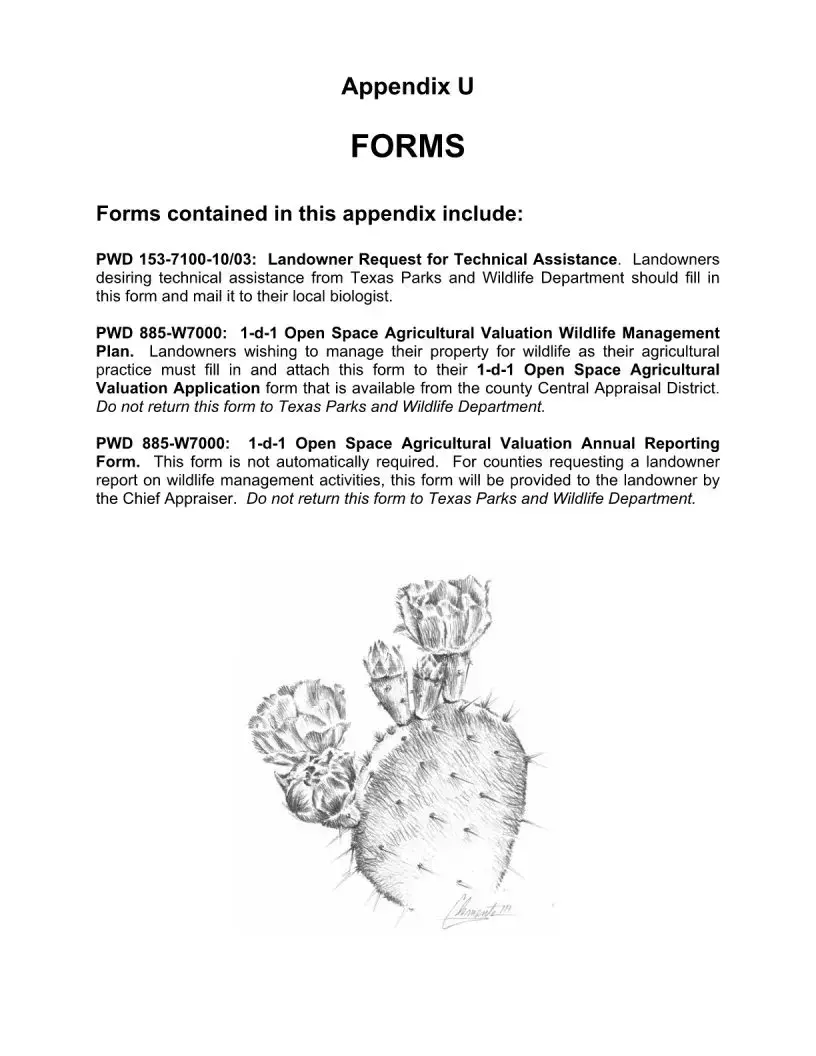
The Texas Parks and Wildlife Department provides a variety of forms designed to assist landowners in managing their properties effectively for wildlife and habitat conservation. One of the primary documents is the PWD 153-7100-10/03, known as the Landowner Request for Technical Assistance. This form allows landowners to seek expert guidance from local biologists to enhance wildlife habitats on their lands. Additionally, for those interested in agricultural valuation through wildlife management, the PWD 885-W7000 form is essential. This form must be completed and submitted alongside the 1-d-1 Open Space Agricultural Valuation Application to the county Central Appraisal District, as it outlines the landowner's wildlife management plan. Furthermore, there is an annual reporting form associated with the 1-d-1 Open Space Agricultural Valuation, which may be required by certain counties to track wildlife management activities. It is important to note that while the Texas Parks and Wildlife Department offers these forms and the associated services, the information collected remains confidential, ensuring the privacy of landowners. By completing these forms, landowners can take proactive steps towards effective wildlife management while contributing to the preservation of Texas's natural resources.
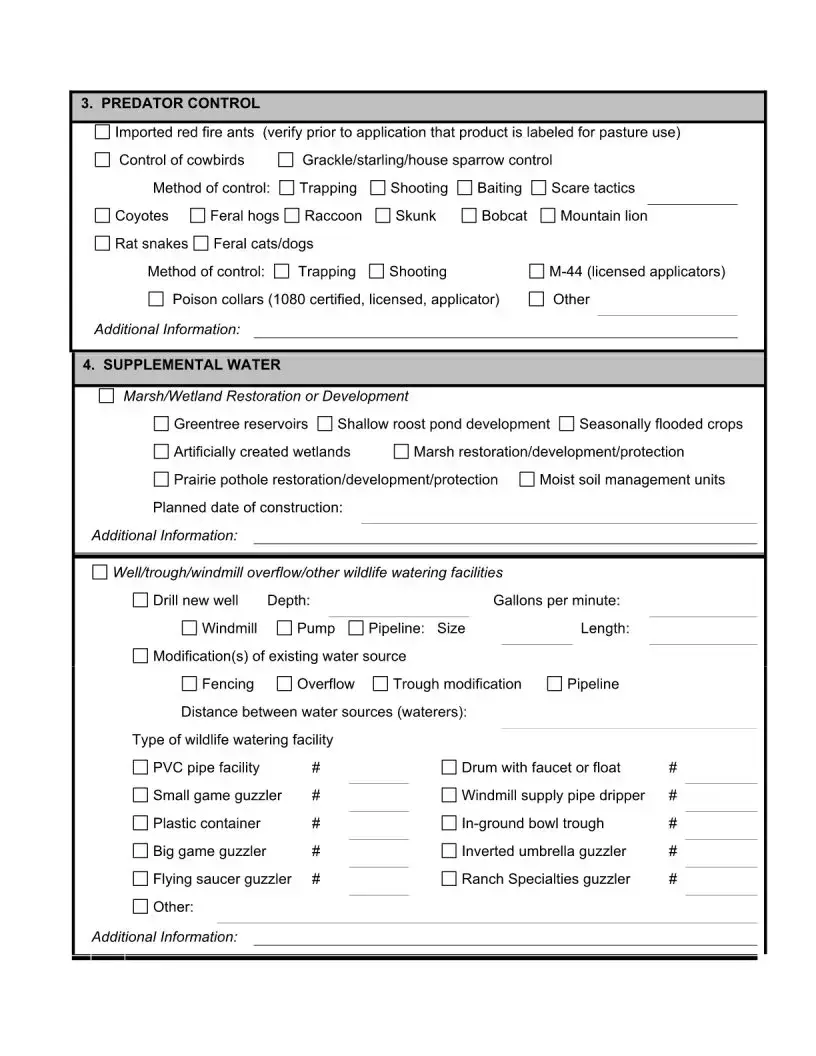
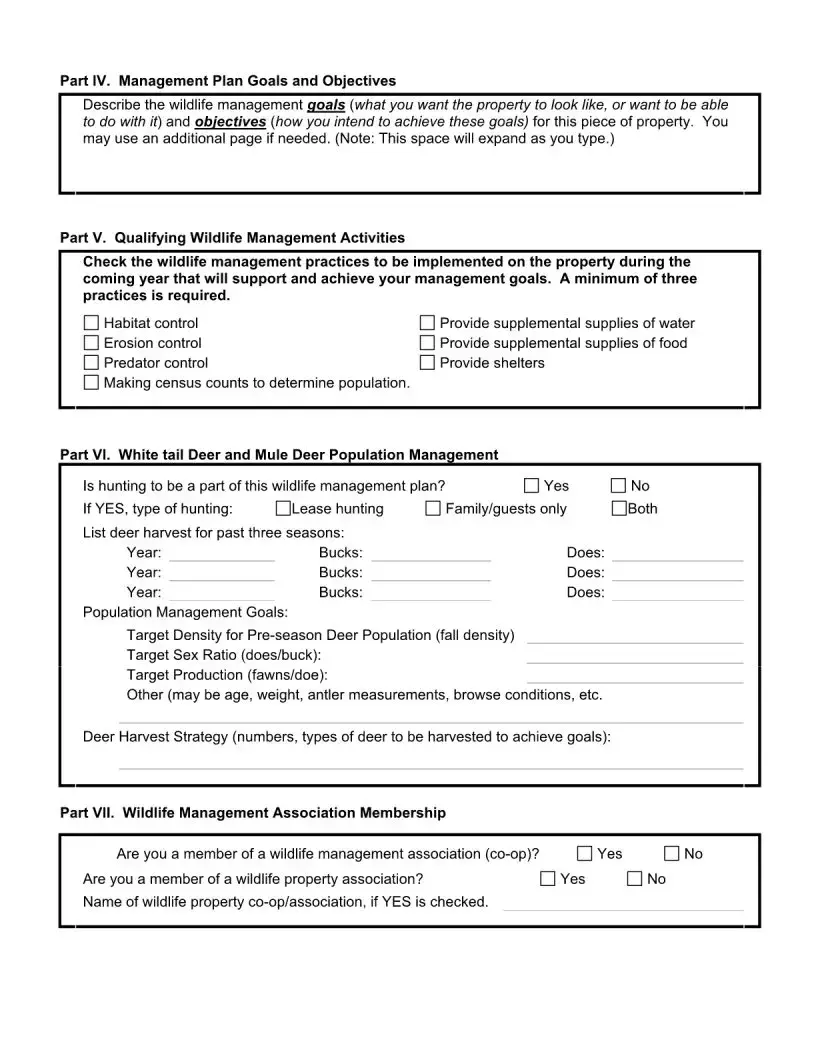
Document Preview

Form Specifications

Fact Name Description
Form Purpose The Texas PWD form is designed for landowners seeking technical assistance from the Texas Parks and Wildlife Department to enhance wildlife habitats and manage populations on their property.
Submission Guidelines Landowners must send the completed form to their local biologist. It should not be sent to the Texas Parks and Wildlife Department directly.
Confidentiality Clause According to Section 12.0251 of the Parks and Wildlife Code, information collected through the form is confidential and cannot be disclosed, ensuring the privacy of the landowner.
Non-Binding Recommendations Recommendations provided to landowners are non-binding and voluntary. Landowners can choose whether to implement the guidelines offered by the department.
Compliance with Laws The Texas Parks and Wildlife Department operates under Title V compliance, ensuring services are provided without discrimination based on race, color, national origin, age, or handicap.

Texas Pwd: Usage Guidelines

Filling out the Texas Parks and Wildlife Department (TPWD) form requires careful attention to detail. Ensure you have all necessary information at hand before you start. Follow these steps to complete the form accurately.

  1. Obtain the form: Download or print the Texas PWD form you need, such as the Landowner Request for Technical Assistance or the Wildlife Management Plan.
  2. Read the instructions: Familiarize yourself with the purpose of the form and any specific requirements outlined.
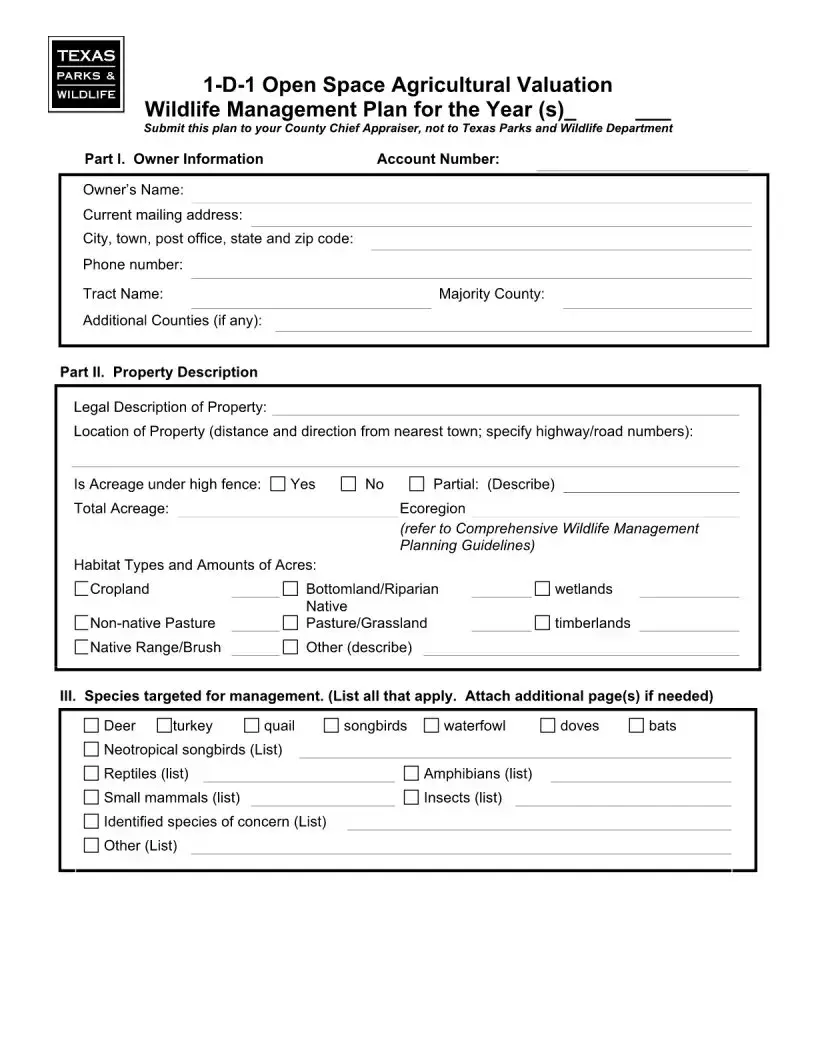
  3. Fill in your personal information: Enter your name, address, phone number, and any other required contact details.
  4. Describe the property: Provide the legal description, location, total acreage, and habitat types of the property.
  5. List targeted species: Identify the wildlife species you aim to manage. Include all relevant species, and attach additional pages if necessary.
  6. Outline management goals: Clearly describe your wildlife management goals and objectives for the property.
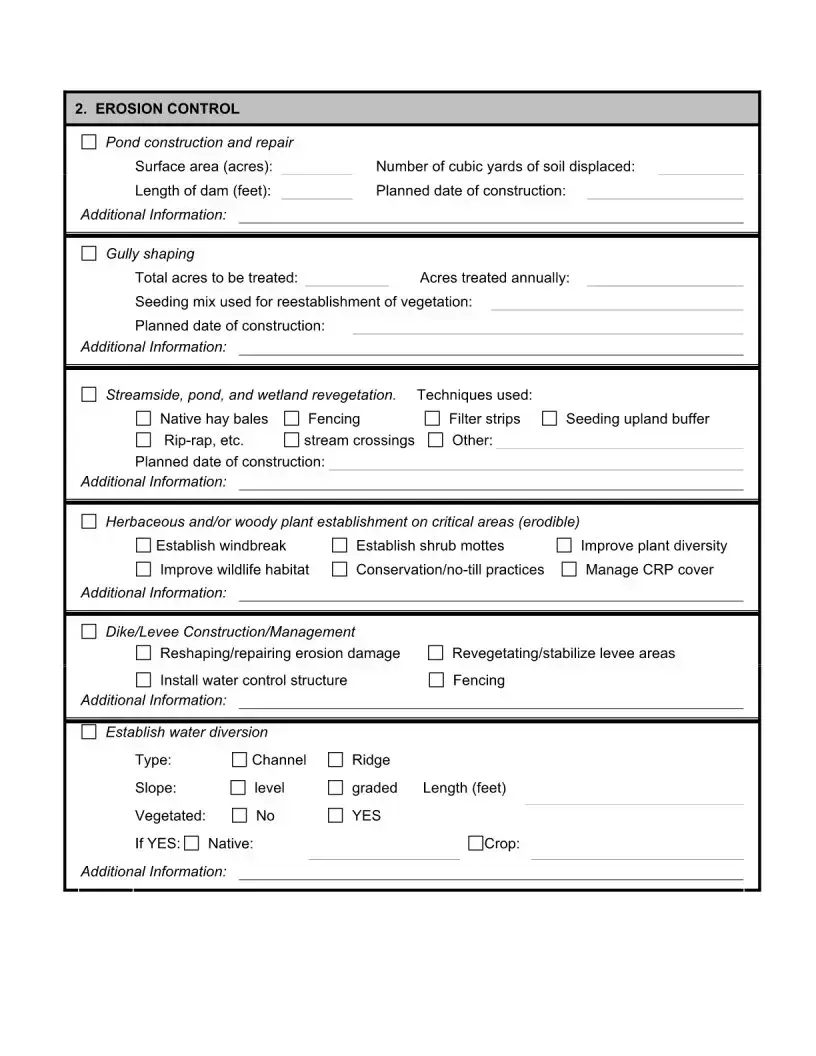
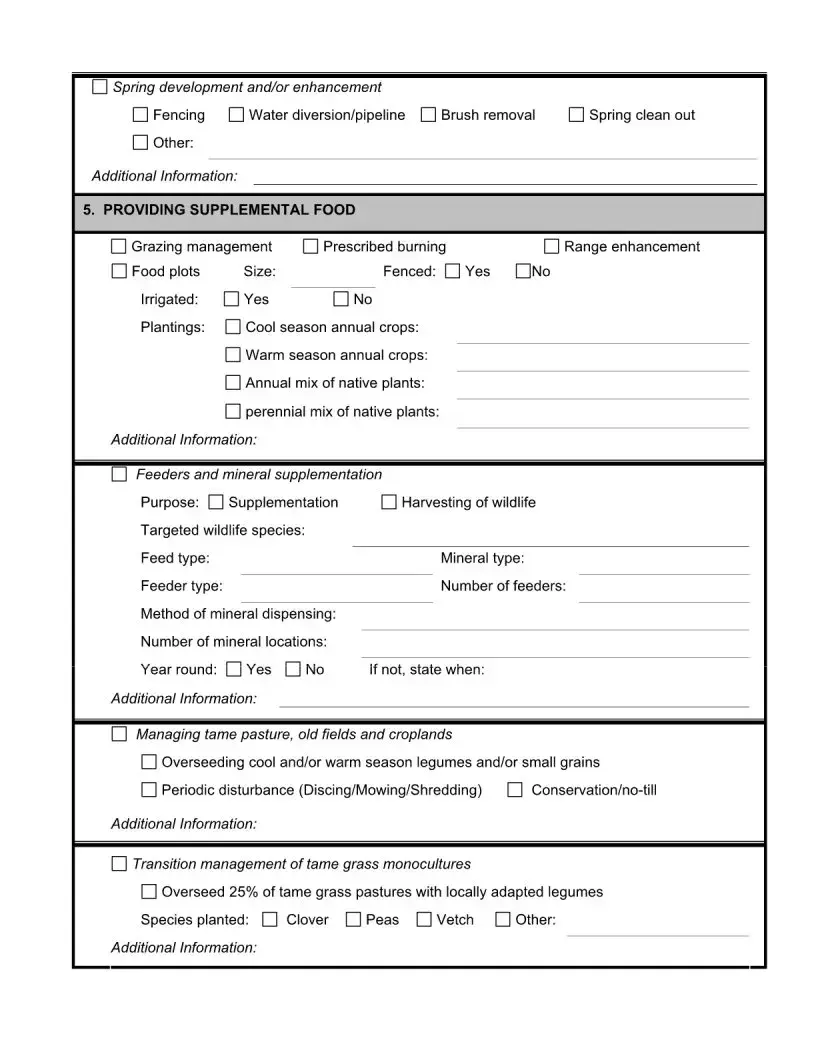
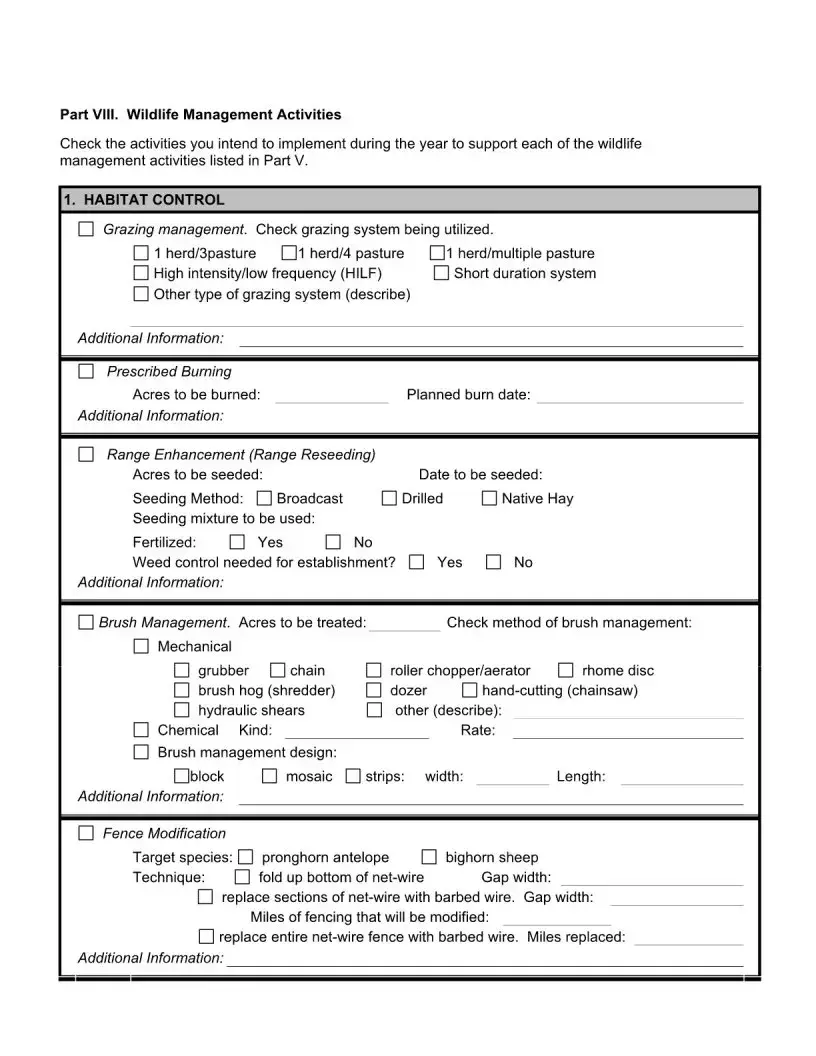
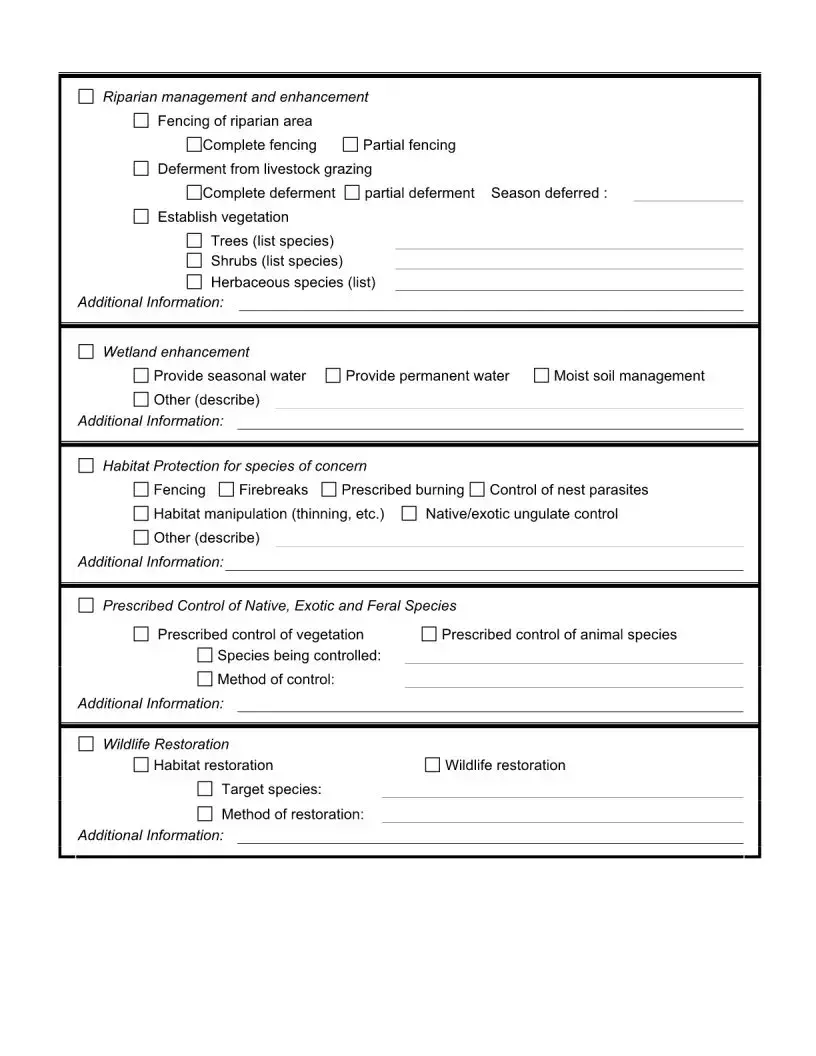
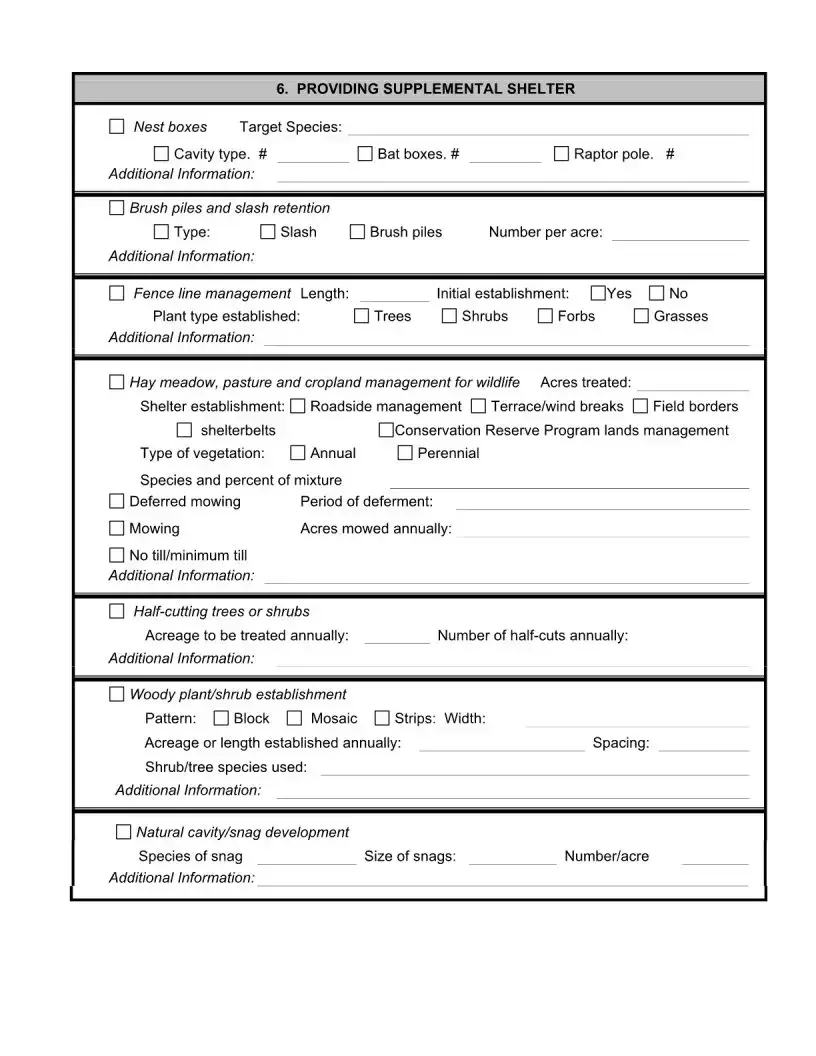
  7. Check management activities: Select at least three wildlife management practices you plan to implement to support your goals.
  8. Complete deer management section: If applicable, indicate whether hunting will be part of your plan and provide details about past deer harvests.
  9. Sign and date the form: Ensure that you or your authorized agent signs the form to certify ownership or authorization.
  10. Submit the form: Send the completed form to the appropriate recipient, such as your local biologist or county chief appraiser, as specified.

Once you submit the form, the Texas Parks and Wildlife Department will review your request or plan. They may contact you for further information or to discuss your management goals. Be prepared for a follow-up and ensure you keep copies of all submitted documents for your records.

Your Questions, Answered

What is the Texas PWD form?

The Texas PWD form refers to several specific forms used by landowners to request technical assistance or to manage wildlife on their properties. These forms are provided by the Texas Parks and Wildlife Department (TPWD) and include the Landowner Request for Technical Assistance and the 1-d-1 Open Space Agricultural Valuation Wildlife Management Plan, among others. Each form serves a unique purpose related to wildlife management and land valuation.

Who should fill out the Landowner Request for Technical Assistance form?

This form should be filled out by landowners who seek technical help from the Texas Parks and Wildlife Department. If you want to enhance wildlife habitat or manage wildlife populations on your land, this is the appropriate form to use. It allows you to request guidance from TPWD staff who can assist with your specific needs.

What is the purpose of the 1-d-1 Open Space Agricultural Valuation Wildlife Management Plan?

This plan is designed for landowners who wish to manage their property for wildlife as part of their agricultural practices. By filling out this form and submitting it with your 1-d-1 Open Space Agricultural Valuation Application, you can demonstrate your commitment to wildlife management. It helps ensure that your property is recognized for its agricultural value while also supporting wildlife conservation efforts.

Do I need to return the wildlife management forms to the Texas Parks and Wildlife Department?

No, you do not need to return the 1-d-1 Open Space Agricultural Valuation forms to the Texas Parks and Wildlife Department. Instead, these forms should be submitted to your county’s Chief Appraiser. The TPWD only requires the forms for their records when assistance is requested.

What types of information will be collected through these forms?

The forms collect various types of information, including landowner details, property descriptions, management goals, and specific wildlife management activities planned for the property. This information helps TPWD provide tailored recommendations and support for effective wildlife management.

Is the information provided in the forms confidential?

Yes, the information collected in response to a landowner's request for technical guidance is confidential. The Texas Parks and Wildlife Department cannot disclose specific details about the location or species identified on your property. However, summarized data may be released in a way that does not identify individual landowners or properties.

What if I have questions about the forms or need assistance?

If you have questions or need help with the forms, you can contact the Texas Parks and Wildlife Department directly. They can provide guidance on how to complete the forms and answer any specific inquiries you may have. The contact number is 512-389-4959.

Common mistakes

  1. Incomplete Information: Many people forget to fill in all required fields. Missing details can delay processing.

  2. Incorrect Property Description: Providing an inaccurate legal description or location can lead to confusion. Always double-check these details.

  3. Wrong Submission Address: Some landowners mistakenly send the form to the Texas Parks and Wildlife Department instead of their local biologist. Make sure you know where to send it.

  4. Failure to Sign: A signature is essential. Without it, the form may be considered invalid.

  5. Not Specifying Goals: Failing to clearly outline wildlife management goals and objectives can result in inadequate assistance. Be specific about what you want to achieve.

  6. Ignoring Required Practices: Some forms require a minimum number of management practices to be checked. Skipping this can lead to rejection.

  7. Missing Contact Information: Not providing phone numbers or mailing addresses can hinder communication. Always include this information.

  8. Not Updating Changes: If there are changes to property ownership or management plans, failing to update the form can cause issues down the line.

  9. Neglecting Confidentiality: Some people overlook the confidentiality aspect of the information shared. It's important to understand that certain details are protected.

Documents used along the form

When managing land for wildlife in Texas, several forms and documents complement the Texas Parks and Wildlife Department (TPWD) forms. These documents facilitate communication and ensure compliance with state regulations. Below is a list of commonly used forms that landowners may find helpful.

  • Landowner Request for Technical Assistance (PWD 153-7100-10/03): This form allows landowners to seek technical help from TPWD. By submitting this request, landowners can receive guidance on habitat enhancement and wildlife management.
  • 1-d-1 Open Space Agricultural Valuation Wildlife Management Plan (PWD 885-W7000): This document is essential for landowners who wish to manage their property for wildlife as part of their agricultural practices. It must accompany the 1-d-1 Open Space Agricultural Valuation Application.
  • 1-d-1 Open Space Agricultural Valuation Annual Reporting Form (PWD 885-W7000): This form is provided to landowners by the Chief Appraiser if a report on wildlife management activities is requested. It is not automatically required and should not be sent to TPWD.
  • Wildlife Management Plan Template: This template assists landowners in outlining their specific goals, objectives, and management practices for wildlife on their property. It serves as a structured guide for effective management.
  • Habitat Assessment Form: This form helps landowners evaluate the current conditions of their land. It includes sections for documenting habitat types, species present, and any potential improvements needed.
  • Wildlife Census Form: This document is used to record data on wildlife populations. It can help landowners track changes in species numbers over time, which is crucial for effective management.
  • Deer Management Plan: This specific plan outlines strategies for managing deer populations, including hunting regulations, population goals, and harvest strategies. It is important for maintaining a balanced ecosystem.
  • Landowner Certification Form: This form certifies that the individual submitting the documents is the landowner or has been authorized to act on behalf of the landowner. It ensures that all requests and reports are legitimate.

Utilizing these forms and documents can significantly enhance the management of wildlife on private lands. Each form serves a unique purpose, contributing to a comprehensive approach to wildlife conservation and habitat improvement. By being thorough and organized in your documentation, you can foster a healthier ecosystem while ensuring compliance with Texas regulations.

Similar forms

The Texas PWD form has several counterparts that serve similar purposes in wildlife management and land use. Below is a list of nine documents that are comparable to the Texas PWD form, along with a brief explanation of how each one is similar:

  • Landowner Request for Technical Assistance: This document allows landowners to seek help from the Texas Parks and Wildlife Department, similar to how the Texas PWD form requests technical guidance for habitat enhancement.
  • 1-d-1 Open Space Agricultural Valuation Application: This application is used by landowners to apply for agricultural valuation, akin to the Texas PWD form which focuses on wildlife management as an agricultural practice.
  • Wildlife Management Plan: This plan outlines specific management strategies for wildlife, just as the Texas PWD form requests detailed management goals and objectives.
  • Annual Reporting Form for Wildlife Management: This document is used to report on wildlife management activities annually, similar to the Texas PWD form which may require ongoing documentation of management efforts.
  • Habitat Control Plan: This plan details methods for controlling and enhancing habitats, paralleling the objectives outlined in the Texas PWD form for improving wildlife habitats.
  • Population Management Strategy: This document focuses on managing wildlife populations, much like the Texas PWD form which includes sections for deer population management.
  • Landowner Authorization Form: This form allows an agent to act on behalf of the landowner, similar to the Texas PWD form which requires certification of ownership or authorization.
  • Wildlife Census Report: This report provides data on wildlife populations, akin to the data collection aspect of the Texas PWD form for management recommendations.
  • Wildlife Habitat Inventory: This inventory assesses habitat conditions, which is comparable to the habitat inventory conducted as part of the Texas PWD form's technical assistance request.

Dos and Don'ts

When filling out the Texas Parks and Wildlife Department (TPWD) forms, attention to detail is crucial. Here are some important dos and don’ts to keep in mind:

  • Do read the instructions carefully before starting the form.
  • Do provide accurate and complete information about your property.
  • Do include your contact information, ensuring it is up-to-date.
  • Do sign the form where indicated to validate your request.
  • Do attach any necessary additional pages if the space provided is insufficient.
  • Don't forget to keep a copy of the completed form for your records.
  • Don't submit the form to the Texas Parks and Wildlife Department if it specifies otherwise.
  • Don't leave any required fields blank, as this may delay processing.
  • Don't share confidential information that could identify you or your property without consent.

By following these guidelines, you can help ensure a smooth process when submitting your request for technical assistance or wildlife management plans.

Misconceptions

Understanding the Texas PWD forms is crucial for landowners seeking assistance with wildlife management. However, several misconceptions can lead to confusion. Here are seven common misunderstandings about these forms:

  • Form submission is mandatory for all landowners. Many believe that submitting the PWD forms is a requirement for all landowners. In reality, not all landowners need to fill out these forms unless they are specifically seeking technical assistance or engaging in wildlife management practices.
  • Technical assistance is only for large landowners. Some think that only those with extensive landholdings can request technical assistance. In fact, any landowner, regardless of property size, can seek guidance from the Texas Parks and Wildlife Department.
  • All forms must be returned to the Texas Parks and Wildlife Department. It is a common misconception that all forms need to be submitted to the department. However, certain forms, like the 1-d-1 Open Space Agricultural Valuation Wildlife Management Plan, should be submitted to the County Chief Appraiser instead.
  • All wildlife management activities require annual reporting. Many believe that annual reporting is mandatory for all wildlife management activities. This is not true. Only counties that specifically request a report will require the annual reporting form, which will be provided by the Chief Appraiser.
  • Confidentiality is not guaranteed. Some landowners worry that their information will not be kept confidential. However, Section 12.0251 of the Parks and Wildlife Code ensures that information collected during technical assistance requests is confidential and cannot be disclosed.
  • Recommendations from the department are binding. There is a misconception that any recommendations provided by the Texas Parks and Wildlife Department must be followed. In reality, these recommendations are non-binding and voluntary, allowing landowners to make their own decisions.
  • Technical assistance is only available for specific wildlife species. Some landowners believe that technical assistance is limited to certain species. However, the department offers guidance for a wide range of wildlife management practices, covering various species and habitats.

By clarifying these misconceptions, landowners can better navigate the Texas PWD forms and make informed decisions about their wildlife management strategies.

Key takeaways

When filling out and using the Texas Parks and Wildlife Department (TPWD) forms, it’s essential to understand the purpose and requirements of each document. Here are some key takeaways:

  • Understand the Forms: The TPWD offers several forms, including the Landowner Request for Technical Assistance and the Wildlife Management Plan. Familiarize yourself with each form's specific purpose.
  • Submit to the Right Office: Ensure you send the completed forms to the appropriate office. For example, the Wildlife Management Plan should be submitted to your County Chief Appraiser, not to TPWD.
  • Technical Assistance: If you seek help from TPWD for wildlife management, fill out the Landowner Request for Technical Assistance. This allows staff to enter your property for assessments.
  • Confidentiality Matters: Information collected during your request for assistance is confidential. TPWD cannot disclose specific details about your land or its wildlife without your permission.
  • Non-Binding Recommendations: Any guidelines provided by TPWD are voluntary. You are not obligated to follow their recommendations.
  • Accurate Information is Key: Fill out all sections of the forms accurately. Include your contact information, property details, and management goals to ensure a smooth process.
  • Multiple Practices Required: When completing the Wildlife Management Plan, you must check at least three wildlife management practices you plan to implement on your property.
  • Annual Reporting: If your county requests an annual report on your wildlife management activities, be prepared to complete the corresponding form provided by the Chief Appraiser.
  • Compliance and Rights: The TPWD operates without discrimination. You have the right to access your information and request corrections if necessary.

By keeping these takeaways in mind, you can navigate the process of filling out and using the Texas PWD forms more effectively, ensuring compliance and enhancing your wildlife management efforts.