Homepage Blank Texas 503 PDF Form
Content Overview

The Texas 503 form, officially known as the Assumed Name Certificate, serves as a crucial document for businesses operating under names other than their legal entity names. This form is essential for both domestic and foreign corporations, limited liability companies, and other business entities that wish to conduct business or provide professional services in Texas using an assumed name. Filing this certificate with the Secretary of State provides public notice of the business name being used, ensuring transparency and accountability. However, it is important to note that filing the 503 form does not grant exclusive rights to the name, nor does it protect against conflicts with existing trademarks or common law rights. The form requires specific information, including the assumed name, legal entity name, type of entity, jurisdiction of formation, and principal office address. Additionally, the duration of the assumed name certificate can be set for a maximum of ten years, with options for renewal. Compliance with filing requirements is critical, as failure to do so may result in civil and criminal penalties. Understanding the nuances of the Texas 503 form is vital for any business entity aiming to operate under an assumed name in the state.


Document Preview

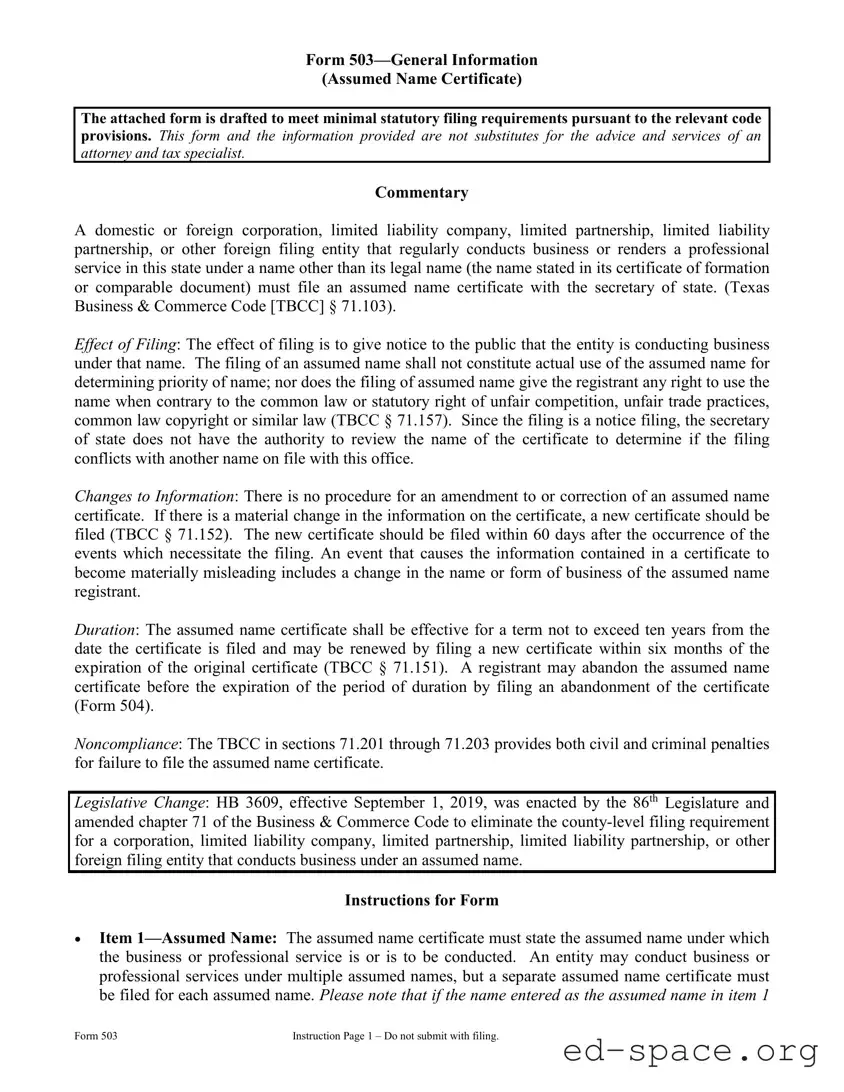
Form 503—General Information
(Assumed Name Certificate)
The attached form is drafted to meet minimal statutory filing requirements pursuant to the relevant code
provisions. This form and the information provided are not substitutes for the advice and services of an
attorney and tax specialist.
Commentary
A domestic or foreign corporation, limited liability company, limited partnership, limited liability
partnership, or other foreign filing entity that regularly conducts business or renders a professional
service in this state under a name other than its legal name (the name stated in its certificate of formation
or comparable document) must file an assumed name certificate with the secretary of state. (Texas
Business & Commerce Code [TBCC] § 71.103).
Effect of Filing: The effect of filing is to give notice to the public that the entity is conducting business
under that name. The filing of an assumed name shall not constitute actual use of the assumed name for
determining priority of name; nor does the filing of assumed name give the registrant any right to use the
name when contrary to the common law or statutory right of unfair competition, unfair trade practices,
common law copyright or similar law (TBCC § 71.157). Since the filing is a notice filing, the secretary
of state does not have the authority to review the name of the certificate to determine if the filing
conflicts with another name on file with this office.
Changes to Information: There is no procedure for an amendment to or correction of an assumed name
certificate. If there is a material change in the information on the certificate, a new certificate should be
filed (TBCC § 71.152). The new certificate should be filed within 60 days after the occurrence of the
events which necessitate the filing. An event that causes the information contained in a certificate to
become materially misleading includes a change in the name or form of business of the assumed name
registrant.
Duration: The assumed name certificate shall be effective for a term not to exceed ten years from the
date the certificate is filed and may be renewed by filing a new certificate within six months of the
expiration of the original certificate (TBCC § 71.151). A registrant may abandon the assumed name
certificate before the expiration of the period of duration by filing an abandonment of the certificate
(Form 504).
Noncompliance: The TBCC in sections 71.201 through 71.203 provides both civil and criminal penalties
for failure to file the assumed name certificate.
Legislative Change: HB 3609, effective September 1, 2019, was enacted by the 86
th
Legislature and
amended chapter 71 of the Business & Commerce Code to eliminate the county-level filing requirement
for a corporation, limited liability company, limited partnership, limited liability partnership, or other
foreign filing entity that conducts business under an assumed name.
Instructions for Form
Item 1Assumed Name: The assumed name certificate must state the assumed name under which
the business or professional service is or is to be conducted. An entity may conduct business or
professional services under multiple assumed names, but a separate assumed name certificate must
be filed for each assumed name. Please note that if the name entered as the assumed name in item 1
Form 503 Instruction Page 1 Do not submit with filing.
is exactly the same as the legal name of the entity on file with the secretary of state, the certificate
will be rejected for failing to provide an assumed name.
Item 2Entity Name: The assumed name certificate must contain the legal name of the entity as
contained in its certificate of formation or comparable document filed with the secretary of state. An
incorporated entity, such as a bank or trust company, whose organizational documents are not filed
with the secretary of state, would set forth the legal name of the entity as contained in its
organizational documents.
Items 3 and 4Type of Entity and File Number: Identify the type of entity that is filing the
assumed name. If there is not a check box that applies to the entity, check “other” and then specify
the type of entity in the space provided. It is recommended that the file number, if any, assigned by
the secretary of state be provided to facilitate processing of the document.
Item 5Jurisdiction: The certificate must state the jurisdiction of formation of the entity filing the
assumed name certificate.
Item 6—Principal Office Address: Provide the street or mailing address of entity’s principal
office.
Item 7—Period of Duration: An assumed name certificate is effective for a term not to exceed a
period of ten years from the date of filing the certificate. Check the applicable box to specify the
duration which the entity determines should be the duration of the filing of the assumed name
certificate. The entity may opt to make the duration the maximum period of ten years, a period of
less than ten years or until a date certain which date is not more than ten years from the date of
filing.
Item 8—County or Counties in which the Assumed Name Used: The assumed name certificate
is required to state the counties in which the assumed name will be used. If the entity will
potentially use the assumed name in all counties in Texas, check the box for “All.” If the entity
wishes to exclude certain counties but will use the assumed names in most counties, check the box
for “All counties with the exception of the following counties” and list the excluded counties. If the
entity will only conduct business in specific counties, check the box for “Only the following
counties” and list those specific counties.
Execution: A certificate filed with the secretary of state shall be executed by an officer, general
partner, member, manager, representative of or attorney in fact for the corporation, limited
partnership, limited liability partnership, limited liability company, or foreign filing entity. A
certificate executed by an attorney in fact shall include a statement that the attorney in fact has been
duly authorized in writing by the principal to execute the certificate. Please review the form
carefully. Pursuant to section 71.203, a person commits an offense under section 37.10, Penal
Code, if the person intentionally or knowingly signs or directs the filing of an assumed name
certificate that the person knows contains a materially false statement.
Payment and Delivery Instructions: The filing fee for an assumed name certificate filed with the
secretary of state is $25. Fees may be paid by personal checks, money orders, LegalEase debit
cards, or American Express, Discover, MasterCard, and Visa credit cards. Checks or money orders
must be payable through a U.S. bank or financial institution and made payable to the secretary of
state. Fees paid by credit card are subject to a statutorily authorized convenience fee of 2.7 percent
of the total fees.
Form 503 Instruction Page 2 Do not submit with filing.
Submit the completed form in duplicate along with the filing fee. The form may be mailed to P.O.
Box 13697, Austin, Texas 78711-3697; faxed to (512) 463-5709; or delivered to the James Earl
Rudder Office Building, 1019 Brazos, Austin, Texas 78701. If a document is transmitted by fax,
credit card information must accompany the transmission (Form 807). On filing the document, the
secretary of state will return the appropriate evidence of filing to the submitter together with a file-
stamped copy of the document, if a duplicate copy was provided as instructed.
Revised 08/19
Form 503 Instruction Page 3 Do not submit with filing.
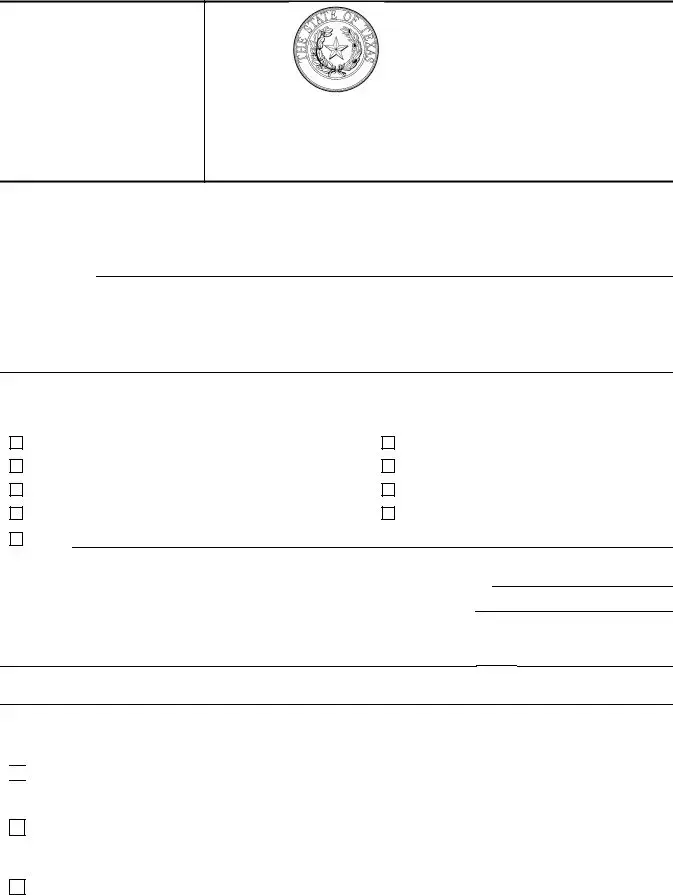
This space reserved for office use.
Assumed Name Certificate
Form 503
(Revised 08/19)
Return in duplicate to:
Secretary of State
P.O. Box 13697
Austin, TX 78711-3697
512 463-5555
FAX: 512 463-5709
Filing Fee: $25
Assumed Name
1. The assumed name under which the business or professional service is, or is to be, conducted or
rendered is:
Entity Information
2. The legal name of the entity filing the assumed name is:
State the name of the entity as currently shown in the records of the secretary of state or on its organizational documents,
if not filed with the secretary of state.
3. The entity filing the assumed name is a: (Select the appropriate entity type below.)
For-profit Corporation Limited Liability Company
Nonprofit Corporation Limited Partnership
Professional Corporation Limited Liability Partnership
Professional Association Cooperative Association
Other
Specify type of entity. For example, foreign real estate investment trust, state bank, insurance company, etc.
4. The file number, if any, issued to the entity by the secretary of state is:
5. The state, country, or other jurisdiction of formation of the entity is:
6. The entity’s principal office address is:
Street or Mailing Address
City State Country Postal or Zip Code
Period of Duration
7a. The period during which the assumed name will be used is 10 years from the date of filing
with the secretary of state.
OR
7b. The period during which the assumed name will be used is years from the date of filing
with the secretary of state (not to exceed 10 years).
OR
7c. The assumed name will be used until
mm/dd/yyyy
(not to exceed 10 years).
Form 503
1
County or Counties in which Assumed Name Used
8. The county or counties where business or professional services are being or are to be conducted or
rendered under the assumed name are:
All counties
All counties with the exception of the following counties:
Only the following counties:
Execution
The undersigned signs this document subject to the penalties imposed by law for the submission of a
materially false or fraudulent instrument and also certifies that the person is authorized to sign on
behalf of the identified entity. If the undersigned is acting in the capacity of an attorney in fact for the
entity, the undersigned certifies that the entity has duly authorized the undersigned in writing to
execute this document.
Date:
Signature of a person authorized by law to sign on behalf of the
identified entity (see instructions)
Form 503
2

Form Specifications

Fact Name Description
Governing Law The Texas Business & Commerce Code (TBCC) § 71.103 governs the filing of the assumed name certificate.
Filing Requirement Any domestic or foreign entity conducting business under a name different from its legal name must file this certificate.
Duration of Validity The assumed name certificate is valid for up to ten years and can be renewed by filing a new certificate.
Filing Fee A fee of $25 is required to file the assumed name certificate, which can be paid via various methods.
Amendment Process There is no amendment process; a new certificate must be filed if there are material changes to the information.
Public Notice Filing the certificate serves as public notice that the entity is operating under the assumed name.
Noncompliance Penalties Failure to file the assumed name certificate can result in civil and criminal penalties under TBCC § 71.201-203.

Texas 503: Usage Guidelines

Filling out the Texas 503 form requires careful attention to detail. Each section must be completed accurately to ensure proper processing. Once the form is filled out, it must be submitted along with the required filing fee. The following steps outline how to complete the form correctly.

  1. Item 1 - Assumed Name: Write the assumed name under which the business will operate. Ensure this name is different from the legal name of the entity.
  2. Item 2 - Entity Name: Enter the legal name of the entity as it appears in the certificate of formation or other official documents.
  3. Items 3 and 4 - Type of Entity and File Number: Select the type of entity from the provided options. If none apply, check "other" and specify. Include the file number assigned by the secretary of state, if available.
  4. Item 5 - Jurisdiction: Indicate the state, country, or jurisdiction where the entity was formed.
  5. Item 6 - Principal Office Address: Provide the complete street or mailing address of the entity's principal office.
  6. Item 7 - Period of Duration: Check the box that corresponds to how long the assumed name will be used (up to ten years).
  7. Item 8 - County or Counties: Specify the counties where the assumed name will be used. You can select "All," exclude certain counties, or list specific counties.
  8. Execution: Have an authorized person sign the document. This person must certify they have the authority to sign on behalf of the entity.

Once the form is completed, make sure to include the filing fee of $25. The form can be submitted by mail, fax, or in person. Follow the instructions carefully to ensure a smooth filing process.

Your Questions, Answered

What is the Texas 503 form?

The Texas 503 form, also known as the Assumed Name Certificate, is a document that businesses must file if they operate under a name different from their legal name. This requirement applies to various entities, including corporations, limited liability companies, and partnerships. The form serves to notify the public that the business is conducting operations under an assumed name.

Who needs to file the Texas 503 form?

Any domestic or foreign corporation, limited liability company, limited partnership, limited liability partnership, or other foreign filing entity that regularly conducts business in Texas under a name that differs from its legal name must file this form. If your business name matches your legal name, the filing will be rejected.

How long is the assumed name certificate valid?

The assumed name certificate is valid for a maximum of ten years from the filing date. You can renew it by filing a new certificate within six months before the original certificate expires. If you no longer wish to use the assumed name, you can abandon the certificate by filing an abandonment form.

What happens if my business information changes?

If there is a material change in your business information, such as a change in the name or form of your business, you must file a new assumed name certificate. There is no process for amending or correcting the existing certificate. This new filing should occur within 60 days of the change.

What are the penalties for not filing the Texas 503 form?

Failure to file the assumed name certificate can result in both civil and criminal penalties under the Texas Business & Commerce Code. It is essential to comply with the filing requirements to avoid these penalties.

How do I complete the Texas 503 form?

To complete the form, provide the assumed name, legal name of the entity, type of entity, jurisdiction of formation, principal office address, and duration of the assumed name. You must also specify the counties where the name will be used. Ensure that the form is signed by an authorized individual.

What is the filing fee for the Texas 503 form?

The filing fee for the Texas 503 form is $25. You can pay this fee using personal checks, money orders, or credit cards. If you pay by credit card, a convenience fee of 2.7% will apply. Make sure to submit the form in duplicate along with the payment.

Where do I submit the Texas 503 form?

You can submit the completed Texas 503 form by mail to the Secretary of State, fax it, or deliver it in person to the James Earl Rudder Office Building in Austin, Texas. If you fax the document, include your credit card information for payment.

Common mistakes

  1. Incorrect Assumed Name: Many individuals mistakenly use the legal name of the entity instead of the assumed name. The form requires a distinct assumed name that differs from the legal name on file. If the names are identical, the certificate will be rejected.

  2. Missing Jurisdiction: Failing to provide the jurisdiction of formation can lead to delays. This information is essential and must be included to ensure proper processing of the assumed name certificate.

  3. Improper Duration Selection: Some people overlook the duration section. The assumed name certificate is only effective for a maximum of ten years. Selecting a duration that exceeds this limit can result in rejection.

  4. Signature Issues: The execution section is often mishandled. The certificate must be signed by an authorized person. If the signer is an attorney in fact, a written authorization must be included. Missing or incorrect signatures can invalidate the filing.

Documents used along the form

When filing the Texas 503 form, there are several other documents that may be necessary to ensure compliance and proper registration. Each of these forms serves a specific purpose and is often used in conjunction with the assumed name certificate.

  • Form 504—Abandonment of Assumed Name Certificate: This form is used when a registrant decides to discontinue using an assumed name before the original certificate expires. It formally notifies the Secretary of State of the abandonment.
  • Form 807—Credit Card Payment Authorization: If filing via fax, this form is required to authorize payment by credit card. It includes necessary information such as card type and billing details.
  • Certificate of Formation: This document is essential for establishing a business entity. It outlines the entity's legal name and structure, which must match the information on the assumed name certificate.
  • Form 501—Certificate of Formation for a Corporation: Specific to corporations, this form registers the entity with the Secretary of State. It provides foundational information that may be referenced in the assumed name filing.
  • Form 502—Certificate of Formation for a Limited Liability Company: Similar to Form 501, this document is tailored for LLCs. It details the formation of the LLC and is necessary for ensuring the assumed name is linked to the correct entity.
  • Form 801—Application for Registration of Foreign Entity: If a foreign entity wishes to operate in Texas under an assumed name, this form registers the entity with the state, ensuring compliance with local laws.

Understanding these forms and their purposes can streamline the process of registering an assumed name in Texas. Each document plays a vital role in ensuring that your business operates legally and efficiently under its chosen name.

Similar forms

The Texas 503 form, known as the Assumed Name Certificate, shares similarities with several other documents that serve various purposes in business registration and compliance. Below is a list of eight documents that resemble the Texas 503 form, along with explanations of their similarities.

  • DBA Registration (Doing Business As): Like the Texas 503 form, a DBA registration allows a business to operate under a name that differs from its legal name. It serves the same purpose of notifying the public about the business's assumed name.
  • Fictitious Name Registration: This document is essentially another term for DBA registration. It functions similarly to the Texas 503 form by requiring businesses to register any name they use that is not their legal name.
  • Certificate of Formation: While this document establishes a business's legal existence, it is similar to the Texas 503 form in that it requires specific information about the entity, including its name and jurisdiction of formation.
  • Partnership Agreement: This document outlines the terms of a partnership and may include the name under which the partnership operates. Like the Texas 503 form, it emphasizes the importance of the business name in legal and operational contexts.
  • Business License Application: When applying for a business license, entities often need to disclose their operating name. This is akin to the Texas 503 form, which also requires the disclosure of the assumed name for public notice.
  • Trade Name Registration: Similar to the Texas 503 form, trade name registration involves filing a name that a business uses in commerce. Both documents aim to protect the public by providing transparency regarding business identities.
  • Foreign Qualification Application: When a business operates in a state other than where it was formed, it must file for foreign qualification. This application often requires the business's assumed name, aligning with the Texas 503 form's purpose of name registration.
  • Nonprofit Registration Form: Nonprofits must also register their assumed names if they differ from their legal names. This form serves a similar function to the Texas 503 form by ensuring that the public is aware of the name under which the nonprofit operates.

Each of these documents plays a critical role in ensuring transparency and compliance in business operations, much like the Texas 503 form. They collectively help maintain a clear understanding of who is conducting business under what name, thereby protecting both the business and the public.

Dos and Don'ts

When filling out the Texas 503 form, keep these important points in mind:

  • Do ensure the assumed name is different from the legal name of the entity.
  • Do provide the legal name as it appears in the certificate of formation.
  • Do check the appropriate type of entity and include the file number if available.
  • Do specify the counties where the assumed name will be used.
  • Do sign the form in accordance with the authority granted to you.
  • Don't leave out any required information, as incomplete forms may be rejected.
  • Don't submit the form without paying the filing fee of $25.
  • Don't assume that filing the certificate gives you exclusive rights to the name.
  • Don't forget to file a new certificate if there are material changes to the information.
  • Don't use an assumed name if it conflicts with existing names under common law or statutory rights.

Misconceptions

  • Filing the 503 form guarantees name protection. Filing an assumed name certificate does not provide exclusive rights to the name. It serves only as public notice that a business is operating under that name.
  • All entities must file a 503 form. Only those entities conducting business under a name different from their legal name are required to file. If the business operates under its legal name, no filing is necessary.
  • Once filed, the assumed name certificate never expires. The certificate is effective for a maximum of ten years and must be renewed if the business intends to continue using the name.
  • The Secretary of State checks for name conflicts. The filing does not involve a review for conflicts with existing names. It is the entity's responsibility to ensure the name does not infringe on others' rights.
  • Changes can be made to the existing certificate. If there are material changes to the information on the certificate, a new certificate must be filed rather than amending the existing one.
  • Filing the 503 form is optional. Failure to file when required can lead to civil and criminal penalties under Texas law. Compliance is necessary for legal operation under an assumed name.
  • Payment methods for filing are limited. The filing fee can be paid using various methods, including credit cards and checks, making it accessible to a wide range of businesses.
  • Only one assumed name can be registered. A business can register multiple assumed names, but each name requires a separate certificate to be filed.

Key takeaways

Here are key takeaways about filling out and using the Texas 503 form:

  • Purpose of the Form: The Texas 503 form is used to file an assumed name certificate for businesses operating under a name different from their legal name.
  • Who Must File: Any domestic or foreign entity conducting business in Texas under an assumed name must complete this form.
  • Filing Requirement: The form must be filed with the Secretary of State to provide public notice of the business name being used.
  • No Amendments: If changes occur in the information provided, a new certificate must be filed rather than amending the original.
  • Duration of Filing: The assumed name certificate is valid for up to ten years and can be renewed by filing a new certificate.
  • Filing Fees: A fee of $25 is required for filing the assumed name certificate, payable by various methods including credit card.
  • Execution of the Form: The form must be signed by an authorized individual, such as an officer or attorney in fact, to be valid.
  • Consequences of Noncompliance: Failing to file the assumed name certificate can result in civil and criminal penalties under Texas law.