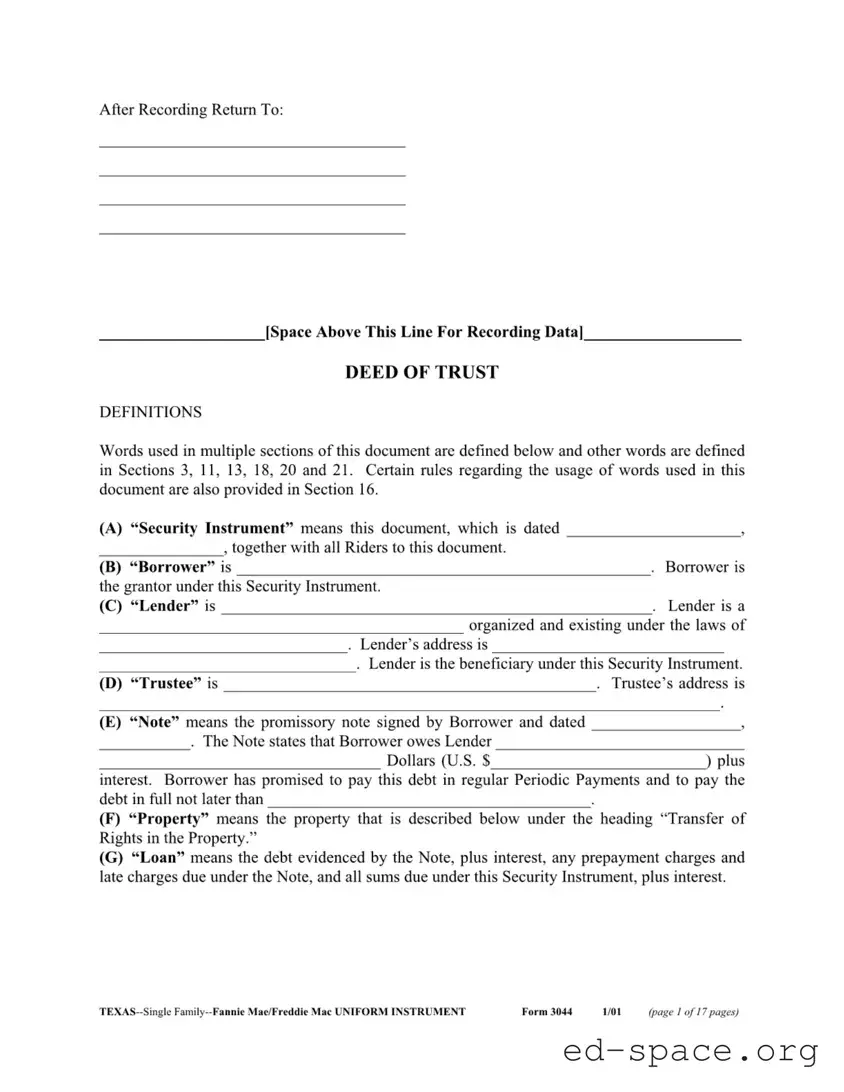
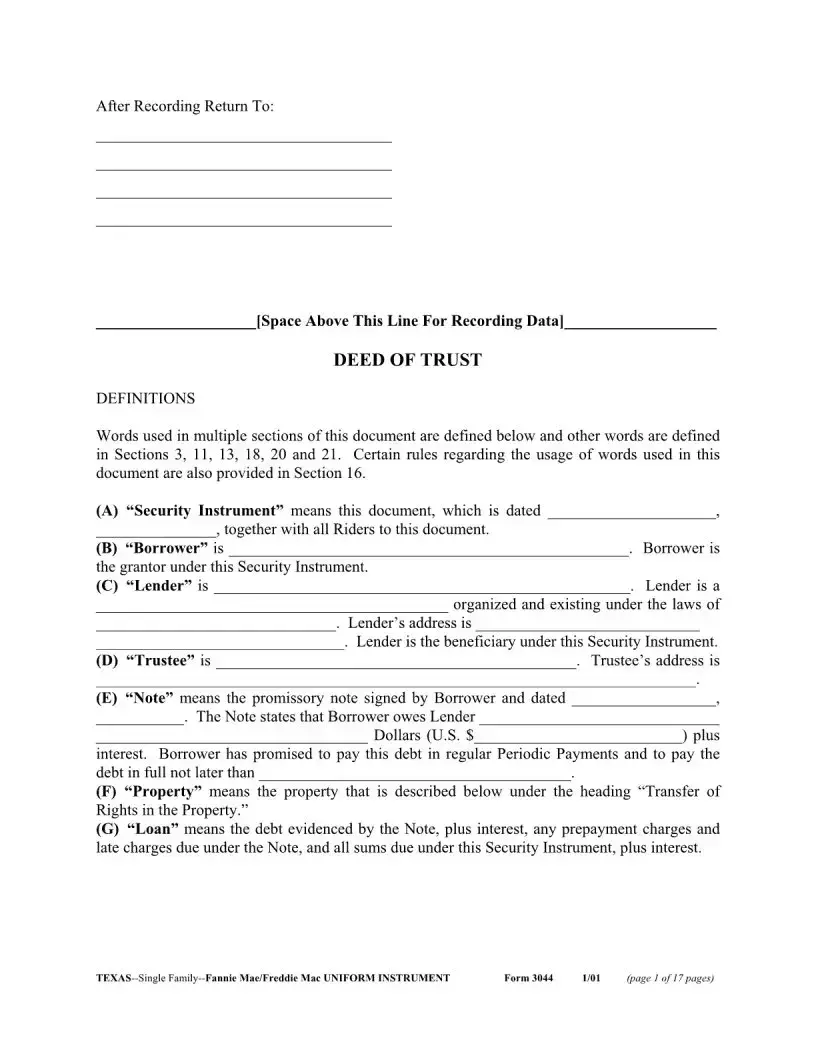
The Texas 3044 form plays a crucial role in the realm of real estate transactions, particularly in the context of securing loans for single-family properties. This document serves as a Deed of Trust, outlining the rights and responsibilities of all parties involved, including the borrower, lender, and trustee. It establishes the legal framework for the loan agreement, detailing key definitions such as "Lender," "Borrower," and "Property." The form also specifies the financial obligations of the borrower, including the principal amount owed, interest rates, and payment schedules. Additionally, it includes provisions for various riders that may apply to the loan, such as adjustable rate or balloon riders, thereby allowing for flexibility based on the borrower’s specific circumstances. The Texas 3044 form further addresses the implications of community association dues and the processes related to electronic funds transfers, ensuring that all parties are aware of their obligations. By clearly delineating the transfer of rights in the property and the covenants that bind the borrower and lender, this form is essential for maintaining clarity and legal compliance in real estate transactions across Texas.
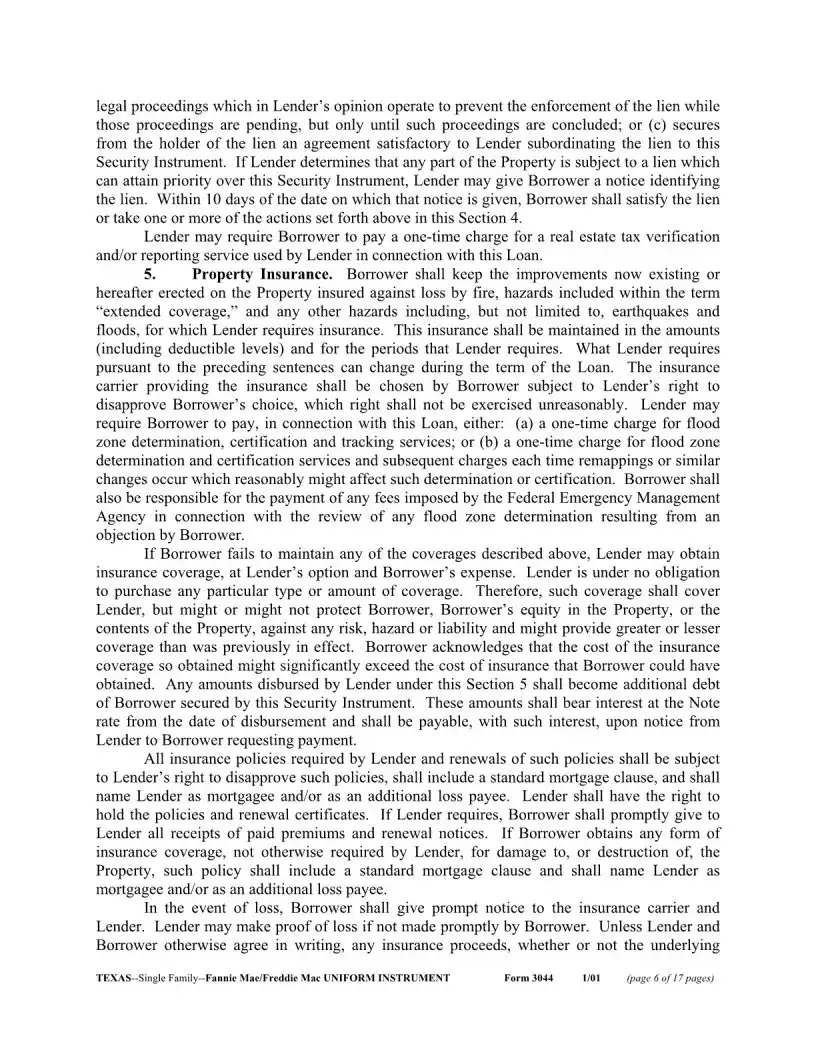
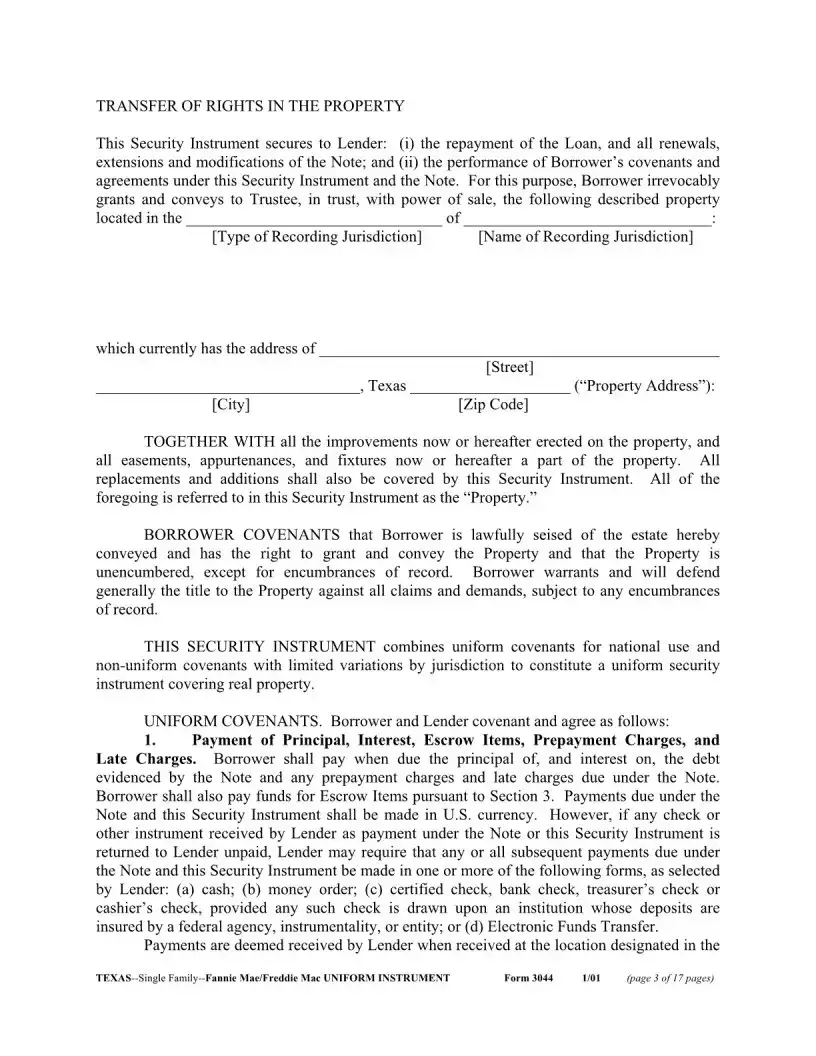
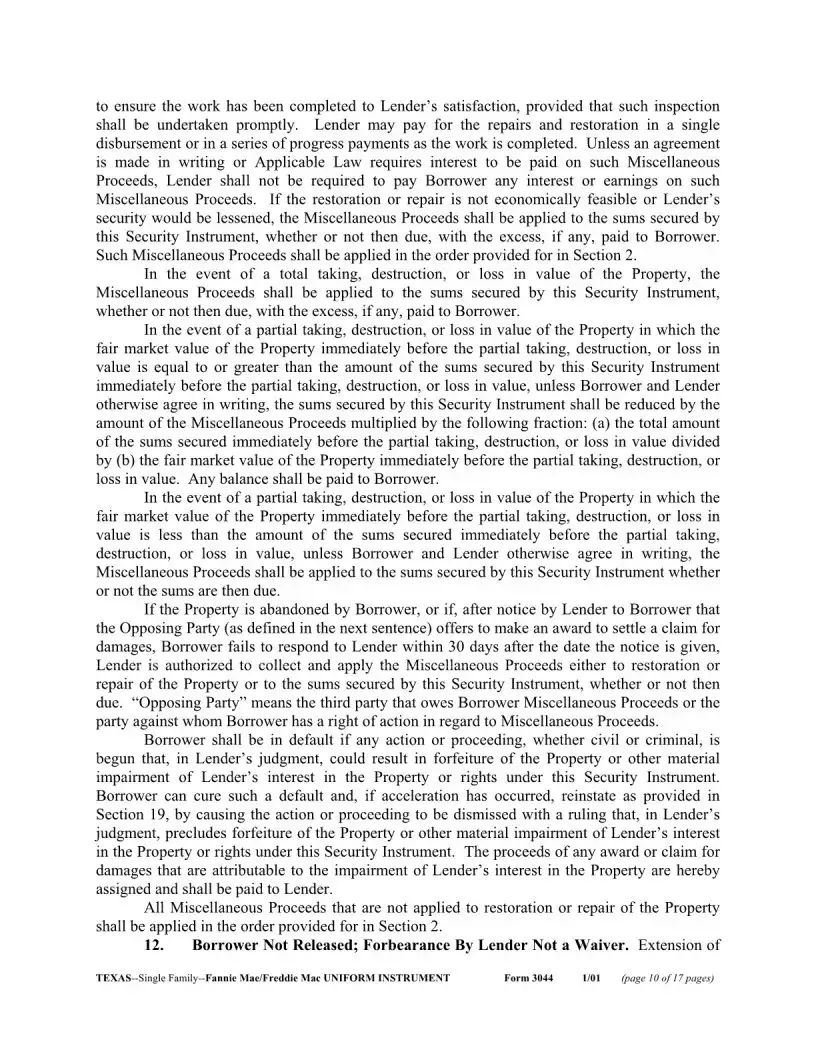
| Fact Name | Fact Description |
|---|---|
| Form Title | The Texas 3044 form is officially titled "Deed of Trust." It serves as a security instrument for real property transactions. |
| Governing Law | This form is governed by Texas state law, including the Texas Property Code. |
| Parties Involved | The form identifies three main parties: the Lender, the Borrower, and the Trustee. |
| Security Instrument | The "Security Instrument" refers to the Deed of Trust itself, which secures the loan to the Lender. |
| Loan Definition | The term "Loan" encompasses the principal amount, interest, and any additional charges as stated in the Note. |
| Periodic Payments | Borrowers must make regular Periodic Payments, which include principal and interest, as outlined in the Note. |
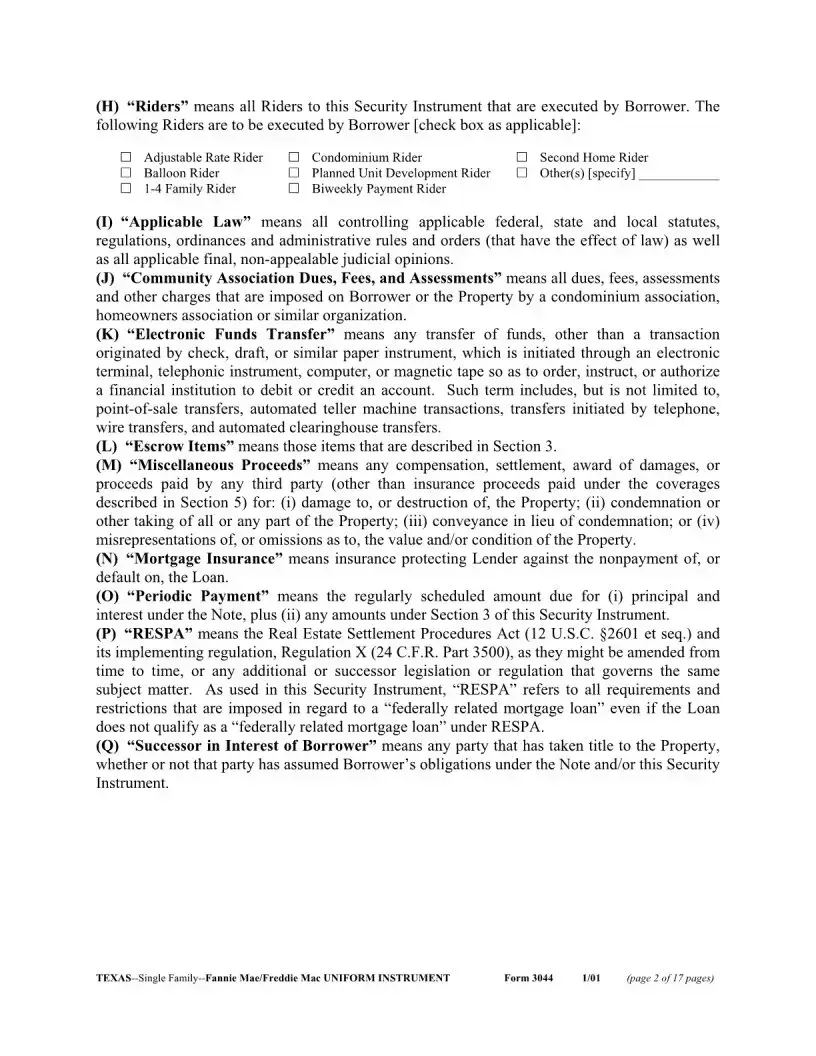
| Riders | Borrowers can execute various Riders, such as Adjustable Rate Rider or Balloon Rider, depending on their loan terms. |
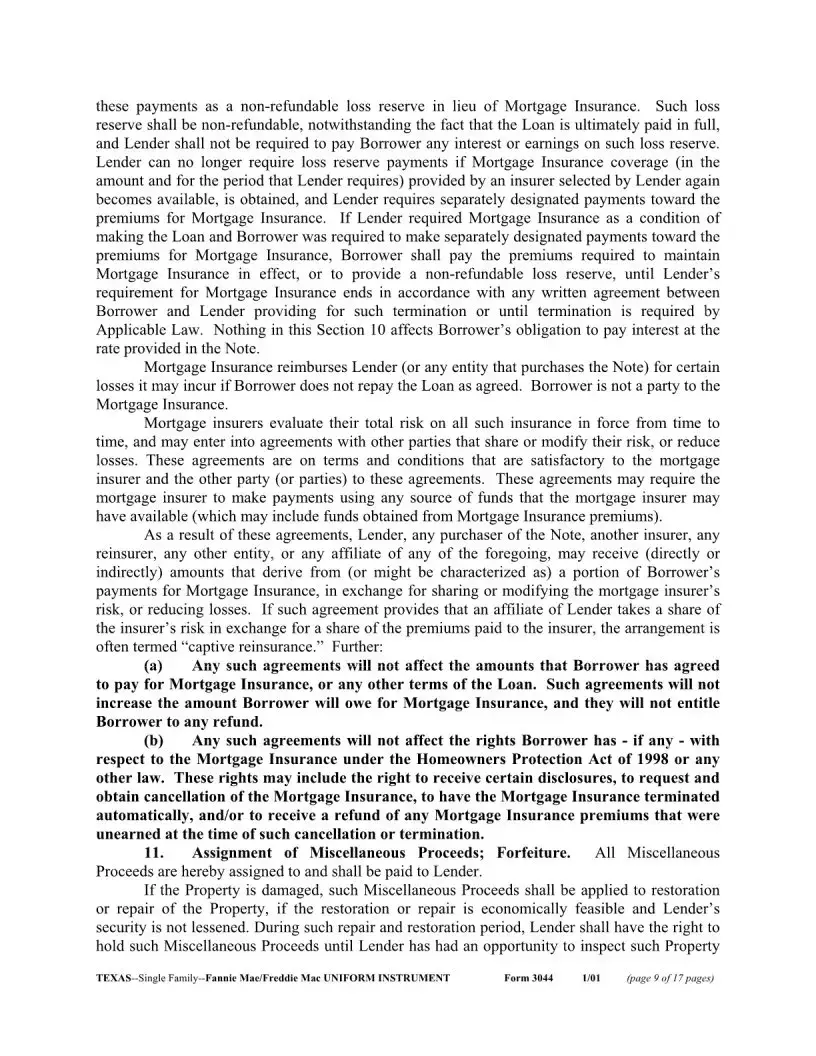
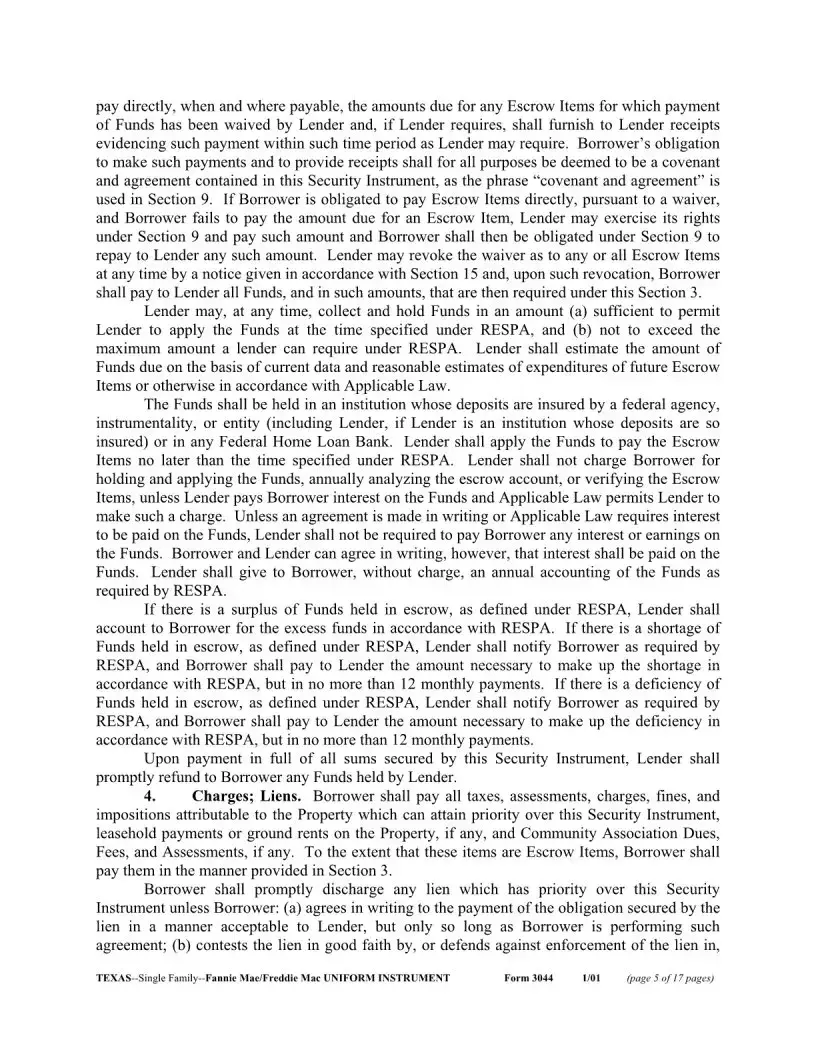
| Escrow Items | Escrow Items are defined in Section 3 of the form, detailing additional costs associated with the property. |
| RESPA Compliance | The form references RESPA, which governs real estate settlement procedures, ensuring transparency in mortgage transactions. |
| Transfer of Rights | The form allows Borrowers to transfer rights in the property to the Trustee, securing the loan repayment. |
Filling out the Texas 3044 form is an important step in securing a loan for property. Once completed, this form will be used to establish the terms of your loan agreement and the responsibilities of all parties involved. Follow these steps to ensure you fill out the form correctly.
What is the Texas 3044 form?
The Texas 3044 form is a legal document known as a Deed of Trust. It serves as a security instrument that establishes a relationship between the borrower, lender, and trustee. This form outlines the terms of a loan secured by real estate, detailing the obligations of the borrower and the rights of the lender. It is crucial for anyone involved in a real estate transaction in Texas to understand this document, as it lays the foundation for the mortgage agreement and the responsibilities that come with it.
Who are the key parties involved in the Texas 3044 form?
The Texas 3044 form identifies three primary parties: the borrower, the lender, and the trustee. The borrower is the individual or entity taking out the loan and pledging the property as collateral. The lender is the financial institution providing the loan, and the trustee is a neutral third party who holds the legal title to the property until the loan is paid off. Understanding the roles of these parties is essential for navigating the terms of the agreement.
What does the term "Property" refer to in the Texas 3044 form?
In the context of the Texas 3044 form, "Property" refers to the real estate that is being used as collateral for the loan. This includes not only the land itself but also any improvements, such as buildings or structures, and any fixtures or appurtenances associated with the property. The specific details about the property, including its address, are provided within the form, ensuring clarity about what is being secured.
What are "Riders" in the Texas 3044 form?
Riders are additional provisions that can be attached to the Deed of Trust to modify or expand upon the original agreement. The Texas 3044 form allows for various types of riders, such as Adjustable Rate Riders, Balloon Riders, and Condominium Riders, among others. Each rider addresses specific circumstances or types of loans, providing flexibility to borrowers and lenders based on their unique situations.
What are the borrower's obligations under the Texas 3044 form?
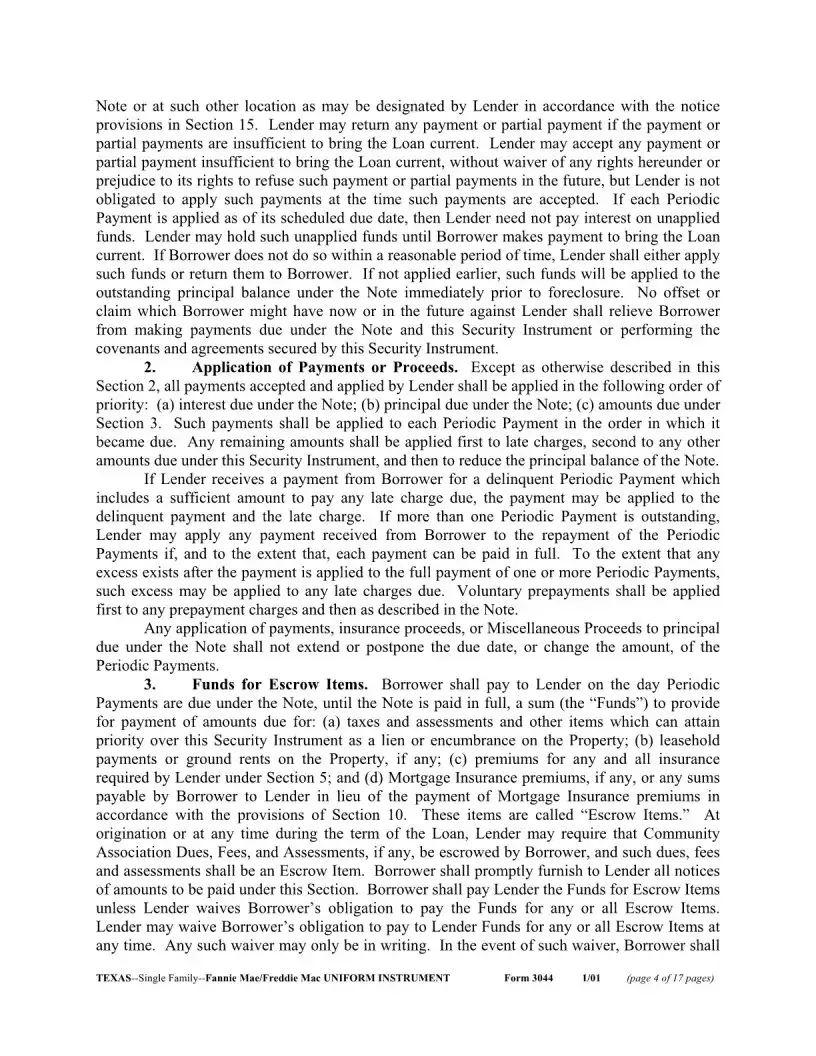
The borrower has several key obligations under the Texas 3044 form. These include making timely payments of principal and interest, covering escrow items, and adhering to any prepayment or late charges outlined in the agreement. The borrower must also ensure that the property remains unencumbered, except for any existing encumbrances of record. Fulfilling these obligations is essential to avoid default and potential foreclosure.
How does the Texas 3044 form address payment methods?
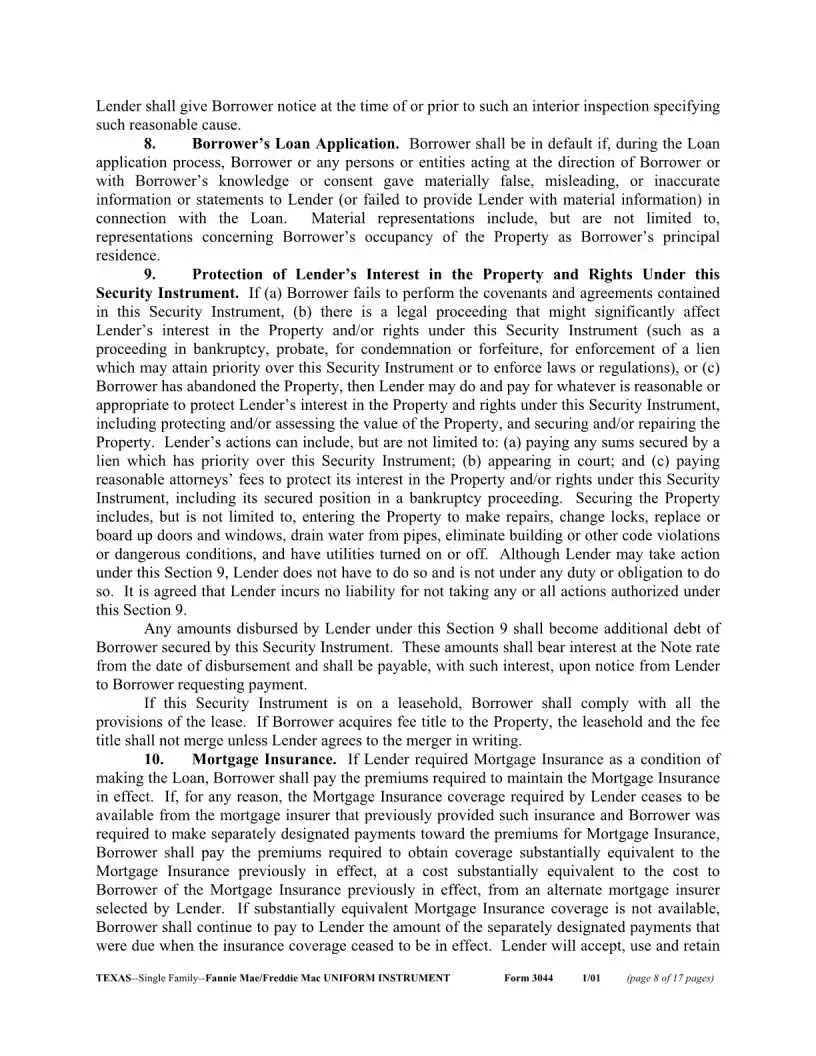
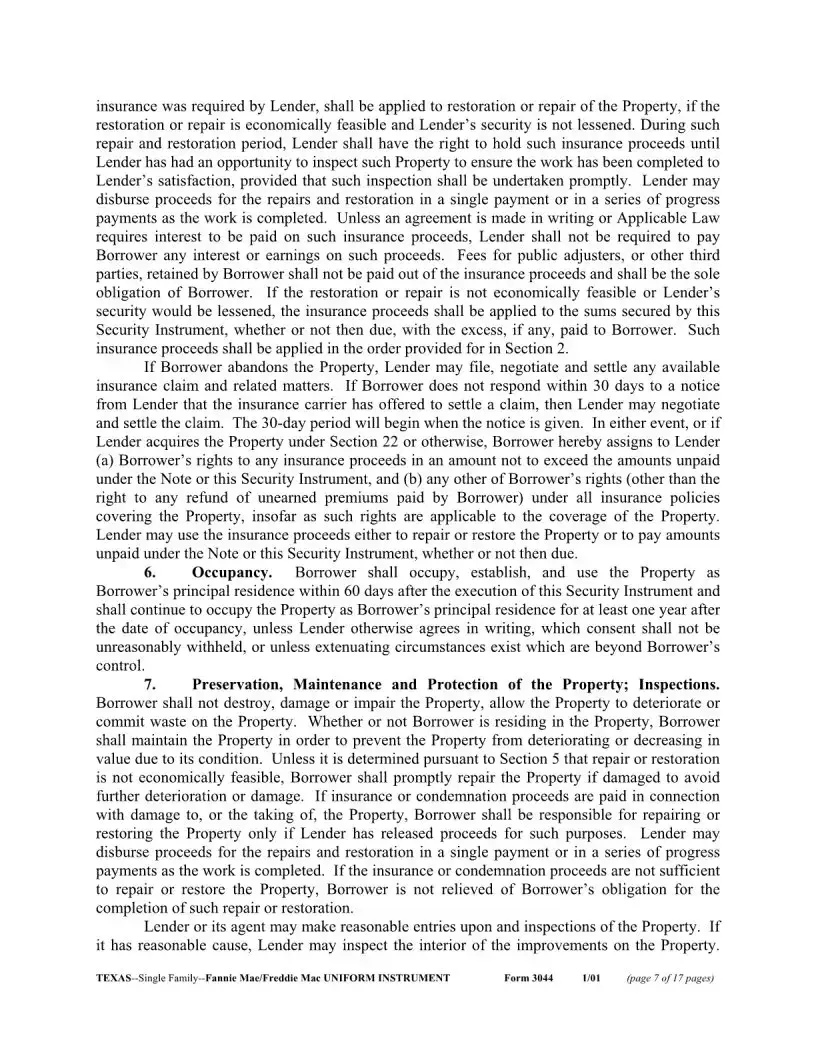
The Texas 3044 form specifies that payments must be made in U.S. currency. If a payment is returned unpaid, the lender has the right to require future payments to be made in more secure forms, such as cash, money orders, or certified checks. This provision protects the lender and ensures that payments are received reliably, which is critical for maintaining the loan agreement.
What is the significance of "Applicable Law" in the Texas 3044 form?
"Applicable Law" refers to the federal, state, and local laws that govern the terms of the Deed of Trust and the loan agreement. This section ensures that all parties are aware that the document must comply with relevant legal statutes and regulations. Understanding this aspect is vital, as it sets the framework for how disputes may be resolved and what legal protections are in place for both the borrower and lender.
Incomplete Information: Many individuals fail to provide all required details on the Texas 3044 form. Essential information such as the full names of the Borrower and Lender, as well as the complete property address, must be accurately filled in to avoid delays or rejections.
Incorrect Dates: Entering the wrong dates can lead to complications. Ensure that the date of the document and any relevant dates related to the loan or property transfer are correct and consistent throughout the form.
Omitting Required Signatures: The form requires signatures from all parties involved. Failing to obtain the necessary signatures from both the Borrower and Lender can render the document invalid.
Misunderstanding Definitions: The Texas 3044 form includes specific definitions that are crucial for understanding the obligations and rights of each party. Not taking the time to read and comprehend these definitions can lead to misunderstandings and potential disputes.
Improperly Selecting Riders: If applicable, Borrowers must check the appropriate boxes for Riders that apply to their loan. Failing to do so or incorrectly selecting Riders can affect the terms of the loan and the rights of the parties involved.
Ignoring Local Regulations: Each jurisdiction may have specific requirements for filing the Texas 3044 form. Not adhering to local regulations can result in the form being rejected or deemed invalid.
When dealing with the Texas 3044 form, it's essential to understand that several other documents often accompany it. Each of these forms plays a specific role in the overall process of securing a loan and managing property transactions. Here’s a brief overview of ten commonly used forms and documents that you might encounter alongside the Texas 3044 form.
Understanding these documents can help streamline the process and ensure that all parties are on the same page. Each form has its own significance and contributes to the overall security and clarity of the loan transaction. Being familiar with them will empower you as you navigate the complexities of property financing in Texas.
The Texas 3044 form is a key document in real estate transactions, particularly in securing loans. It shares similarities with several other documents that also serve to outline agreements and obligations in real estate financing. Here are seven documents that are similar to the Texas 3044 form:
When filling out the Texas 3044 form, it is important to follow specific guidelines to ensure accuracy and compliance. Here are four things to consider:
There are several misconceptions about the Texas 3044 form that can lead to confusion. Understanding these can help ensure that all parties involved are clear on their responsibilities and rights.
This form is not limited to just home purchases. It can also be used for refinancing existing loans, which is a common scenario for many borrowers.
While it is often associated with conventional loans, the Texas 3044 form can also apply to government-backed loans. This includes loans through Fannie Mae and Freddie Mac.
It is crucial for borrowers to understand the terms in the Texas 3044 form. Ignoring these details can lead to misunderstandings about payment obligations and rights.
The Texas 3044 form does not guarantee that a loan will be approved. Approval depends on various factors, including creditworthiness and the lender's policies.
While the Texas 3044 form establishes certain terms, they can be modified under specific circumstances. Both parties must agree to any changes, and it typically requires a formal amendment process.
When filling out and using the Texas 3044 form, it is essential to understand the following key points: