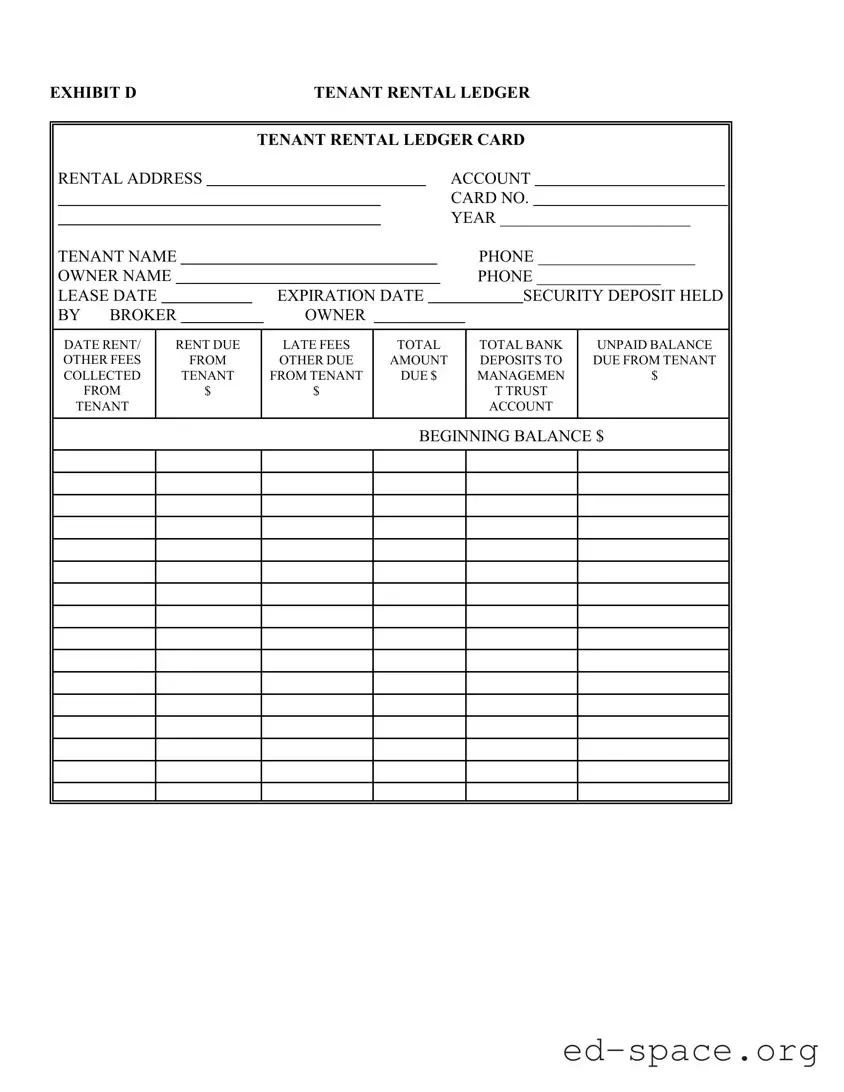
The Tenant Ledger Card form serves as a vital tool in the rental process, encapsulating essential information that both landlords and tenants must track throughout the lease period. This form includes critical details such as the rental address, tenant and owner names, and their respective contact information, creating a clear line of communication. It also outlines important dates, including the lease start and expiration dates, which help both parties remain aware of their contractual obligations. Additionally, the form records the security deposit held by the broker or owner, ensuring transparency in financial transactions. Rent and other fees collected from the tenant are meticulously documented, along with any late fees or additional charges that may arise. The total amount due and the unpaid balance are clearly stated, allowing for easy monitoring of financial responsibilities. Furthermore, the management trust account details and beginning balance provide a comprehensive overview of the tenant's financial standing, reinforcing the importance of accurate record-keeping in maintaining a healthy landlord-tenant relationship.
EXHIBIT D |
|
|
TENANT RENTAL LEDGER |
|
|||||||||||||||||
|
|
|
|
|
|
|
|
|
|
|
|
|
|
|
|
|
|
|
|
|
|
|
|
|
|
|
|
|
|
|
|
|
|
|
|
|
|
|
|
|
|
|
|
|
|
|
|
|
|
|
TENANT RENTAL LEDGER CARD |
|
|||||||||||||
|
|
RENTAL ADDRESS |
|
|
|
|
|
|
|
|
ACCOUNT |
|
|
|
|||||||
|
|
|
|
|
|
|
|
|
|
|
|
|
|
CARD NO. |
|
|
|
||||
|
|
|
|
|
|
|
|
|
|
|
|
|
|
YEAR _______________________ |
|
||||||
|
|
TENANT NAME |
|
|
|
|
|
|
|
|
|
|
PHONE ___________________ |
|
|||||||
|
|
OWNER NAME |
|
|
|
|
|
|
|
|
|
|
PHONE _______________ |
|
|||||||
|
|
LEASE DATE |
|
|
|
EXPIRATION DATE |
|
|
|
|
|
SECURITY DEPOSIT HELD |
|
||||||||
|
|
BY BROKER |
|
|
|
OWNER |
|
|
|
|
|
|
|
|
|
|
|
|
|||
DATE RENT/ OTHER FEES COLLECTED FROM TENANT
RENT DUE
FROM
TENANT
$
LATE FEES
OTHER DUE
FROM TENANT
$
TOTAL
AMOUNT
DUE $
TOTAL BANK |
UNPAID BALANCE |
DEPOSITS TO |
DUE FROM TENANT |
MANAGEMEN |
$ |
T TRUST |
|
ACCOUNT |
|
|
|
BEGINNING BALANCE $
| Fact Name | Description |
|---|---|
| Purpose | The Tenant Ledger Card is used to track all financial transactions between a landlord and a tenant, including rent payments, late fees, and any other charges or credits. |
| Components | This form includes essential information such as tenant and owner names, contact information, lease dates, security deposits, and detailed financial records. |
| State-Specific Laws | In many states, including California, landlords are required to maintain accurate records of all transactions related to the rental property as per the California Civil Code Section 1962. |
| Importance of Accuracy | Maintaining an accurate Tenant Ledger Card is crucial for resolving disputes, ensuring compliance with local laws, and providing a clear financial history for both parties. |
Completing the Tenant Ledger Card form requires attention to detail. Each section must be filled out accurately to ensure proper record-keeping. Follow the steps below to fill out the form correctly.
What is the Tenant Ledger Card form?
The Tenant Ledger Card form is a document used to track rental payments and related financial transactions between a tenant and landlord. It provides a clear record of rent due, fees collected, and any outstanding balances, ensuring both parties have a transparent view of the financial relationship.
What information is included on the Tenant Ledger Card?
The form includes essential details such as the rental address, tenant and owner names, phone numbers, lease dates, expiration dates, security deposit information, and a breakdown of rent and other fees. It also tracks total amounts due and unpaid balances, making it a comprehensive financial record.
How do I fill out the Tenant Ledger Card?
To fill out the Tenant Ledger Card, start by entering the rental address and the account card number. Next, provide the names and phone numbers of both the tenant and the owner. Include the lease dates and security deposit information. Finally, record the amounts for rent, late fees, and any other charges, as well as the total due from the tenant.
Why is it important to maintain an accurate Tenant Ledger Card?
Maintaining an accurate Tenant Ledger Card is crucial for both landlords and tenants. It helps prevent disputes over payments and provides a clear history of financial transactions. This record can also be beneficial in legal situations, should any issues arise regarding rental payments or agreements.
What should I do if there is an error on the Tenant Ledger Card?
If you notice an error on the Tenant Ledger Card, address it immediately. Both the tenant and the landlord should review the card together, confirm the correct information, and make any necessary adjustments. Document the changes clearly to avoid future confusion.
Can the Tenant Ledger Card be used for multiple tenants?
The Tenant Ledger Card is typically designed for individual tenants. If managing multiple tenants, it is advisable to use separate ledger cards for each tenant to ensure clarity and accuracy in tracking their respective financial transactions.
How often should the Tenant Ledger Card be updated?
The Tenant Ledger Card should be updated regularly, ideally after each transaction. This includes recording rent payments, late fees, and any other charges. Regular updates help keep both parties informed and minimize the risk of disputes.
Where should I keep the Tenant Ledger Card?
The Tenant Ledger Card should be kept in a secure location, such as a locked file cabinet or a secure digital format. Both the landlord and tenant should have access to it for transparency, but it should be protected from unauthorized access to maintain privacy.
Missing Tenant Information: One common mistake is failing to fill out the tenant's name and phone number. This information is crucial for communication and record-keeping.
Incorrect Dates: People often miswrite the lease date or expiration date. These dates are important for understanding the duration of the lease and any legal obligations.
Inaccurate Financial Details: Some individuals make errors in recording rent amounts or other fees collected. Double-checking these figures is essential to avoid confusion later.
Not Updating the Ledger: Failing to keep the ledger current can lead to discrepancies. Regular updates ensure that all transactions are accurately reflected.
The Tenant Ledger Card form is an essential document for tracking rent payments and other financial transactions between landlords and tenants. However, several other forms and documents complement this ledger to ensure clarity and compliance in rental agreements. Below are some commonly used documents that often accompany the Tenant Ledger Card.
Using these documents alongside the Tenant Ledger Card helps maintain transparency and accountability in rental transactions. Together, they create a comprehensive record that benefits both landlords and tenants.
The Tenant Ledger Card form serves as a vital document in property management, tracking rental payments and tenant-related financial transactions. Several other documents share similarities with the Tenant Ledger Card, each serving distinct but related purposes. Below is a list of nine such documents, highlighting their similarities.
When filling out the Tenant Ledger Card form, it’s important to be thorough and accurate. Here are some things you should and shouldn't do:
By following these guidelines, you can help ensure that the Tenant Ledger Card is filled out correctly and clearly, benefiting both the tenant and the owner.
Understanding the Tenant Ledger Card form is crucial for both tenants and landlords. However, several misconceptions can lead to confusion. Here are six common myths and the truths behind them:
This is false. While landlords primarily use it to track payments, tenants can also benefit from reviewing their ledger to ensure accuracy in billing and payments.
In reality, this form includes a variety of fees, such as late fees and other charges. It provides a comprehensive overview of all financial interactions between the tenant and the landlord.
Though specific requirements may vary by state, maintaining a ledger is often considered best practice and can be essential in legal disputes regarding payments.
This is incorrect. Updates can be made as payments are received or if there are changes in fees. Keeping the ledger current is vital for accurate record-keeping.
Tenants have the right to question any discrepancies. If a charge seems incorrect, it’s important to address it promptly with the landlord or property manager.
This form is important throughout the entire rental period. Regularly reviewing it can help prevent misunderstandings and ensure that both parties are on the same page.
Being informed about these misconceptions can empower both tenants and landlords. Regular communication and transparency are key to a successful rental experience.
Understanding the Tenant Ledger Card form is essential for both landlords and tenants. Here are some key takeaways to consider when filling out and using this important document: