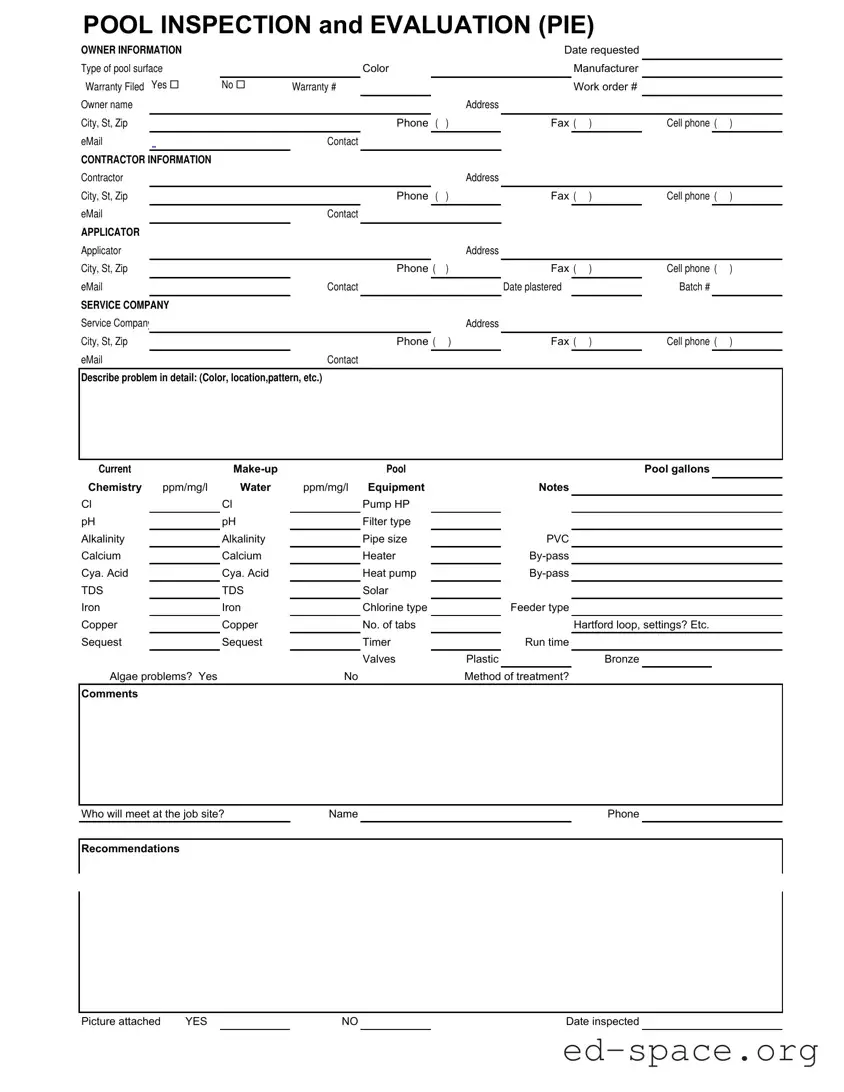
The Swimming Pool Inspection form is an essential tool for pool owners, contractors, and service companies alike, facilitating a thorough evaluation of pool conditions and maintenance needs. This form captures vital information about the pool, including the type of surface, color, and manufacturer details, ensuring that all relevant aspects are documented. Owner and contractor information is clearly outlined, providing a direct line of communication for any follow-up questions or clarifications. The form also addresses specific details about the pool's condition, such as water chemistry, equipment specifications, and any existing problems that may require attention. By detailing the pool's make-up, including gallons, chemical levels, and equipment notes, the form helps in diagnosing issues effectively. Additionally, it includes space for recommendations and comments, allowing inspectors to provide tailored advice based on their findings. A picture can be attached to further illustrate any concerns, making it easier for all parties to understand the situation. Overall, the Swimming Pool Inspection form serves as a comprehensive record that enhances communication and ensures that pools are maintained to the highest standards.

POOL INSPECTION and EVALUATION (PIE)
OWNER INFORMATION |
|
|
|
|
|
|
|
|
|
Date requested |
|
|
|
|||||
Type of pool surface |
|
|
|
|
|
|
|
|
|
|
|
|
|
|
||||
|
|
|
Color |
|
|
|
|
|
Manufacturer |
|
|
|
||||||
|
|
|
|
|
|
|
|
|
|
|
|
|
|
|
|
|
|
|
Warranty Filed Yes |
No |
Warranty # |
|
|
|
|
|
Work order # |
|
|
|
|||||||
Owner name |
|
|
|
|
|
|
|
Address |
|
|
|
|
|
|||||
|
|
|
|
|
|
|
|
|
|
|
|
|
|
|
|
|
||
City, St, Zip |
|
|
|
Phone ( |
) |
|
|
Fax ( |
) |
|
Cell phone ( |
) |
||||||
|
|
|
|
|
|
|
|
|
|
|
|
|
|
|
|
|
||
|
Contact |
|
|
|
|
|
|
|
|
|
|
|
||||||
|
|
|
|
|
|
|
|
|
|
|
|
|
|
|
|
|
|
|
CONTRACTOR INFORMATION |
|
|
|
|
|
|
|
|
|
|
|
|
|
|
|
|
|
|
Contractor |
|
|
|
|
|
|
|
Address |
|
|
|
|
|
|||||
|
|
|
|
|
|
|
|
|
|
|
|
|
|
|
|
|||
City, St, Zip |
|
|
|
Phone ( |
) |
|
|
Fax ( |
) |
|
Cell phone ( |
) |
||||||
|
|
|
|
|
|
|
|
|
|
|
|
|
|
|
|
|
||
|
Contact |
|
|
|
|
|
|
|
|
|
|
|
||||||
|
|
|
|
|
|
|
|
|
|
|
|
|
|
|
|
|
|
|
APPLICATOR |
|
|
|
|
|
|
|
|
|
|
|
|
|
|
|
|
|
|
Applicator |
|
|
|
|
|
|
|
Address |
|
|
|
|
|
|||||
|
|
|
|
|
|
|
|
|
|
|
|
|
|
|
|
|||
City, St, Zip |
|
|
|
Phone ( |
) |
|
|
Fax ( |
) |
|
Cell phone ( |
) |
||||||
|
|
|
|
|
|
|
|
|
|
|
|
|
|
|
||||
|
Contact |
|
|
|
Date plastered |
|
|
Batch # |
|
|||||||||
|
|
|
|
|
|
|
|
|
|
|
|
|
|
|
|
|
|
|
SERVICE COMPANY |
|
|
|
|
|
|
|
|
|
|
|
|
|
|
|
|
|
|
Service Company |
|
|
|
|
|
|
|
Address |
|
|
|
|
|
|||||
|
|
|
|
|
|
|
|
|
|
|
|
|
|
|
|
|||
City, St, Zip |
|
|
|
Phone ( |
) |
|
|
Fax ( |
) |
|
Cell phone ( |
) |
||||||
|
|
|
|
|
|
|
|
|
|
|
|
|
|
|
|
|||
|
Contact |
|
|
|
|
|
|
|
|
|
|
|
||||||
Describe problem in detail: (Color, location,pattern, etc.)
Current |
|
|
Pool |
|
|
|
|
|
Pool gallons |
|||
Chemistry |
ppm/mg/l |
Water |
ppm/mg/l Equipment |
|
|
Notes |
|
|
|
|
||
|
|
|
|
|
|
|||||||
Cl |
|
Cl |
|
Pump HP |
|
|
|
|
|
|
|
|
pH |
|
pH |
|
Filter type |
|
|
|
|
|
|
|
|
Alkalinity |
|
Alkalinity |
|
Pipe size |
|
|
PVC |
|
|
|
|
|
Calcium |
|
Calcium |
|
Heater |
|
|
|
|
|
|
|
|
Cya. Acid |
|
Cya. Acid |
|
Heat pump |
|
|
|
|
|
|
||
TDS |
|
TDS |
|
Solar |
|
|
|
|
|
|
|
|
Iron |
|
Iron |
|
Chlorine type |
|
|
Feeder type |
|
|
|
|
|
Copper |
|
Copper |
|
No. of tabs |
|
|
|
|
Hartford loop, settings? Etc. |
|||
Sequest |
|
Sequest |
|
Timer |
|
|
Run time |
|
|
|
|
|
|
|
|
|
Valves |
Plastic |
|
Bronze |
|
|
|||
Algae problems? Yes |
|
No |
Method of treatment? |
|
|
|
|
|||||
Comments |
|
|
|
|
|
|
|
|
|
|
|
|
|
|
|
|
|
|
|
|
|
|
|
|
|
Who will meet at the job site? |
Name |
|
Phone |
Recommendations
Picture attached |
YES |
|
NO |
|
Date inspected |
| Fact Name | Description |
|---|---|
| Purpose of the Form | The Swimming Pool Inspection form is designed to evaluate the condition and safety of a swimming pool. |
| Owner Information | It collects vital details about the pool owner, including their name, contact information, and warranty status. |
| Contractor Information | Information about the contractor performing the inspection is also required, ensuring accountability and communication. |
| Detailed Problem Description | Inspectors must describe any issues in detail, including color, location, and pattern, to facilitate accurate assessments. |
| Water Chemistry | The form requires current water chemistry readings, such as pH and alkalinity, crucial for pool maintenance. |
| State-Specific Regulations | Different states may have specific laws governing swimming pool inspections, such as California Health and Safety Code § 116025. |
| Recommendations Section | Inspectors provide recommendations for necessary repairs or treatments, helping owners maintain pool safety and quality. |
| Documentation of Inspection | The form serves as a record of the inspection date, findings, and any attached photos, ensuring transparency and compliance. |
Completing the Swimming Pool Inspection form requires careful attention to detail. Each section must be filled out accurately to ensure a comprehensive evaluation. Follow the steps below to complete the form effectively.
What is the purpose of the Swimming Pool Inspection form?
The Swimming Pool Inspection form is designed to gather essential information about a pool's condition and maintenance. It helps owners, contractors, and service companies document the current state of the pool, any existing problems, and the steps taken to address those issues. This form can be particularly useful for warranty claims and ensuring that all parties are informed about the pool's status.
What information do I need to provide as a pool owner?
As a pool owner, you will need to fill out your personal information, including your name, address, and contact details. Additionally, you should provide details about the pool itself, such as the type of surface, color, manufacturer, and warranty status. Describing any problems in detail will also be crucial for the inspection process.
Who should fill out the contractor and applicator information?
The contractor responsible for the pool's maintenance or repair should fill out their information, including their name, address, and contact details. Similarly, if a specific applicator is involved in the pool's upkeep, their information should also be included. This ensures that all parties involved are clearly identified and can be contacted if necessary.
What details are necessary when describing a problem with the pool?
When describing a problem, it's important to be as specific as possible. Include information about the color, location, and pattern of any issues you observe. For example, if there are stains, mention their color and where they are located in the pool. The more detailed you are, the easier it will be for the inspector to assess the situation.
What kind of chemical information is required on the form?
The form requires details about the pool's water chemistry, including measurements for chlorine, pH, alkalinity, and other relevant chemicals. Providing accurate readings for these elements is crucial, as they affect the pool's overall health and safety. If you’re unsure about these measurements, consider having them tested before completing the form.
What should I do if I have algae problems?
If your pool has algae issues, you should indicate this on the form. Additionally, describe the method of treatment you plan to use or have used. This information helps the inspector understand the severity of the problem and provides context for their evaluation.
Is it necessary to attach pictures of the pool?
While it's not mandatory, attaching pictures can be very helpful. Visual evidence of the pool's condition can provide context for the inspector and may assist in identifying issues that are not easily described in words. If you have pictures, be sure to check the box indicating they are attached.
Who will meet at the job site for the inspection?
The form includes a section where you can specify who will be present at the job site during the inspection. It’s important to provide the name and phone number of the person who will be available, as this ensures clear communication between the inspector and the responsible parties.
How do I know if my warranty is filed?
You can check your warranty status by referring to the documentation you received when the pool was installed or serviced. If you’re unsure, contact the manufacturer or the contractor who installed the pool. They can confirm whether your warranty is on file and provide any additional information you may need.
Incomplete Owner Information: Failing to provide all required owner details, such as the owner's name, address, or contact numbers, can delay the inspection process. Ensure that every field is filled out accurately.
Incorrect Pool Specifications: Misstating the type of pool surface or its color can lead to improper evaluation and recommendations. Double-check these details to avoid confusion.
Omitting Problem Description: Leaving the section to describe the problem blank or too vague limits the inspector's ability to address the issue effectively. Provide a detailed account of the problem, including color, location, and pattern.
Neglecting Chemistry and Equipment Details: Inaccurate or missing information about pool chemistry and equipment specifications can result in incorrect assessments. Fill out all chemistry levels and equipment types thoroughly.
Failure to Attach Supporting Documents: Not including pictures or warranty information can hinder the inspection process. Attach all relevant documents to provide a complete picture of the pool's condition.
When conducting a swimming pool inspection, several other forms and documents may be necessary to ensure a comprehensive evaluation. Each of these documents serves a specific purpose and helps maintain safety and compliance standards. Below is a list of commonly used forms alongside the Swimming Pool Inspection form.
Using these documents in conjunction with the Swimming Pool Inspection form can help ensure thoroughness and compliance with safety standards. Proper documentation not only aids in maintenance but also protects the interests of both the pool owner and users.
The Swimming Pool Inspection form shares similarities with several other types of inspection and evaluation documents. Each document serves a specific purpose but often includes comparable elements such as owner and contractor information, service details, and problem descriptions. Below is a list of ten documents that are similar to the Swimming Pool Inspection form:
When filling out the Swimming Pool Inspection form, attention to detail is crucial. Here are some important guidelines to follow:
By adhering to these guidelines, you can help ensure a smooth inspection process for your swimming pool.
Misconceptions about the Swimming Pool Inspection form can lead to confusion and misunderstandings. Here are nine common misconceptions, along with clarifications:
Filling out the Swimming Pool Inspection form is an important step in maintaining your pool. Here are some key takeaways to keep in mind:
Using this form correctly can lead to better pool maintenance and a safer swimming environment.