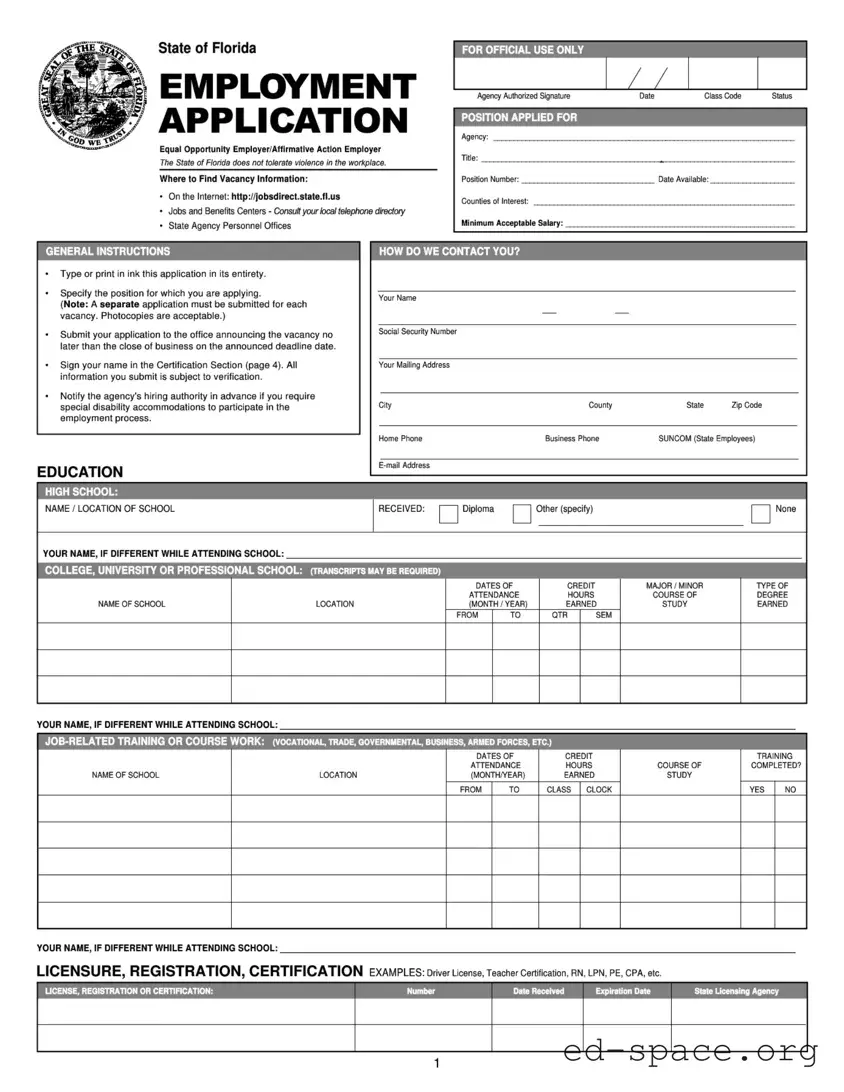
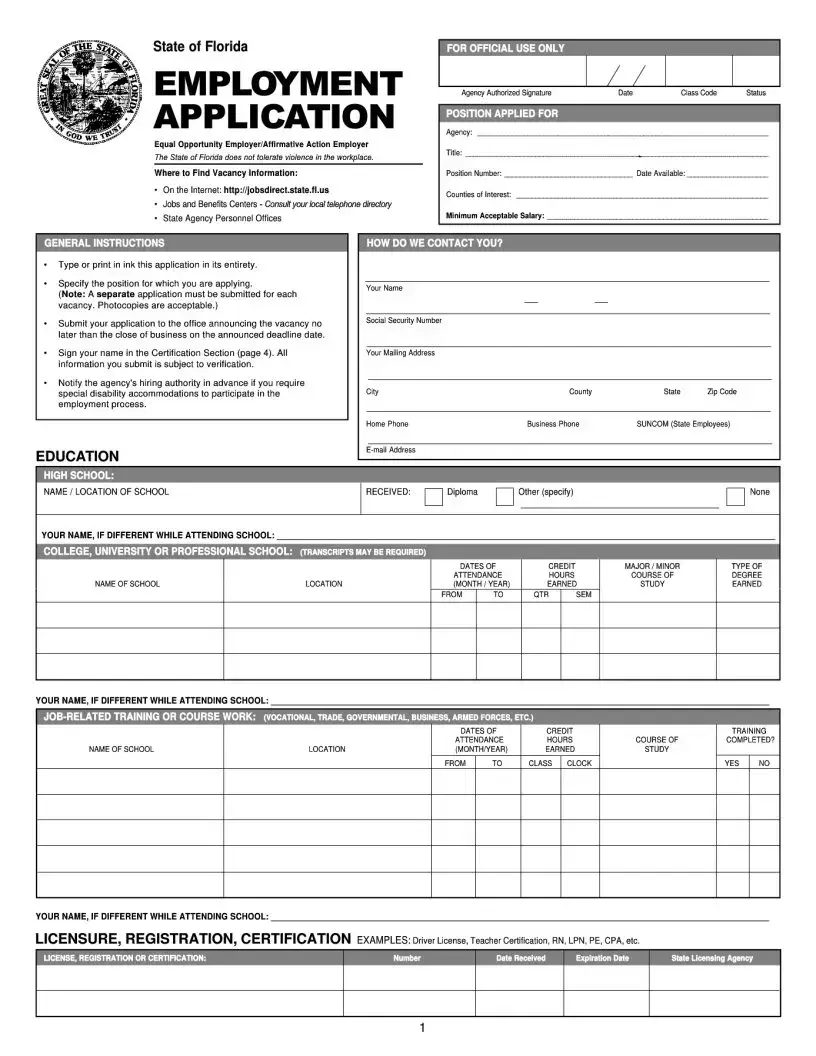
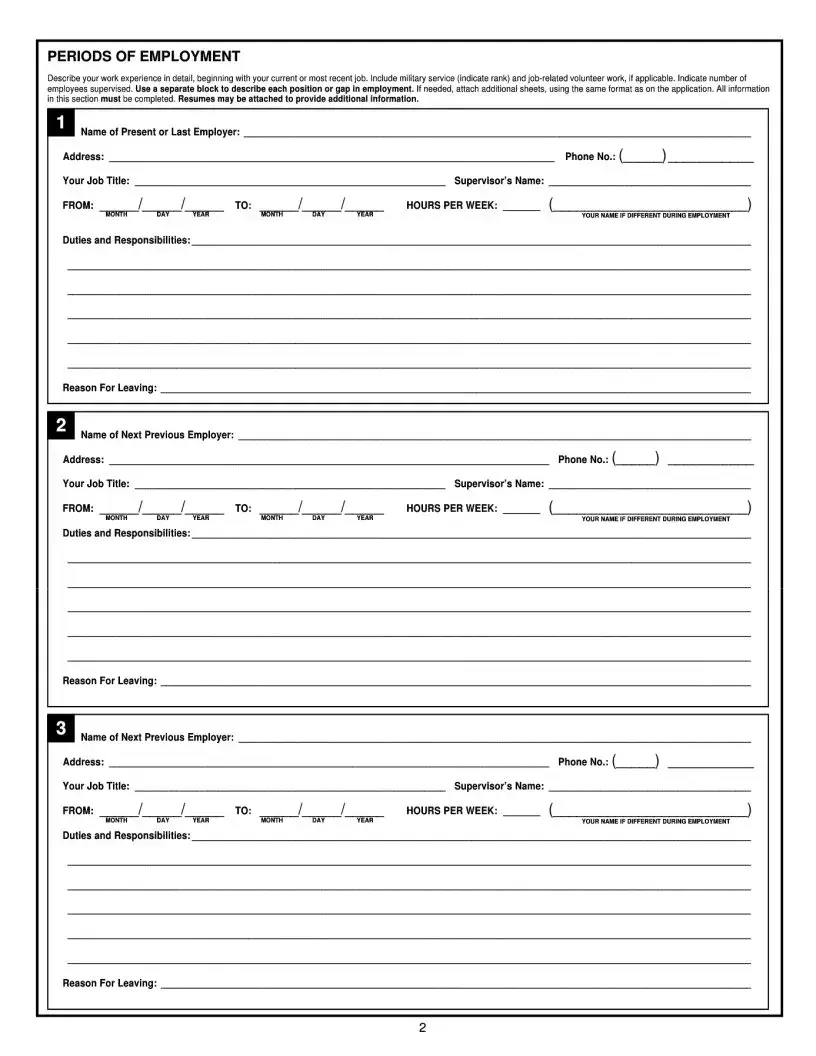
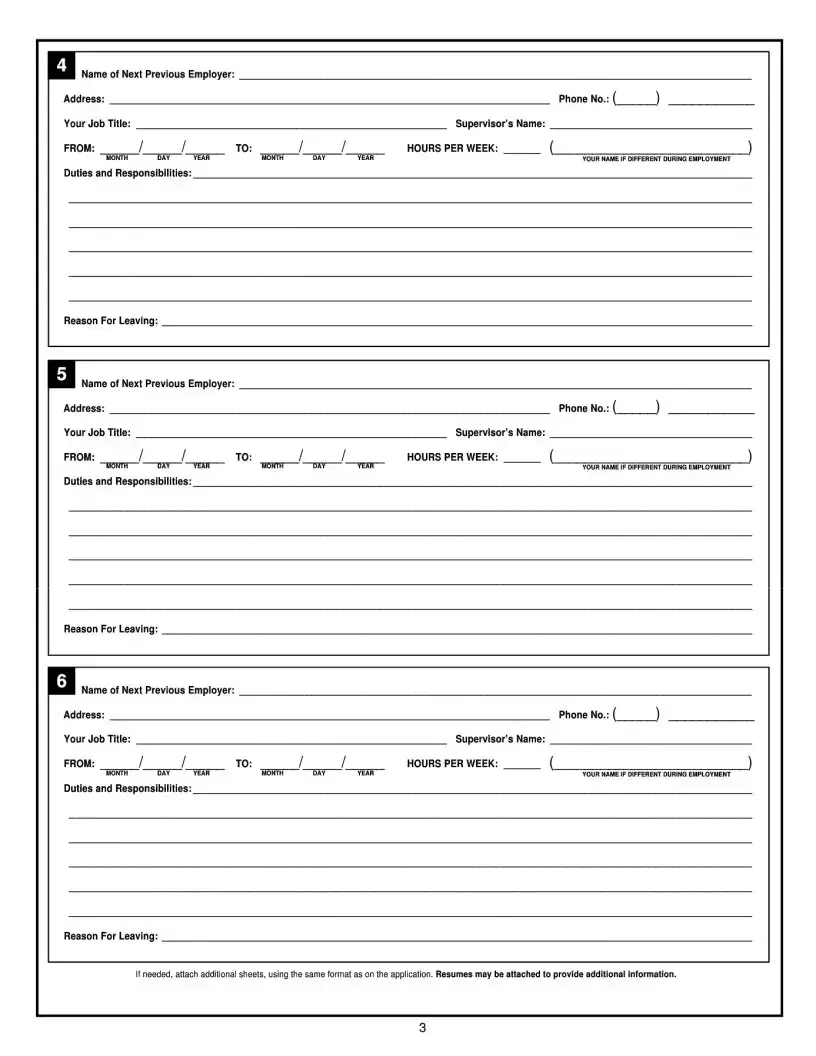
The State of Florida Employment Application form serves as a crucial tool for individuals seeking employment within various state agencies. This form is designed to collect essential information from applicants, including personal details, education history, and work experience. Applicants must specify the position they are applying for and provide a minimum acceptable salary. Clear instructions guide users on how to complete the application, emphasizing the importance of accuracy and completeness. Notably, the form requires applicants to disclose their social security number, contact information, and any relevant licenses or certifications. The employment history section is particularly detailed, asking candidates to outline their previous positions, responsibilities, and reasons for leaving. Additionally, the application stresses the need for compliance with equal opportunity and affirmative action policies, reflecting the state's commitment to creating a diverse workforce. For those requiring special accommodations, there is a provision to notify the hiring authority in advance. Overall, this form not only streamlines the application process but also ensures that all candidates are evaluated fairly and consistently.
| Fact Name | Description |
|---|---|
| Official Use | This application is designated for official use only by the State of Florida. |
| Equal Opportunity Employer | The State of Florida is an Equal Opportunity Employer and an Affirmative Action Employer. |
| Submission Deadline | Applications must be submitted by the close of business on the announced deadline date. |
| Verification of Information | All information provided in the application is subject to verification. |
| Disability Accommodations | Applicants requiring special disability accommodations must notify the agency's hiring authority in advance. |
| Application Instructions | Applicants must type or print the application in its entirety and specify the position applied for. |
| Governing Law | This application process is governed by Florida Statutes, Chapter 110, which outlines state employment procedures. |
Filling out the State of Florida Employment Application form is a straightforward process. You will need to provide personal information, educational background, and details about your work experience. Make sure to read each section carefully and provide accurate information to ensure a smooth application process.
What is the purpose of the Florida Employment Application form?
The Florida Employment Application form is designed to collect essential information from applicants seeking employment with the State of Florida. This form helps hiring agencies assess qualifications, work experience, and education. It ensures that all candidates are evaluated fairly and consistently for available positions.
How should I fill out the application form?
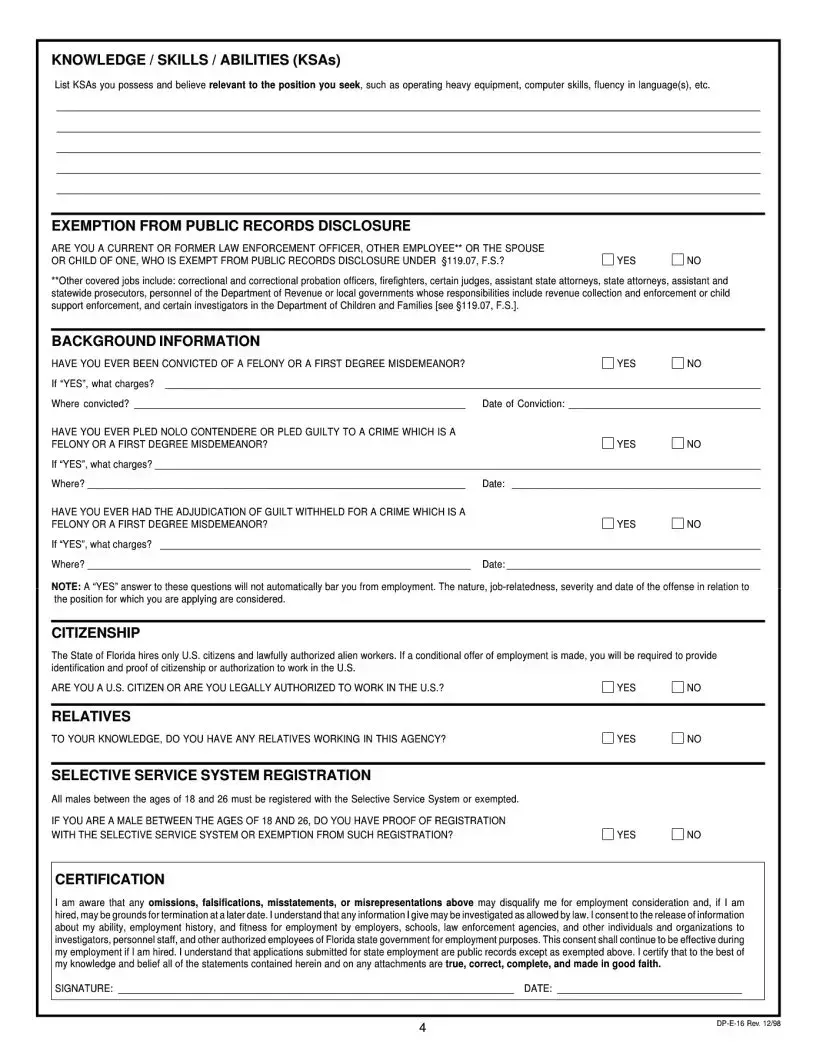
You should complete the application form by typing or printing in ink. Make sure to fill out every section in its entirety. Specify the position you are applying for and submit a separate application for each vacancy. If you need more space, you can attach additional sheets. Remember to sign the Certification Section, as all information is subject to verification.
Where do I submit my completed application?
Your completed application must be submitted to the office that announced the vacancy. Ensure that it reaches them by the close of business on the deadline date provided in the job announcement. This is crucial for your application to be considered.
What if I need special accommodations during the application process?
If you require special accommodations due to a disability, it is important to notify the agency's hiring authority in advance. This will allow them to make the necessary arrangements to assist you during the employment process.
Can I attach a resume to my application?
Yes, you can attach a resume to your application. However, it is important to remember that all sections of the application must still be completed. A resume can provide additional information about your qualifications and work history, but it should not replace the required details on the application form.
Incomplete Information: Many applicants fail to fill out all sections of the application. Omitting details such as job titles, dates of employment, or educational background can lead to disqualification. It is essential to provide comprehensive information to avoid any gaps.
Failure to Specify the Position: Some individuals neglect to clearly state the position they are applying for. Each application should indicate the specific title and position number. Without this information, the application may not be directed to the appropriate hiring authority.
Not Signing the Application: An often overlooked requirement is the need for a signature in the Certification Section. Submitting an unsigned application can result in delays or rejection, as it indicates a lack of commitment to the information provided.
Ignoring Deadlines: Applicants sometimes submit their applications after the specified deadline. It is crucial to ensure that the application reaches the designated office by the close of business on the announced deadline date to be considered for the position.
When applying for a position with the State of Florida, several other forms and documents may be required in conjunction with the Florida Employment Application form. These documents help provide a comprehensive view of the applicant's qualifications, background, and readiness for the role. Below is a list of commonly used forms and documents that can enhance the application process.
Including these documents alongside the Florida Employment Application can significantly enhance an applicant's chances of success. Each document plays a vital role in presenting a complete picture of the candidate, showcasing their qualifications and readiness for the desired position.
Job Application Form: Similar to the Florida Employment Application, a standard job application form collects personal information, work history, and education. It is used by employers to assess candidates for various positions.
Resume: A resume provides a summary of a candidate's work experience and skills. While the Florida Employment Application is more structured, both serve to present qualifications to potential employers.
Cover Letter: This document accompanies a job application or resume. It introduces the applicant and highlights key qualifications, similar to how the Florida Employment Application requires an overview of experience.
Federal Employment Application (SF-171): Used for federal jobs, this form gathers personal information and work history, much like the Florida Employment Application, but tailored to federal requirements.
State Job Application Forms (Other States): Many states have their own job application forms that collect similar information regarding education, work experience, and references, just like Florida's form.
Volunteer Application Form: This form is used by organizations to gather information about potential volunteers. It often includes sections for work history and skills, similar to the Florida Employment Application.
Internship Application Form: Similar to the Florida Employment Application, this form collects details about education and work experience for candidates seeking internships.
College Admission Application: This document requests personal information, educational background, and extracurricular activities, paralleling the Florida Employment Application's focus on education and experience.
Professional License Application: Used to apply for various professional licenses, this form also gathers personal and educational details, akin to the licensure section of the Florida Employment Application.
Background Check Authorization Form: While primarily focused on consent for background checks, this form often requires personal and employment history, similar to the information collected in the Florida Employment Application.
When filling out the State Florida Employment Application form, it’s crucial to approach the task with care. Here are four key do's and don'ts to keep in mind:
Taking these steps can help streamline your application process and improve your chances of being considered for the position.
Understanding the Florida Employment Application form is crucial for job seekers. However, several misconceptions can lead to confusion. Here are nine common misconceptions explained:
Being aware of these misconceptions can help applicants navigate the Florida Employment Application process more effectively.
Filling out the State of Florida Employment Application form is a crucial step in the job application process. Here are key takeaways to consider:
Following these guidelines can enhance the effectiveness of your application and improve your chances of securing an interview.