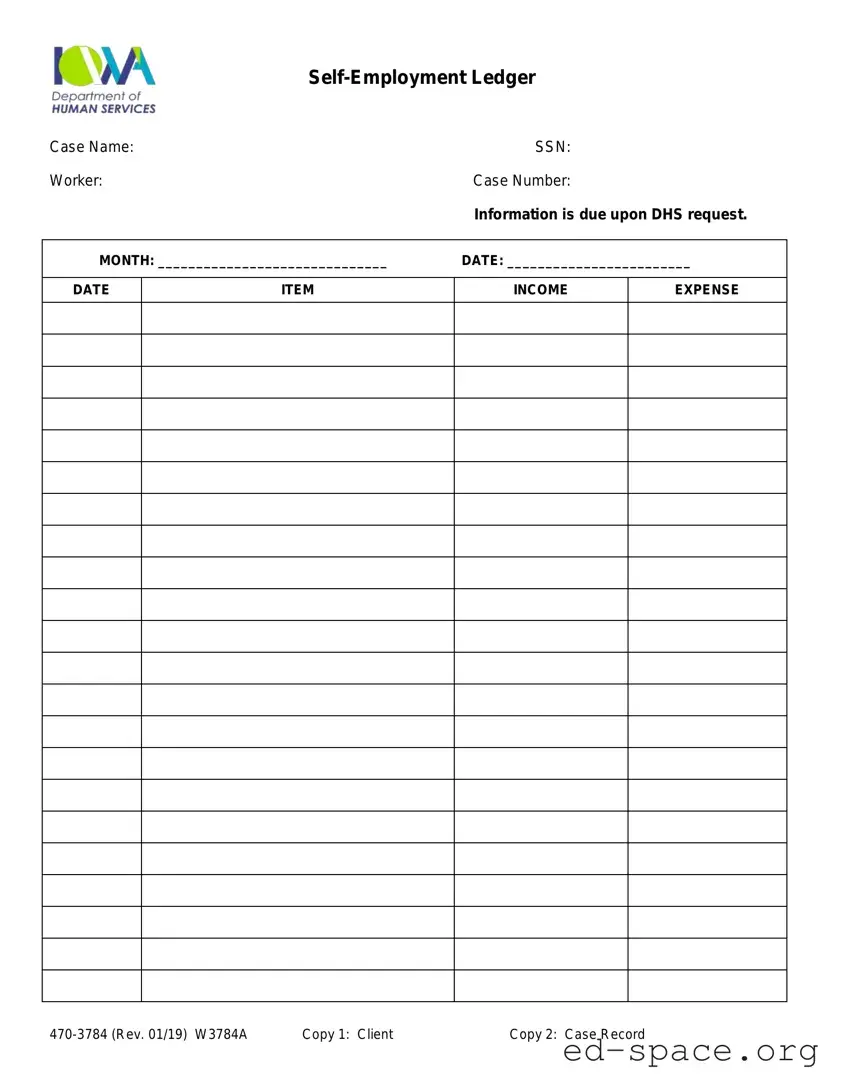
The Self Employment Ledger form is an essential tool for individuals managing their self-employment income and expenses. This form is required by the Iowa Department of Human Services and plays a crucial role in ensuring that self-employed individuals maintain accurate records for their case management. Key components of the form include the case name, social security number, worker details, and case number, all of which help to identify the individual and their specific circumstances. Users must provide information upon request from the Department of Human Services, emphasizing the importance of timely and accurate reporting. Each month, individuals will document their income and expenses, allowing for a clear financial overview. The structure of the form facilitates easy tracking of financial data, making it simpler for both the client and case workers to manage self-employment records effectively. With its straightforward layout, the Self Employment Ledger form is designed to support self-employed individuals in navigating their financial responsibilities while ensuring compliance with state requirements.
Case Name: |
|
SSN: |
|
Worker: |
|
Case Number: |
|
|
|
Information is due upon DHS request. |
|
|
|
|
|
MONTH: ______________________________ |
DATE: ________________________ |
||
|
|
|
|
DATE |
ITEM |
INCOME |
EXPENSE |
|
|
|
|
|
|
|
|
|
|
|
|
|
|
|
|
|
|
|
|
|
|
|
|
|
|
|
|
|
|
|
|
|
|
|
|
|
|
|
|
|
|
|
|
|
|
|
|
|
|
|
|
|
|
|
|
|
|
|
|
|
|
|
|
|
|
|
|
|
|
|
|
|
|
|
|
|
|
|
|
|
|
|
|
|
|
|
|
|
|
|
|
Copy 1: Client |
Copy 2: Case Record |
| Fact Name | Description |
|---|---|
| Purpose | The Self-Employment Ledger form is used to track income and expenses for self-employed individuals applying for assistance. |
| Governing Law | This form is governed by the Iowa Department of Human Services regulations. |
| Required Information | Users must provide their case name, Social Security Number (SSN), worker, and case number. |
| Submission Requirement | Information must be submitted upon request by the Department of Human Services. |
| Form Revision | The current version of the form is the 470-3784, revised in March 2012. |
Filling out the Self Employment Ledger form is an important step for tracking your income and expenses. Completing this form accurately ensures that you provide the necessary information when requested by the Iowa Department of Human Services. Follow these steps to fill out the form correctly.
Once you have filled out the form, keep a copy for your records. Be prepared to submit it to the Iowa Department of Human Services when they request it, as they may need this information to assess your eligibility for services or benefits.
What is the purpose of the Self Employment Ledger form?
The Self Employment Ledger form is designed to help individuals who are self-employed keep track of their income and expenses. This record is crucial for reporting accurate financial information to the Iowa Department of Human Services (DHS). By maintaining this ledger, self-employed individuals can ensure they provide the necessary documentation when requested by DHS, which can impact their eligibility for various assistance programs.
How should I fill out the Self Employment Ledger form?
Filling out the Self Employment Ledger form involves recording specific details about your income and expenses. Start by entering your case name, Social Security Number (SSN), the worker assigned to your case, and your case number at the top of the form. For each month, you will document the date of each income and expense item. It's essential to be as detailed as possible, noting the nature of each transaction to create a clear financial picture. This thoroughness will help when DHS requests this information.
How often should I submit the Self Employment Ledger form?
While the Self Employment Ledger form is submitted upon DHS request, it is advisable to keep it updated regularly. By maintaining current records, you can easily provide accurate information when needed. This practice not only helps in compliance but also allows you to monitor your business’s financial health more effectively. Regular updates can prevent last-minute scrambles to gather information when the form is requested.
What happens if I fail to submit the Self Employment Ledger form?
Failing to submit the Self Employment Ledger form when requested by DHS can have consequences. It may lead to delays in processing your case or could affect your eligibility for assistance programs. In some cases, lack of compliance might result in a loss of benefits. Therefore, it is crucial to respond promptly to any requests from DHS and ensure that your ledger is accurate and up-to-date to avoid any disruptions in support.
Incomplete Information: Many individuals fail to fill out all required fields. Missing details such as the case name, SSN, or case number can lead to processing delays.
Incorrect Dates: Entering the wrong month or date can result in confusion. Ensure that the date corresponds accurately with the income and expenses being reported.
Inaccurate Income Reporting: Some people underestimate or overestimate their income. It’s important to provide precise figures to avoid discrepancies.
Neglecting Expenses: Failing to list all relevant expenses can skew the financial picture. Every expense should be documented clearly to reflect true self-employment status.
Not Keeping Copies: Individuals often forget to retain a copy of the completed form. Keeping a personal record is crucial for future reference and accountability.
The Self Employment Ledger form is a crucial document for individuals reporting their income and expenses from self-employment. To effectively manage and document self-employment activities, several other forms and documents are often used in conjunction with this ledger. Below is a list of these related documents.
Utilizing these documents alongside the Self Employment Ledger can enhance accuracy and transparency in reporting self-employment income and expenses. Keeping thorough records is essential for compliance and financial management.
The Self Employment Ledger form is a crucial document for tracking income and expenses related to self-employment. It shares similarities with several other forms used in various contexts. Below are four documents that are comparable to the Self Employment Ledger:
When filling out the Self Employment Ledger form, it's important to follow certain guidelines to ensure accuracy and compliance. Here are six things you should and shouldn't do:
The Self Employment Ledger form is an essential tool for individuals who are self-employed and need to report their income and expenses to the Iowa Department of Human Services. However, there are several misconceptions surrounding this form that can lead to confusion. Here are eight common misconceptions:
Understanding these misconceptions can help ensure compliance and avoid potential issues with the Department of Human Services. It is crucial to approach the Self Employment Ledger with accurate information and a clear understanding of its requirements.
Here are some key takeaways about filling out and using the Self Employment Ledger form: