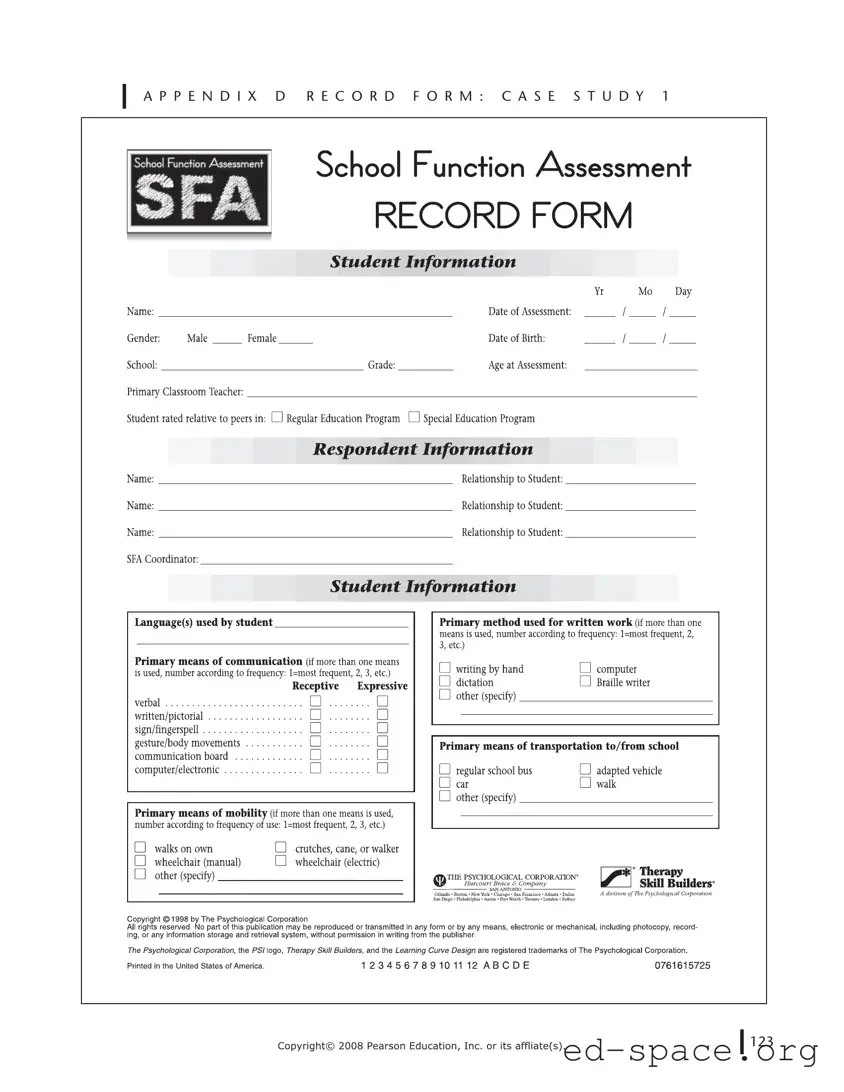
The School Function Assessment (SFA) form serves as a vital tool in evaluating a student's functional performance within the school environment. This assessment focuses on various aspects of a child's ability to participate in school-related tasks, addressing areas such as self-care, mobility, and social interactions. By examining these key components, educators and specialists can identify strengths and challenges that may affect a student's learning experience. The SFA provides a structured approach to gather information from teachers, parents, and the students themselves, ensuring a comprehensive understanding of each child's unique needs. Additionally, it aids in developing tailored interventions and support strategies, fostering an inclusive educational environment. Ultimately, the insights gained from the SFA empower schools to enhance student engagement and promote successful outcomes for all learners.
A P P E N D I X D R E C O R D F O R M : C A S E S T U D Y 1 |
Copyright© 2008 Pearson Education, Inc. or its affliate(s).
123
R E C O R D F O R M : C A S E S T U D Y 1 |
124
Copyright© 2008 Pearson Education, Inc. or its affliate(s).
R E C O R D F O R M : C A S E S T U D Y 1 |
Copyright© 2008 Pearson Education, Inc. or its affliate(s).
125
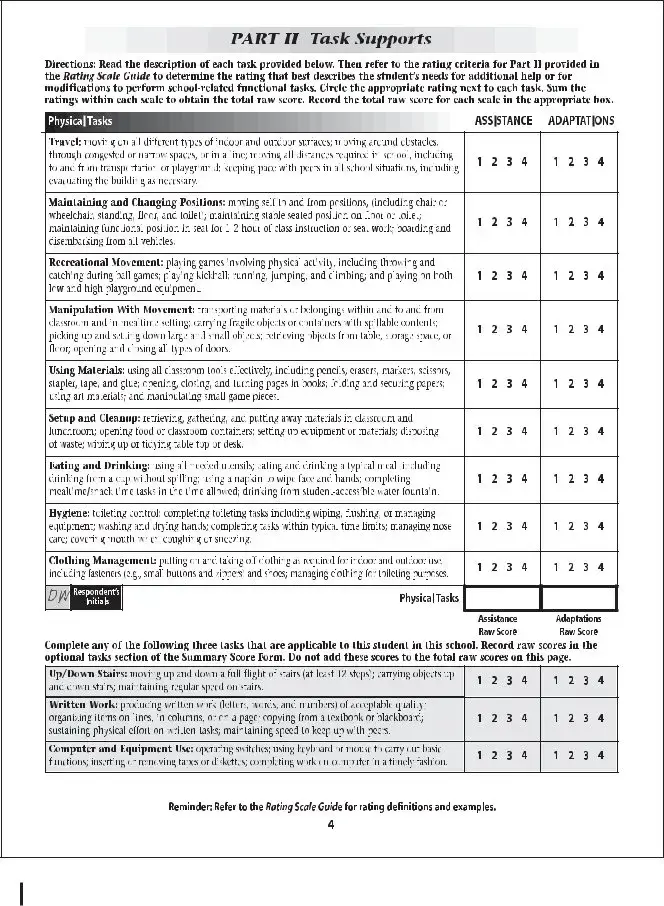
R E C O R D F O R M : C A S E S T U D Y 1 |
126
Copyright© 2008 Pearson Education, Inc. or its affliate(s).
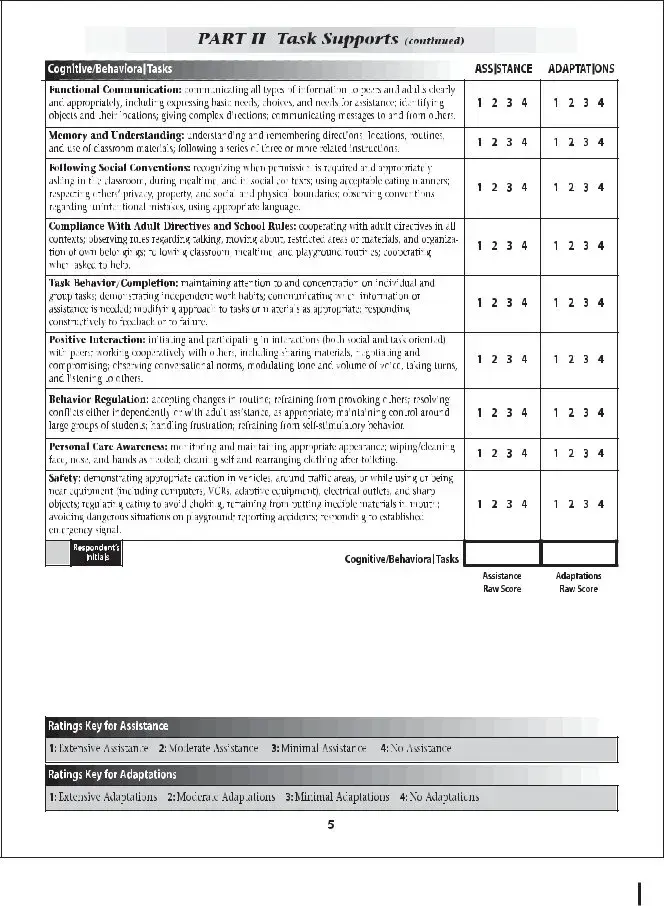
R E C O R D F O R M : C A S E S T U D Y 1 |
Copyright© 2008 Pearson Education, Inc. or its affliate(s).
127
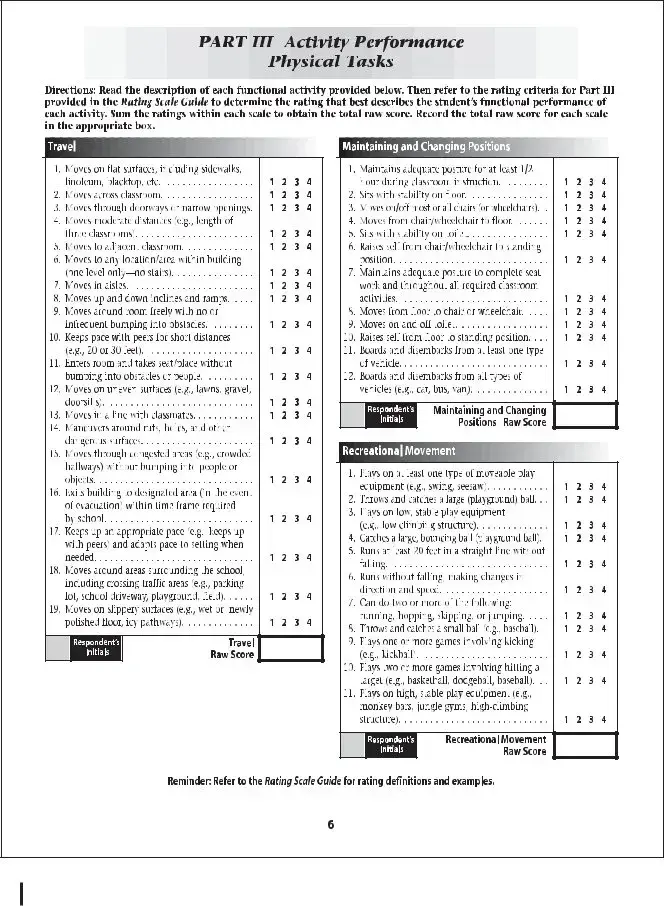
R E C O R D F O R M : C A S E S T U D Y 1 |
128
Copyright© 2008 Pearson Education, Inc. or its affliate(s).
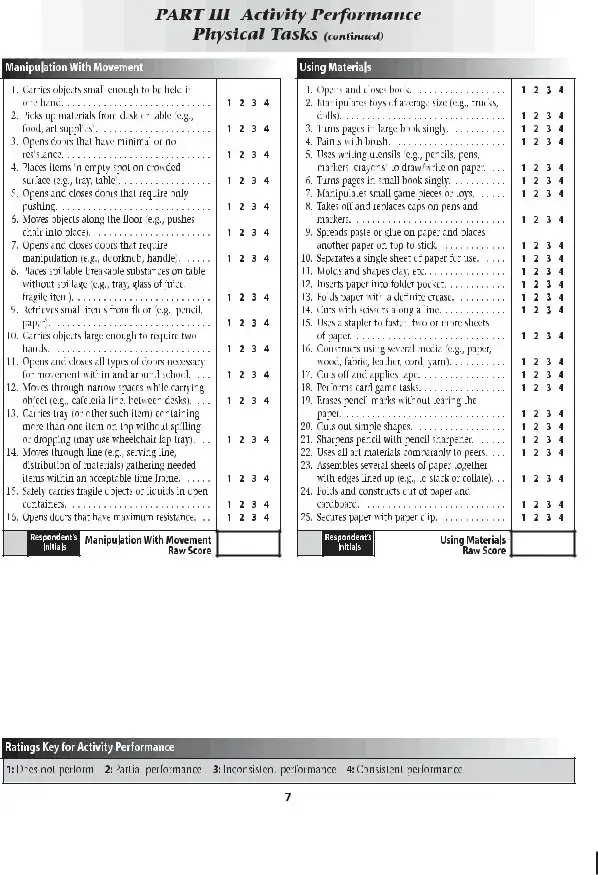
R E C O R D F O R M : C A S E S T U D Y 1
Copyright© 2008 Pearson Education, Inc. or its affliate(s).
129
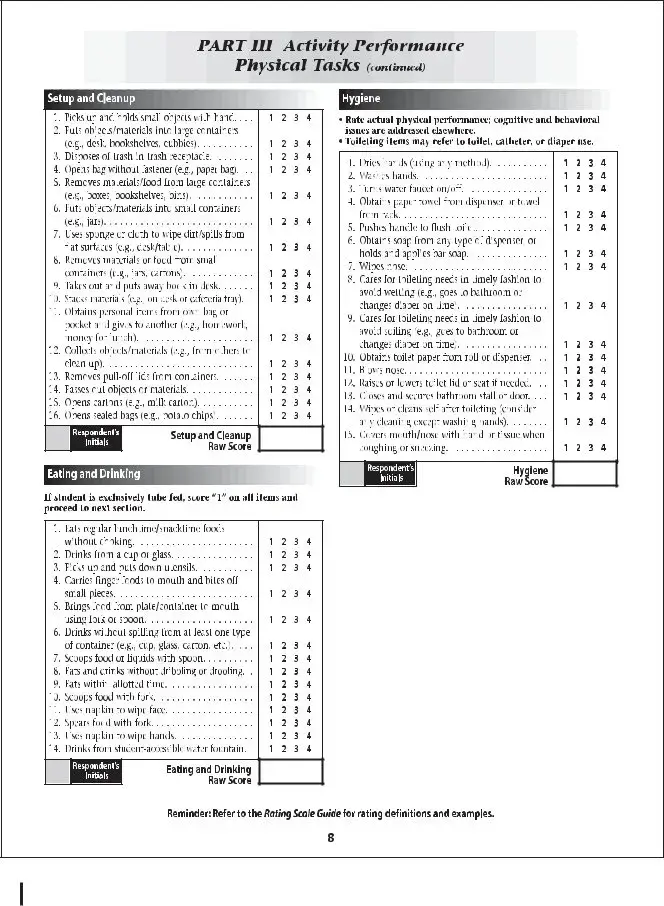
R E C O R D F O R M : C A S E S T U D Y 1 |
130
Copyright© 2008 Pearson Education, Inc. or its affliate(s).
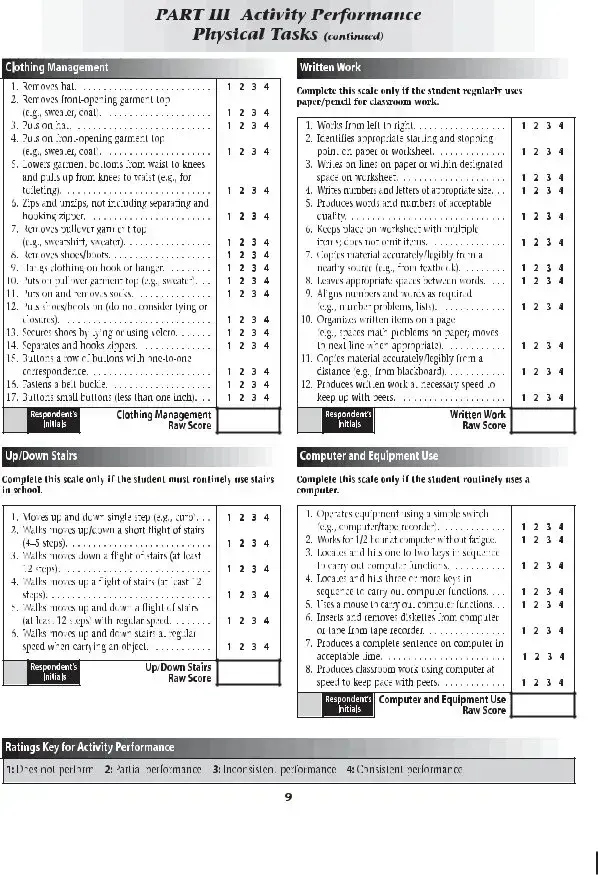
R E C O R D F O R M : C A S E S T U D Y 1
Copyright© 2008 Pearson Education, Inc. or its affliate(s).
131
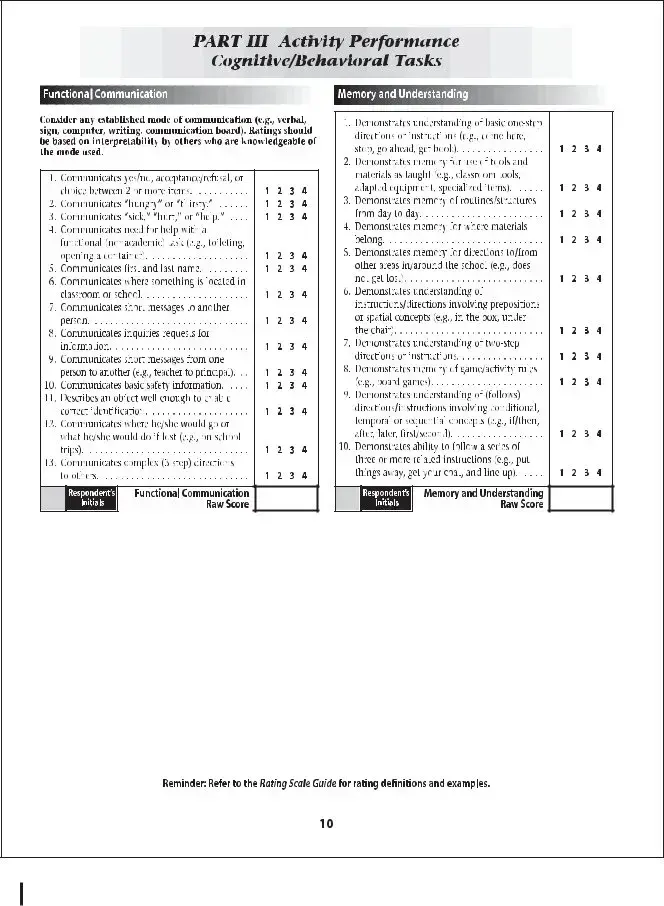
R E C O R D F O R M : C A S E S T U D Y 1 |
132
Copyright© 2008 Pearson Education, Inc. or its affliate(s).
| Fact Name | Description |
|---|---|
| Purpose | The School Function Assessment form is designed to evaluate a student's performance in school-related tasks. |
| Target Population | This form is intended for students with disabilities, helping to identify their functional abilities. |
| Components | The assessment includes various sections that cover academic, social, and behavioral skills. |
| Administration | The form is typically administered by educators or school psychologists. |
| Scoring | Scores are based on observations and input from teachers, parents, and the students themselves. |
| State-Specific Forms | Some states have their own versions of the form, governed by laws such as the Individuals with Disabilities Education Act (IDEA). |
| Confidentiality | All information collected through the assessment is kept confidential and used solely for educational purposes. |
| Review Frequency | The assessment should be reviewed regularly to ensure it meets the changing needs of the student. |
Completing the School Function Assessment form requires attention to detail and a clear understanding of the necessary information. Following these steps will help ensure that the form is filled out accurately and efficiently, facilitating the next stages of the assessment process.
What is the purpose of the School Function Assessment form?
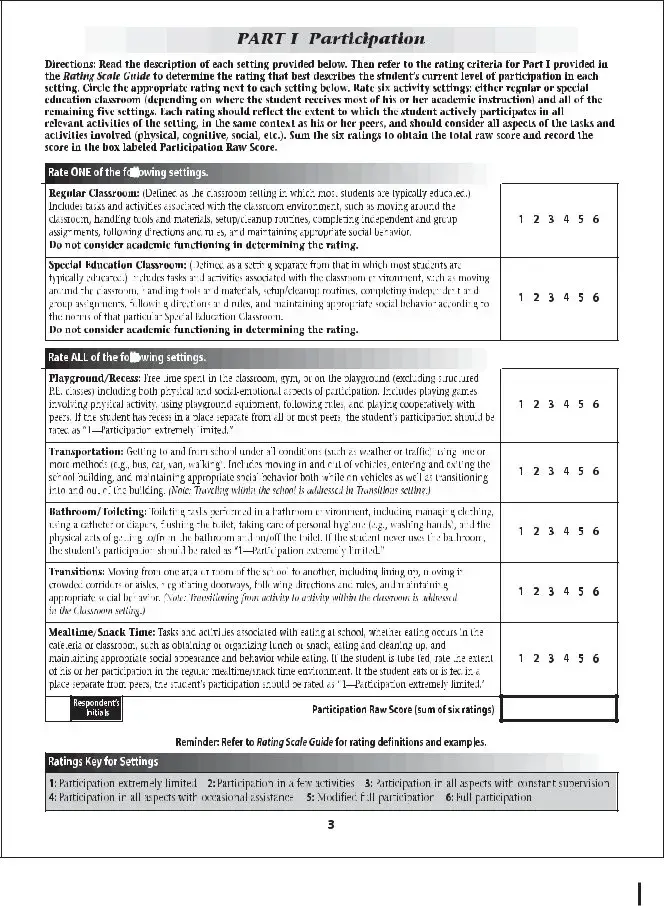
The School Function Assessment form is designed to evaluate a student's performance in various school-related tasks. It helps educators understand how well a student is functioning in the school environment. By assessing areas such as participation, support needs, and performance in daily activities, the form provides valuable insights that can inform individualized education plans and support strategies.
Who should complete the School Function Assessment form?
The form should be completed by teachers, special education staff, or other professionals who work closely with the student. They have the best understanding of the student's abilities and challenges in a school setting. Input from parents or guardians can also be beneficial to create a comprehensive view of the student's functioning.
How is the information from the School Function Assessment used?
The information gathered from the assessment is used to identify a student's strengths and weaknesses in school-related activities. This data can guide the development of individualized education plans (IEPs) and inform decisions regarding accommodations and support services. It ensures that the educational needs of each student are met effectively.
Is the School Function Assessment form required for all students?
No, the School Function Assessment form is not required for all students. It is typically used for students who may need additional support or who have specific challenges that affect their performance in school. Educators and specialists will determine if the assessment is necessary based on the individual needs of the student.
Filling out the School Function Assessment form can be a critical task for understanding a child's needs and abilities in a school setting. However, many individuals make common mistakes that can lead to inaccurate assessments. Here are six frequent errors to avoid:
Each section of the form has specific guidelines. Skipping over these can result in incomplete or incorrect information.
Vague descriptions do not give a clear picture of the child's abilities. Providing concrete examples helps evaluators understand the context better.
Input from teachers, parents, and other professionals can provide a more comprehensive view of the child's functioning. Neglecting to gather this input can lead to an incomplete assessment.
Taking time to thoughtfully consider each question is essential. Hasty responses may overlook important details that could affect the evaluation.
The form should be filled out in clear, straightforward language. Using complex terms can confuse those reviewing the assessment.
It is important to reflect the child's current abilities and challenges. Outdated information can misrepresent their needs.
By avoiding these common mistakes, individuals can ensure that the School Function Assessment form provides a clear and accurate representation of a child's abilities and needs.
The School Function Assessment (SFA) form is a valuable tool used to evaluate a student's performance in school-related tasks. To ensure a comprehensive understanding of a student's needs, several other documents may accompany the SFA. Each of these forms plays a unique role in gathering important information about the student.
By utilizing these documents alongside the School Function Assessment, educators and support staff can create a comprehensive profile of the student. This holistic approach ensures that all aspects of a student's educational experience are considered, leading to more effective support and interventions.
The School Function Assessment (SFA) form is a tool used to evaluate a student's performance in school settings, focusing on their ability to participate in various activities. Several other documents share similarities with the SFA in terms of their purpose and structure. Below are four such documents:
When filling out the School Function Assessment form, it is essential to approach the task thoughtfully. The following list outlines key actions to take and avoid during this process.
Understanding the School Function Assessment (SFA) form is crucial for parents, educators, and service providers. However, several misconceptions can cloud its purpose and use. Here are four common misunderstandings:
By clarifying these misconceptions, stakeholders can better understand the value of the School Function Assessment and utilize it effectively to support student success.
Filling out the School Function Assessment form can be a straightforward process when you keep these key points in mind:
By following these takeaways, you can effectively complete the School Function Assessment form and support the student's educational journey.