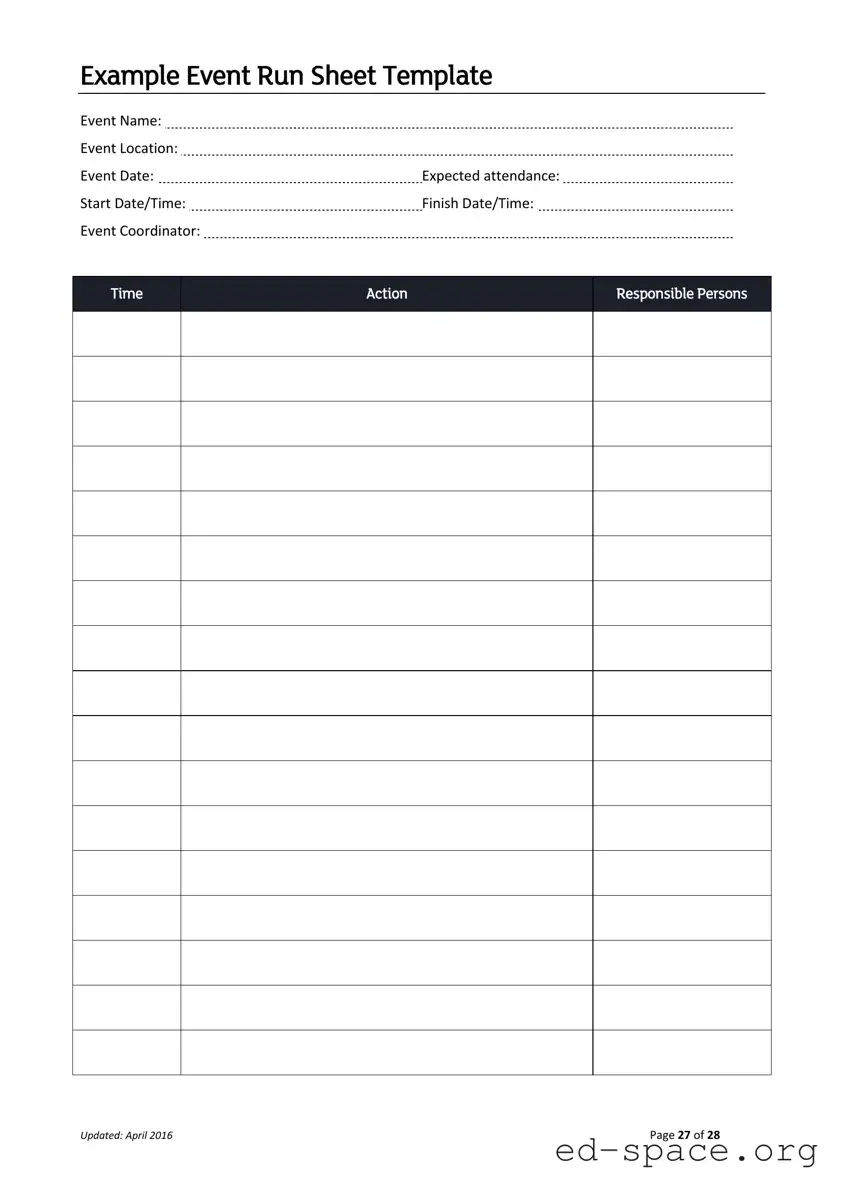
The Running Sheet form serves as a crucial tool for event planning and management, ensuring that every detail is meticulously organized and executed. This comprehensive document outlines essential information such as the event name, location, and date, providing a clear framework for all involved. It includes critical logistical details, like expected attendance and specific start and finish times, which help coordinate activities effectively. The form also designates an event coordinator, who oversees the entire operation, ensuring that everything runs smoothly. Additionally, the Running Sheet breaks down the timeline of actions required, assigning responsibilities to various individuals or teams. By keeping everyone informed and accountable, this form minimizes the risk of oversights and enhances overall event success.
Example Event Run Sheet Template
Event Name: |
|
Event Location: |
|
Event Date: |
Expected attendance: |
Start Date/Time: |
Finish Date/Time: |
Event Coordinator: |
|
Time
Action
Responsible Persons
Updated: April 2016 |
Page 27 of 28 |
| Fact Name | Description |
|---|---|
| Event Details | The Running Sheet form captures essential information such as event name, location, and date. |
| Attendance Expectations | It includes a section for expected attendance, helping organizers prepare adequately. |
| Timing Information | Start and finish times are documented to ensure the event runs smoothly and on schedule. |
| Coordinator Information | The form identifies the event coordinator, making it clear who is responsible for overseeing the event. |
| State-Specific Regulations | In some states, the use of a Running Sheet may be governed by local event planning laws or regulations. |
Once you have the Running Sheet form ready, you will need to fill it out carefully. This form helps organize important details about your event, ensuring everything runs smoothly. Follow these steps to complete the form accurately.
After completing the form, review it for accuracy. Make sure all information is clear and correct. This will help your event run smoothly and efficiently.
What is a Running Sheet form?
A Running Sheet form is a detailed schedule that outlines the timeline of an event. It includes key information such as the event name, location, date, expected attendance, and specific actions that need to be taken during the event. This document helps ensure that all participants are aware of their responsibilities and the timing of each activity.
What information do I need to fill out on the Running Sheet?
You will need to provide essential details such as the event name, location, date, expected attendance, and the start and finish times. Additionally, you should list the event coordinator and include a timeline of actions along with the responsible persons for each task.
How can the Running Sheet help with event planning?
The Running Sheet serves as a comprehensive guide for event planners and participants. It helps keep everyone on the same page, ensuring that tasks are completed on time. By clearly defining roles and responsibilities, it minimizes confusion and enhances coordination among team members.
Who is responsible for creating the Running Sheet?
The event coordinator typically takes the lead in creating the Running Sheet. However, input from various team members may be necessary to ensure that all aspects of the event are covered. Collaboration is key to developing an effective Running Sheet.
How often should the Running Sheet be updated?
The Running Sheet should be updated regularly, especially as the event date approaches. Changes in the schedule, responsibilities, or other details should be reflected in the document to keep everyone informed. An updated Running Sheet should be distributed to all relevant parties to ensure smooth execution of the event.
Can I customize the Running Sheet for different events?
Yes, the Running Sheet is highly customizable. You can modify it to suit the specific needs of different events. Whether it’s a corporate meeting, wedding, or festival, adjusting the timeline and actions allows for flexibility in planning.
Is there a standard format for a Running Sheet?
While there is no strict standard format, a typical Running Sheet includes sections for event details, a timeline of actions, and a list of responsible persons. The layout should be clear and easy to follow, allowing for quick reference during the event.
What should I do if something goes wrong during the event?
If an issue arises, refer to the Running Sheet to identify the responsible persons. Clear communication is crucial. Address the problem promptly and adjust the timeline if necessary. The Running Sheet can serve as a guide to help you navigate unexpected situations effectively.
Failing to provide the Event Name can lead to confusion about the purpose of the event.
Omitting the Event Location makes it difficult for participants and staff to find the venue.
Not specifying the Event Date can result in scheduling conflicts and misunderstandings.
Underestimating the Expected attendance may lead to inadequate resources and accommodations.
Incorrectly entering the Start Date/Time and Finish Date/Time can disrupt the flow of the event.
Neglecting to list the Event Coordinator can create a lack of accountability and leadership.
Forgetting to update the Time Action Responsible Persons section can result in tasks being overlooked.
The Running Sheet form is an essential document for organizing events, detailing the schedule and responsibilities of those involved. However, it is often accompanied by several other important forms and documents that help streamline the event planning process. Below is a list of these additional documents, each serving a specific purpose in ensuring the event runs smoothly.
By utilizing these forms and documents alongside the Running Sheet, event planners can enhance organization, communication, and overall success. Each document plays a vital role in ensuring that all aspects of the event are thoroughly planned and executed.
The Running Sheet form is a crucial document for event management. Several other documents share similarities with the Running Sheet, each serving specific purposes in planning and execution. Below are five documents that align closely with the Running Sheet form:
When filling out the Running Sheet form, it’s important to keep a few key points in mind. Here’s a list of what you should and shouldn’t do:
By following these guidelines, you can ensure that your Running Sheet form is filled out correctly and efficiently. This will help make your event run smoothly.
Many people have misunderstandings about the Running Sheet form. Here are six common misconceptions:
Understanding these misconceptions can help you use the Running Sheet form effectively, ensuring your event runs smoothly.
Filling out and utilizing the Running Sheet form effectively can greatly enhance the organization and execution of an event. Here are some key takeaways to consider:
By adhering to these guidelines, the Running Sheet can serve as a valuable tool in the successful management of any event.