Homepage Fillable Response to a Cease and Desist Letter Template
Content Overview

When faced with a cease and desist letter, responding appropriately is crucial to protect your rights and interests. This response form serves as a structured way to address the claims made against you, ensuring that your side of the story is clearly communicated. It typically includes essential components such as your contact information, a detailed acknowledgment of the claims, and a statement of your position regarding the allegations. Additionally, the form may require you to outline any actions you intend to take, whether that involves complying with the demands, disputing the claims, or seeking further dialogue. By carefully crafting your response, you can effectively convey your perspective and potentially mitigate any legal repercussions. Understanding the nuances of this form can empower individuals and businesses alike to navigate the complexities of legal disputes with confidence.

Document Preview

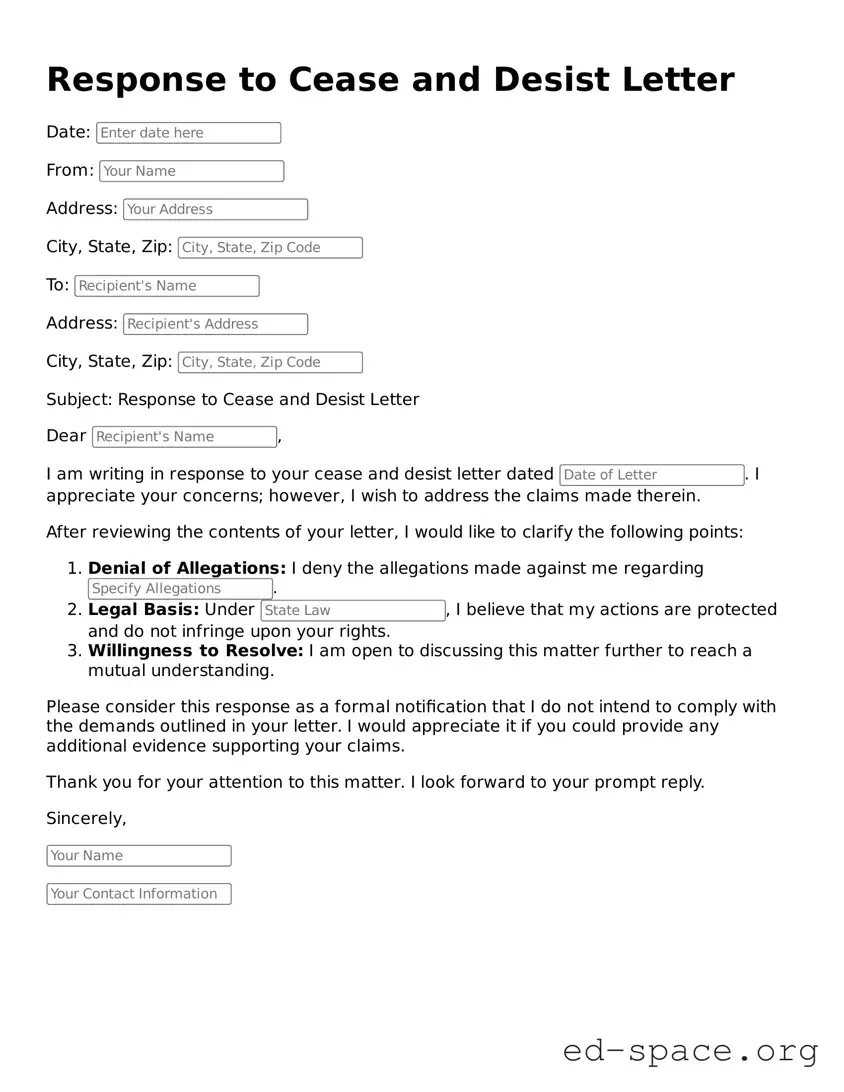
Response to Cease and Desist Letter

Date:

From:

Address:

City, State, Zip:

To:

Address:

City, State, Zip:

Subject: Response to Cease and Desist Letter

Dear ,

I am writing in response to your cease and desist letter dated . I appreciate your concerns; however, I wish to address the claims made therein.

After reviewing the contents of your letter, I would like to clarify the following points:

  1. Denial of Allegations: I deny the allegations made against me regarding .
  2. Legal Basis: Under , I believe that my actions are protected and do not infringe upon your rights.
  3. Willingness to Resolve: I am open to discussing this matter further to reach a mutual understanding.

Please consider this response as a formal notification that I do not intend to comply with the demands outlined in your letter. I would appreciate it if you could provide any additional evidence supporting your claims.

Thank you for your attention to this matter. I look forward to your prompt reply.

Sincerely,

PDF Form Details

Fact Name Description
Purpose The Response to a Cease and Desist Letter form is used to formally reply to a claim made in a cease and desist letter.
Importance Responding promptly can prevent further legal action and demonstrates a willingness to resolve the issue.
Content The response should include an acknowledgment of the claims, a statement of your position, and any supporting evidence.
State-Specific Forms Different states may have specific requirements for responses, so it is important to check local laws.
Governing Law The governing laws may vary by state; for example, California law may apply to responses sent within California.
Delivery Method Responses can be delivered via certified mail, email, or other agreed-upon methods to ensure receipt.
Legal Representation Consulting with an attorney can be beneficial to understand the implications of your response.
Documentation Keep a copy of your response and any related correspondence for your records.
Follow-Up After sending the response, monitor for any further communication or legal action from the sender.

Response to a Cease and Desist Letter: Usage Guidelines

Once you have received a cease and desist letter, it’s important to respond appropriately. This response will help clarify your position and outline any necessary actions moving forward. Following these steps will ensure that your response is clear and effective.

  1. Read the Cease and Desist Letter Carefully: Understand the claims being made against you. Take note of any specific allegations and the timeframe given for your response.
  2. Gather Evidence: Collect any relevant documents, communications, or other evidence that supports your position. This information will be crucial in formulating your response.
  3. Draft Your Response: Begin by addressing the sender of the letter. Clearly state that you are responding to their cease and desist request. Use a professional tone throughout.
  4. State Your Position: Clearly outline your stance regarding the claims made in the letter. If you believe the claims are unfounded, explain why, using the evidence you gathered.
  5. Propose a Resolution: If applicable, suggest a way to resolve the issue. This could involve a compromise or clarification of your actions.
  6. Include Your Contact Information: Make it easy for the sender to reach you for further discussion. Include your phone number and email address.
  7. Review and Edit: Before sending, review your response for clarity and professionalism. Make sure there are no grammatical errors or unclear statements.
  8. Send the Response: Choose a method of delivery that ensures your response is received. Consider sending it via certified mail or another traceable method.

After sending your response, monitor for any further communication from the sender. Be prepared to engage in discussions or negotiations if necessary. It may also be wise to consult with a legal professional for additional guidance based on the specifics of your situation.

Your Questions, Answered

What is a Response to a Cease and Desist Letter form?

A Response to a Cease and Desist Letter form is a document that allows individuals or businesses to formally reply to a cease and desist letter they have received. This letter typically demands that the recipient stop a specific action or behavior that the sender believes is infringing on their rights. By submitting a response, the recipient can clarify their position, present their arguments, and potentially negotiate a resolution to the dispute.

Why is it important to respond to a cease and desist letter?

Ignoring a cease and desist letter can lead to serious consequences. The sender may escalate the matter by pursuing legal action, which could result in costly litigation. By responding, you demonstrate that you take the matter seriously and are willing to engage in a dialogue. This proactive approach can help protect your rights and may even lead to a resolution without the need for court involvement.

What should be included in my response?

Your response should clearly address the claims made in the cease and desist letter. Start by acknowledging receipt of the letter and briefly summarizing its contents. Then, present your side of the story. If you believe the claims are unfounded, explain why. If you are willing to negotiate or modify your actions, outline those terms. Additionally, consider including any evidence that supports your position. It's essential to maintain a professional tone throughout the response.

Should I seek legal advice before responding?

Yes, seeking legal advice is highly recommended. An attorney can help you understand the implications of the cease and desist letter and guide you in crafting an appropriate response. They can also identify any potential legal risks and help you navigate the situation effectively. Even if you feel confident in your understanding of the issue, having a legal expert on your side can provide valuable insights and strengthen your position.

Common mistakes

  1. Ignoring the Deadline: Many individuals overlook the importance of responding within the specified timeframe. Failing to meet this deadline can lead to further legal complications.

  2. Not Addressing All Claims: A common mistake is responding to only some of the claims made in the cease and desist letter. It is crucial to address each point raised to avoid leaving any issues unresolved.

  3. Using Emotional Language: Some responses contain emotional or confrontational language. This approach can undermine the seriousness of the response and may escalate the situation.

  4. Failing to Provide Evidence: When applicable, individuals should include supporting evidence for their position. Neglecting to do so can weaken the response.

  5. Not Seeking Legal Advice: Many people attempt to fill out the response form without consulting a legal professional. This can lead to errors that could have been avoided with proper guidance.

Documents used along the form

When responding to a cease and desist letter, it is crucial to have the right forms and documents ready. These documents can help clarify your position and protect your rights. Below is a list of common forms and documents that may accompany a response to a cease and desist letter.

  • Cease and Desist Letter: This is the original letter sent to you, outlining the sender's claims and demands. It is important to review this document carefully to understand the allegations being made.
  • Response Letter: This is your formal reply to the cease and desist letter. It should address the claims made and provide your perspective on the situation.
  • Evidence Documentation: Any supporting materials, such as emails, contracts, or photographs, that back up your position. This evidence can be crucial in demonstrating your side of the story.
  • Affidavit: A written statement confirmed by oath, often used to provide factual information in a legal context. This can lend credibility to your response.
  • Counterclaim: If you believe the sender has wronged you, a counterclaim can outline your grievances and potentially seek damages or other remedies.
  • Mediation Agreement: If both parties agree to resolve the dispute outside of court, a mediation agreement can outline the terms and conditions of the mediation process.
  • Settlement Agreement: This document outlines the terms of any agreement reached between you and the sender, often resolving the issue without further legal action.
  • Legal Representation Agreement: If you choose to hire an attorney, this agreement outlines the terms of your relationship with your legal counsel.
  • Notice of Intent to Sue: If the situation escalates, this document can formally notify the other party of your intention to take legal action.
  • Proof of Service: This document verifies that the cease and desist letter and your response have been delivered to the appropriate parties, ensuring that all communications are properly documented.

Having these documents at your disposal can significantly impact the outcome of your situation. It is always advisable to approach such matters thoughtfully and, if necessary, seek legal guidance to navigate the complexities involved.

Similar forms

  • Demand Letter: A demand letter requests specific action from the recipient, often related to a perceived legal right. Like a response to a cease and desist letter, it asserts a claim and outlines the consequences of inaction.
  • Settlement Agreement: A settlement agreement resolves disputes outside of court. Similar to a response, it may outline terms to avoid further legal action, aiming for a mutual resolution.
  • Counterclaim: A counterclaim is a legal response to a lawsuit that asserts the defendant's own claims against the plaintiff. It parallels a response to a cease and desist letter by presenting a defense and counterarguments.
  • Letter of Intent: A letter of intent outlines preliminary agreements between parties. Like a response, it can clarify positions and intentions, potentially leading to further negotiations or agreements.

Dos and Don'ts

When responding to a cease and desist letter, it is essential to approach the situation with care. Below is a list of actions to take and avoid while filling out the response form.

  • Do read the letter carefully. Understanding the claims made against you is crucial.
  • Do gather evidence. Compile any relevant documentation that supports your position.
  • Do respond in a timely manner. Adhering to any deadlines provided in the letter can help mitigate further legal action.
  • Do consider consulting an attorney. Professional legal advice can provide clarity and guidance.
  • Don't ignore the letter. Failing to respond can lead to escalation and potential legal consequences.
  • Don't admit fault prematurely. Acknowledging liability without understanding the full context can be detrimental.

Misconceptions

Understanding the Response to a Cease and Desist Letter can be challenging. Here are ten common misconceptions that people often have about this process:

  1. It's only for legal experts. Many people believe that only attorneys can respond effectively. However, individuals can prepare their responses with the right guidance.
  2. A response admits guilt. Some think that responding to a cease and desist letter means they are admitting wrongdoing. In reality, a response can clarify misunderstandings without admitting fault.
  3. Ignoring the letter is acceptable. Many feel that they can simply ignore the letter. This can lead to further legal action, making it crucial to address the concerns raised.
  4. All cease and desist letters are legitimate. Not every letter has a strong legal basis. It's important to evaluate the claims made before responding.
  5. Responses must be formal and lengthy. Some believe that a lengthy, formal response is necessary. A clear and concise reply is often more effective.
  6. You must comply immediately. There's a misconception that immediate compliance is required. It's important to assess the situation before taking any action.
  7. A response can only be negative. Many think that responses must be confrontational. A respectful and constructive approach can lead to a better resolution.
  8. Once you respond, you're stuck. Some worry that responding locks them into a position. You can still negotiate or seek further clarification after your response.
  9. Legal representation is always necessary. While having a lawyer can be beneficial, many individuals can effectively respond on their own with proper information.
  10. All responses are the same. Each situation is unique, and responses should be tailored to the specific circumstances and claims made in the letter.

By addressing these misconceptions, individuals can better navigate the process and respond appropriately to a cease and desist letter.

Key takeaways

Responding to a cease and desist letter can be a critical step in protecting your rights. Here are some key takeaways to keep in mind when filling out and using the Response to a Cease and Desist Letter form:

  • Understand the Allegations: Carefully read the letter to grasp the claims being made against you. This will help you formulate an appropriate response.
  • Gather Evidence: Collect any relevant documentation or evidence that supports your position. This may include contracts, emails, or other communications.
  • Be Professional: Maintain a respectful tone in your response. A calm and professional demeanor can help de-escalate the situation.
  • Address Each Claim: Respond to each allegation individually. Clearly state your position and provide evidence where applicable.
  • Consult a Legal Expert: If you are unsure about how to respond, consider seeking advice from a legal professional. They can provide valuable insights tailored to your situation.
  • Keep Records: Save copies of your response and any correspondence related to the cease and desist letter. This documentation may be important if the situation escalates.

By following these guidelines, you can effectively navigate the process of responding to a cease and desist letter.