When employees find themselves increasingly unhappy in their roles, the decision to resign can become a necessary step toward personal and professional fulfillment. A resignation letter due to job dissatisfaction serves as a formal means of communicating this decision to an employer. This document typically includes essential components such as the employee's contact information, the date of resignation, and a brief explanation of the reasons for leaving, while maintaining a tone of professionalism. It may also express gratitude for past opportunities, despite the underlying dissatisfaction. By providing a clear and respectful notice, the letter not only ensures that the employee leaves on good terms but also facilitates a smoother transition for both parties. Understanding the key elements of this form can empower individuals to articulate their feelings effectively, paving the way for a more positive future in their careers.
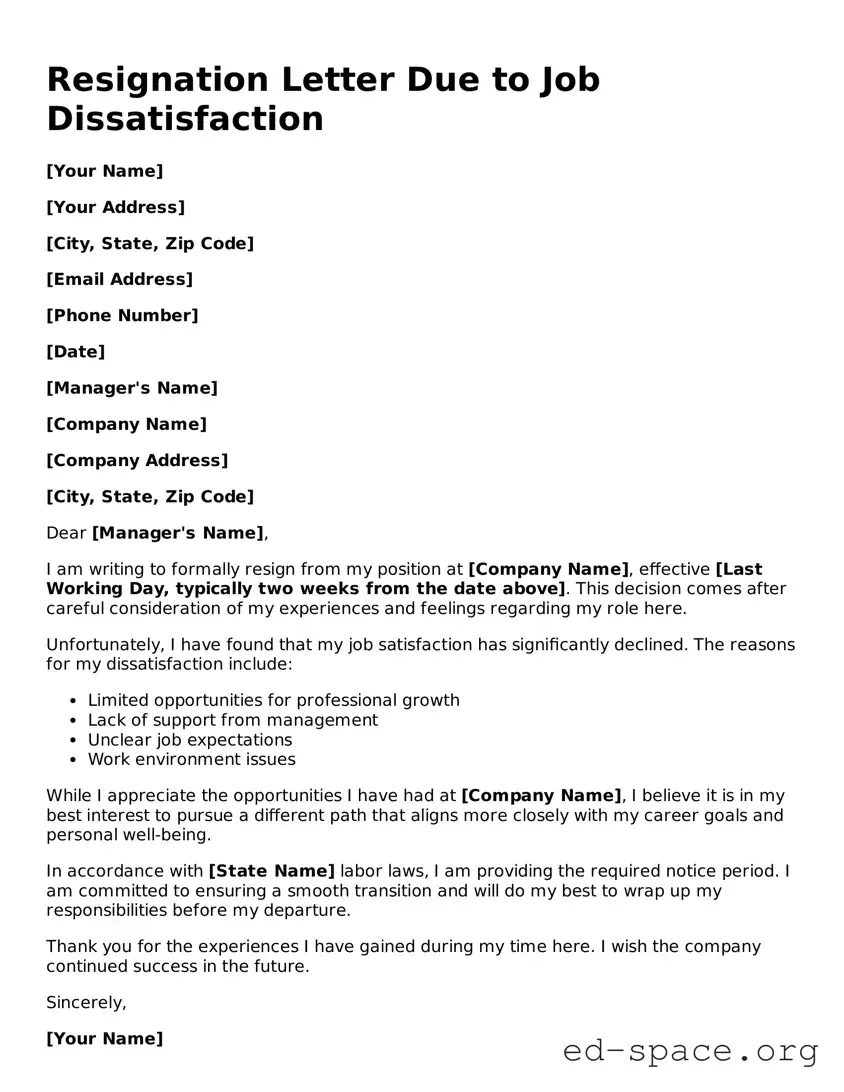
Resignation Letter Due to Job Dissatisfaction
[Your Name]
[Your Address]
[City, State, Zip Code]
[Email Address]
[Phone Number]
[Date]
[Manager's Name]
[Company Name]
[Company Address]
[City, State, Zip Code]
Dear [Manager's Name],
I am writing to formally resign from my position at [Company Name], effective [Last Working Day, typically two weeks from the date above]. This decision comes after careful consideration of my experiences and feelings regarding my role here.
Unfortunately, I have found that my job satisfaction has significantly declined. The reasons for my dissatisfaction include:
While I appreciate the opportunities I have had at [Company Name], I believe it is in my best interest to pursue a different path that aligns more closely with my career goals and personal well-being.
In accordance with [State Name] labor laws, I am providing the required notice period. I am committed to ensuring a smooth transition and will do my best to wrap up my responsibilities before my departure.
Thank you for the experiences I have gained during my time here. I wish the company continued success in the future.
Sincerely,
[Your Name]
| Fact Name | Description |
|---|---|
| Purpose | A resignation letter due to job dissatisfaction serves as a formal notice to an employer that an employee is leaving their position due to unhappiness with their job. |
| Notice Period | Typically, employees are expected to provide a notice period, which can vary by company policy or state law, often ranging from two weeks to a month. |
| State-Specific Forms | Some states may have specific guidelines or forms that should be used for resignations, ensuring compliance with local employment laws. |
| Governing Laws | In the U.S., employment is generally "at-will," meaning employees can resign for any reason. However, some states may have laws regarding final paychecks and accrued benefits. |
| Professionalism | Even when resigning due to dissatisfaction, it is recommended to maintain professionalism in the letter, as this can impact future job references. |
After completing the Resignation Letter Due to Job Dissatisfaction form, submit it to your supervisor or human resources department. Ensure that you retain a copy for your records. This will help in maintaining clear communication about your decision to resign.
What is a Resignation Letter Due to Job Dissatisfaction?
A resignation letter due to job dissatisfaction is a formal document that an employee submits to their employer when they decide to leave their job because they are unhappy with their work environment or job responsibilities. This letter serves to communicate the employee's decision to resign and can help maintain professionalism during the transition.
Why should I use a resignation letter instead of just telling my boss?
Using a resignation letter is important for several reasons. First, it provides a written record of your resignation, which can be helpful for both you and your employer. Second, it allows you to express your feelings and reasons for leaving in a clear and structured manner. This can help prevent misunderstandings and ensure that you leave on good terms.
What should I include in my resignation letter?
Your resignation letter should include several key elements. Start with a clear statement of your intention to resign. Mention your last working day, typically two weeks from the date of the letter. You may also want to briefly explain your reasons for leaving, focusing on your dissatisfaction without going into excessive detail. Finally, express gratitude for the opportunities you had during your employment.
How do I address my resignation letter?
Address your resignation letter to your immediate supervisor or manager. If you work in a larger organization, it may also be appropriate to include a copy to the Human Resources department. Use a professional salutation, such as "Dear [Manager's Name]," to maintain a respectful tone.
Is it necessary to provide a reason for my resignation?
While it is not mandatory to provide a reason for your resignation, doing so can help clarify your decision and may be beneficial for the employer. If you choose to explain your job dissatisfaction, keep your comments constructive and professional. Avoid negative language that could harm your reputation or relationships in the future.
Can I change my mind after submitting my resignation letter?
Once you submit your resignation letter, it is generally considered a formal decision to leave your job. However, if you have a change of heart, it is possible to discuss your situation with your employer. Keep in mind that they may have already begun the process of finding a replacement, and there is no guarantee that they will allow you to stay.
Failing to specify the last working day. It's crucial to clearly state when your employment will officially end. Without this, there could be confusion about your departure.
Using an unprofessional tone. Even if you're unhappy, maintain a respectful and professional tone. This letter may be part of your employment record.
Neglecting to express gratitude. Even in dissatisfaction, acknowledging any positive experiences can leave a better impression.
Not providing a reason for leaving. While it's not mandatory, briefly mentioning your job dissatisfaction can help clarify your decision.
Forgetting to proofread. Spelling and grammatical errors can undermine your professionalism. Always review your letter before submission.
Leaving out contact information. Make sure to include your phone number or email. This allows for future communication if needed.
Not following company policy. Check if your employer has specific guidelines for resignations. Ignoring these can complicate your departure.
When an individual decides to resign from their position due to job dissatisfaction, several other forms and documents may accompany the resignation letter. These documents help ensure a smooth transition, clarify the resignation process, and address any outstanding matters related to employment. Below is a list of commonly used documents that may be relevant during this time.
Each of these documents serves a specific purpose in the resignation process. By understanding and utilizing them, employees can navigate their departure more effectively, ensuring that all necessary steps are taken and that they leave on good terms. Proper documentation not only aids in personal closure but also contributes to the organization's ability to learn and grow from the experience.
When preparing to fill out a resignation letter due to job dissatisfaction, it is important to approach the task thoughtfully. Here are five essential dos and don'ts to consider:
By following these guidelines, you can ensure that your resignation letter is both respectful and effective, paving the way for future professional interactions.
When it comes to the Resignation Letter Due to Job Dissatisfaction form, several misconceptions can lead to confusion. Below are five common misunderstandings, along with clarifications to help you navigate this process more effectively.
Misconception 1: Submitting a resignation letter means you are burning bridges.
Many people believe that resigning due to dissatisfaction will ruin their professional relationships. However, a well-written resignation letter can maintain professionalism and leave the door open for future opportunities.
Misconception 2: You must provide a detailed explanation of your dissatisfaction.
Some think that they need to elaborate extensively on their reasons for leaving. In reality, a simple statement expressing your intention to resign is sufficient. You can choose to keep the details private.
Misconception 3: A resignation letter must be lengthy to be effective.
There is a belief that longer letters convey more seriousness. In fact, concise and clear communication is often more impactful. A brief letter can effectively communicate your decision without unnecessary details.
Misconception 4: You cannot change your mind after submitting the letter.
Some individuals worry that once they submit their resignation letter, they cannot reconsider. While it is advisable to think carefully before resigning, it is possible to discuss your decision with your employer before your last day.
Misconception 5: All resignation letters are the same.
People often assume that resignation letters follow a one-size-fits-all template. In reality, each letter should be tailored to reflect individual circumstances and the nature of the job. Personalization can make a significant difference.
Understanding these misconceptions can help you approach the resignation process with confidence and clarity. It is important to remember that your career journey is personal, and how you choose to resign should reflect your values and professional goals.
Filling out and using a Resignation Letter Due to Job Dissatisfaction form requires careful consideration. Here are key takeaways to ensure a smooth process:
Using this form correctly can ease your transition and maintain your professional reputation.