When faced with health challenges, the decision to resign from a job can be both emotionally taxing and necessary for personal well-being. A resignation letter due to health reasons serves as a formal means of communicating your intent to leave your position, ensuring that your employer is informed of your situation while maintaining professionalism. This letter typically includes essential elements such as the date of your resignation, a brief explanation of your health-related circumstances, and a note of gratitude for the opportunities provided during your employment. While it may be difficult to articulate your reasons, expressing appreciation for your time at the company can leave a positive impression. Additionally, it’s important to consider the timing of your resignation; providing adequate notice allows for a smoother transition for both you and your employer. Crafting this letter thoughtfully can help you navigate this challenging period with grace and clarity, paving the way for your next steps toward recovery and new beginnings.
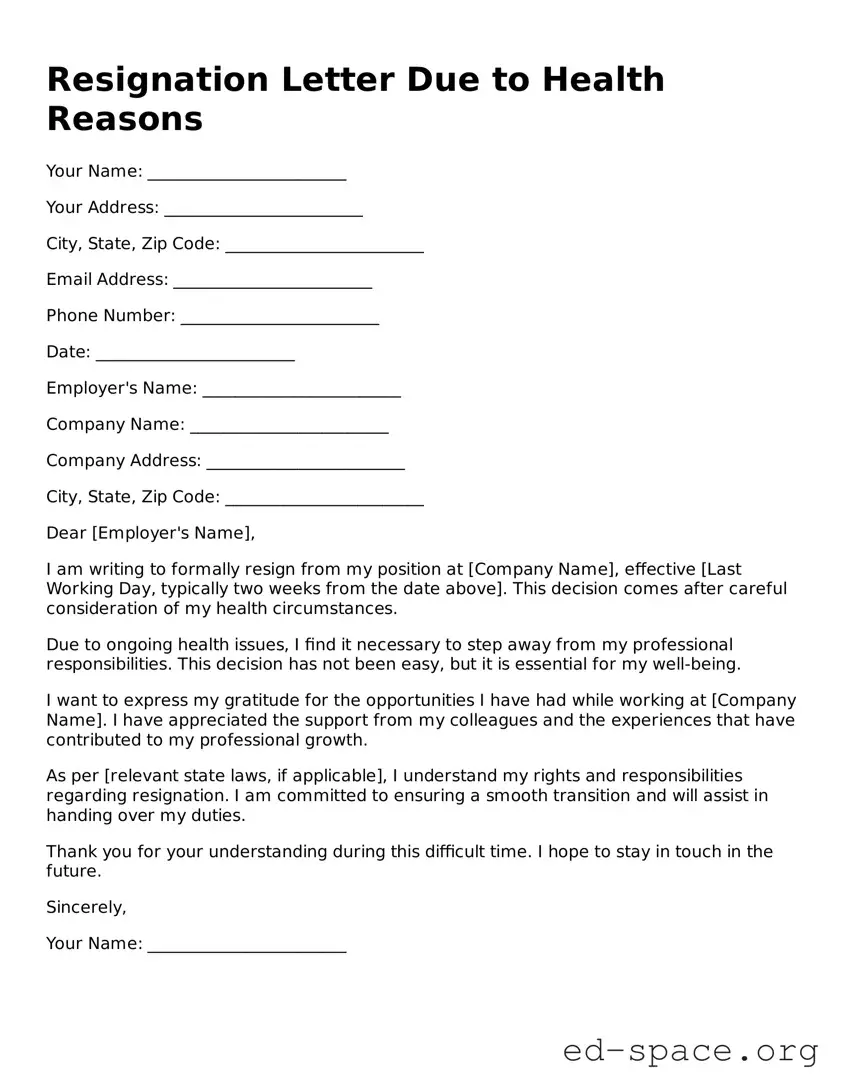
Resignation Letter Due to Health Reasons
Your Name: ________________________
Your Address: ________________________
City, State, Zip Code: ________________________
Email Address: ________________________
Phone Number: ________________________
Date: ________________________
Employer's Name: ________________________
Company Name: ________________________
Company Address: ________________________
City, State, Zip Code: ________________________
Dear [Employer's Name],
I am writing to formally resign from my position at [Company Name], effective [Last Working Day, typically two weeks from the date above]. This decision comes after careful consideration of my health circumstances.
Due to ongoing health issues, I find it necessary to step away from my professional responsibilities. This decision has not been easy, but it is essential for my well-being.
I want to express my gratitude for the opportunities I have had while working at [Company Name]. I have appreciated the support from my colleagues and the experiences that have contributed to my professional growth.
As per [relevant state laws, if applicable], I understand my rights and responsibilities regarding resignation. I am committed to ensuring a smooth transition and will assist in handing over my duties.
Thank you for your understanding during this difficult time. I hope to stay in touch in the future.
Sincerely,
Your Name: ________________________
| Fact Name | Description |
|---|---|
| Purpose | The Resignation Letter Due to Health Reasons form allows employees to formally resign from their position due to health-related issues. |
| Notice Period | Employees should check their employment contract for any required notice period before submitting this letter. |
| Confidentiality | Health information is sensitive. Employees should only disclose what is necessary in the letter. |
| State-Specific Requirements | Some states may have specific laws regarding resignation and health disclosures. Review local labor laws. |
| Format | The letter should be clear and concise, including the date, recipient's information, and a brief explanation of the health reasons. |
| Final Paycheck | Employees should inquire about their final paycheck and any accrued benefits upon resignation. |
When you need to resign from your job due to health issues, it's important to communicate your decision clearly and professionally. After completing the resignation letter, you will want to submit it to your employer. This ensures that your departure is handled smoothly and respectfully.
What is a Resignation Letter Due to Health Reasons?
A resignation letter due to health reasons is a formal document that an employee submits to their employer when they need to resign from their position due to medical issues. This letter serves to notify the employer of the resignation and provides a brief explanation of the circumstances surrounding it.
Why is it important to submit a resignation letter for health reasons?
Submitting a resignation letter is important because it provides a clear and documented way to communicate your decision to leave the job. It helps maintain professionalism and can be beneficial for future references. Additionally, it may help the employer understand the reason for your departure, which can foster goodwill.
What should be included in the resignation letter?
The letter should include your intent to resign, the effective date of your resignation, and a brief explanation of your health situation if you feel comfortable sharing it. It’s also courteous to express gratitude for the opportunities you had while working at the company.
How much notice should I give before resigning?
Typically, a notice period of two weeks is standard, but this may vary based on your employment contract or company policy. If your health condition requires immediate resignation, it is advisable to communicate this clearly in your letter and discuss it with your employer directly.
Do I need to provide medical documentation with my resignation letter?
Generally, you are not required to provide medical documentation when resigning due to health reasons. However, if your employer has specific policies or if you are seeking certain benefits, it may be helpful to have documentation available. Always check your company's policies for guidance.
Can I change my mind after submitting the resignation letter?
Once you submit a resignation letter, it is considered a formal notice of your intent to leave. While you can express a desire to retract your resignation, it is ultimately up to your employer to accept or deny your request. It's best to have a clear understanding of your situation before making a final decision.
What are the potential implications of resigning for health reasons?
Resigning for health reasons may impact your eligibility for certain benefits, such as unemployment compensation or health insurance. It’s important to understand your rights and any potential consequences. Consulting with a legal or HR professional can provide clarity on how your resignation may affect you moving forward.
Not Clearly Stating the Reason for Resignation: It is essential to specify that the resignation is due to health reasons. Failing to do so may lead to misunderstandings.
Using Inappropriate Language: The tone of the letter should remain professional. Avoid emotional language or overly casual phrases, as they can detract from the seriousness of the situation.
Neglecting to Provide a Resignation Date: Clearly state your last working day. This helps your employer plan for your departure and ensures a smooth transition.
Failing to Express Gratitude: Acknowledge the opportunities provided during your employment. A simple thank you can leave a positive impression, even in difficult circumstances.
Not Following Company Protocol: Be aware of any specific procedures your company has in place for resignations. Ignoring these can lead to complications.
Overlooking Confidentiality: While it is important to mention health reasons, be cautious about sharing too much personal information. Protect your privacy.
Not Keeping a Copy: Always retain a copy of your resignation letter for your records. This can be important for future reference or if any disputes arise.
Submitting the Letter Without Proofreading: Grammatical errors or typos can undermine the professionalism of your letter. Take the time to review and edit before submission.
When an individual decides to resign from their position due to health reasons, several other forms and documents may accompany the resignation letter. These documents help ensure a smooth transition and clarify any necessary arrangements regarding benefits, final pay, and other important matters. Below are some common forms that might be used alongside the resignation letter.
Understanding these documents can help individuals navigate the resignation process more effectively. Each form serves a specific purpose and contributes to a clearer understanding of the rights and responsibilities of both the employee and employer. Being prepared with the necessary paperwork can ease the transition during a challenging time.
The Resignation Letter Due to Health Reasons form serves a specific purpose, but it shares similarities with several other important documents. Each of these documents plays a role in formalizing a change in employment status or addressing workplace issues. Below are four documents that are comparable to the resignation letter, along with a brief explanation of how they are similar:
When filling out a resignation letter due to health reasons, it is important to approach the task with care and consideration. Below is a list of ten things to do and avoid during this process.
By adhering to these guidelines, individuals can ensure that their resignation letter is both effective and considerate of their circumstances.
Many individuals have misunderstandings about the Resignation Letter Due to Health Reasons form. Addressing these misconceptions can help clarify the process and ensure that employees make informed decisions. Below are eight common misconceptions:
Understanding these misconceptions can empower individuals to make informed choices regarding their health and employment. Clear communication with employers is essential during this process.
When preparing to fill out and use the Resignation Letter Due to Health Reasons form, consider the following key takeaways:
Taking these steps can help facilitate a smoother transition during a challenging time.