In the professional landscape, a resignation letter serves as a critical document that formalizes an employee's decision to leave a job. This letter not only communicates the intent to resign but also outlines important details such as the effective date of departure, the reason for leaving, and a note of gratitude toward the employer. Crafting a well-structured resignation letter can help maintain positive relationships and ensure a smooth transition. Essential components include the date, the recipient's name and title, a clear statement of resignation, and an offer to assist during the transition period. Additionally, the tone should remain respectful and professional, reflecting the employee's appreciation for the opportunities provided. As individuals navigate their career paths, understanding the significance of this form becomes paramount in fostering goodwill and leaving a lasting positive impression.
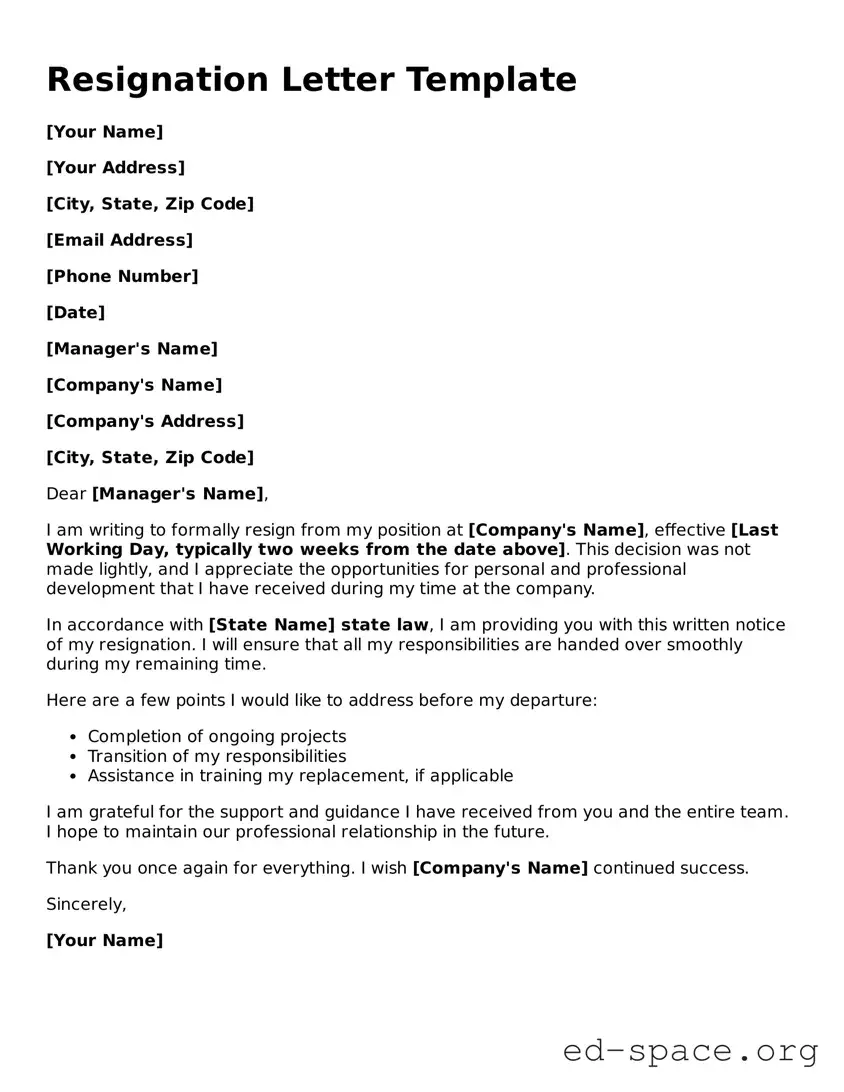
Resignation Letter Template
[Your Name]
[Your Address]
[City, State, Zip Code]
[Email Address]
[Phone Number]
[Date]
[Manager's Name]
[Company's Name]
[Company's Address]
[City, State, Zip Code]
Dear [Manager's Name],
I am writing to formally resign from my position at [Company's Name], effective [Last Working Day, typically two weeks from the date above]. This decision was not made lightly, and I appreciate the opportunities for personal and professional development that I have received during my time at the company.
In accordance with [State Name] state law, I am providing you with this written notice of my resignation. I will ensure that all my responsibilities are handed over smoothly during my remaining time.
Here are a few points I would like to address before my departure:
I am grateful for the support and guidance I have received from you and the entire team. I hope to maintain our professional relationship in the future.
Thank you once again for everything. I wish [Company's Name] continued success.
Sincerely,
[Your Name]
| Fact Name | Details |
|---|---|
| Purpose of a Resignation Letter | A resignation letter formally notifies an employer of an employee's intention to leave their position. |
| Importance of Professionalism | Writing a resignation letter maintains professionalism and helps preserve a positive relationship with the employer. |
| Notice Period | Most employers expect a notice period, often two weeks, which should be clearly stated in the letter. |
| State-Specific Forms | Some states may have specific guidelines for resignation letters, but generally, no formal state-specific form is required. |
| Governing Laws | Employment laws vary by state. For example, in California, the Labor Code requires employers to provide a final paycheck upon resignation. |
| Content Recommendations | A resignation letter should include the date of the letter, the employee's last working day, and a brief expression of gratitude. |
| Delivery Method | It is best to deliver the resignation letter in person, but if that's not possible, email or postal mail are acceptable alternatives. |
Once you have your resignation letter form ready, it’s important to fill it out carefully. This form will help you communicate your decision to leave your job clearly and professionally. Follow these steps to complete the form accurately.
What is a resignation letter?
A resignation letter is a formal document that an employee submits to their employer to announce their intention to leave their job. This letter serves as a professional courtesy and helps to maintain a positive relationship between the employee and employer, even after the employee departs from the organization.
Why is it important to submit a resignation letter?
Submitting a resignation letter is crucial for several reasons. First, it provides written documentation of the employee's decision to resign, which can be important for record-keeping purposes. Second, it allows the employer to prepare for the transition, such as finding a replacement or redistributing responsibilities. Lastly, a well-crafted resignation letter can help preserve the employee's professional reputation and may lead to positive references in the future.
What should be included in a resignation letter?
A resignation letter should include several key elements: the date of the letter, a clear statement of resignation, the last working day, a brief expression of gratitude for the opportunities provided, and an offer to assist during the transition period. Including these components ensures clarity and professionalism in the communication.
How much notice should I give in my resignation letter?
Typically, it is standard practice to provide two weeks' notice when resigning from a job. However, the notice period may vary based on company policy, the employee's role, or the terms outlined in an employment contract. It is advisable to check the company’s guidelines before determining the appropriate notice period.
Can I resign verbally instead of submitting a resignation letter?
While it is possible to resign verbally, submitting a resignation letter is recommended. A written letter serves as a formal record of the resignation and can prevent misunderstandings. It is best to communicate the resignation verbally first, followed by a written letter to ensure clarity and professionalism.
What if I am leaving due to a negative experience at work?
If an employee is leaving due to a negative experience, it is still advisable to keep the resignation letter professional and concise. Focus on the positive aspects of the job and avoid detailing grievances. This approach helps maintain professionalism and can prevent potential repercussions in future employment opportunities.
Is it necessary to include my reason for leaving in the resignation letter?
Including a reason for leaving in the resignation letter is not mandatory. Many employees choose to keep this information private. If an employee feels comfortable sharing their reason, they may do so briefly, but it is not required. The primary purpose of the letter is to formally announce the resignation.
What should I do after submitting my resignation letter?
After submitting the resignation letter, it is important to prepare for the transition. This may involve completing outstanding tasks, training a replacement, or ensuring a smooth handover of responsibilities. Maintaining professionalism during this period is essential, as it can impact future references and professional relationships.
Failing to include a clear resignation date. Many individuals forget to specify when their resignation will take effect, which can lead to confusion for both the employer and the employee.
Using an inappropriate tone. A resignation letter should maintain professionalism. Using informal language or expressing negative emotions can reflect poorly on the individual.
Neglecting to address the letter to the correct person. It is essential to direct the resignation to the appropriate supervisor or HR representative to ensure proper processing.
Not providing a reason for leaving. While it is not mandatory, including a brief explanation can foster goodwill and maintain a positive relationship with the employer.
Overlooking proofreading. Spelling and grammatical errors can undermine the professionalism of the letter. A careful review is crucial before submission.
Forgetting to express gratitude. Acknowledging the opportunities and experiences gained during employment can leave a lasting positive impression.
When an employee decides to leave a job, a resignation letter is often the first step in the process. However, several other forms and documents may accompany this letter to ensure a smooth transition. Below is a list of commonly used documents that can help facilitate the resignation process.
These documents, when used in conjunction with a resignation letter, help clarify expectations and responsibilities for both the employee and the employer. By understanding each form's purpose, employees can navigate their resignation more effectively and ensure all necessary steps are taken.
Termination Letter: This document formally notifies an employee that their employment is ending. Similar to a resignation letter, it outlines the reasons for termination and provides details about the final paycheck and benefits.
Job Offer Letter: When an individual accepts a new position, a job offer letter confirms the terms of employment. Like a resignation letter, it serves as a formal document that outlines important details regarding the job, such as start date and salary.
Reference Letter: A reference letter is written to endorse an individual's skills and qualifications. Similar to a resignation letter, it is often used during transitions, helping the individual move from one job to another.
Letter of Intent: This document expresses a person's intention to enter into a formal agreement, such as a new job or partnership. Like a resignation letter, it communicates a significant decision and outlines the next steps in the process.
When filling out a resignation letter form, there are several important considerations to keep in mind. Here’s a list of things you should and shouldn't do:
When it comes to resignation letters, there are several misconceptions that can lead to confusion. Understanding the truth behind these misconceptions can help ensure a smoother transition when leaving a job. Here are eight common misconceptions about resignation letters:
By addressing these misconceptions, individuals can navigate the resignation process more effectively. A well-prepared resignation letter can leave a positive impression and facilitate a smoother transition.
Filling out and using a resignation letter form is an important step in leaving a job professionally. Here are some key takeaways to consider: