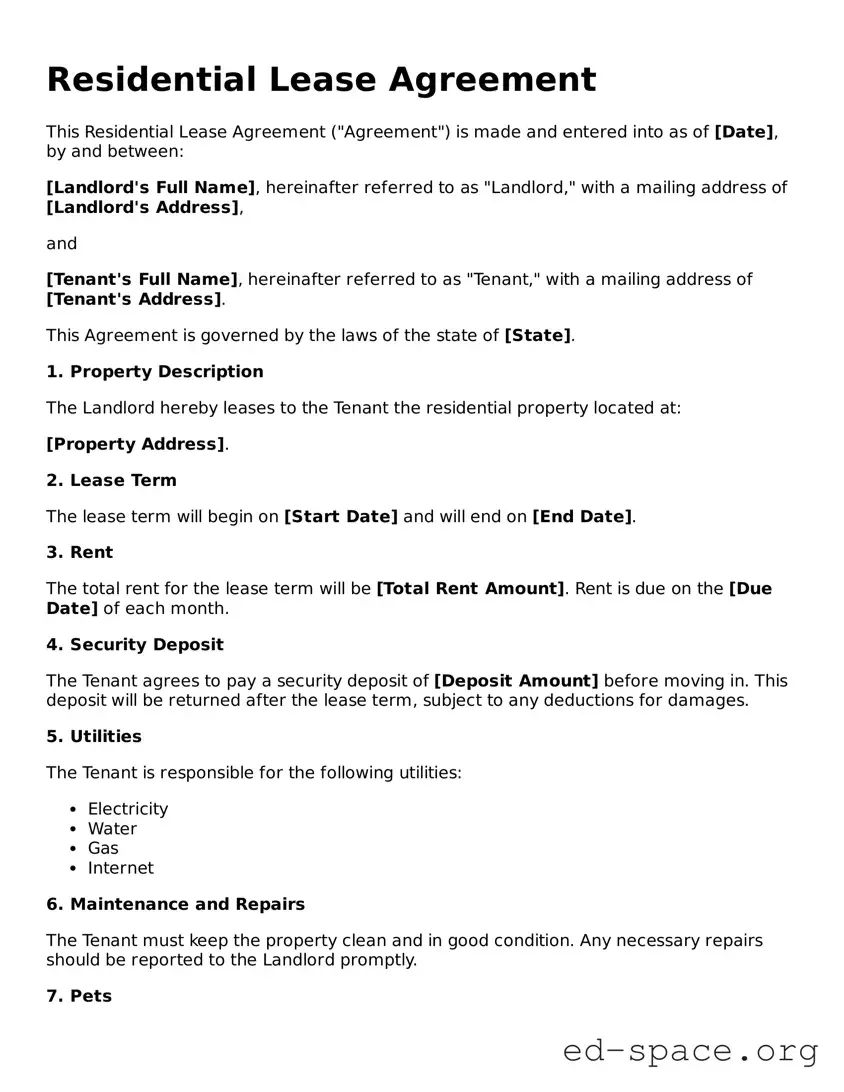
A Residential Lease Agreement is a crucial document that outlines the terms and conditions between a landlord and a tenant. This form typically includes essential details such as the duration of the lease, the amount of rent due, and the payment schedule. It also specifies the responsibilities of both parties, covering maintenance obligations and rules regarding pets or alterations to the property. Security deposits, late fees, and the process for terminating the lease are also addressed, providing clarity and protection for both the landlord and tenant. Understanding these components is vital for anyone entering into a rental agreement, as it helps ensure that both parties are on the same page and can avoid potential disputes in the future. Whether you are a first-time renter or a seasoned landlord, familiarity with the Residential Lease Agreement is key to a successful rental experience.
Residential Lease Agreement
This Residential Lease Agreement ("Agreement") is made and entered into as of [Date], by and between:
[Landlord's Full Name], hereinafter referred to as "Landlord," with a mailing address of [Landlord's Address],
and
[Tenant's Full Name], hereinafter referred to as "Tenant," with a mailing address of [Tenant's Address].
This Agreement is governed by the laws of the state of [State].
1. Property Description
The Landlord hereby leases to the Tenant the residential property located at:
[Property Address].
2. Lease Term
The lease term will begin on [Start Date] and will end on [End Date].
3. Rent
The total rent for the lease term will be [Total Rent Amount]. Rent is due on the [Due Date] of each month.
4. Security Deposit
The Tenant agrees to pay a security deposit of [Deposit Amount] before moving in. This deposit will be returned after the lease term, subject to any deductions for damages.
5. Utilities
The Tenant is responsible for the following utilities:
6. Maintenance and Repairs
The Tenant must keep the property clean and in good condition. Any necessary repairs should be reported to the Landlord promptly.
7. Pets
Pets are [Allowed/Not Allowed] on the premises. If allowed, the Tenant must pay a non-refundable pet deposit of [Pet Deposit Amount].
8. Termination
Either party may terminate this Agreement by providing written notice at least [Notice Period] days in advance.
9. Governing Law
This Agreement will be governed by and construed in accordance with the laws of the state of [State].
IN WITNESS WHEREOF, the parties have executed this Residential Lease Agreement as of the date first above written.
Landlord's Signature: ___________________________ Date: _______________
Tenant's Signature: ___________________________ Date: _______________
| Fact Name | Description |
|---|---|
| Purpose | A Residential Lease Agreement is a legal document that outlines the terms and conditions under which a tenant can rent a property from a landlord. |
| Duration | Typically, these agreements specify a lease term, which can range from month-to-month to a year or longer, depending on the arrangement between the landlord and tenant. |
| Governing Laws | The laws governing Residential Lease Agreements vary by state. For example, in California, the California Civil Code Section 1940 governs residential leases. |
| Security Deposits | Most lease agreements require a security deposit, which is held to cover potential damages or unpaid rent. State laws dictate the maximum amount that can be charged and the conditions for its return. |
Completing the Residential Lease Agreement form is essential for establishing a clear understanding between landlords and tenants. This process involves providing specific information about the rental property, the parties involved, and the terms of the lease. Follow the steps below to ensure accurate completion of the form.
After filling out the form, review it carefully for accuracy. Both parties should keep a signed copy for their records. This ensures that everyone is on the same page regarding the terms of the lease.
What is a Residential Lease Agreement?
A Residential Lease Agreement is a legally binding contract between a landlord and a tenant. This document outlines the terms and conditions under which a tenant can occupy a rental property. It typically includes details such as the rental amount, payment due dates, duration of the lease, and responsibilities of both parties. This agreement helps protect the rights of both the landlord and the tenant, ensuring clarity and understanding throughout the rental period.
What should be included in a Residential Lease Agreement?
Several key elements should be included in a Residential Lease Agreement to ensure it is comprehensive. First, the names of both the landlord and tenant should be clearly stated. Next, the property address and a description of the rental unit are essential. The agreement should specify the lease term, whether it is month-to-month or for a fixed period. Additionally, it should outline the rent amount, payment method, and late fees if applicable. Other important aspects include security deposits, maintenance responsibilities, and rules regarding pets or alterations to the property. Having these details in writing helps prevent misunderstandings later on.
What happens if either party wants to terminate the lease early?
If either the landlord or tenant wishes to terminate the lease early, the specific terms of the lease agreement will dictate the process. Many leases include a clause that outlines the conditions for early termination, which may involve providing a written notice within a certain timeframe. In some cases, the tenant may be required to pay a penalty or forfeit their security deposit. It's important for both parties to review the lease carefully and communicate openly about their intentions. Understanding the terms can help avoid potential legal disputes.
Can a Residential Lease Agreement be modified?
Yes, a Residential Lease Agreement can be modified, but both parties must agree to any changes. Modifications should be documented in writing and signed by both the landlord and tenant to ensure clarity and enforceability. Common reasons for modifications include changes in rent, lease duration, or tenant responsibilities. It is crucial to keep a record of any amendments to avoid confusion in the future. If a modification is made, both parties should retain copies of the updated agreement.
Incomplete Information: Many individuals fail to provide all required information on the Residential Lease Agreement form. This can include missing names, addresses, or contact details of the tenants and landlords.
Incorrect Dates: It is common for people to make mistakes when entering the lease start and end dates. Inaccurate dates can lead to confusion regarding the lease term and may result in disputes later.
Neglecting Signatures: Some individuals forget to sign the lease or neglect to obtain the necessary signatures from all parties involved. Without proper signatures, the agreement may not be legally binding.
Overlooking Terms and Conditions: Renters and landlords sometimes overlook important terms and conditions outlined in the lease. Failing to review these details can lead to misunderstandings about responsibilities, payment schedules, and maintenance obligations.
When entering into a rental agreement, several other forms and documents may accompany the Residential Lease Agreement. These documents help clarify the rights and responsibilities of both landlords and tenants, ensuring a smoother rental experience. Below is a list of commonly used forms that may be relevant in the leasing process.
Understanding these documents can empower both landlords and tenants, fostering a more harmonious rental relationship. Properly managing these forms can help prevent misunderstandings and protect the interests of all parties involved.
When filling out a Residential Lease Agreement form, it's crucial to approach the task with care. A well-completed lease can set the stage for a smooth rental experience. Here are some important do's and don'ts to keep in mind:
By following these guidelines, you can help ensure a positive renting experience. Remember, a little diligence now can lead to a lot of peace of mind later!
Understanding the Residential Lease Agreement is essential for both landlords and tenants. Unfortunately, several misconceptions can lead to confusion. Here are seven common misconceptions:
Many people believe that all lease agreements have identical terms. In reality, each lease can vary significantly based on local laws, property specifics, and the agreements made between the landlord and tenant.
Some individuals think that a verbal agreement is enough to establish a rental relationship. However, without a written lease, it can be challenging to enforce any terms, leading to potential disputes.
There is a misconception that security deposits cannot be refunded. In fact, if a tenant fulfills all lease obligations and leaves the property in good condition, they are entitled to receive their deposit back.
Many tenants believe that landlords have unrestricted access to their rental units. However, most leases require landlords to provide notice before entering the property, except in emergencies.
Some assume that lease agreements apply only to long-term rentals. However, they can also be used for short-term rentals, providing clarity on the terms of occupancy.
It is a common belief that a signed lease is set in stone. While changes can be difficult, both parties can agree to modifications, provided they are documented and signed by all involved.
Some landlords may suggest that tenants have no rights under a lease. In reality, tenants are protected by various laws that outline their rights and responsibilities, ensuring fair treatment.
Being aware of these misconceptions can help both landlords and tenants navigate their rental agreements more effectively.
When filling out and using a Residential Lease Agreement form, several key points should be considered to ensure clarity and legal compliance.
By paying attention to these key takeaways, both landlords and tenants can create a comprehensive Residential Lease Agreement that protects their interests.