The Residency Letter of Intent form plays a crucial role in the medical residency application process. This document serves as a platform for applicants to express their genuine interest in a specific residency program. It allows candidates to highlight their unique qualifications, experiences, and motivations for pursuing a career in medicine. By articulating their goals and aspirations, applicants can make a compelling case for why they would be a valuable addition to the program. Additionally, the form often includes sections where candidates can discuss their relevant clinical experiences, research endeavors, and personal attributes that align with the program's mission. Understanding the nuances of this form can significantly impact an applicant's chances of securing an interview and ultimately, a position in their desired residency program.
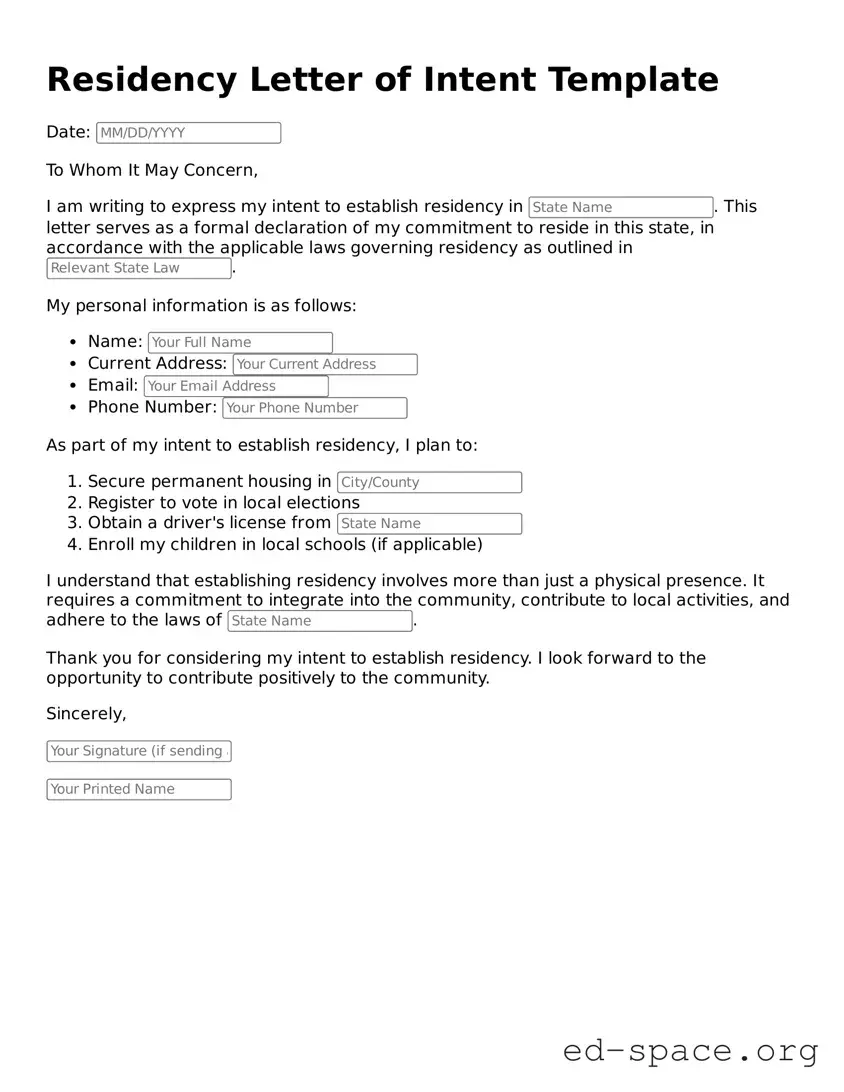
Residency Letter of Intent Template
Date:
To Whom It May Concern,
I am writing to express my intent to establish residency in . This letter serves as a formal declaration of my commitment to reside in this state, in accordance with the applicable laws governing residency as outlined in .
My personal information is as follows:
As part of my intent to establish residency, I plan to:
I understand that establishing residency involves more than just a physical presence. It requires a commitment to integrate into the community, contribute to local activities, and adhere to the laws of .
Thank you for considering my intent to establish residency. I look forward to the opportunity to contribute positively to the community.
Sincerely,
| Fact Name | Description |
|---|---|
| Purpose | The Residency Letter of Intent is used to express a person's intention to establish residency in a particular state. |
| Eligibility | Individuals must meet specific criteria set by the state to qualify for residency. |
| Governing Laws | The form is governed by state-specific laws, which can vary significantly. For instance, California's residency laws are outlined in the California Family Code. |
| Submission Process | Typically, the completed form must be submitted to the appropriate state agency, often the Department of Motor Vehicles or a local government office. |
| Supporting Documents | Applicants may need to provide proof of residency, such as utility bills or rental agreements, along with the form. |
| Deadlines | Each state may have specific deadlines for submitting the Residency Letter of Intent, particularly if it pertains to legal matters. |
| Impact on Taxes | Establishing residency can affect an individual's tax obligations, including state income tax rates and eligibility for certain deductions. |
| Legal Assistance | Seeking legal advice is often recommended to ensure compliance with state laws and to navigate the complexities of residency requirements. |
After obtaining the Residency Letter of Intent form, you will need to carefully complete it to ensure all required information is accurately provided. This process will help facilitate your application and ensure that your intentions are clearly communicated to the relevant authorities.
What is the purpose of the Residency Letter of Intent form?
The Residency Letter of Intent form is a crucial document that expresses your intention to pursue a residency program. It outlines your interest in a specific residency and provides an opportunity to convey your passion for the field. This letter serves as a way to introduce yourself to the program directors and can significantly impact your application. A well-crafted letter can demonstrate your commitment and help you stand out among other candidates.
Who should complete the Residency Letter of Intent form?
This form is typically completed by medical students or graduates who are applying for residency programs. If you are interested in a specific residency and wish to formally express your intent, this form is for you. It’s essential for applicants who want to clarify their goals and motivations to the selection committee.
What information should be included in the Residency Letter of Intent?
Your letter should include several key elements. Start with a brief introduction about yourself, including your background and experiences. Clearly state your interest in the residency program and why you believe you would be a good fit. Additionally, it’s beneficial to mention any specific aspects of the program that attract you. Finally, conclude with a strong statement of intent and gratitude for the opportunity to apply.
Is there a specific format I should follow for the Residency Letter of Intent?
When should I submit the Residency Letter of Intent?
Failing to provide complete personal information. Applicants often omit critical details such as their full name, contact information, or residency program preferences.
Not adhering to the specified word count. Many applicants exceed or fall short of the required length, which can reflect poorly on their attention to detail.
Neglecting to proofread for spelling and grammatical errors. Mistakes in writing can undermine the professionalism of the application.
Using a generic template without personalizing the content. Admissions committees look for unique insights into the applicant’s motivations and experiences.
Failing to address the specific program’s strengths and how they align with personal goals. Applicants may miss the opportunity to demonstrate why they are a good fit for the program.
Submitting the form without obtaining necessary signatures or approvals. This oversight can lead to delays or disqualification from the application process.
The Residency Letter of Intent form is an important document for individuals applying to residency programs. However, several other forms and documents often accompany this letter to provide a comprehensive view of the applicant's qualifications and intentions. Below is a list of common documents that may be required or beneficial during the residency application process.
Each of these documents plays a crucial role in the residency application process. Together, they help programs evaluate candidates comprehensively, ensuring that they select individuals who are well-suited for the challenges of residency training.
The Residency Letter of Intent form serves an important purpose in the application process for residency programs. It shares similarities with several other key documents. Here’s a look at four documents that are comparable to the Residency Letter of Intent:
When filling out the Residency Letter of Intent form, it’s important to approach the task thoughtfully. Here are some key dos and don'ts to keep in mind:
By following these guidelines, you can create a compelling Residency Letter of Intent that stands out to the selection committee.
Many people have misunderstandings about the Residency Letter of Intent form. Here are some common misconceptions and clarifications to help clear things up.
Understanding these misconceptions can help you approach the Residency Letter of Intent form with confidence and clarity.
When filling out and using the Residency Letter of Intent form, consider the following key takeaways: