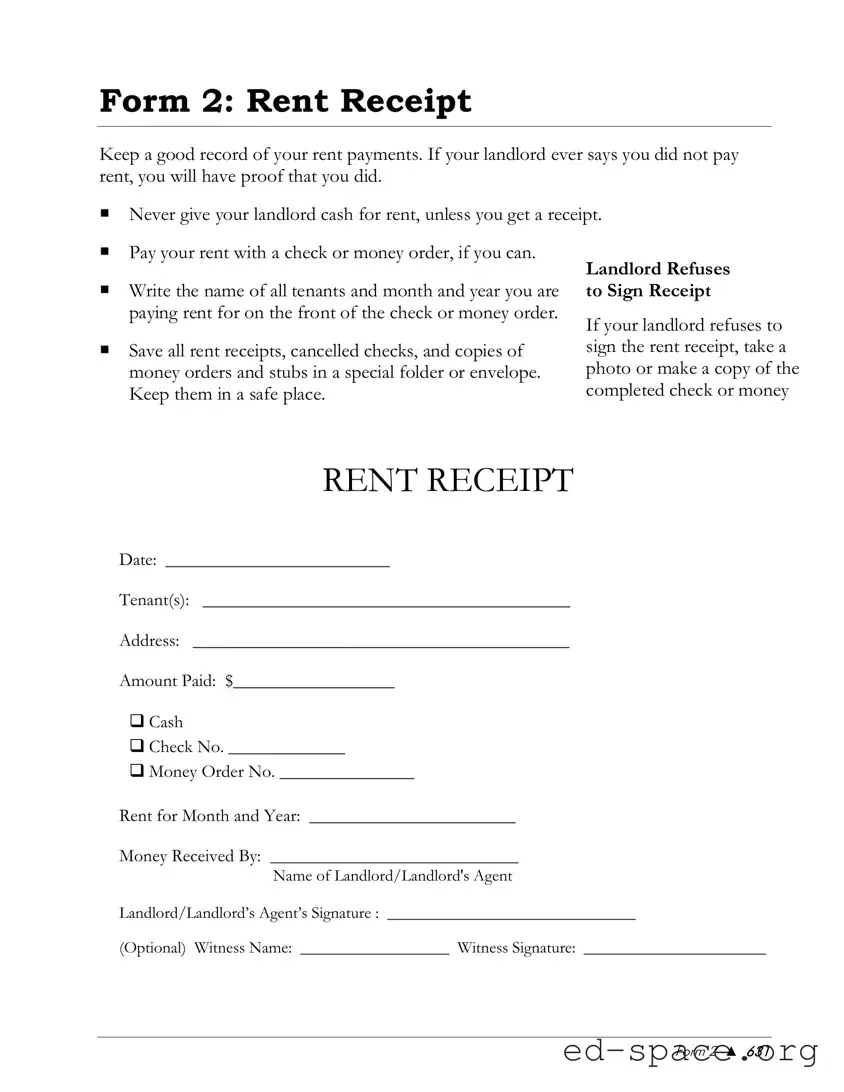
The Rental Receipt form serves as an essential document for both landlords and tenants in the rental process. It provides a clear record of rent payments made, ensuring that both parties have a mutual understanding of the transaction. Key details included in the form are the date of payment, the names of the tenant(s), and the address of the rental property. Additionally, it specifies the amount paid and the method of payment, whether by cash, check, or money order. This clarity helps prevent disputes regarding payment history. The form also allows for the month and year of the rent being paid to be recorded, further establishing a timeline for the transaction. Landlords or their agents must sign the receipt, which adds a layer of authenticity, while a witness signature can also be included for additional verification. Overall, the Rental Receipt form is a straightforward yet vital tool that helps maintain transparency and accountability in rental agreements.
RENT RECEIPT
Date: _________________________
Tenant(s): _________________________________________
Address: __________________________________________
Amount Paid: $__________________
Cash
Check No. _____________
Money Order No. _______________
Rent for Month and Year: _______________________
Money Received By: ______________________________
Name of Landlord/Landlord's Agent Landlord/Landlord’s Agent’s Signature : ______________________________
(Optional) Witness Name: __________________ Witness Signature: ______________________
| Fact Name | Description |
|---|---|
| Date | The receipt must include the date when the payment is made. |
| Tenant Information | Tenant(s) names should be clearly stated on the receipt. |
| Property Address | The address of the rental property must be specified. |
| Payment Amount | The total amount paid by the tenant should be recorded. |
| Payment Method | Indicate how the payment was made: cash, check, or money order. |
| Rent Period | Clearly state the month and year for which the rent is being paid. |
| Received By | The name of the landlord or their agent who received the payment should be included. |
| Signature | The landlord or their agent should sign the receipt to validate it. |
| Witness Information | Including a witness name and signature is optional but can add credibility. |
After gathering the necessary information, you can proceed to fill out the Rental Receipt form. This form serves as a record of payment made by the tenant to the landlord. Follow the steps below to ensure all required fields are completed accurately.
What is a Rental Receipt form?
A Rental Receipt form is a document that confirms payment made by a tenant to a landlord for rent. It serves as proof of payment and includes essential details such as the date, tenant names, address, amount paid, and payment method. This form helps both parties keep accurate records of transactions.
What information do I need to fill out on the Rental Receipt form?
You will need to provide the date of the transaction, the names of the tenant(s), the rental property address, the amount paid, and the payment method (cash, check, or money order). Additionally, you can include the name of the landlord or their agent, and optionally, signatures from both the landlord and a witness.
Why is it important to keep a Rental Receipt?
Keeping a Rental Receipt is crucial for both tenants and landlords. For tenants, it acts as proof of payment in case of disputes. For landlords, it helps track rental income and provides documentation for tax purposes. Both parties benefit from having clear records of their financial transactions.
Can I use a Rental Receipt form for partial rent payments?
Yes, you can use the Rental Receipt form for partial rent payments. Just make sure to clearly indicate the amount paid and the total rent due. This helps maintain transparency and keeps accurate records of what has been paid and what is still owed.
Is a signature required on the Rental Receipt form?
While a signature is not mandatory, it is highly recommended. A signature from the landlord or their agent adds credibility to the receipt. If a witness is present, their signature can further validate the transaction, providing additional assurance to both parties.
How should I store my Rental Receipts?
Store your Rental Receipts in a safe and organized manner. You can keep physical copies in a dedicated folder or file. Alternatively, consider scanning and saving them digitally. This way, you can easily access them when needed, whether for personal records or tax purposes.
Failing to include the date on the rental receipt. This is crucial for record-keeping and can lead to disputes.
Not providing the tenant's name clearly. Ensure all tenant names are spelled correctly to avoid confusion.
Leaving the amount paid section blank. Always specify the exact amount received to maintain transparency.
Choosing the payment method but not filling in the corresponding details. For example, if payment was made by check, the check number should be included.
Neglecting to document the month and year for which rent is being paid. This information is essential for both parties to understand the payment period.
Omitting the landlord's signature or the name of the person receiving the payment. This can lead to questions about the legitimacy of the receipt.
When renting a property, several important documents work in tandem with the Rental Receipt form. Each of these forms serves a specific purpose, ensuring that both landlords and tenants have a clear understanding of their rights and responsibilities. Below is a list of commonly used forms that you may encounter.
Understanding these documents can help create a smoother rental experience. Each form plays a crucial role in protecting the rights of both parties involved in the rental agreement.
The Rental Receipt form serves a specific purpose in documenting rental transactions. However, there are other documents that share similarities with it. Here’s a look at four such documents:
When filling out the Rental Receipt form, attention to detail is crucial. Here are some important dos and don'ts to keep in mind:
Understanding the Rental Receipt form is crucial for both landlords and tenants. However, several misconceptions can lead to confusion. Below are eight common misconceptions about this form, along with clarifications.
Addressing these misconceptions can enhance the understanding and usage of the Rental Receipt form, benefiting both landlords and tenants alike.
When using the Rental Receipt form, it is important to follow certain guidelines to ensure clarity and legal compliance. Here are key takeaways to consider: