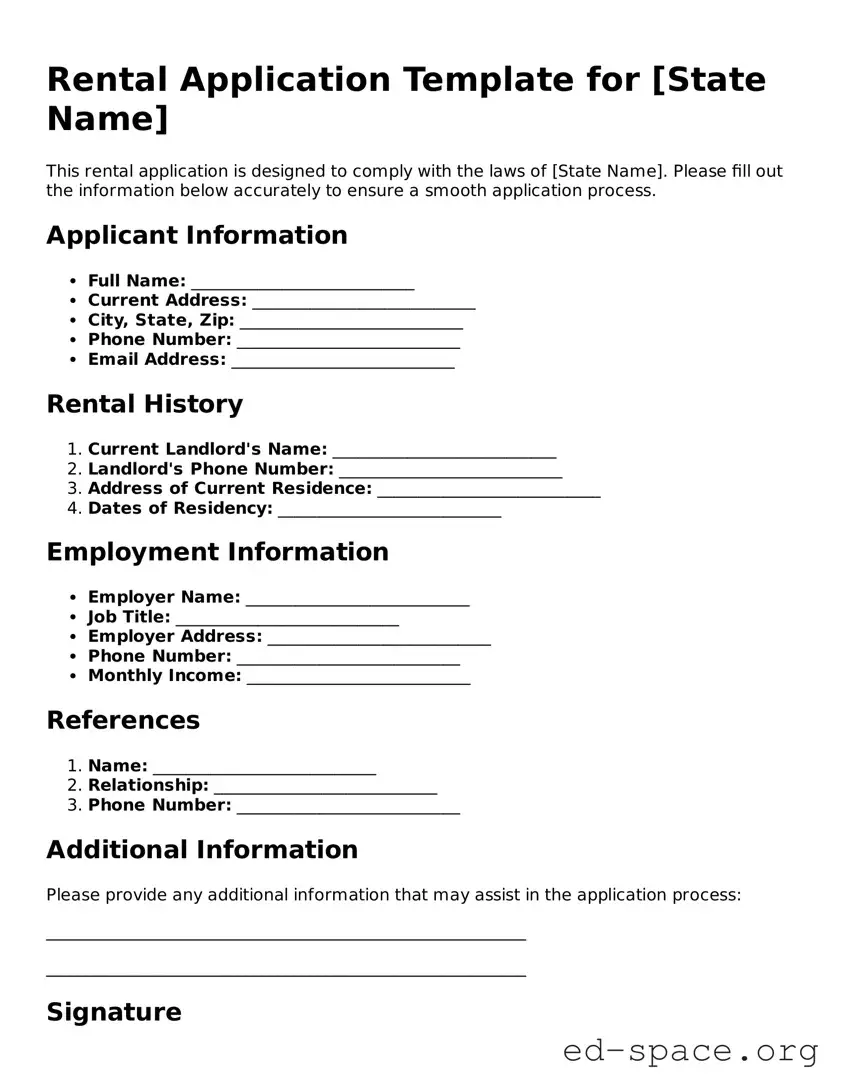
When seeking a new rental property, completing a Rental Application form is a crucial step in the process. This form serves as a comprehensive tool for landlords to assess potential tenants. It typically includes sections that require personal information, such as the applicant's name, contact details, and social security number. Additionally, the form often requests employment history, income verification, and references, allowing landlords to evaluate an applicant's financial stability and reliability. Applicants may also need to disclose their rental history, including previous addresses and landlord contacts. Other important components can include consent for background checks and credit reports, which help landlords make informed decisions. Completing this form accurately and thoroughly is essential, as it not only reflects the applicant's qualifications but also sets the tone for a positive landlord-tenant relationship.
Rental Application Template for [State Name]
This rental application is designed to comply with the laws of [State Name]. Please fill out the information below accurately to ensure a smooth application process.
Applicant Information
Rental History
Employment Information
References
Additional Information
Please provide any additional information that may assist in the application process:
__________________________________________________________
__________________________________________________________
Signature
By signing below, I confirm that the information provided is accurate and complete.
Applicant Signature: ___________________________
Date: ___________________________
| Fact Name | Description |
|---|---|
| Purpose | A rental application form is used by landlords to screen potential tenants. It helps gather important information about the applicant's background, financial status, and rental history. |
| Required Information | Typically, the form requests personal details such as name, contact information, employment history, and references. This information helps landlords make informed decisions. |
| Application Fee | Many landlords charge a non-refundable application fee. This fee covers the cost of background checks and processing the application. |
| State-Specific Laws | Each state has its own laws regarding rental applications. For example, in California, landlords must provide a written notice if they deny an application based on the credit report. |
| Fair Housing Act Compliance | The rental application process must comply with the Fair Housing Act. This means landlords cannot discriminate against applicants based on race, color, religion, sex, national origin, familial status, or disability. |
Completing a rental application is an important step in securing your next home. This process requires careful attention to detail, as the information provided will help landlords assess your suitability as a tenant. Once you have filled out the application, it will be reviewed, and you will be informed of the next steps in the approval process.
What is a Rental Application form?
A Rental Application form is a document that potential tenants fill out when they wish to rent a property. This form collects important information about the applicant, including personal details, rental history, employment status, and references. Landlords and property managers use this information to evaluate the suitability of applicants for their rental properties.
What information do I need to provide on the Rental Application form?
When completing a Rental Application form, you will typically need to provide your full name, contact information, social security number, and details about your current and previous residences. Additionally, you may be asked to include your employment information, income, and references. Some landlords may also request permission to conduct a background check or credit check, so be prepared to provide any necessary consents.
How long does it take to process a Rental Application?
The processing time for a Rental Application can vary. Generally, landlords or property managers aim to complete the review within a few days to a week. Factors influencing this timeline include the number of applications received, the thoroughness of background checks, and the responsiveness of references. If you haven’t heard back after a week, it’s perfectly acceptable to follow up for an update.
What happens if my Rental Application is denied?
If your Rental Application is denied, the landlord or property manager should provide you with a reason for the denial. Common reasons include insufficient income, poor rental history, or negative credit reports. If you believe the denial was unjust, you can request a copy of the report used in the decision-making process. Understanding the reason can help you address any issues before applying for another rental property.
Incomplete Information: Many applicants fail to provide all required details. Missing information can delay the application process or lead to rejection.
Inaccurate Data: Providing false or misleading information, whether intentional or accidental, can result in immediate disqualification.
Neglecting to Review: Skipping a final review of the application before submission can lead to overlooked mistakes or omissions.
Ignoring Instructions: Each rental application may have specific instructions. Failing to follow these can cause confusion and hinder the approval process.
Not Providing References: Many landlords request personal or professional references. Omitting these can raise red flags about your reliability.
Submitting Without Documentation: Required documents, such as pay stubs or identification, should accompany the application. Lack of documentation may lead to delays.
Overlooking Deadlines: Rental applications often have strict submission deadlines. Missing these can result in losing the opportunity for the desired rental.
When applying for a rental property, several forms and documents may accompany the Rental Application form. These documents help landlords evaluate potential tenants more thoroughly and ensure that the rental process is smooth and transparent. Below is a list of commonly used forms and documents in the rental application process.
Understanding these documents and their purposes can facilitate a smoother rental application process. Having them prepared in advance can save time and help applicants present themselves as responsible and organized tenants.
The Rental Application form shares similarities with several other documents used in the housing and rental process. Here are four key documents that resemble it:
When applying for a rental property, it's essential to present yourself in the best light possible. Here are some key dos and don'ts to keep in mind while filling out your rental application form.
By following these guidelines, you can enhance your chances of securing the rental you desire. Good luck!
When it comes to rental applications, several misconceptions can create confusion for potential tenants. Understanding the truth behind these beliefs can help individuals navigate the application process more effectively.
By addressing these misconceptions, individuals can approach their rental applications with greater confidence and clarity. Understanding the process is key to securing a rental that meets their needs.
Filling out a rental application form is a crucial step in securing a rental property. Here are some key takeaways to keep in mind:
Taking these steps can enhance your chances of a successful rental application. Good luck!