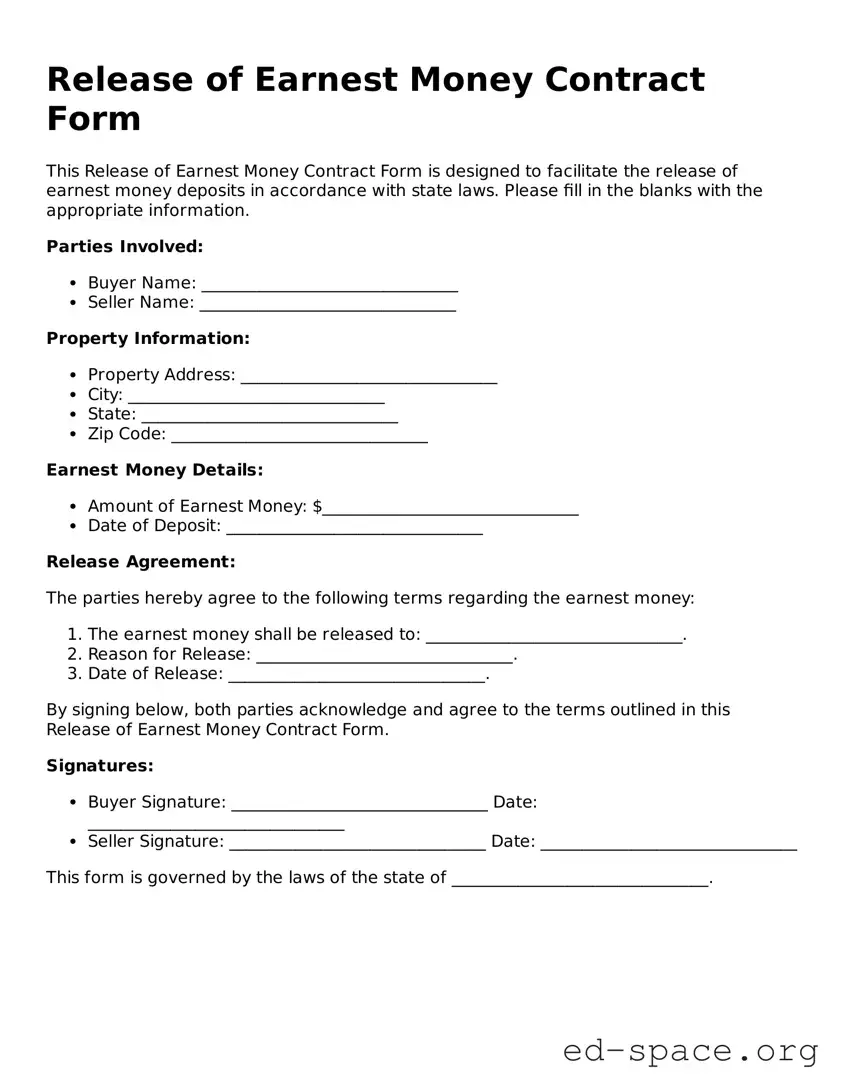
When entering into a real estate transaction, the handling of earnest money is a crucial step that can significantly impact both buyers and sellers. The Release of Earnest Money Contract Form serves as a vital document in this process, providing a clear framework for the return or forfeiture of earnest money deposits. This form outlines the circumstances under which the earnest money can be released, ensuring that all parties are aware of their rights and obligations. It typically includes essential details such as the names of the parties involved, the property address, and the specific reasons for the release. By utilizing this form, buyers can safeguard their interests while sellers can protect themselves from potential disputes. Understanding how to properly complete and execute this form is key to a smooth transaction, making it an essential tool for anyone involved in real estate dealings.
Release of Earnest Money Contract Form
This Release of Earnest Money Contract Form is designed to facilitate the release of earnest money deposits in accordance with state laws. Please fill in the blanks with the appropriate information.
Parties Involved:
Property Information:
Earnest Money Details:
Release Agreement:
The parties hereby agree to the following terms regarding the earnest money:
By signing below, both parties acknowledge and agree to the terms outlined in this Release of Earnest Money Contract Form.
Signatures:
This form is governed by the laws of the state of _______________________________.
| Fact Name | Description |
|---|---|
| Definition | The Release of Earnest Money Contract Form is used to document the release of earnest money in real estate transactions. |
| Purpose | This form clarifies the conditions under which earnest money is returned to the buyer or forfeited to the seller. |
| Parties Involved | The form is typically completed by the buyer, seller, and their respective agents. |
| Governing Law | Each state has its own laws regarding earnest money; for example, in California, it is governed by Civil Code Section 1057. |
| Timing | The release form should be submitted promptly after the decision to release or forfeit the earnest money is made. |
| Signatures Required | All parties involved must sign the form to ensure that the release is legally binding. |
| Record Keeping | It is essential to keep a copy of the completed form for future reference and documentation. |
After obtaining the Release of Earnest Money Contract Form, it's essential to complete it accurately to ensure that all parties involved understand the terms of the release. Follow the steps below to fill out the form correctly.
Once the form is filled out and submitted, the next steps will involve confirming the release of funds and ensuring all parties are informed of the outcome. Prompt communication is crucial to avoid any misunderstandings.
What is the Release of Earnest Money Contract Form?
The Release of Earnest Money Contract Form is a document used in real estate transactions. It allows parties involved in a contract to formally release earnest money held in escrow. This money is typically a deposit made by a buyer to demonstrate their serious intent to purchase a property. The form ensures that all parties agree on the release and terms surrounding the earnest money.
When should I use the Release of Earnest Money Contract Form?
This form should be used when a real estate transaction is not proceeding as planned. Situations may include the buyer backing out of the purchase, the seller failing to meet contractual obligations, or mutual agreement to cancel the transaction. Using this form helps clarify the terms under which the earnest money will be returned or forfeited.
Who needs to sign the Release of Earnest Money Contract Form?
Typically, both the buyer and the seller must sign the form. If there are additional parties involved in the transaction, such as real estate agents or brokers, their signatures may also be required. All parties must agree on the terms of the release to avoid future disputes regarding the earnest money.
What information is required on the form?
The form generally requires details such as the names of the buyer and seller, the property address, the amount of earnest money, and the reason for the release. It may also include any conditions that must be met for the release to occur. Accurate information is crucial to prevent misunderstandings.
Is the Release of Earnest Money Contract Form legally binding?
Yes, once signed by all relevant parties, the form is legally binding. It serves as a written agreement that outlines the terms of the release of the earnest money. Parties should ensure they fully understand the implications of the form before signing, as it may affect their rights to the funds.
What happens if there is a dispute over the earnest money?
If a dispute arises regarding the earnest money, parties may need to seek legal advice. The Release of Earnest Money Contract Form can help clarify the agreed terms, but if there is disagreement, mediation or legal action may be necessary. It's advisable to keep thorough records of all communications and agreements related to the transaction.
Missing Signatures: One common mistake is forgetting to sign the form. Each party involved must provide their signature to validate the release. Without this, the form may not be considered legally binding.
Incorrect Information: Providing inaccurate details can lead to complications. Double-check names, addresses, and any specific terms related to the earnest money. Errors can cause delays or disputes later on.
Omitting Important Dates: Failing to include the date of the agreement or the date the earnest money was originally paid can create confusion. Always ensure that all relevant dates are clearly stated.
Not Reviewing Terms: It's essential to read through the entire form before submitting. Many people overlook specific terms or conditions that may affect the release of funds. Take the time to understand what you are agreeing to.
The Release of Earnest Money Contract Form is an essential document in real estate transactions, particularly when a buyer and seller need to clarify the status of earnest money deposits. However, this form often works in conjunction with several other important documents. Below is a list of these forms, each playing a crucial role in the transaction process.
Understanding these accompanying documents can significantly enhance your real estate experience. Each form serves a unique purpose, contributing to a smoother transaction and helping to protect the interests of all parties involved.
When filling out the Release of Earnest Money Contract Form, it’s important to be careful and thorough. Here are some things you should and shouldn’t do:
Understanding the Release of Earnest Money Contract Form is crucial for anyone involved in real estate transactions. Unfortunately, several misconceptions can lead to confusion and potential issues. Here are seven common misconceptions about this form:
Misconception 1: The form is only necessary if a deal falls through.
This is incorrect. While it is often used in failed transactions, the form can also be utilized when both parties agree to release the earnest money for other reasons.
Misconception 2: Only buyers can initiate the release of earnest money.
In reality, either party—buyer or seller—can request the release of earnest money, depending on the terms of the contract.
Misconception 3: The form guarantees the return of earnest money.
Not necessarily. The release depends on the circumstances of the transaction and the agreement between both parties.
Misconception 4: You don’t need a lawyer to fill out the form.
While it’s not legally required, consulting with a legal professional can help ensure that the form is completed correctly and that your rights are protected.
Misconception 5: The form can be signed after the closing date.
This is misleading. The form should be completed and signed as soon as the decision to release earnest money is made, ideally before the closing date.
Misconception 6: There is a standard timeframe for submitting the form.
There is no universal timeframe. The timeline for submission can vary based on the contract terms and local regulations.
Misconception 7: The Release of Earnest Money Contract Form is the same in every state.
This is false. Each state may have different requirements and forms, so it’s essential to use the correct form for your specific location.
Being aware of these misconceptions can help you navigate the real estate process more effectively. Always seek accurate information and consider professional guidance when dealing with earnest money contracts.
When dealing with the Release of Earnest Money Contract Form, it's important to understand a few key points. Here are some takeaways to keep in mind:
By following these steps, you can navigate the process smoothly and ensure that all parties are on the same page.