The Police Report form serves as a crucial tool for individuals wishing to document incidents involving law enforcement. It allows citizens to file complaints or reports regarding interactions with police, ensuring that their voices are heard. This form is designed to gather essential information, starting with the identity of the person making the report. While anonymity is an option, providing details such as name, address, and contact information can help authorities follow up effectively. The form also captures vital statistics, including race and age, which are optional but may aid in understanding broader trends. Furthermore, it prompts the complainant to specify the nature of the complaint, detailing the officer involved, the date and time of the incident, and the location where it occurred. A comprehensive description of the incident is crucial, as it helps in assessing the situation accurately. If there were any injuries, the form requests information about medical treatment received, including the name of the doctor and the date of treatment. Finally, the form allows for additional comments and requires a signature, reinforcing the seriousness of the report. This structured approach not only facilitates the filing process but also enhances transparency and accountability within law enforcement agencies.

Gray areas are for internal use only.
DEPARTMENT
ORI NO.
INTERNAL AFFAIRS CASE NO.
PERSON MAKING REPORT (Complaints may be filed anonymously)
NAME
ALIAS
ADDRESS
CITY
DOB
STATE |
|
ZIP |
|
PHONE |
||
|
|
|
|
|
|
|
|
|
|
|
|
RACE (optional for statistical purposes only) |
|
|
AGE |
SEX |
|
|
|
|
|
|
|
|
|
|
|
EMPLOYER/SCHOOL
PHONE
ADDRESS
CITY
STATE
ZIP
INCIDENT
NATURE OF COMPLAINT
COMPLAINT AGAINST (NAME(s))
BADGE NO(s)
DATE
TIME
DATE/TIME REPORTED
HOW REPORTED
INCIDENT LOCATION |
DIST/AREA |
BEAT |
|
|
|
DESCRIPTION OF INCIDENT |
|
|
DESCRIPTION OF ANY INJURIES
PLACE OF |
DOCTOR’S |
DATE OF |
|
TREATMENT |
NAME |
TREATMENT |
|
|
|
|
|
SIGNATURE OF COMPLAINANT (Optional) |
|
|
DATE |
|
|
|
|
COMMENTS |
|
|
|
SIGNATURE
BADGE NO.
DATE RECEIVED
| Fact Name | Details |
|---|---|
| Form Purpose | This form is used to file complaints regarding law enforcement conduct in Hanover Township. |
| Anonymity | Individuals can file complaints anonymously if they choose to do so. |
| Incident Reporting | Details about the incident, including date, time, and location, must be provided. |
| Injury Documentation | If there are any injuries, the complainant should describe them and provide doctor treatment details. |
| Optional Information | Race and signature of the complainant are optional fields on the form. |
| Contact Information | Complainants must provide their contact information, including address and phone number. |
| Governing Law | This form is governed by New Jersey state law regarding internal affairs complaints. |
| Internal Use | Gray areas on the form are designated for internal use only by the police department. |
| Submission Process | Complaints can be submitted in person or via mail to the Hanover Township Police Department. |
Completing the Police Report form accurately is essential for ensuring that your complaint is properly documented. After filling out the form, it will be submitted to the appropriate law enforcement agency for review. Follow these steps to ensure that all necessary information is included.
What is the purpose of the Police Report form?
The Police Report form is used to file complaints against law enforcement personnel. This includes any officer from the Hanover Township Police Department or other law enforcement agencies in Morris County. Individuals can report incidents of misconduct, excessive force, or any other concerns they have regarding police actions. The form allows for anonymous submissions, ensuring that individuals can voice their concerns without fear of retaliation.
Who can file a complaint using this form?
Anyone can file a complaint using the Police Report form. This includes members of the public who have witnessed or experienced an incident involving law enforcement. The form is designed to be accessible, allowing for anonymous reporting if desired. Whether you are a resident, visitor, or employee in the area, your voice can be heard through this process.
What information is required to complete the form?
To complete the Police Report form, you will need to provide specific information. This includes your name, address, and contact details, though these can be omitted if you choose to file anonymously. You must also describe the nature of your complaint, including the names of the officers involved, the date and time of the incident, and the location where it occurred. Additionally, if there were any injuries, you should include details about medical treatment received.
How will my complaint be handled after submission?
Once your complaint is submitted, it will be reviewed by the Internal Affairs division of the police department. They will assess the information provided and determine the appropriate course of action. This may include conducting an investigation into the incident. You may not receive immediate feedback, but rest assured that all complaints are taken seriously and handled with care.
Incomplete Personal Information: Failing to provide all required personal details can delay the processing of the report. Ensure that your name, address, and contact information are fully filled out.
Missing Incident Details: Omitting key information about the incident can lead to misunderstandings. Be specific about the nature of the complaint, including the date, time, and location.
Incorrect Names or Badge Numbers: Providing wrong names or badge numbers for the individuals involved can hinder the investigation. Double-check these details for accuracy.
Not Describing Injuries: If there are injuries, failing to describe them can affect the outcome of the report. Include as much detail as possible about any injuries sustained.
Neglecting to Sign the Report: A missing signature can render the report invalid. Always sign the report before submitting it, even if it is optional.
Ignoring the Reporting Method: Not specifying how the incident was reported can create confusion. Clearly indicate whether it was done in person, by phone, or online.
When filing a complaint or report with law enforcement, several additional forms and documents may be required or helpful. These documents assist in providing a complete picture of the situation and ensure that all necessary information is captured effectively. Below is a list of forms often used alongside the Police Report form.
These documents, when used in conjunction with the Police Report form, help ensure that all aspects of an incident are thoroughly documented. This comprehensive approach aids law enforcement in conducting investigations and supports the rights and needs of those involved.
Incident Report: Similar to a Police Report, an Incident Report documents specific events or occurrences. It includes details about the incident, involved parties, and any actions taken by law enforcement.
Accident Report: This document is used to record information about vehicle accidents. Like a Police Report, it captures the who, what, when, and where, along with details of injuries and damages.
Witness Statement Form: A Witness Statement Form collects accounts from individuals who observed an incident. It serves a similar purpose by documenting perspectives and details relevant to the case.
Victim Impact Statement: This form allows victims to express how a crime has affected them. It parallels the Police Report in that it provides essential context for law enforcement and the judicial process.
Field Interview Report: Officers use this report to document interactions with individuals during investigations. It shares similarities with a Police Report in terms of recording details and observations.
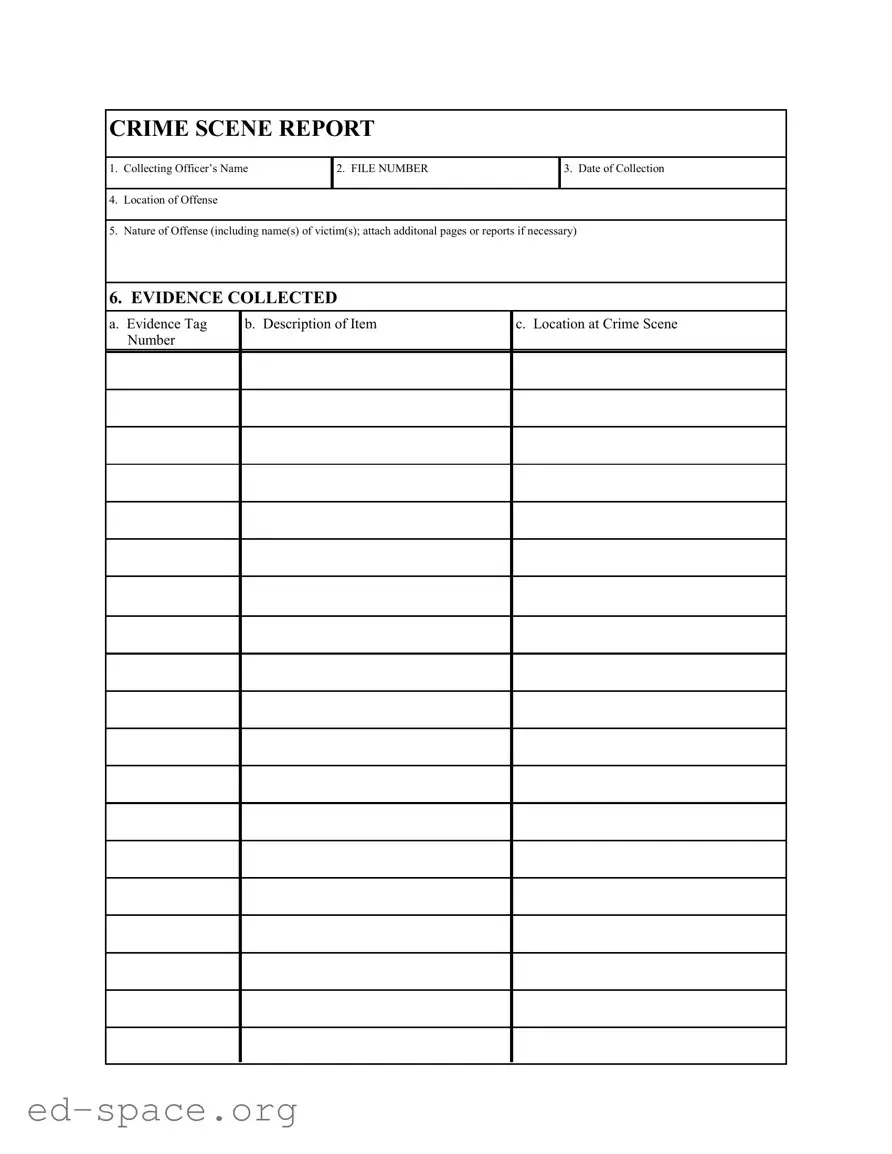
Crime Scene Report: This document outlines the findings and observations made at a crime scene. Like a Police Report, it is crucial for establishing the facts surrounding an incident.
Arrest Report: An Arrest Report details the circumstances surrounding an arrest, including the charges and evidence. It is akin to a Police Report in that it serves as an official record of law enforcement actions.
Evidence Log: This log tracks items collected during an investigation. While focused on physical evidence, it complements the Police Report by providing a thorough account of what was gathered.
Complaint Form: A general Complaint Form allows individuals to report grievances against any entity, including police. It resembles the Police Report in its function of documenting complaints.
Internal Affairs Report: This report investigates allegations against law enforcement personnel. It aligns with the Police Report in that it addresses complaints and seeks to provide accountability within the police department.
When filling out the Police Report form, it's important to be thorough and accurate. Here are some guidelines to help you navigate the process effectively.
By following these guidelines, you can ensure that your report is clear and effective, aiding the investigation process.
Understanding the Police Report form is crucial for effective communication with law enforcement. However, several misconceptions exist regarding its purpose and use. Below is a list of common misconceptions along with explanations.
When filling out the Police Report form, it is essential to provide accurate and detailed information. Here are some key takeaways to keep in mind:
Using the Police Report form effectively can help ensure that your complaint is taken seriously and addressed appropriately. Your input plays a crucial role in the internal affairs process.