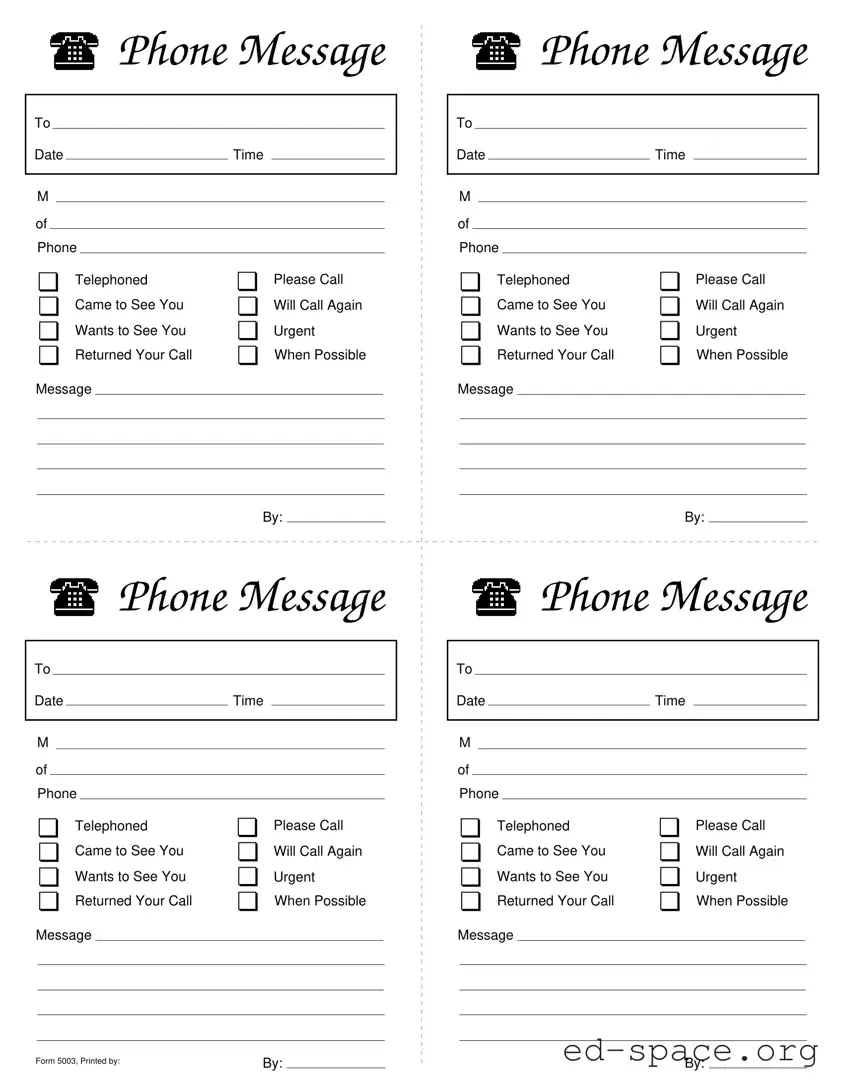
In the fast-paced world of communication, keeping track of important messages can often feel like a daunting task. The Phone Message Slips form serves as a practical tool to streamline this process, ensuring that no crucial information slips through the cracks. This form is designed to capture essential details such as the date and time of the call, the method of communication, and the nature of the message itself. Users can easily indicate whether the caller has telephoned, requested a call back, or visited in person. Additionally, the form allows for categorization of messages based on urgency, providing clarity in prioritizing follow-ups. With checkboxes for various scenarios—ranging from "Wants to See You" to "Returned Your Call"—it simplifies the task of recording and relaying messages. By utilizing the Phone Message Slips form, individuals and organizations can maintain a clear and organized communication flow, ultimately enhancing productivity and ensuring that every message is addressed in a timely manner.
|
|
|
|
|
Phone Message |
||||
|
|
|
|
|
|
|
|
|
|
To |
|
|
|
|
|
||||
Date |
|
|
Time |
|
|
|
|||
|
|
|
|
|
|
|
|
|
|
M |
|
|
|
|
|
||||
of |
|
|
|
|
|
||||
Phone |
|
|
|
|
|
||||
❏ Telephoned |
❏ Please Call |
||||||||
❏ Came to See You |
❏ Will Call Again |
||||||||
❏ Wants to See You |
❏ Urgent |
||||||||
❏ Returned Your Call |
❏ When Possible |
||||||||
Message
|
|
|
|
|
|
By: |
|
|
|
|
|
|
|
|
|
Phone Message |
|
||||
|
|
|
|
|
|
|
|
|
|
|
To |
|
|
|
|
|
|
||||
Date |
|
|
Time |
|
|
|
||||
|
|
|
|
|
|
|
|
|
|
|
M |
|
|
|
|
|
|
||||
of |
|
|
|
|
|
|
||||
Phone |
|
|
|
|
|
|
||||
❏ Telephoned |
❏ Please Call |
|
||||||||
❏ Came to See You |
❏ Will Call Again |
|
||||||||
❏ Wants to See You |
❏ Urgent |
|
||||||||
❏ Returned Your Call |
❏ When Possible |
|
||||||||
Message
|
|
|
|
|
Phone Message |
||||
|
|
|
|
|
|
|
|
|
|
To |
|
|
|
|
|
||||
Date |
|
|
Time |
|
|
|
|||
|
|
|
|
|
|
|
|
|
|
M |
|
|
|
|
|
||||
of |
|
|
|
|
|
|
|||
Phone |
|
|
|
|
|
||||
❏ Telephoned |
❏ Please Call |
||||||||
❏ Came to See You |
❏ Will Call Again |
||||||||
❏ Wants to See You |
❏ Urgent |
||||||||
❏ Returned Your Call |
❏ When Possible |
||||||||
Message
|
|
|
|
|
|
By: |
|
|
|
|
|
|
|
|
|
Phone Message |
|
||||
|
|
|
|
|
|
|
|
|
|
|
To |
|
|
|
|
|
|
||||
Date |
|
|
Time |
|
|
|
||||
|
|
|
|
|
|
|
|
|
|
|
M |
|
|
|
|
|
|
||||
of |
|
|
|
|
|
|
||||
Phone |
|
|
|
|
|
|
||||
❏ Telephoned |
❏ Please Call |
|
||||||||
❏ Came to See You |
❏ Will Call Again |
|
||||||||
❏ Wants to See You |
❏ Urgent |
|
||||||||
❏ Returned Your Call |
❏ When Possible |
|
||||||||
Message
Form 5003, Printed by: |
By: |
|
By: |
|
|
|
| Fact Name | Description |
|---|---|
| Purpose | The Phone Message Slips form is designed to document phone communications and messages for easy reference. |
| Fields Included | This form includes fields for the recipient's name, date, time, method of phone contact, and the message itself. |
| Options for Contact | Users can indicate the method of communication, such as telephoned, please call, or came to see you. |
| Urgent Notifications | The form allows for marking messages as urgent, ensuring timely attention to important communications. |
| Form Number | This is identified as Form 5003, which helps in organizing and filing. |
| Printed By | The form includes a section to indicate who printed it, providing accountability and tracking. |
| State-Specific Laws | While this form is generally used across various states, specific regulations may apply depending on local governing laws. |
Filling out the Phone Message Slips form is a straightforward process. This form helps keep track of important messages and communications. Follow the steps below to complete the form accurately.
What is the purpose of the Phone Message Slips form?
The Phone Message Slips form serves as a practical tool for documenting communications that occur via phone or in person. It helps ensure that important messages are not forgotten or overlooked. By recording details such as the date, time, and nature of the communication, this form provides a clear record that can be referenced later. This is particularly useful in professional settings where timely responses are crucial.
What information do I need to fill out on the Phone Message Slips form?
When completing the Phone Message Slips form, you should include several key pieces of information. First, note the date and time of the message. Next, indicate the method of communication by checking the appropriate box, such as "Telephoned," "Came to See You," or "Returned Your Call." Additionally, you should specify the urgency of the message if applicable. Finally, provide a brief summary of the message itself. This will ensure that anyone reviewing the slip understands the context and importance of the communication.
How can I ensure that the Phone Message Slips are used effectively?
To maximize the effectiveness of the Phone Message Slips, it is essential to establish a consistent process for their use. Encourage all team members to fill out a slip immediately after receiving a call or visit. Regularly review these slips during team meetings to keep everyone informed about ongoing communications. Furthermore, consider creating a centralized location where these slips can be stored and easily accessed by the relevant parties. This practice not only promotes accountability but also enhances communication within the organization.
Can the Phone Message Slips be customized for specific needs?
Yes, the Phone Message Slips can be customized to better suit the specific needs of your organization. While the standard form provides essential fields, additional sections can be added to capture more detailed information, such as the caller's contact information or follow-up actions required. Customization allows for greater flexibility and can improve the overall functionality of the form, making it a more effective tool for your communication needs.
Neglecting to Include the Date and Time: One common mistake is forgetting to fill in the date and time of the call or visit. This information is crucial for tracking messages accurately.
Choosing Multiple Options: Selecting more than one checkbox under the "M of Phone" section can create confusion. It is important to choose only one option that best describes the nature of the message.
Failing to Write a Clear Message: A vague or incomplete message can lead to misunderstandings. Providing a detailed message ensures the recipient knows exactly what is needed.
Omitting the Name of the Person Taking the Message: Not including your name in the "Message By" section can lead to accountability issues. Always write your name to ensure clarity on who received the message.
Not Marking Urgency Appropriately: Mislabeling a message as urgent when it is not, or vice versa, can cause delays. Use the urgency checkbox judiciously to convey the correct level of importance.
Using Illegible Handwriting: Illegible handwriting can make it difficult for the recipient to read the message. Clear and neat writing is essential for effective communication.
The Phone Message Slips form is an essential tool for capturing important communication details. Along with this form, there are several other documents that can help streamline communication and ensure that messages are effectively relayed. Here’s a brief overview of some commonly used forms that complement the Phone Message Slips.
These documents work together to enhance communication efficiency. By using them alongside the Phone Message Slips form, you can create a more organized and effective communication system.
Visitor Log: Like the Phone Message Slips form, a Visitor Log records important details about individuals who visit an office. It captures the visitor's name, time of visit, and purpose, ensuring that all interactions are documented for future reference.
Appointment Reminder: An Appointment Reminder serves a similar purpose by notifying individuals about scheduled meetings. It includes the date, time, and reason for the appointment, helping to keep everyone informed and organized.
Delivery Confirmation: A Delivery Confirmation document tracks packages or important items sent or received. It includes sender and recipient details, along with the time of delivery, ensuring accountability for the items exchanged.
Client Intake Form: The Client Intake Form gathers essential information from new clients. It collects personal details, contact information, and specific needs, much like how the Phone Message Slips form gathers relevant details about phone interactions.
When filling out the Phone Message Slips form, there are several important things to keep in mind. Here’s a list of dos and don’ts to ensure the message is clear and effective.
Misconceptions about the Phone Message Slips form can lead to confusion in its usage. Here are four common misunderstandings:
When using the Phone Message Slips form, it’s important to understand how to fill it out correctly to ensure clear communication. Here are some key takeaways:
By following these guidelines, you can effectively use the Phone Message Slips form to communicate important information clearly and efficiently.