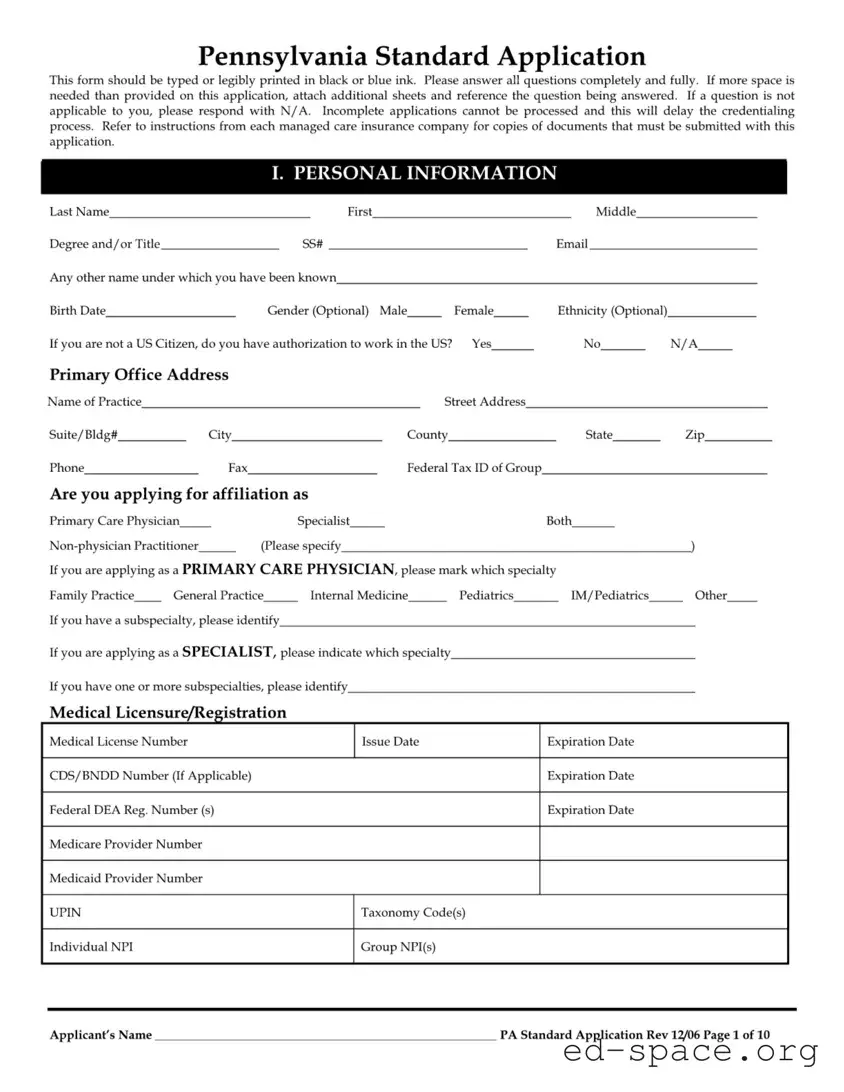
The Pennsylvania Standard Application form serves as a crucial document for healthcare professionals seeking to establish their credentials within the state. This application requires individuals to provide detailed personal information, including their name, contact details, and professional qualifications. Applicants must specify their medical specialties, whether they are primary care physicians or specialists, and include relevant licenses and registration numbers. Education and training history is also a significant part of the form, with sections dedicated to undergraduate education, medical school, and any internships or residencies completed. The application emphasizes the importance of completeness; every question must be answered fully, and if additional space is needed, extra sheets should be attached. Incomplete submissions will lead to delays in the credentialing process, underscoring the necessity for meticulous attention to detail. Furthermore, applicants are reminded to refer to the specific instructions provided by managed care insurance companies regarding any additional documents that must accompany the application. This form is not just a bureaucratic requirement; it is a gateway for healthcare providers to demonstrate their qualifications and secure their place in Pennsylvania's healthcare system.
| Fact Name | Description |
|---|---|
| Form Purpose | The Pennsylvania Standard Application is used for credentialing healthcare providers. |
| Submission Guidelines | Applicants must type or print the form in black or blue ink and answer all questions completely. |
| Completeness Requirement | Incomplete applications cannot be processed, which may delay the credentialing process. |
| Additional Documentation | Applicants must refer to specific managed care insurance company instructions for required documents. |
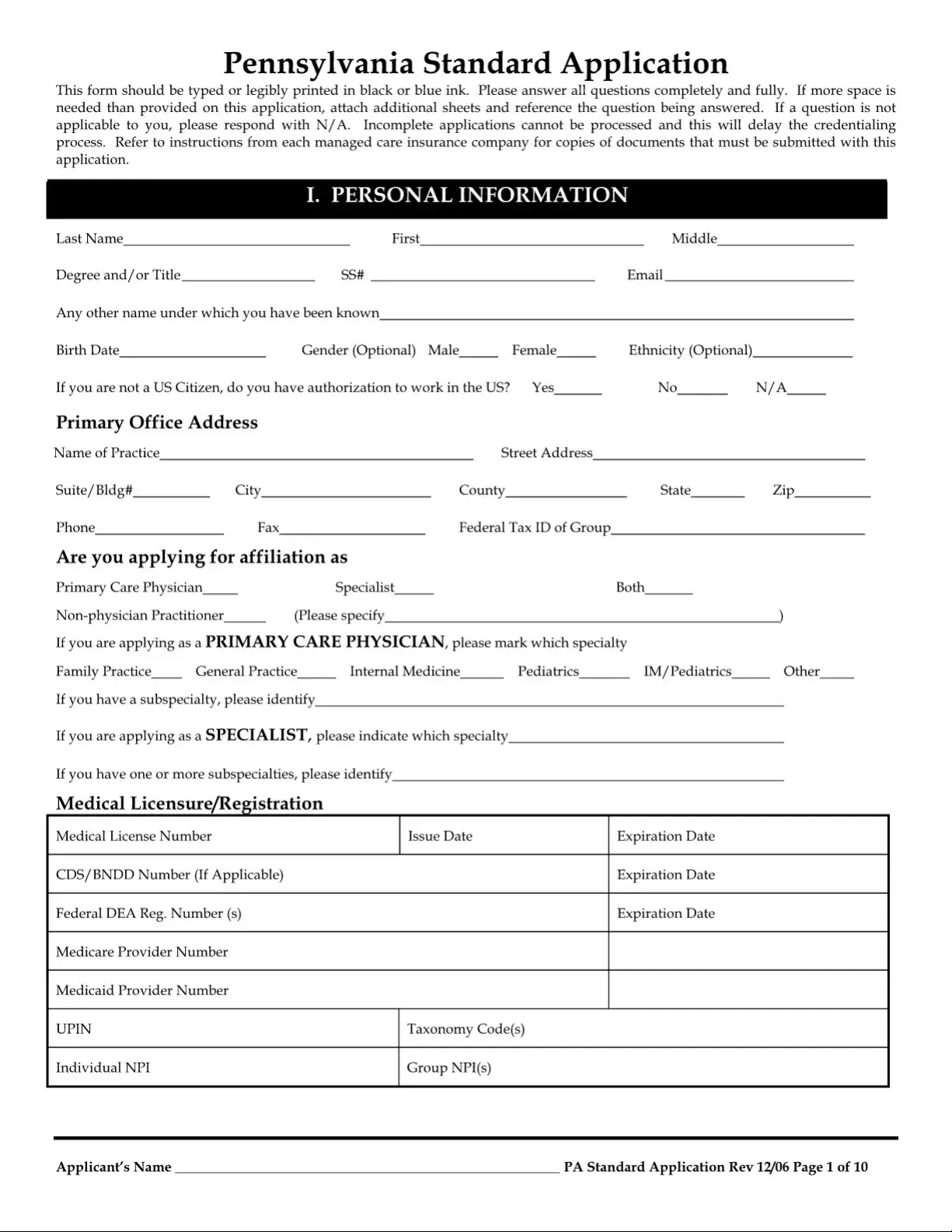
| Personal Information Section | This section collects essential details such as name, contact information, and work authorization status. |
| Medical Licensure | Applicants must provide their medical license number, issue date, and expiration date. |
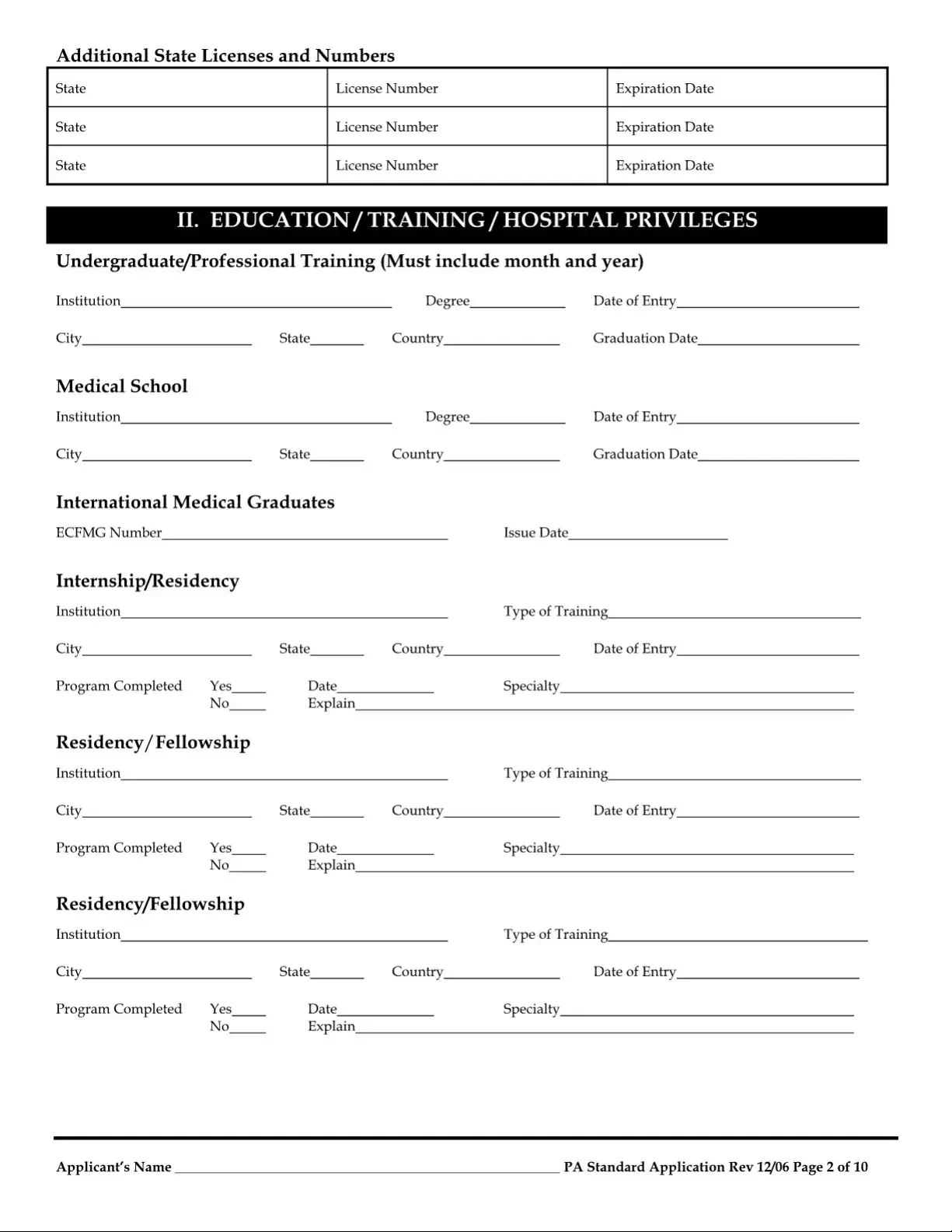
| Education and Training | Details about undergraduate, professional training, and residency must be included in the application. |
| Governing Laws | The application is governed by Pennsylvania state laws regarding healthcare provider credentialing. |
Completing the Pennsylvania Standard Application form requires careful attention to detail. This form collects essential information regarding your personal background, education, training, and work history. Ensure that all sections are filled out accurately to avoid delays in processing.
What is the Pennsylvania Standard Application form?
The Pennsylvania Standard Application form is a document used by healthcare professionals seeking to apply for affiliation with managed care insurance companies in Pennsylvania. It requires applicants to provide personal, educational, and professional information to facilitate the credentialing process.
How should I complete the application?
This form should be typed or legibly printed in black or blue ink. It is crucial to answer all questions fully and completely. If additional space is needed, attach separate sheets and reference the relevant question. If a question does not apply to you, respond with "N/A." Incomplete applications will delay processing.
What personal information is required?
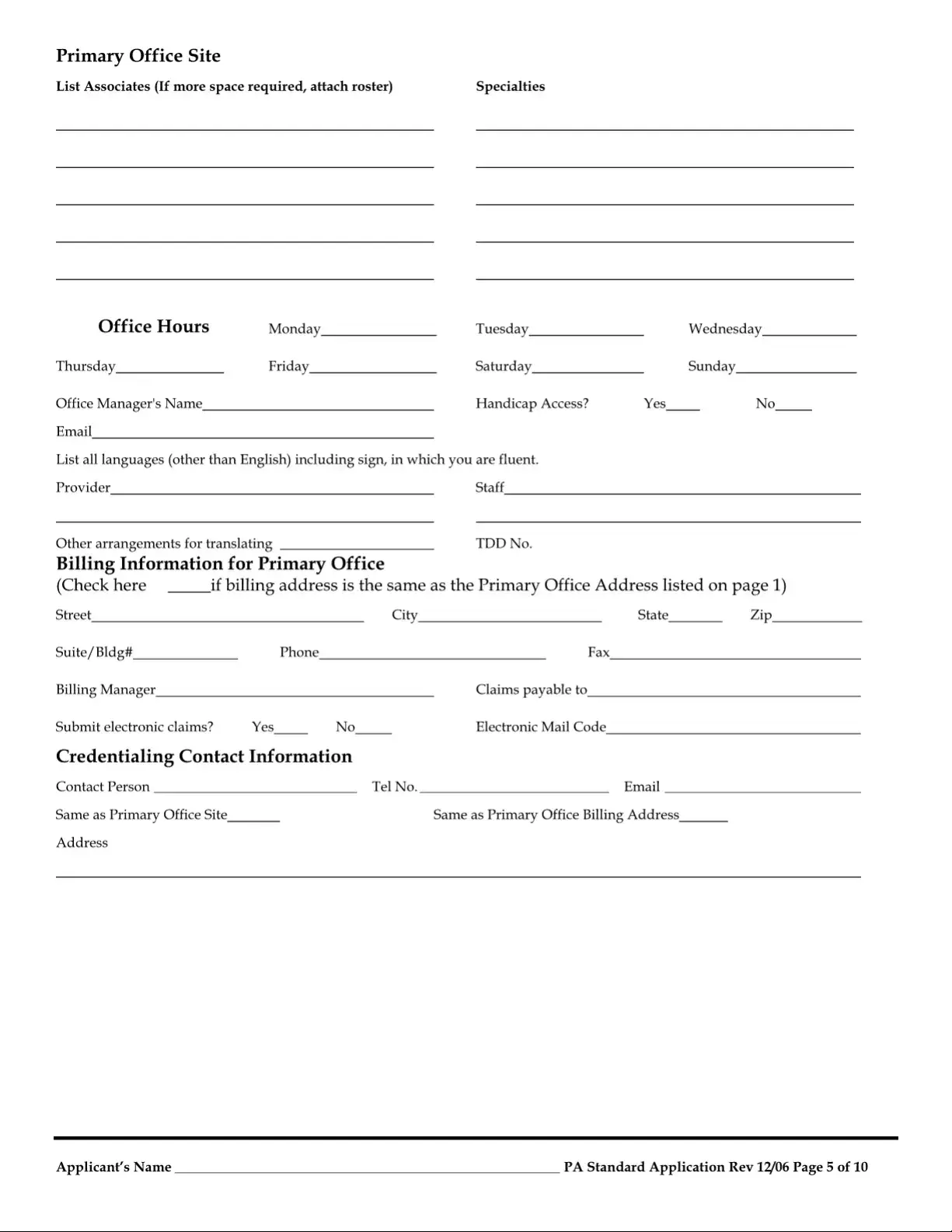
Applicants must provide their last name, first name, middle name, degree or title, Social Security number, and any other names previously used. Additional details include birth date, gender (optional), email, ethnicity (optional), and whether the applicant is authorized to work in the U.S. The primary office address and contact information are also required.
What educational background do I need to provide?
Applicants must list their undergraduate and professional training, including the name of the institution, degree earned, dates of attendance, and graduation dates. For medical school, similar information is required. International medical graduates need to include their ECFMG number and issue date.
What information about my medical licensure is necessary?
Applicants must provide details about their medical licenses, including license numbers, issue and expiration dates, and any applicable CDS/BNDD numbers. Additionally, information regarding federal DEA registration, Medicare and Medicaid provider numbers, and taxonomy codes must be included.
How do I document my work history?
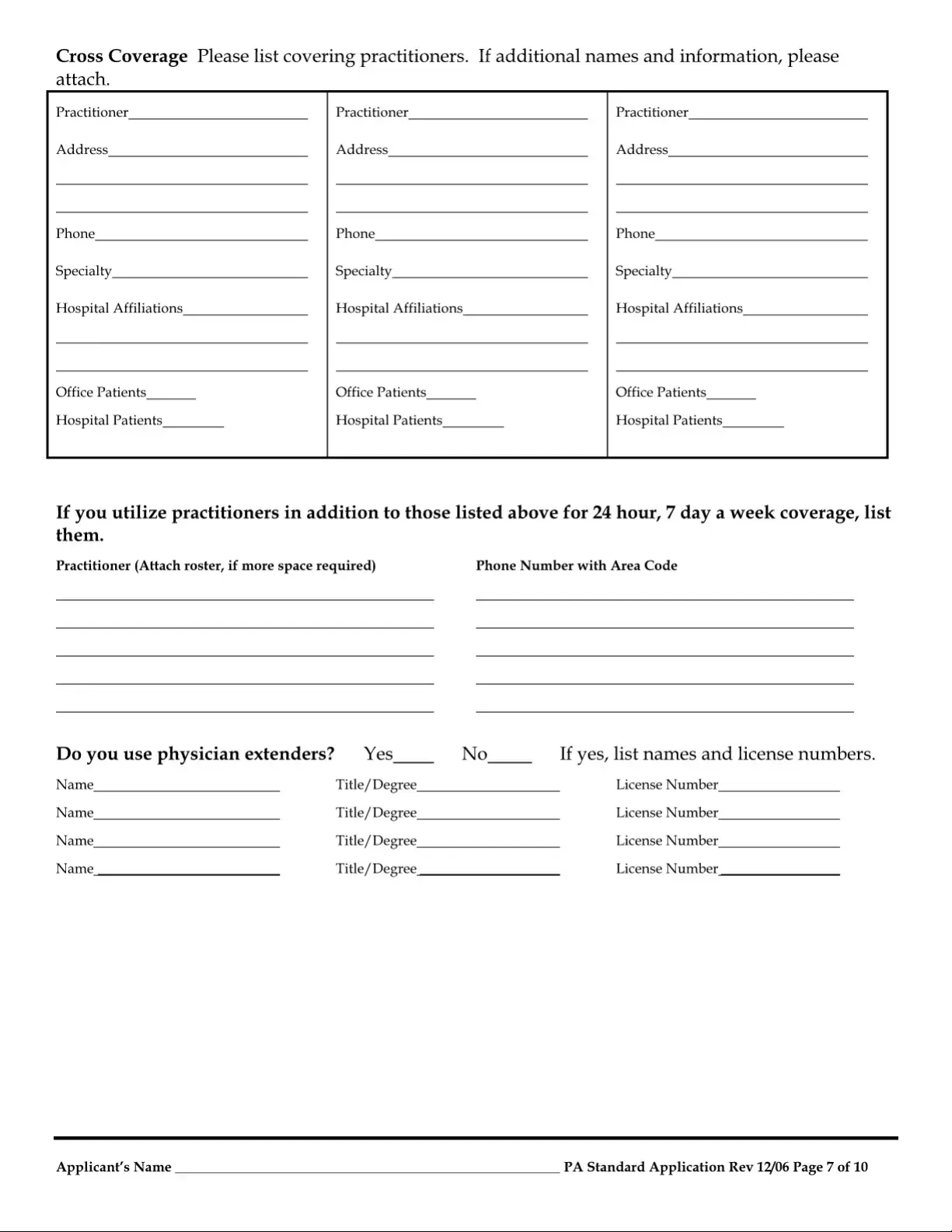
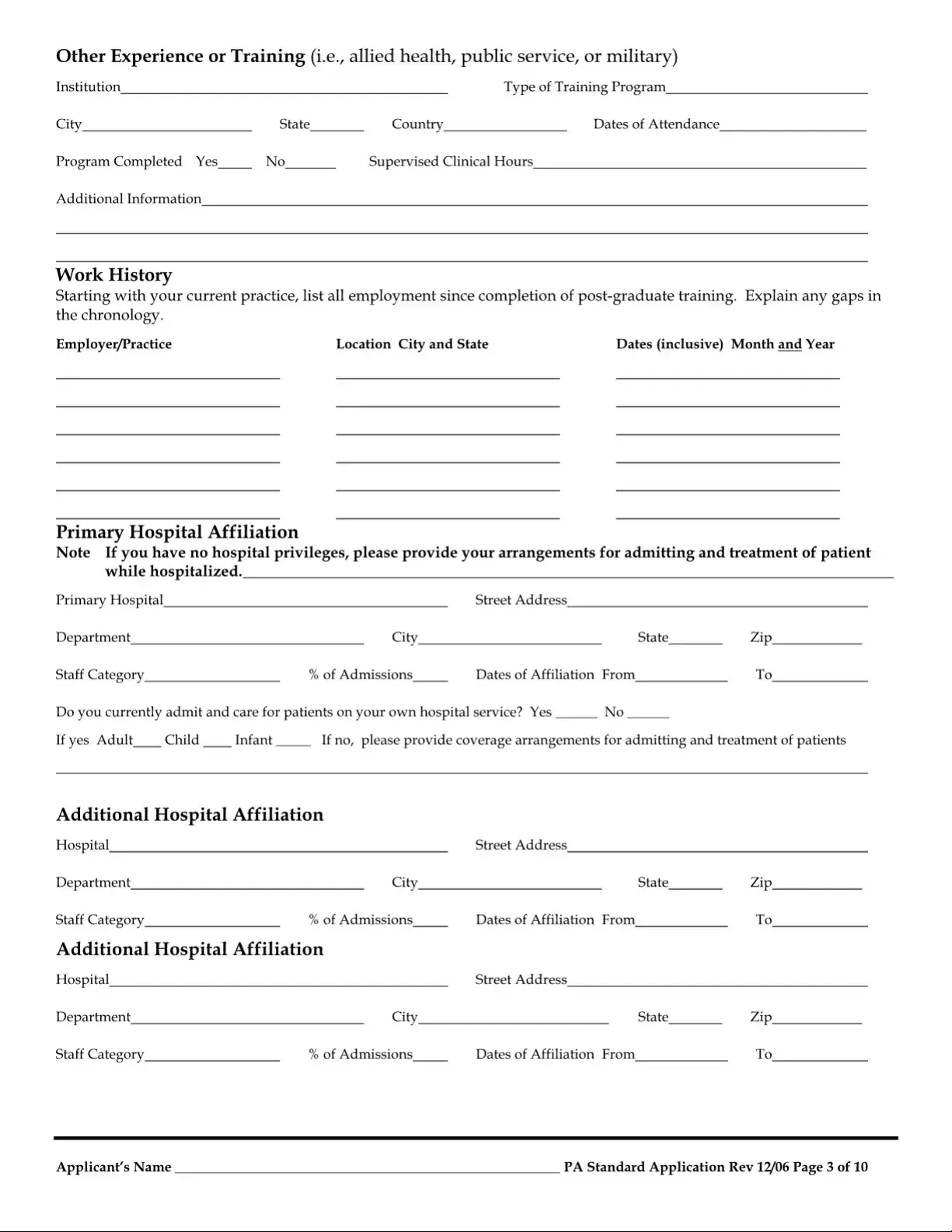
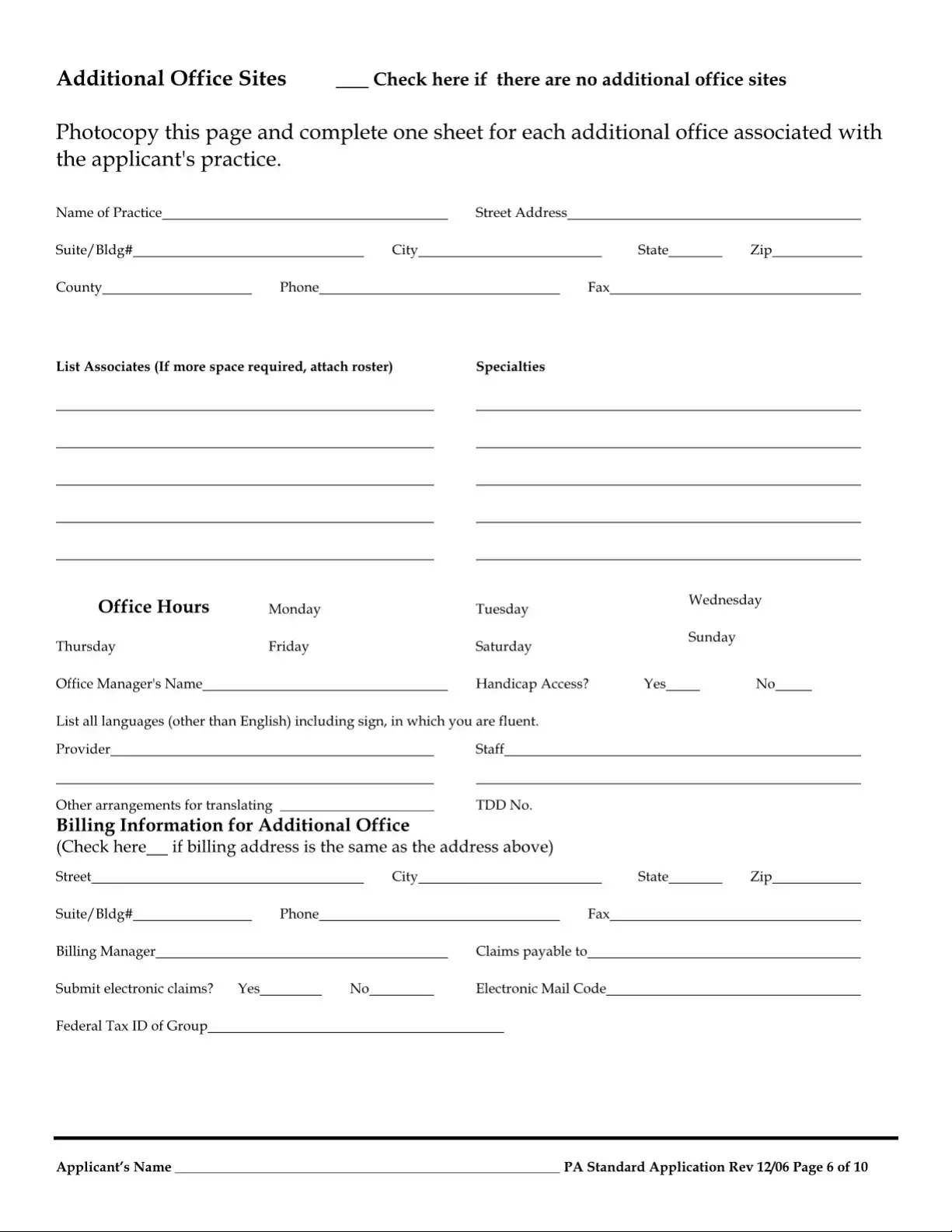
Starting with the current practice, applicants should list all employment since completing post-graduate training. This includes employer names, practice locations, dates of employment, and explanations for any gaps in employment history. It is essential to include details about hospital affiliations and the percentage of admissions during those periods.
What if I have no hospital privileges?
If an applicant does not have hospital privileges, they must provide details about their arrangements for admitting and treating patients. This includes information on how patient care will be managed and who will cover the admitting responsibilities.
Are there any specific instructions for submitting documents?
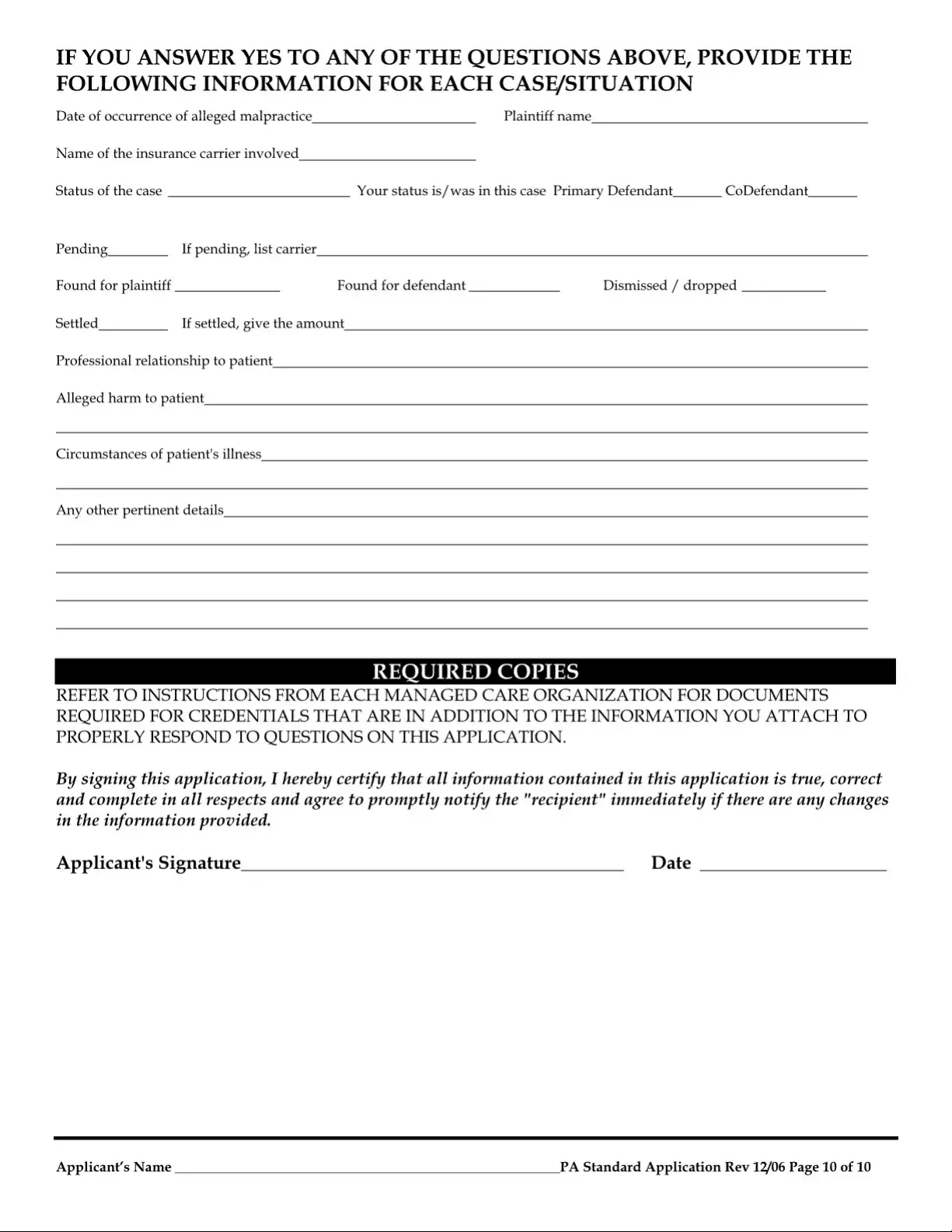
Yes, applicants should refer to the instructions provided by each managed care insurance company. These instructions will outline any additional documents that must be submitted alongside the application form to ensure a complete submission.
What happens if my application is incomplete?
An incomplete application cannot be processed, which will lead to delays in the credentialing process. It is essential to review the application thoroughly before submission to ensure all required information is included.
Can I apply for multiple affiliations on the same application?
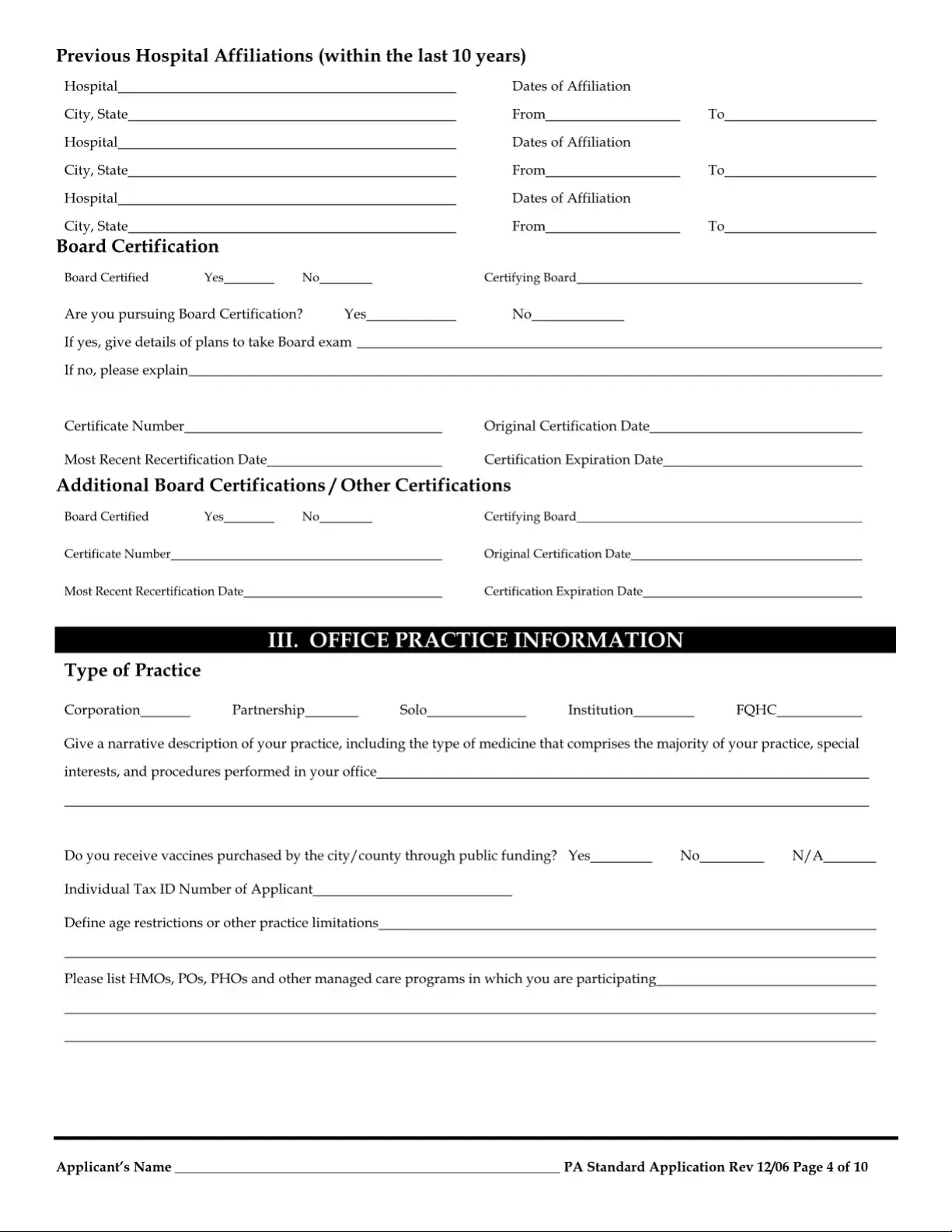
Yes, applicants can indicate if they are applying for affiliation as a primary care physician, non-physician practitioner, or specialist. If applying as a specialist, it is important to specify the specialty and any subspecialties in the application.
Neglecting to Use the Correct Writing Instrument: The application must be typed or printed in black or blue ink. Using other colors can lead to confusion and may result in delays.
Failing to Answer All Questions: Incomplete applications cannot be processed. It's crucial to answer every question fully. If a question does not apply, simply write "N/A" to avoid leaving blanks.
Not Providing Additional Information When Necessary: If the space provided is insufficient, attach extra sheets and clearly reference the corresponding question. This helps ensure your application is complete.
Overlooking Required Documentation: Each managed care insurance company may have specific documents that must accompany your application. Make sure to refer to their instructions to avoid missing anything important.
Incorrectly Listing Personal Information: Double-check that your name, Social Security number, and other personal details are accurate. Mistakes in this section can cause significant delays.
Ignoring the Importance of Accurate Dates: When listing your education and training, ensure that all dates are correct. Inaccurate dates can raise red flags and complicate the verification process.
Omitting Gaps in Employment: If there are gaps in your work history, explain them. Failing to do so may lead to assumptions that could hinder your application.
Inconsistent Information Across Sections: Ensure that the information you provide in different parts of the application aligns. Inconsistencies can lead to confusion and may delay processing.
Not Keeping a Copy of Your Application: Always retain a copy of your completed application for your records. This can be helpful for future reference or in case you need to follow up.
The Pennsylvania Standard Application form is a crucial document for healthcare professionals seeking to establish their credentials. Along with this application, several other forms and documents are typically required to ensure a complete submission. Each of these documents plays a significant role in the credentialing process, helping to verify qualifications, experience, and compliance with regulations.
Submitting these documents along with the Pennsylvania Standard Application form helps streamline the credentialing process. Each document serves a specific purpose, ensuring that applicants meet the necessary standards to provide quality care. Being thorough and organized in your submission can significantly reduce delays and facilitate a smoother credentialing experience.
The Pennsylvania Standard Application form shares similarities with several other important documents used in various credentialing processes. Below are four documents that resemble it, along with their specific similarities:
When filling out the Pennsylvania Standard Application form, attention to detail is crucial. Here are some essential dos and don'ts to guide you through the process.
By following these guidelines, you can streamline the application process and enhance your chances of a successful submission.
Here are some common misconceptions about the Pennsylvania Standard Application form. Understanding these can help you complete the form accurately and efficiently.
By addressing these misconceptions, you can ensure that your application is complete and accurate, helping to facilitate a smoother credentialing process.
Filling out the Pennsylvania Standard Application form requires attention to detail and adherence to specific guidelines. Here are some key takeaways to keep in mind:
By keeping these points in mind, you can streamline the application process and avoid common pitfalls.