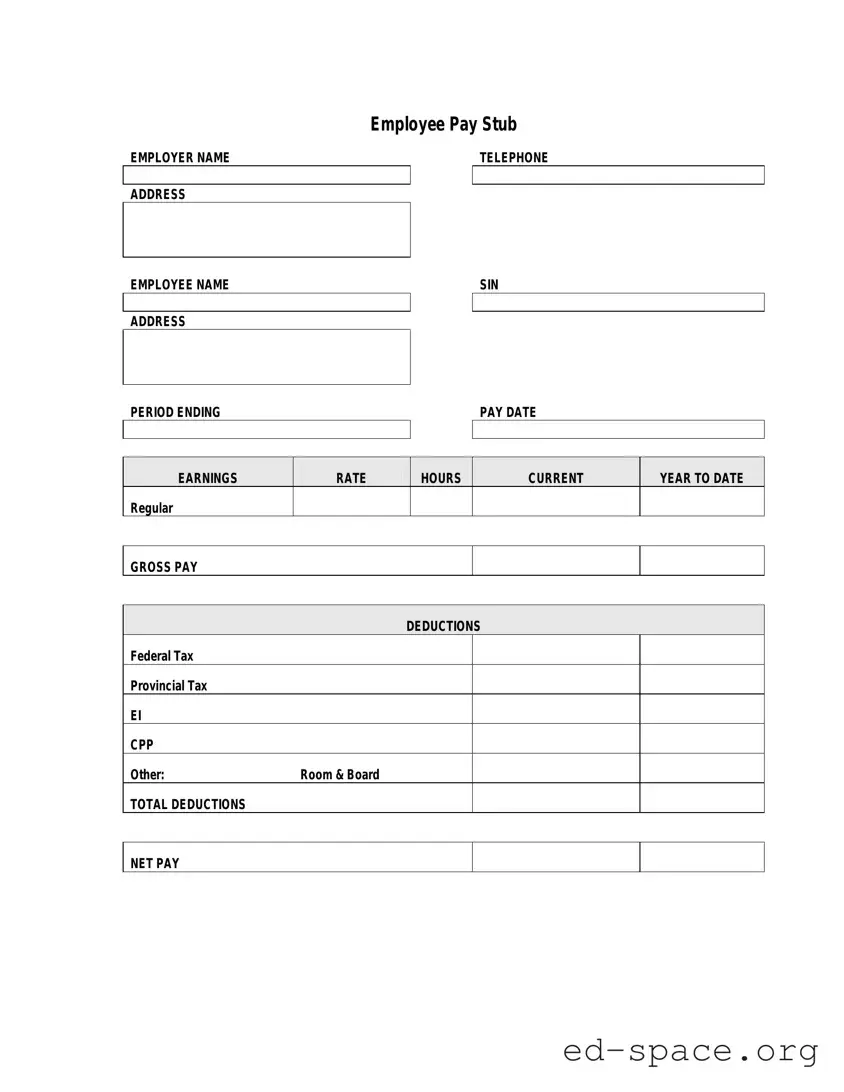
The Pay Stub form serves as a crucial document for both employees and employers, detailing essential information about an employee's earnings and deductions. This form typically includes the employee's gross pay, which reflects the total amount earned before any deductions are made. It also outlines various deductions, such as federal and state taxes, Social Security, and Medicare contributions, providing transparency about how much money is taken out of each paycheck. Additionally, the Pay Stub often highlights the net pay, which is the amount the employee actually receives after all deductions. Employers may also include information about hours worked, overtime pay, and any bonuses or commissions. Understanding the components of a Pay Stub is vital for employees to ensure they are compensated correctly and to facilitate personal financial planning. Overall, the Pay Stub form is not just a record of payment; it is an important tool for financial literacy and workplace accountability.

| Fact Name | Description |
|---|---|
| Definition | A pay stub is a document provided by an employer that outlines an employee's earnings and deductions for a specific pay period. |
| Components | Typically includes gross pay, net pay, taxes withheld, and other deductions such as health insurance and retirement contributions. |
| Frequency | Employers are required to provide pay stubs at each pay period, which can be weekly, bi-weekly, or monthly. |
| State-Specific Requirements | Some states have specific laws governing the issuance of pay stubs. For example, California law requires employers to provide a detailed pay stub that includes specific information. |
| Access | Employees have the right to access their pay stubs, whether in paper form or electronically, depending on the employer's policy. |
| Importance | Pay stubs are crucial for budgeting, tax preparation, and verifying employment income for loans or rental applications. |
Filling out the Pay Stub form is an important task that ensures your payment information is accurately documented. This process requires attention to detail, as the information you provide will reflect your earnings and deductions. Follow these steps to complete the form effectively.
Once you have filled out all sections of the Pay Stub form, review your entries for accuracy. This will help ensure that your payment information is clear and correct, preventing any potential issues in the future.
What is a Pay Stub?
A pay stub is a document provided by an employer that outlines an employee's earnings for a specific pay period. It details gross pay, deductions, and net pay. Employees can use this information to understand their earnings and verify that they are being compensated correctly.
What information is included on a Pay Stub?
A typical pay stub includes the employee's name, pay period dates, gross earnings, deductions (such as taxes, health insurance, and retirement contributions), and net pay. Some pay stubs may also show year-to-date totals for earnings and deductions.
How can I obtain my Pay Stub?
You can obtain your pay stub from your employer's payroll department. Many companies provide electronic access through an employee portal. If you prefer a physical copy, you can request one from HR or payroll directly.
Why is it important to keep my Pay Stubs?
Keeping your pay stubs is crucial for several reasons. They serve as proof of income, which is often required for loan applications or tax filings. Additionally, they help you track your earnings and ensure that all deductions are correct.
What should I do if I notice an error on my Pay Stub?
If you find an error on your pay stub, report it to your employer or the payroll department immediately. Provide them with specific details about the discrepancy. They can investigate the issue and correct it if necessary.
Can I access my Pay Stubs online?
Many employers offer online access to pay stubs through a secure employee portal. Check with your HR department to see if this option is available. If it is, you’ll need your login credentials to access your pay stubs online.
How long should I keep my Pay Stubs?
It is advisable to keep your pay stubs for at least one year. This timeframe allows you to reference them for tax purposes and for any discrepancies that may arise. Some people choose to keep them longer, especially if they need them for financial records.
What if my employer does not provide Pay Stubs?
If your employer does not provide pay stubs, they are required by law to provide you with a written statement of your earnings and deductions. You can request this information from your employer. If they refuse, you may want to consult with your local labor department for further guidance.
Failing to include accurate personal information. This includes your name, address, and Social Security number. Ensure all details match official documents.
Incorrectly reporting hours worked. Double-check your time entries. Mistakes in this area can lead to underpayment or overpayment.
Not accounting for overtime. If applicable, ensure that overtime hours are clearly marked and calculated correctly.
Neglecting to include all deductions. Review your deductions carefully. This includes taxes, insurance, and retirement contributions.
Using outdated tax information. Tax rates can change annually. Make sure you are using the most current information available.
Overlooking additional income sources. If you have bonuses or commissions, they should be included in your total earnings.
Not reviewing the final pay stub for errors. After filling out the form, take a moment to review it for any mistakes before submission.
Ignoring employer-specific requirements. Some employers may have specific guidelines for completing the pay stub. Be sure to follow these instructions closely.
When managing personal finances or navigating employment matters, several important documents complement the Pay Stub form. Each of these documents serves a unique purpose and provides valuable information to employees and employers alike. Understanding these forms can help individuals make informed decisions regarding their employment and financial situations.
Each of these documents plays a crucial role in the employment process and financial management. Being familiar with them can empower individuals to better understand their rights, responsibilities, and overall financial health.
W-2 Form: This document summarizes an employee's annual wages and the taxes withheld from their paychecks. Like a pay stub, it provides essential information about earnings and deductions, but it is issued at the end of the year rather than with each paycheck.
Paycheck: A paycheck is a physical or electronic form of payment for work performed. It includes the same information as a pay stub, such as gross pay, deductions, and net pay, but it serves as the actual payment rather than a summary of earnings.
Direct Deposit Receipt: When an employee's wages are deposited directly into their bank account, they often receive a direct deposit receipt. This document shows the amount deposited and may include similar details to a pay stub, such as gross pay and deductions.
Employment Contract: An employment contract outlines the terms of employment, including salary, benefits, and deductions. While it does not provide a breakdown of each paycheck, it establishes the framework for what will be reflected on pay stubs over time.
When filling out the Pay Stub form, it's important to be careful and accurate. Here are some guidelines to help you navigate the process effectively.
Understanding pay stubs is essential for both employees and employers. However, several misconceptions can lead to confusion. Here are four common misunderstandings about pay stubs:
By clarifying these misconceptions, employees can better understand their pay stubs and make informed decisions about their finances.
When filling out and using the Pay Stub form, it’s important to keep a few key points in mind. Here are some essential takeaways:
By following these tips, you can make sure that your Pay Stub form is filled out correctly and used effectively.