Homepage Blank Ohio Unclaimed PDF Form
Content Overview

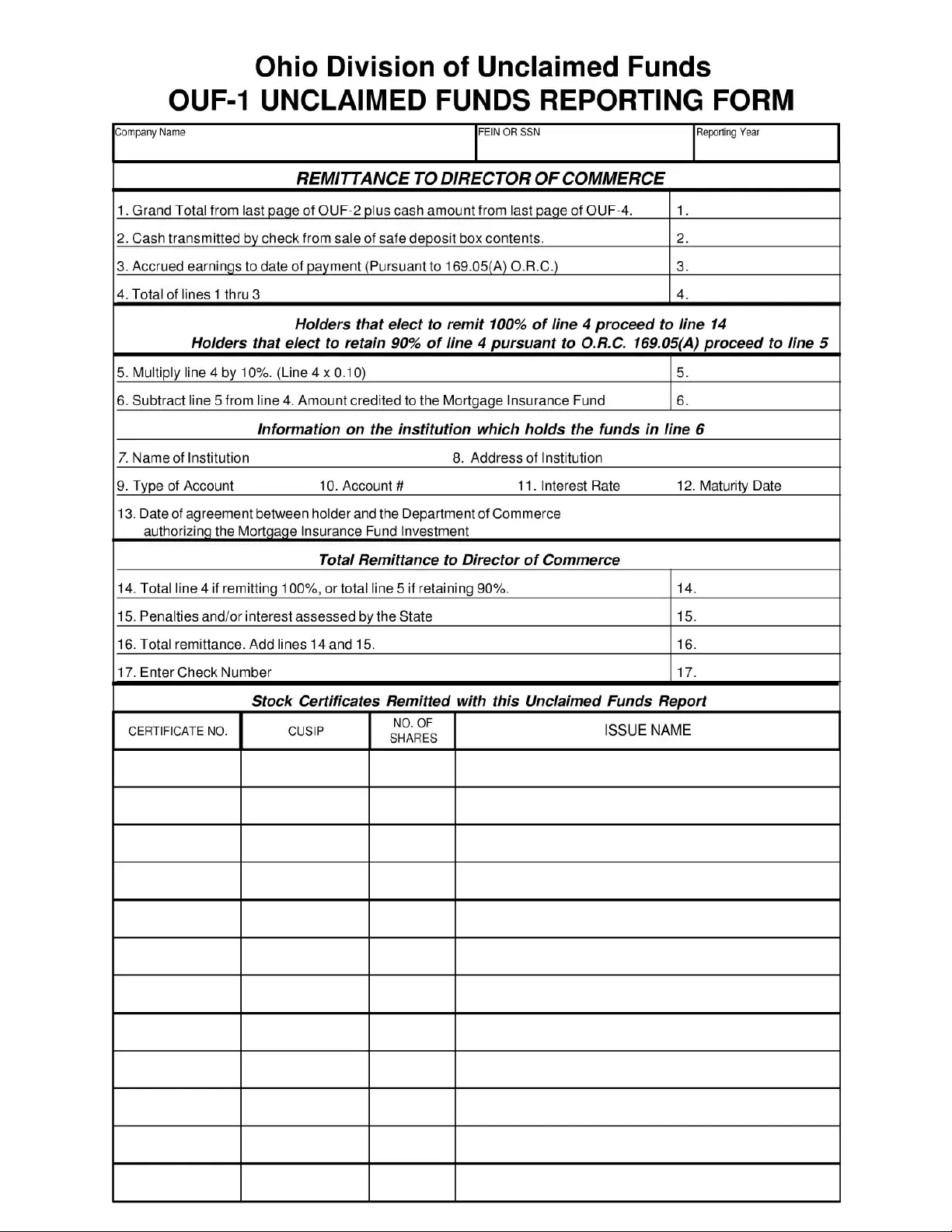
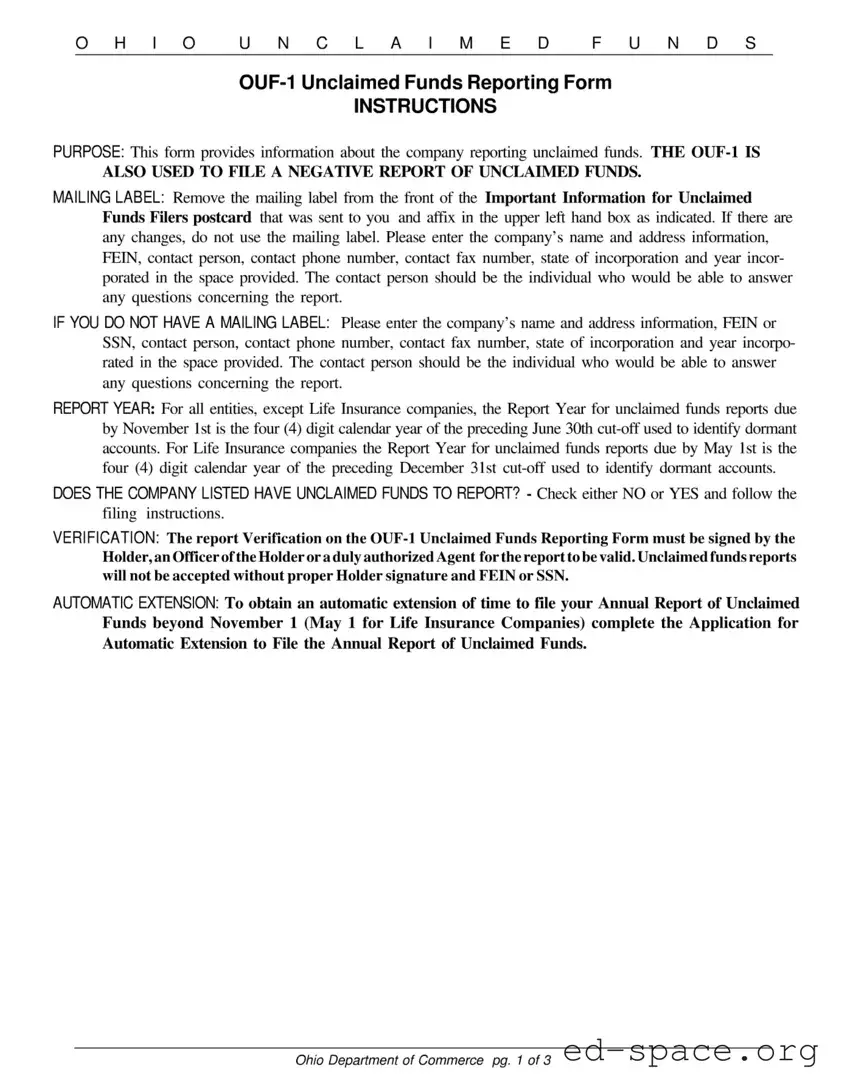
The Ohio Unclaimed Funds Reporting Form, known as the OUF-1, serves a critical function for businesses and organizations that need to report unclaimed funds to the state. It is not only a means of documenting unclaimed assets but also allows for the filing of negative reports if no unclaimed funds are present. The form requires essential company information, including the name, address, and Federal Employer Identification Number (FEIN) or Social Security Number (SSN) of the reporting entity. Additionally, it necessitates the identification of a contact person who can address any inquiries related to the report. The form also includes a section for verifying whether the company has unclaimed funds to report, which must be completed accurately to ensure compliance. The reporting year differs based on the type of entity, with specific deadlines for submission. For most companies, the report is due by November 1, while life insurance companies have a deadline of May 1. A crucial part of the process is the verification section, which must be signed by an authorized individual, affirming the accuracy of the information provided. Failure to include this signature or the required identification numbers will result in the rejection of the report. For those needing more time, an automatic extension can be requested through a separate application. Overall, the OUF-1 form is an essential tool for maintaining transparency and accountability regarding unclaimed funds in Ohio.
Document Preview

Form Specifications

Fact Name Description
Form Purpose The OUF-1 form is used to report unclaimed funds and can also file a negative report if no funds are to be reported.
Verification Requirement A valid report must include a signature from the Holder, an Officer, or an authorized Agent, along with the FEIN or SSN.
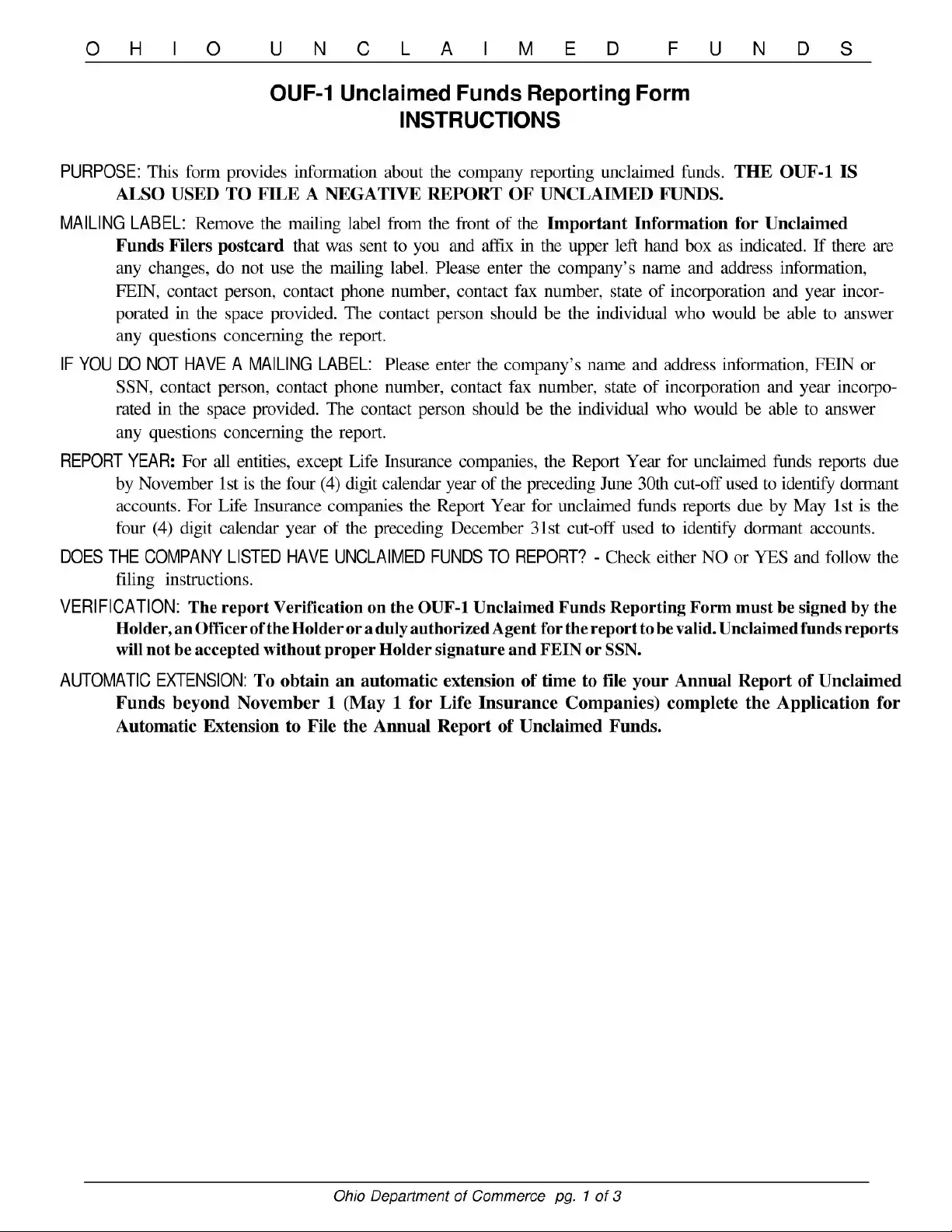
Report Year Guidelines For most entities, the report year is the four-digit calendar year of the preceding June 30th cut-off, due by November 1st.
Governing Law This form is governed by Chapter 169 of the Ohio Revised Code, which outlines the requirements for reporting unclaimed funds.

Ohio Unclaimed: Usage Guidelines

Once the Ohio Unclaimed Funds Reporting Form is filled out, it must be submitted to the Ohio Division of Unclaimed Funds. Ensure that all information is accurate and complete to avoid delays in processing.

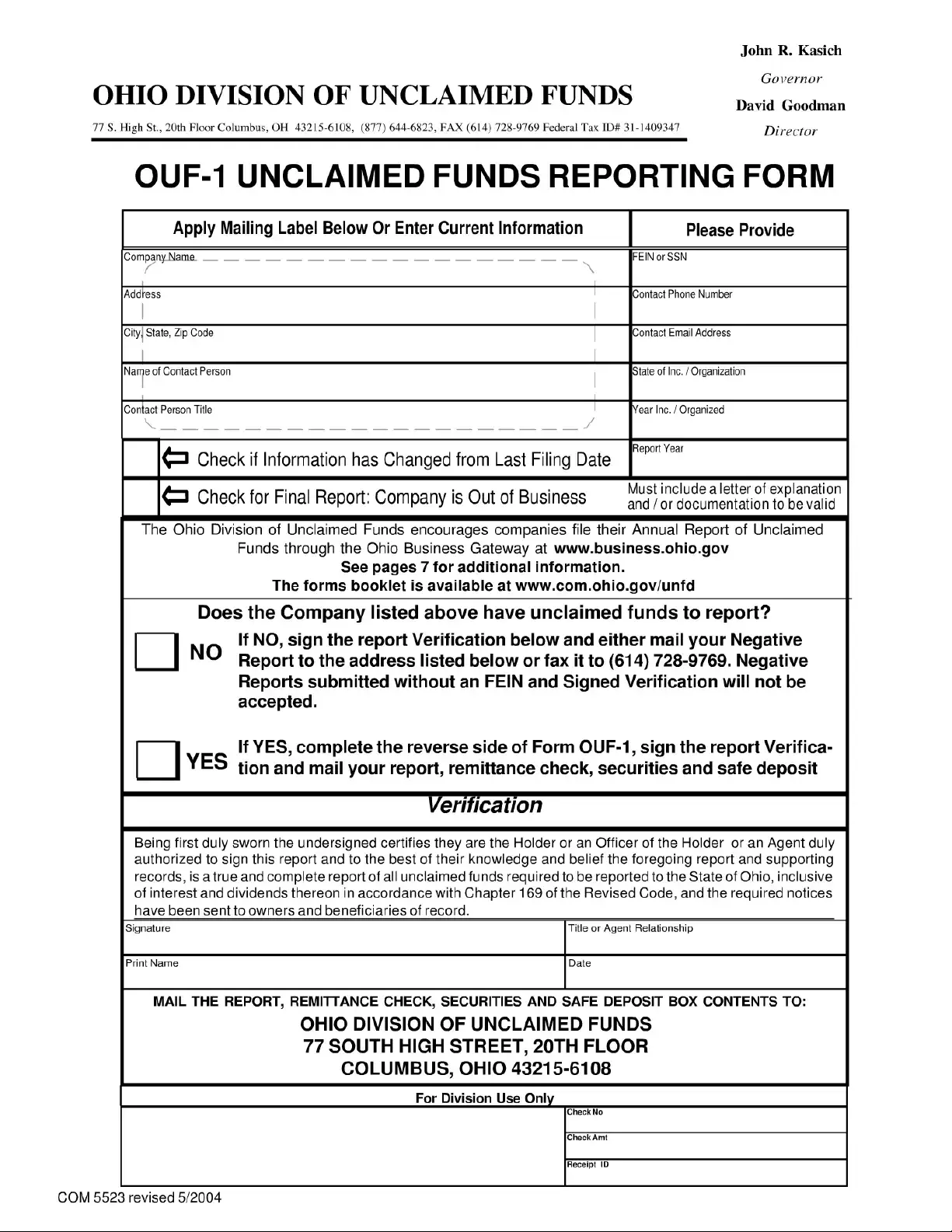
  1. Remove the mailing label from the postcard sent to you and attach it to the upper left-hand box of the form. If you do not have a mailing label, enter the company’s name, address, FEIN or SSN, contact person, contact phone number, contact fax number, state of incorporation, and year incorporated in the designated spaces.
  2. Identify the report year. For most entities, this is the four-digit calendar year of the preceding June 30th cut-off. For Life Insurance companies, it is the four-digit calendar year of the preceding December 31st cut-off.
  3. Indicate whether the company has unclaimed funds to report by checking "YES" or "NO." Follow the filing instructions based on your selection.
  4. If you checked "YES," complete the reverse side of the form and sign the report verification section. Ensure the signature is from the Holder, an Officer of the Holder, or an authorized Agent.
  5. If applicable, complete the Application for Automatic Extension to File the Annual Report of Unclaimed Funds for an extension beyond November 1 (or May 1 for Life Insurance Companies).
  6. Mail the completed report, remittance check, and any relevant securities or safe deposit box contents to the Ohio Division of Unclaimed Funds at the address provided on the form.

Your Questions, Answered

What is the purpose of the Ohio Unclaimed Funds Reporting Form (OUF-1)?

The Ohio Unclaimed Funds Reporting Form, known as OUF-1, is designed to help companies report unclaimed funds to the state. This form is essential for ensuring that any unclaimed assets are properly documented and can be returned to their rightful owners. Additionally, the OUF-1 can be used to file a negative report, indicating that the company does not have any unclaimed funds to report. Accurate completion of this form is crucial for compliance with state regulations.

How do I fill out the OUF-1 form if I do not have a mailing label?

If you do not have a mailing label, you can still complete the OUF-1 form by entering your company’s name, address, Federal Employer Identification Number (FEIN) or Social Security Number (SSN), and contact details in the spaces provided. It's important to ensure that the contact person listed is someone who can address any questions related to the report. This information helps streamline communication and ensures that any issues can be resolved promptly.

What should I do if my company is out of business?

If your company is no longer in operation, you must indicate this on the OUF-1 form by checking the box for "Final Report." This step is important for closing out your reporting obligations. You will still need to complete the rest of the form accurately, including any unclaimed funds that may need to be reported. Submitting a final report helps the state keep accurate records and allows for proper handling of any remaining assets.

What happens if I do not sign the verification section of the OUF-1 form?

The verification section of the OUF-1 form must be signed by the Holder, an Officer of the Holder, or an authorized Agent for the report to be considered valid. If this signature is missing, the Ohio Division of Unclaimed Funds will not accept the report. This requirement ensures accountability and accuracy in the reporting process, so it is essential to complete this section before submission.

Common mistakes

  1. Ignoring the Mailing Label: Many individuals forget to use the mailing label provided on the Important Information postcard. This label ensures that the report reaches the right department efficiently.

  2. Incomplete Company Information: Failing to fill out all required fields, such as the company’s name, FEIN, and contact details, can lead to delays or rejection of the form.

  3. Incorrect Report Year: Some filers mistakenly report the wrong year. It’s crucial to use the correct four-digit calendar year based on the cut-off date.

  4. Missing Signature: The report must be signed by the Holder, an Officer, or an authorized Agent. Omitting a signature invalidates the submission.

  5. Not Checking the Right Box: Filers often overlook the section that requires them to indicate whether there are unclaimed funds to report. This can lead to confusion and misfiling.

  6. Failing to Update Information: If there have been any changes since the last filing, it is essential to update the information. Ignoring this can result in processing issues.

  7. Neglecting to Submit a Negative Report: If the company has no unclaimed funds, a negative report must still be filed. Failing to do so can lead to penalties.

  8. Not Utilizing Online Resources: The Ohio Division of Unclaimed Funds encourages electronic filing through the Ohio Business Gateway. Many individuals miss out on this convenient option.

Documents used along the form

When dealing with unclaimed funds in Ohio, it's essential to have a clear understanding of various forms and documents that often accompany the Ohio Unclaimed Funds Reporting Form (OUF-1). These documents play a crucial role in ensuring compliance with state regulations and facilitating the reporting process. Below is a list of common forms and documents that may be used alongside the OUF-1.

  • Application for Automatic Extension to File: This form allows companies to request additional time to submit their Annual Report of Unclaimed Funds. An automatic extension can help alleviate pressure during busy reporting periods.
  • Negative Report Form: If a company has no unclaimed funds to report, this form is used to officially declare that there are no funds to report. Submitting a negative report is important for maintaining accurate records.
  • Verification Signature Page: This page must be signed by the holder or an authorized agent. It certifies that the information provided in the report is accurate and complete, ensuring accountability in the reporting process.
  • Remittance Check: When submitting unclaimed funds, a remittance check may be included. This check covers the total amount of unclaimed funds being reported, ensuring that the state receives the correct payment.
  • Account Information Form: This document provides details about the financial institution holding the unclaimed funds. It includes the institution's name, account number, and type of account, which are essential for proper processing.
  • Supporting Documentation: This may include records that substantiate the claim of unclaimed funds, such as account statements or correspondence with the owners. Providing supporting documentation can help clarify the report and avoid disputes.
  • Transmittal Letter: A transmittal letter can accompany the report, summarizing the contents and purpose of the submission. This letter serves as a cover note, making it easier for the receiving agency to understand the context of the documents.

Understanding these forms and documents can greatly simplify the process of reporting unclaimed funds in Ohio. Each document serves a specific purpose and helps ensure that the reporting is accurate and compliant with state regulations. By preparing these materials in advance, companies can navigate the unclaimed funds process more efficiently.

Similar forms

The Ohio Unclaimed Funds Reporting Form (OUF-1) shares similarities with several other important documents used for financial reporting and compliance. Below are six documents that resemble the OUF-1 in purpose and function:

  • State Unclaimed Property Report: Like the OUF-1, this report is filed by businesses to declare unclaimed property. Both documents require detailed information about the entity and the funds being reported.
  • Negative Report of Unclaimed Property: This document allows entities to confirm that they have no unclaimed property to report. Similar to the OUF-1, it requires verification from an authorized representative of the company.
  • Annual Financial Report: Companies must submit this report to provide a comprehensive overview of their financial status. Both reports require accurate data and signatures from authorized personnel to ensure validity.
  • Form 1099: Issued by businesses to report various types of income, this form shares the need for precise information about the payee. Both the 1099 and OUF-1 require identification numbers and contact details for accountability.
  • Tax Return: Like the OUF-1, tax returns must be filed annually and include detailed financial information. Both documents necessitate signatures and can result in penalties if not filed correctly or on time.
  • Application for Extension to File: This application is similar to the OUF-1's provision for an automatic extension. It allows businesses to request more time to meet filing deadlines, ensuring compliance with state regulations.

Dos and Don'ts

When filling out the Ohio Unclaimed Funds Reporting Form, it's essential to follow specific guidelines to ensure your submission is accurate and complete. Here’s a helpful list of things to do and avoid:

  • Do use the mailing label provided on the postcard if you received one. This helps ensure your information is correctly processed.
  • Don't forget to provide the company’s name, address, FEIN or SSN, and contact details if you don’t have a mailing label.
  • Do check the appropriate box indicating whether your company has unclaimed funds to report.
  • Don't submit the form without the required signature from the Holder, an Officer, or an authorized Agent. This signature is crucial for validity.
  • Do ensure that the report year is correctly filled out based on the entity type, especially for Life Insurance companies.
  • Don't neglect to include any changes from your last filing. If there are updates, make sure to indicate them clearly.
  • Do mail the completed report, along with any remittance checks and supporting documents, to the Ohio Division of Unclaimed Funds at the specified address.

By following these guidelines, you can help ensure that your submission is processed smoothly and efficiently. Pay careful attention to the details, as they can make a significant difference in the outcome of your report.

Misconceptions

Here are some common misconceptions about the Ohio Unclaimed Funds Reporting Form (OUF-1) and clarifications to help you understand the process better:

  • Anyone can submit the form. Only the holder of the unclaimed funds or an authorized agent can file the report.
  • Negative reports are not necessary. If there are no unclaimed funds to report, a negative report must still be submitted.
  • The mailing label is mandatory. If you don’t have a mailing label, you can still complete the form by entering your information manually.
  • All companies report for the same year. Different deadlines apply, especially for Life Insurance companies, which report for a different cut-off date.
  • Signature is optional. A valid report must include a signature from the holder, an officer, or an authorized agent.
  • Extensions are not available. You can apply for an automatic extension to file your report if needed.
  • Filing online is not an option. Companies are encouraged to file their reports through the Ohio Business Gateway for convenience.
  • All funds must be remitted immediately. Holders can choose to retain a percentage of the funds before remitting the rest.
  • There are no penalties for late filing. The state may assess penalties or interest for reports filed after the deadline.
  • Once filed, the report can’t be amended. If you discover an error after submission, you may need to file an amended report.

Understanding these misconceptions can help ensure that you comply with the requirements and properly report unclaimed funds. If you have further questions, consider reaching out to the Ohio Division of Unclaimed Funds for assistance.

Key takeaways

Filling out and using the Ohio Unclaimed Funds form can be straightforward if you follow the key steps. Here are some essential takeaways:

  • Understand the purpose: The OUF-1 form is designed for companies to report unclaimed funds.
  • Negative reports: This form can also be used to file a negative report if there are no unclaimed funds to report.
  • Mailing label: If you received a mailing label, remove it from the postcard and affix it to the form. If you don’t have one, fill in your company’s information manually.
  • Contact information: Provide the name, address, FEIN or SSN, and contact details of a person who can answer questions about the report.
  • Report year: For most entities, the report year is the four-digit calendar year of the preceding June 30th. Life insurance companies follow a different schedule.
  • Verification is crucial: The form must be signed by the Holder, an Officer, or an authorized Agent for it to be valid.
  • Automatic extension: If you need more time to file, complete the Application for Automatic Extension to File the Annual Report.
  • Submission methods: You can mail the report or fax it to the Ohio Division of Unclaimed Funds.
  • Final report check: Indicate if this is a final report by checking the appropriate box if the company is out of business.
  • Online filing: Consider filing your report through the Ohio Business Gateway for convenience.

By following these takeaways, you can ensure that your submission is complete and accurate, helping you navigate the process effectively.