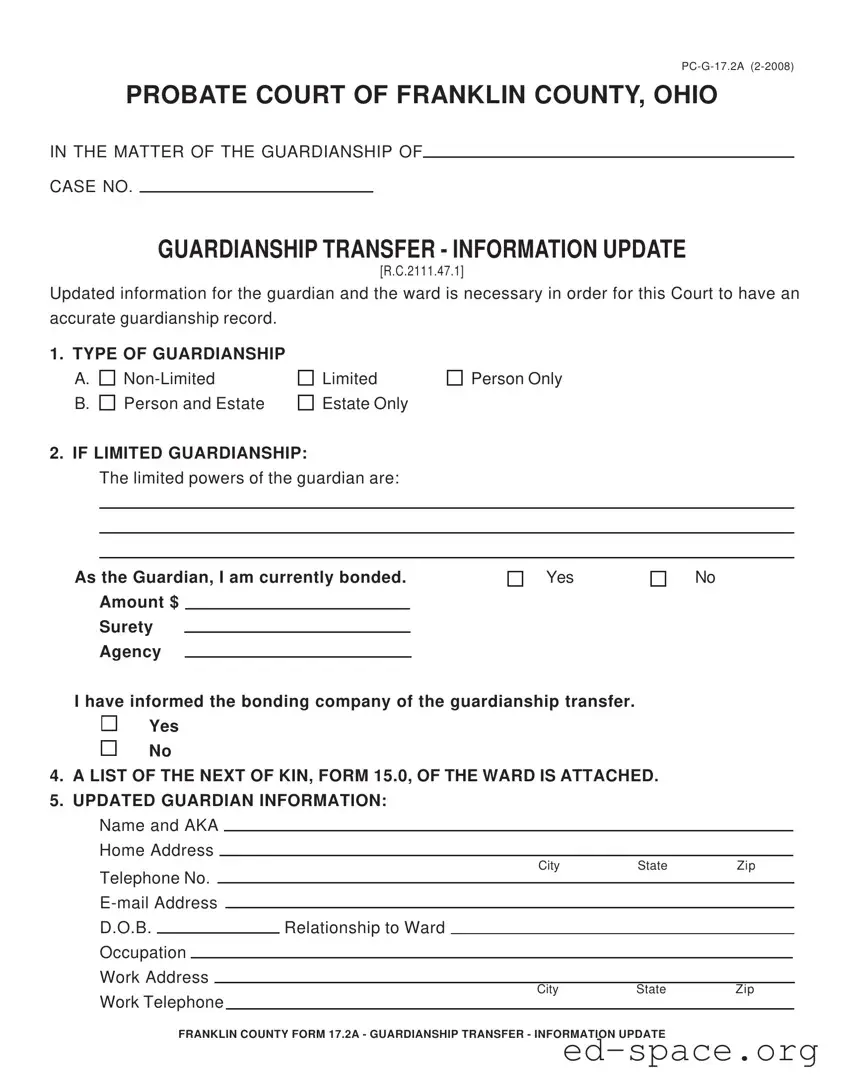
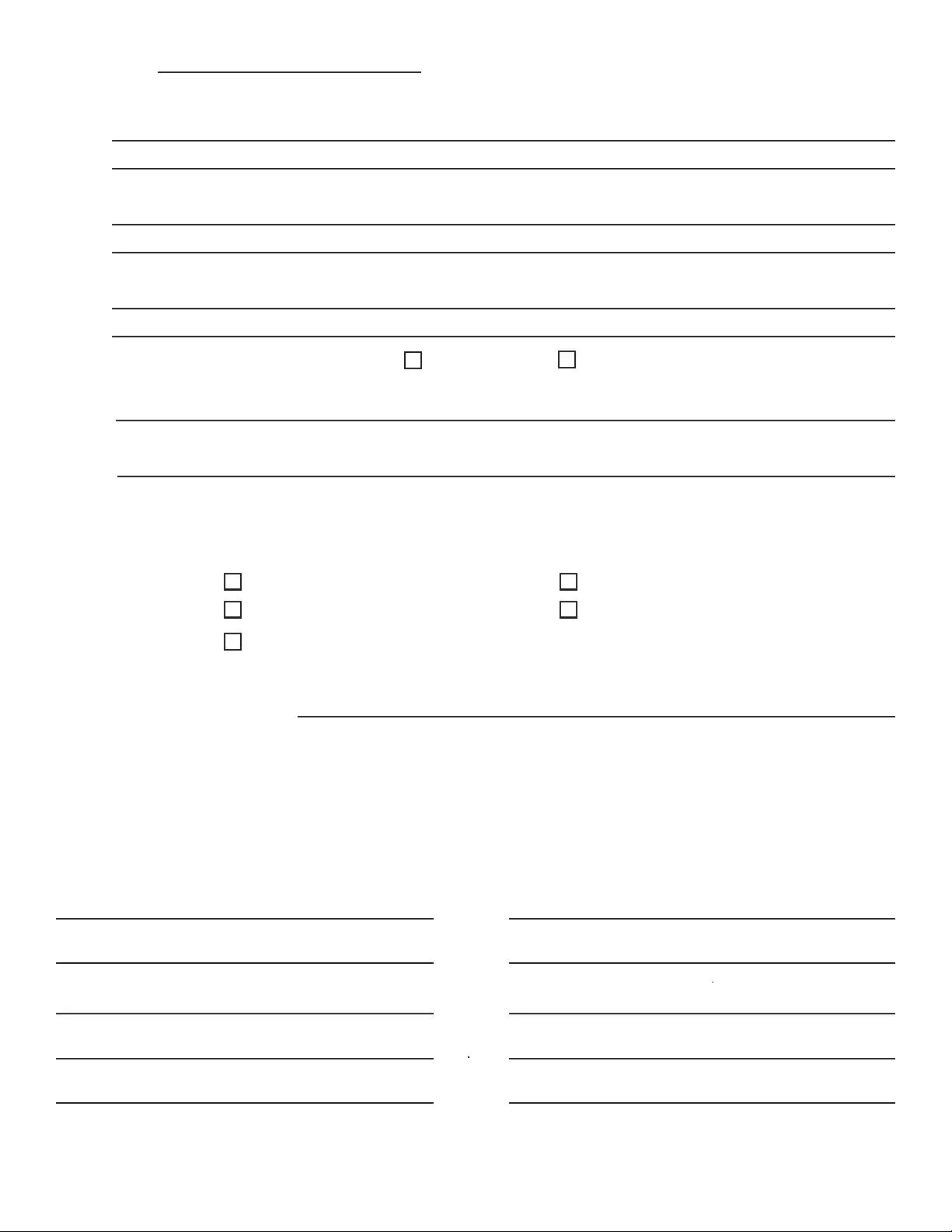
The Ohio PC-G-17.2A form plays a crucial role in the guardianship process, particularly in Franklin County. This form is utilized to update essential information regarding both the guardian and the ward, ensuring that the court maintains accurate records as stipulated by Ohio law. Guardianship can take various forms, including limited or non-limited guardianship, and this form allows for the specification of the type involved. For those appointed as limited guardians, there is a section dedicated to outlining the specific powers granted, which is vital for clarity and compliance. Additionally, the form requires the guardian to disclose any past criminal charges or convictions, which can impact their suitability for the role. Updated contact information for the ward, including their next of kin, is also a key component, as it ensures that the court can reach out to relevant individuals in case of emergencies. Furthermore, the form delves into the rights retained by the ward, any existing legal documents like wills or powers of attorney, and medical information that may affect their care. By meticulously gathering and updating this information, the PC-G-17.2A form serves as a foundational tool for the ongoing management of guardianship cases, fostering transparency and accountability within the system.


| Fact Name | Description |
|---|---|
| Form Purpose | The PC-G-17.2A form is used to update information regarding the guardianship of a ward in Franklin County, Ohio. |
| Governing Law | This form is governed by Ohio Revised Code (R.C.) 2111.47.1. |
| Types of Guardianship | The form allows for the designation of either limited or non-limited guardianship for both person and estate, or estate only. |
| Required Attachments | Next of kin information must be attached using Form 15.0, providing the court with necessary contact details. |
| Guardian's Responsibilities | The guardian must disclose any criminal charges or convictions related to theft, violence, or substance abuse. |
Completing the Ohio PC G 17 2A form is an essential step in updating the guardianship information for both the guardian and the ward. This ensures that the court has accurate and current records. Follow these steps carefully to fill out the form correctly.
What is the purpose of the Ohio PC-G-17.2A form?
The Ohio PC-G-17.2A form is used to update the information related to a guardianship case in Franklin County, Ohio. It ensures that the court has accurate and current records regarding both the guardian and the ward. This is important for maintaining the integrity of the guardianship process and ensuring that the needs of the ward are met appropriately.
Who needs to fill out the PC-G-17.2A form?
The guardian of the ward is responsible for completing the PC-G-17.2A form. This individual must provide updated information about themselves, the ward, and any relevant changes in circumstances that may affect the guardianship. It is crucial that the guardian provides complete and accurate information to facilitate the court's review.
What information is required about the guardian on the form?
The form requests essential details about the guardian, including their name, home address, telephone number, email address, date of birth, relationship to the ward, and occupation. Additionally, if the guardianship is limited, the guardian must specify the limited powers granted to them. This information helps the court understand the guardian's qualifications and current situation.
What information about the ward must be provided?
Updated information about the ward includes their full name, age, date of birth, gender, residence, and contact details. The form also asks for information regarding the ward’s rights, any legal documents like wills or powers of attorney, and medical conditions. This comprehensive data helps the court assess the ward's needs and rights effectively.
What should I do if I have a criminal record?
If the guardian has been charged with or convicted of a crime involving theft, physical violence, or substance abuse, this information must be disclosed on the form. The guardian should list the dates and places of any charges or convictions. Transparency is essential, as the court will consider this information when determining the suitability of the guardian.
How does the form address the ward's rights?
The PC-G-17.2A form includes a section where the guardian must specify what rights the ward has retained. This can range from the right to vote to the ability to marry or execute a will. Understanding these rights is crucial, as it impacts the ward's autonomy and the guardian's responsibilities.
What happens if the guardian can no longer serve?
The form requires the guardian to provide contact information for friends or relatives who should be notified in the event of the guardian's death or incapacity. This ensures that there is a plan in place for the ward's continued care and legal representation, should the guardian be unable to fulfill their duties.
How often should the PC-G-17.2A form be updated?
The PC-G-17.2A form should be updated whenever there are significant changes in the guardian's or ward's circumstances. This could include changes in contact information, legal status, or health conditions. Keeping this information current is vital for the court's ability to make informed decisions regarding the guardianship.
Incomplete Information: One common mistake is failing to provide all required details. Each section of the form must be filled out completely to ensure the court has all necessary information.
Incorrect Guardian Type: Selecting the wrong type of guardianship can lead to complications. It is essential to choose between "Limited" or "Non-Limited" accurately based on the circumstances.
Missing Next of Kin Information: The form requires an attachment of the next of kin list. Forgetting to include this information can delay the process.
Failure to Update Guardian Information: Some individuals neglect to provide updated contact details or background information. This can hinder communication and the court's ability to reach the guardian.
Omitting Criminal History: If there are any charges or convictions related to theft or violence, these must be disclosed. Failing to do so may lead to legal repercussions.
Neglecting Ward's Rights: It is crucial to accurately indicate which rights the ward has retained. Misrepresentation can affect the ward's autonomy and legal standing.
Inaccurate Medical Information: Providing incorrect details about the ward's medical condition or disabilities can impact the court's decisions regarding care and support.
The Ohio PC G 17 2A form is an important document used in the context of guardianship, particularly for updating information regarding the guardian and the ward. In addition to this form, there are several other documents that are often utilized to ensure a comprehensive understanding of the guardianship arrangement. Each of these documents serves a specific purpose and contributes to the overall management of the guardianship process.
Each of these documents complements the Ohio PC G 17 2A form by providing additional context and information necessary for effective guardianship. Together, they help to create a clearer picture of the ward's needs and the responsibilities of the guardian, ensuring that the guardianship operates smoothly and in the best interest of the ward.
The Ohio PC-G-17.2A form is an important document used in guardianship cases. It serves to update information about both the guardian and the ward. Similar forms exist across various states and contexts, each serving a related purpose. Here’s a list of nine documents that share similarities with the Ohio PC-G-17.2A form:
Each of these documents plays a crucial role in ensuring that individuals' rights and needs are addressed, much like the Ohio PC-G-17.2A form does in the context of guardianship.
When filling out the Ohio PC G 17 2A form, it is important to follow specific guidelines to ensure accuracy and compliance. Below is a list of things you should and should not do during this process.
Understanding the Ohio PC G 17 2A form is crucial for anyone involved in guardianship matters. However, several misconceptions can lead to confusion. Here are five common misunderstandings:
By dispelling these misconceptions, individuals can better navigate the guardianship process and ensure compliance with legal requirements.
Filling out the Ohio PC G 17 2A form is an essential step in updating guardianship information. Here are some key takeaways to keep in mind:
Completing this form with attention to detail ensures that the guardianship record is accurate and up-to-date, which is vital for the well-being of the ward.