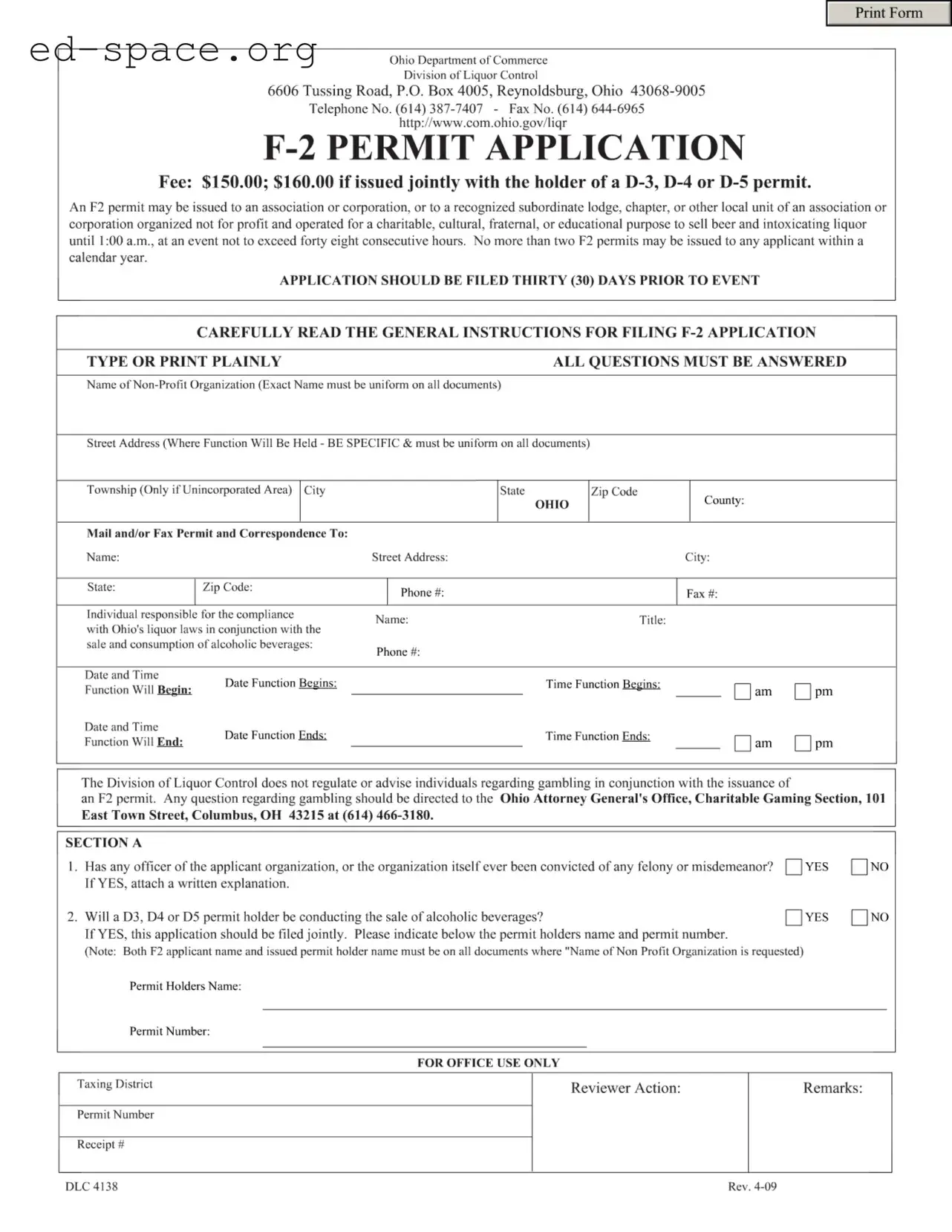
The Ohio F2 Permit form is a crucial document for non-profit organizations seeking to sell beer and intoxicating liquor at events. This permit allows associations, corporations, and recognized local units to operate such sales until 1:00 a.m., with events lasting no more than 48 consecutive hours. A fee of $150.00 is required for the application, which increases to $160.00 if issued jointly with certain other permits. It is important to note that applicants can receive a maximum of two F2 permits within a calendar year. To ensure timely processing, applications must be submitted at least 30 days prior to the event. The form requires specific details, including the name and address of the organization, the function's date and time, and information regarding compliance with Ohio's liquor laws. Additionally, the applicant must confirm their non-profit status and provide details about the event's purpose and financial arrangements. The application also includes questions about any prior legal issues related to the organization and the involvement of other permit holders. Accurate and complete responses are essential, as any falsification can lead to permit denial. Understanding these requirements is vital for a successful application process.
| Fact Name | Details |
|---|---|
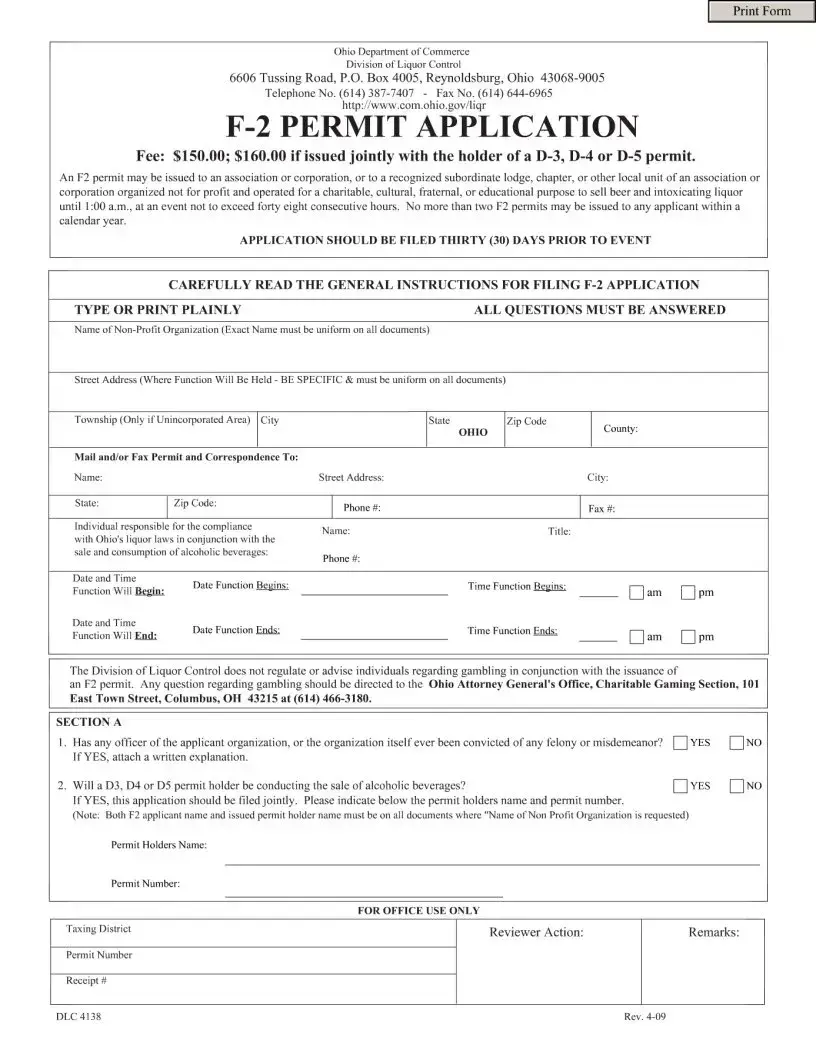
| Permit Fee | The F-2 Permit application fee is $150.00, or $160.00 if issued jointly with a D-3, D-4, or D-5 permit holder. |
| Eligible Entities | This permit can be issued to non-profit associations, corporations, or recognized subordinate lodges, chapters, or local units for charitable, cultural, fraternal, or educational purposes. |
| Event Duration | An F-2 permit allows the sale of beer and intoxicating liquor until 1:00 a.m. for events lasting no more than 48 consecutive hours. |
| Annual Limit | Applicants may receive no more than two F-2 permits within a calendar year. |
| Application Deadline | Applications must be filed at least 30 days prior to the event date. |
| Compliance Responsibility | The individual responsible for compliance with Ohio’s liquor laws must be identified in the application. |
| Governing Law | The F-2 Permit is governed by Ohio Revised Code Section 4303.12. |
| Gambling Regulations | The Division of Liquor Control does not regulate gambling. Questions regarding gambling should be directed to the Ohio Attorney General’s Office. |
Filling out the Ohio F 2 Permit form requires attention to detail and accuracy. This application is essential for organizations looking to sell beer and intoxicating liquor at events. The process involves providing specific information about your organization, the event, and compliance with liquor laws. Ensure that you have all necessary documentation ready before starting.
What is the purpose of the Ohio F-2 Permit?
The Ohio F-2 Permit allows non-profit organizations to sell beer and intoxicating liquor at events. These events can last up to 48 consecutive hours and must conclude by 1:00 a.m. The permit is specifically designed for associations or corporations that operate for charitable, cultural, fraternal, or educational purposes.
How much does the F-2 Permit cost?
The application fee for the F-2 Permit is $150. If the permit is issued jointly with a holder of a D-3, D-4, or D-5 permit, the fee increases to $160. This fee must be submitted with the application.
How many F-2 Permits can an organization apply for in a year?
Organizations can apply for a maximum of two F-2 Permits within a calendar year. This limit ensures that permits are distributed fairly among eligible organizations.
When should the application be submitted?
The application for the F-2 Permit should be filed at least 30 days prior to the event. This timeline allows for processing and ensures compliance with all necessary regulations.
What information is required on the application?
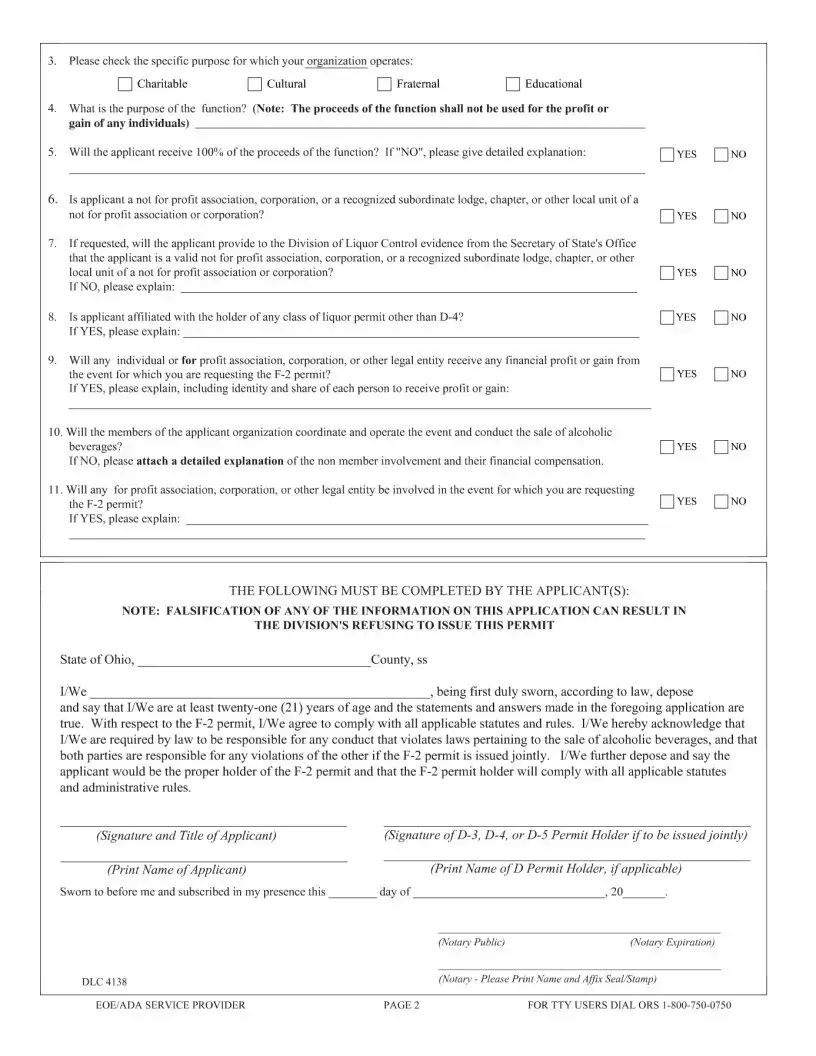
The application requires detailed information about the non-profit organization, including its exact name, address, and purpose. Additionally, it must include the date and time of the event, as well as the contact information for the individual responsible for compliance with liquor laws.
What happens if the organization has had legal issues?
If any officer of the organization or the organization itself has been convicted of a felony or misdemeanor, this must be disclosed in the application. A written explanation should be attached if the answer is "yes." Transparency in this area is crucial for the approval process.
Can the F-2 Permit be used for events that involve gambling?
The Division of Liquor Control does not regulate gambling in conjunction with the F-2 Permit. For any questions regarding gambling, organizations should contact the Ohio Attorney General’s Office, specifically the Charitable Gaming Section.
Failing to answer all questions: Every question on the form must be answered. Incomplete forms may be rejected.
Incorrect organization name: The name of the non-profit organization must match exactly across all documents. Discrepancies can lead to delays.
Not filing on time: Applications should be submitted at least thirty days before the event. Late submissions may not be processed.
Ignoring the purpose of the event: Clearly state the function's purpose. Vague descriptions can cause confusion and potential rejection.
Not providing required explanations: If any "yes" answers are given, a detailed explanation must be attached. Failing to do so can lead to complications.
Misunderstanding profit distribution: Ensure clarity on whether the organization will receive 100% of the proceeds. If not, provide a detailed explanation.
Incorrect contact information: Make sure the address and phone number for correspondence are accurate. Errors can lead to missed communications.
Not identifying responsible individuals: Clearly identify who will oversee compliance with liquor laws. This is crucial for accountability.
Failing to attach necessary documentation: If requested, provide evidence from the Secretary of State’s Office confirming non-profit status.
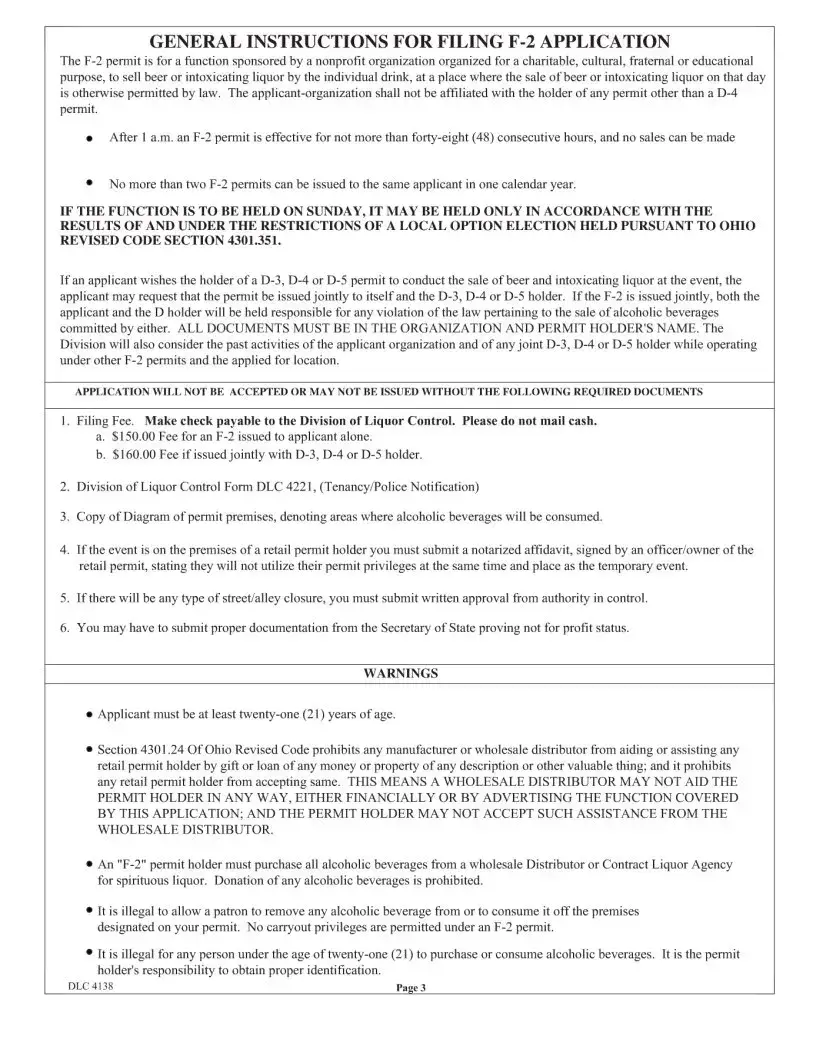
Not understanding joint permit requirements: If filing jointly with a D-3, D-4, or D-5 permit holder, ensure that both names are included on all documents.
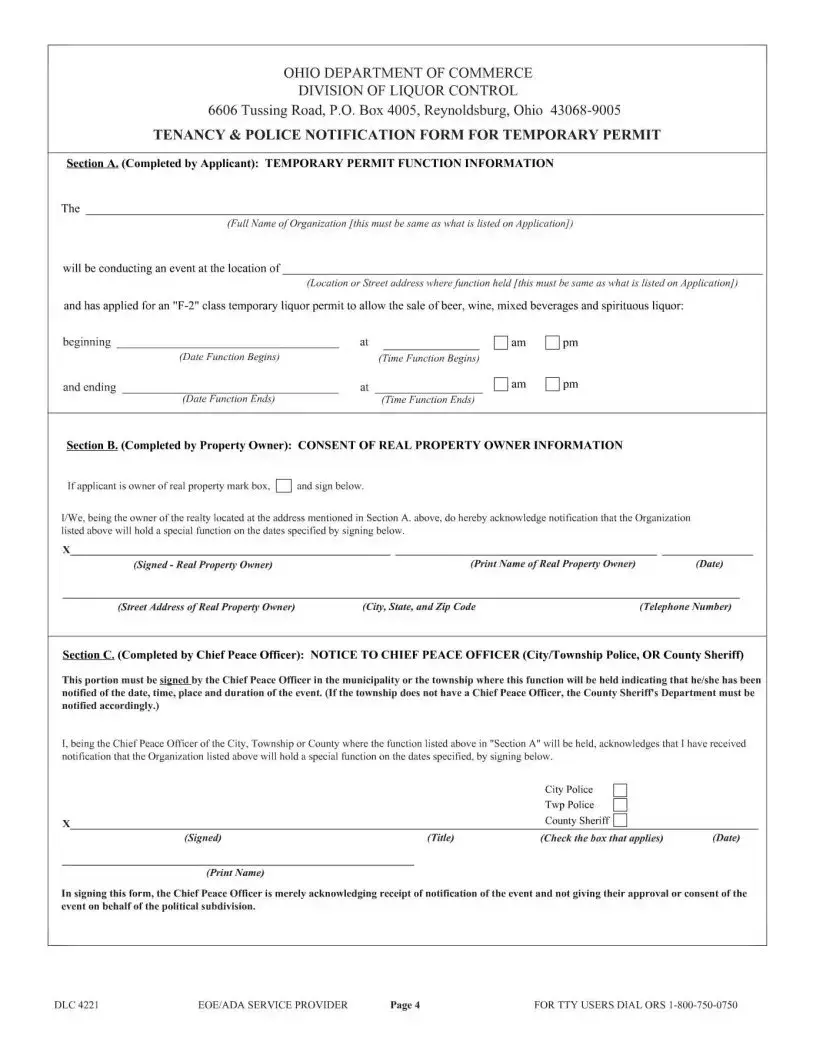
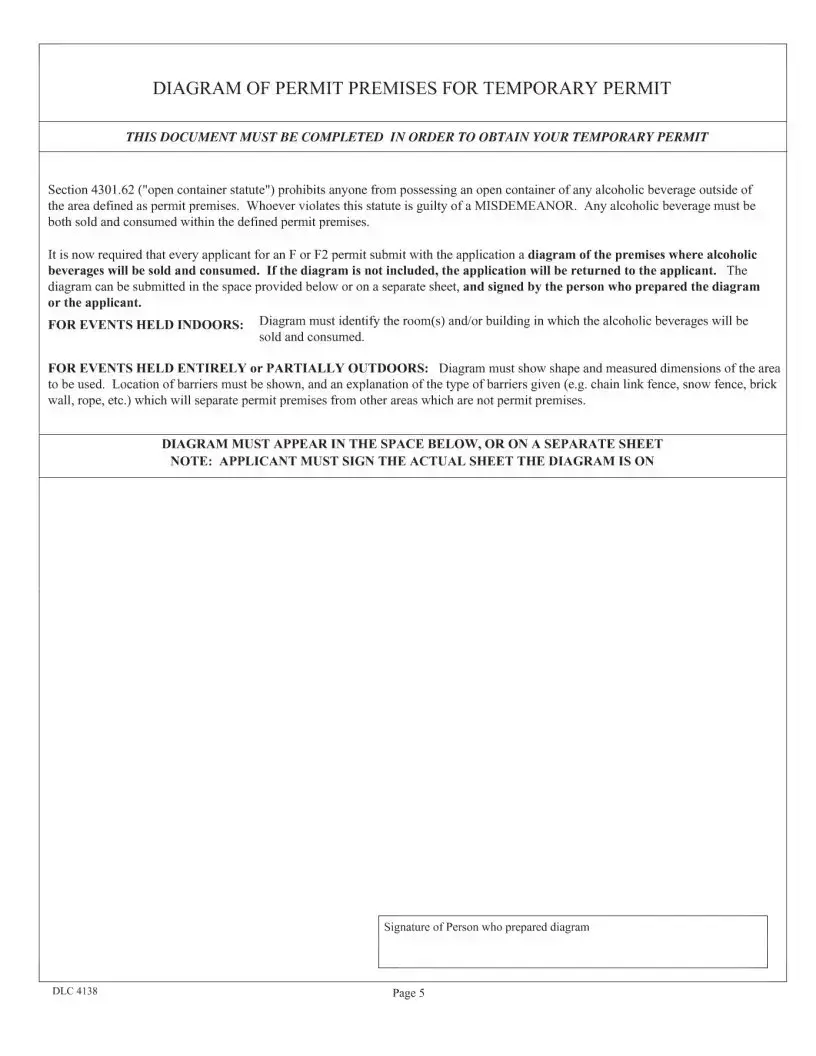
The Ohio F-2 Permit form is a key document for non-profit organizations seeking to sell alcoholic beverages at events. Several other forms and documents may accompany this application to ensure compliance with state regulations and to facilitate the event's organization. Below is a list of these documents, each serving a specific purpose in the application process.
These documents help ensure that the event is conducted legally and responsibly. Proper preparation and submission of all required forms can facilitate a smoother application process for the F-2 Permit.
The Ohio F-2 Permit form is similar to several other documents that also deal with the sale and distribution of alcohol. Here’s a list of five documents that share similarities with the F-2 Permit:
When filling out the Ohio F-2 Permit form, it is essential to approach the task with care and attention to detail. Here are some important do's and don'ts to consider:
By adhering to these guidelines, applicants can enhance their chances of a successful application process. Careful preparation reflects the seriousness of the event and the commitment to compliance with the law.
Understanding the F-2 Permit application process is crucial for organizations planning events in Ohio. However, several misconceptions can lead to confusion. Here are some common misunderstandings:
This is not true. Applications must be filed at least thirty (30) days before the event. Late submissions may result in denial.
Only non-profit organizations, associations, or recognized local units can apply. For-profit entities are not eligible.
This permit only allows the sale of beer and intoxicating liquor until 1:00 a.m. during a specific event lasting no more than forty-eight consecutive hours.
Each applicant is limited to two F-2 Permits within a calendar year. This restriction helps manage event frequency.
The Division of Liquor Control does not oversee gambling related to the F-2 Permit. Any gambling inquiries should be directed to the Ohio Attorney General’s Office.
Organizations must clarify if any profits will go to individuals or for-profit entities. If not all proceeds are kept, a detailed explanation is required.
The application involves detailed questions about the organization and the event. All questions must be answered thoroughly to avoid delays or denials.
Being aware of these misconceptions can help organizations navigate the F-2 Permit process more effectively. Proper understanding and preparation are key to a successful event.
Filling out the Ohio F-2 Permit form can seem daunting, but understanding the key points can make the process smoother. Here are some essential takeaways:
By keeping these points in mind, applicants can navigate the F-2 permit application process more effectively. Always double-check the form for accuracy and completeness before submission to avoid any issues down the line.