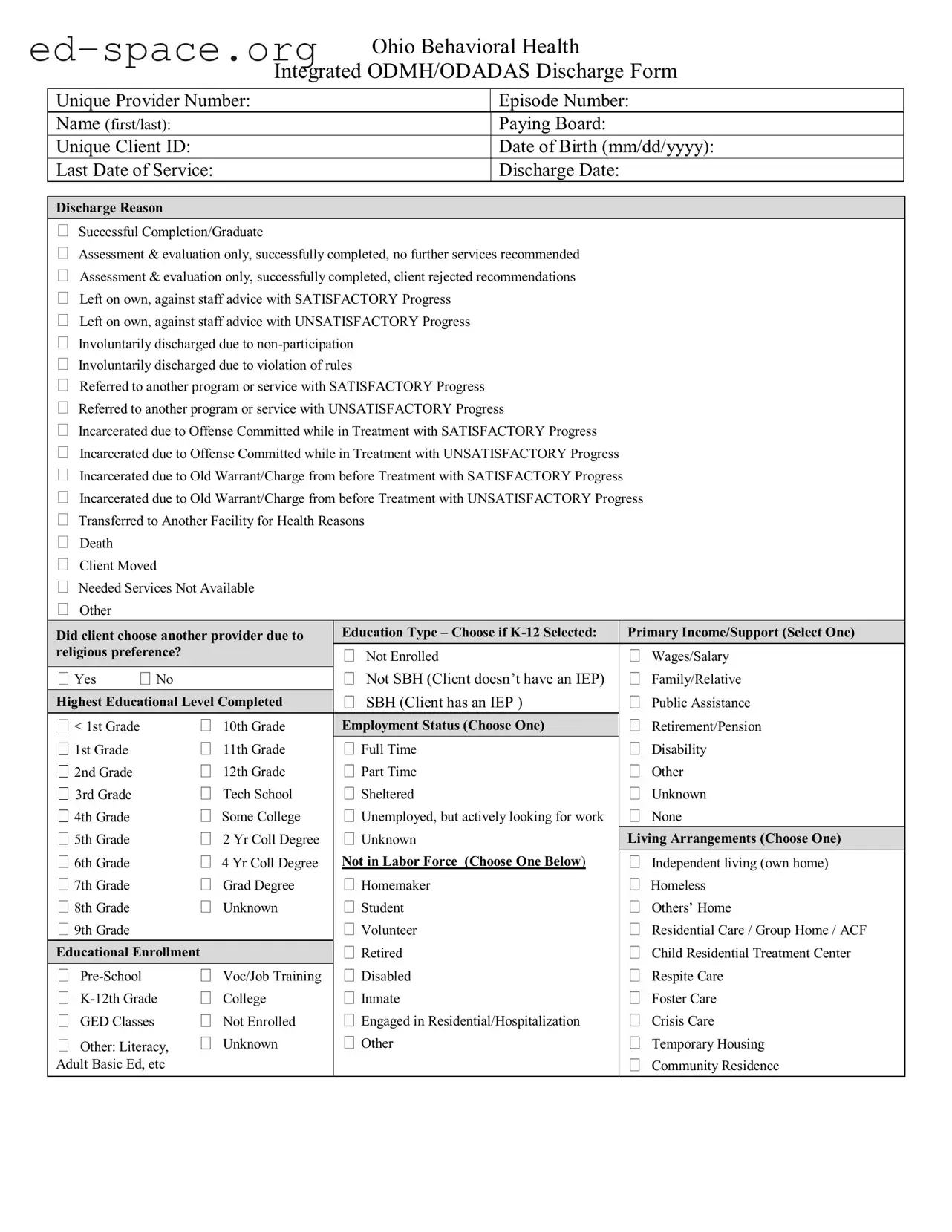
The Ohio Behavioral Discharge Form plays a crucial role in documenting the transition of clients from behavioral health services. This comprehensive form captures essential information such as the client's unique identification details, including their name, date of birth, and unique client ID. It outlines the reasons for discharge, which can range from successful completion of treatment to involuntary discharge due to non-participation or rule violations. The form also records the client's educational background, living arrangements, and employment status, providing a holistic view of their circumstances. Additionally, it delves into the client's substance use history, including drug of choice and frequency of use, as well as any co-occurring physical health conditions. By collecting this information, the Ohio Behavioral Discharge Form ensures that all relevant data is available for future care and support, facilitating a smoother transition for clients into their next phase of recovery or treatment.

|
Ohio Behavioral Health |
|
|
Integrated ODMH/ODADAS Discharge Form |
|
|
|
|
Unique Provider Number: |
|
Episode Number: |
Name (first/last): |
|
Paying Board: |
Unique Client ID: |
|
Date of Birth (mm/dd/yyyy): |
Last Date of Service: |
|
Discharge Date: |
Discharge Reason
Successful Completion/Graduate
Assessment & evaluation only, successfully completed, no further services recommended
Assessment & evaluation only, successfully completed, client rejected recommendations
Left on own, against staff advice with SATISFACTORY Progress
Left on own, against staff advice with UNSATISFACTORY Progress
Involuntarily discharged due to
Involuntarily discharged due to violation of rules
Referred to another program or service with SATISFACTORY Progress
Referred to another program or service with UNSATISFACTORY Progress
Incarcerated due to Offense Committed while in Treatment with SATISFACTORY Progress
Incarcerated due to Offense Committed while in Treatment with UNSATISFACTORY Progress
Incarcerated due to Old Warrant/Charge from before Treatment with SATISFACTORY Progress
Incarcerated due to Old Warrant/Charge from before Treatment with UNSATISFACTORY Progress
Transferred to Another Facility for Health Reasons
Death
Client Moved
Needed Services Not Available
Other
|
|
|
|
|
|
Education Type – Choose if |
|
|
Primary Income/Support (Select One) |
|
|
|
|
|
|
|
|
|
|
||
|
|
|
||||||||
|
Did client choose another provider due to |
|
||||||||
|
religious preference? |
|
|
|
Not Enrolled |
|
Wages/Salary |
|||
|
|
|
|
|
|
|
||||
|
Yes |
No |
|
|
|
Not SBH (Client doesn’t have an IEP) |
|
Family/Relative |
||
|
Highest Educational Level Completed |
|
|
SBH (Client has an IEP ) |
|
Public Assistance |
||||
|
|
|
|
|||||||
|
< 1st Grade |
|
10th Grade |
|
Employment Status (Choose One) |
|
|
Retirement/Pension |
||
|
1st Grade |
|
11th Grade |
|
Full Time |
|
Disability |
|||
|
2nd Grade |
|
12th Grade |
|
Part Time |
|
Other |
|||
|
3rd Grade |
|
Tech School |
|
Sheltered |
|
Unknown |
|||
|
4th Grade |
|
Some College |
|
Unemployed, but actively looking for work |
|
None |
|||
|
5th Grade |
|
2 Yr Coll Degree |
|
Unknown |
|
Living Arrangements (Choose One) |
|
||
|
6th Grade |
|
4 Yr Coll Degree |
|
Not in Labor Force (Choose One Below) |
|
Independent living (own home) |
|||
|
7th Grade |
|
Grad Degree |
|
Homemaker |
|
Homeless |
|||
|
8th Grade |
|
Unknown |
|
Student |
|
Others’ Home |
|||
|
9th Grade |
|
|
|
|
Volunteer |
|
Residential Care / Group Home / ACF |
||
|
|
|
|
Retired |
|
Child Residential Treatment Center |
||||
|
Educational Enrollment |
|
|
|
|
|||||
|
|
|
|
|
|
|
|
|
|
|
|
|
Voc/Job Training |
|
Disabled |
|
Respite Care |
||||
|
College |
|
Inmate |
|
Foster Care |
|||||
|
GED Classes |
|
Not Enrolled |
|
Engaged in Residential/Hospitalization |
|
Crisis Care |
|||
|
Other: Literacy, |
Unknown |
|
Other |
|
Temporary Housing |
||||
Adult Basic Ed, etc |
|
|
|
|
|
|
Community Residence |
|||
|
|
|
|
|
|
|
|
|
|
|

|
Living Arrangements (continued) |
|
|
Drug of Choice (Continued) |
|
|
ODMH: BIOMARKERS |
|
|||||||
|
|
|
|
|
|
||||||||||
|
Nursing Facility |
|
|
|
|
|
|
|
|||||||
|
|
|
|
Source of Height/Weight Information |
|
||||||||||
|
Licensed MR Facility |
|
|
Other Opiates and Synthetics |
|
||||||||||
|
State MH/MR Institution |
|
|
PCP |
|
|
|
|
|
|
|
|
|||
|
|
|
|
|
|
|
|
|
|
|
|||||
|
Hospital |
|
|
|
Other Hallucinogens |
|
|
|
|
|
|
||||
|
|
|
|
|
|
|
Height and Weight |
|
|||||||
|
Correctional Facility |
|
|
Methamphetamines |
|
|
|
|
|
Height (feet and inches) |
|||||
|
Other |
|
|
|
Other Amphetamines |
|
|
| |
|
||||||
|
|
|
|
|
|
|
|||||||||
|
|
|
|
|
|
|
|
|
|||||||
|
Unknown |
|
|
Other Stimulants |
|
|
|
|
|
Weight (lbs) |
|||||
|
|
|
|
|
|
Benzodiazepines |
|
|
| |
|
|||||
|
|
|
Global Assessment of |
|
|
|
|
|
|||||||
|
|
|
|
|
|
|
|
|
|
||||||
| |
|
Functioning |
|
|
Other |
|
Physical Health Conditions |
|
|||||||
|
Diagnosis Type (Choose One) |
|
|
Barbiturates |
|
|
|
Does client report/provide evidence of any of the |
|||||||
|
DSM IV |
ICD9 |
|
|
Other |
|
following conditions in past year? |
||||||||
|
|
|
|
|
|
|
|
||||||||
|
|
|
|
|
|
|
|
Diabetes |
|
|
|||||
|
Primary Diagnosis Code: |
|
|
Inhalants |
|
|
|
|
|
||||||
|
|
|
|
|
|
|
High Cholesterol |
||||||||
|
|
|
|
|
|
Nicotine |
|
|
|
|
Cardiovascular Disease (heart attack, stroke) |
||||
|
Secondary Diagnosis Code: |
|
|
Other Medications |
|
|
|
High blood pressure |
|||||||
|
|
|
|
|
|
Unknown |
|
|
|
Cancer |
|
|
|||
|
|
|
|
|
|
Frequency of Use |
|
|
|
Kidney Disease/Failure |
|||||
|
|
|
|
|
|
|
|
|
|||||||
|
|
|
|
|
|
– 3 X Past Week |
|
Bowel Obstruction (eg, constipation) |
|||||||
|
Tertiary Diagnosis Code: |
|
|
|
|
|
|
||||||||
|
|
|
|
|
|
– 2 X in Past Mo |
– 6 X Past Week |
|
Respiratory Disease (eg, COPD) |
||||||
|
|
|
|
|
|
|
|
|
|
|
|
None |
|
|
|
|
|
|
|
|
|
|
|
|
|
||||||
|
Special Populations (Select all that Apply) |
|
|
Route of Administration |
|
|
|
Health Care Utilization |
|
||||||
|
SMD/SED |
|
|
Oral |
|
Injection |
|
How frequently (in days) has the client used the |
|||||||
|
Alcohol/Other Drug Abuse |
|
|
Smoking |
|
Other |
|
following since admission or last update? |
|||||||
|
|
|
|
|
|
|
|
|
|||||||
|
Forensic Status |
|
|
Inhalation |
Unknown |
|
|
|
|
|
|||||
|
|
|
|
|
|
Hospital Admissions |
|||||||||
|
|
|
|
|
|
|
|
|
|
|
| |
|
|||
|
Developmentally Disabled |
|
|
|
|
Age of First Use – First |
|
||||||||
|
|
|
|
|
|
|
|
||||||||
|
Deaf/Hard of Hearing |
|
| |
|
Intoxication |
|
|
|
|
|
Emergency Room Visits/Admits |
||||
|
|
|
|
|
|
|
|
|
|||||||
|
Blind/Sight Impaired |
|
|
Primary AOD Code: |
|
|
| |
|
(psychiatric or physical health) |
||||||
|
|
|
|
|
|
|
|
||||||||
|
Physically Disabled |
|
|
|
|
Number of Arrests past 30 days |
|
|
|
Outpatient Primary Care Visits |
|||||
|
Sexual Abuse Victim |
|
| |
|
(AOD NOM) |
| |
|
(physical health) |
|||||||
|
Domestic Violence Victim/Witness |
|
|
Primary Reimbursement (Select One) |
|
|
|
|
Dental Visits |
||||||
|
Child of Alcohol/Drug Abuser |
|
|
|
|
|
|
| |
|
||||||
|
|
|
|
|
|
|
|
|
|||||||
|
HIV/AIDS |
|
|
Blue Cross/Blue Shield |
|
|
|
Evidence Based Practices |
|
||||||
|
Suicidal |
|
|
|
Medicare |
|
|
|
|
Did the client receive any of the following EBPs |
|||||
|
Language Barriers/English 2ND Lang. |
|
|
Medicaid |
|
|
|
|
since admission or last update? |
||||||
|
Hepatitis C |
|
|
Other Government Support |
|
Adult Practices |
|
||||||||
|
Transgendered |
|
|
Worker’s Compensation |
|
Supportive Housing |
|||||||||
|
In Custody/Child Welfare |
|
|
Other Private Health Insurance |
|
Supported Employment |
|||||||||
|
Multiple Service System Involvement |
|
|
No Charge |
|
|
|
Assertive Community Treatment (ACT) |
|||||||
|
|
|
|
Other Payment Source |
|
|
|
|
|
||||||
|
Early Childhood: At Risk for SED |
|
|
|
|
|
Family |
|
|||||||
|
Sexual Offender |
|
|
|
|
IDDT |
|
|
|||||||
|
|
|
|
|
|
|
|
|
|
|
|||||
|
|
|
Frequency of attendance at |
|
|
|
|
||||||||
|
Bisexual/Gay/Lesbian |
|
|
programs in the 30 days prior to discharge |
|
|
WMR/Illness |
||||||||
|
|
|
|
|
|
|
|
|
|||||||
|
Military Family |
|
|
No attendance in past month |
|
Medication Management |
|||||||||
|
Drug of Choice (Primary Choice) |
|
|
|
Child & Adolescent Practices |
|
|||||||||
|
Alcohol |
|
|
|
|
Therapeutic Foster Care |
|||||||||
|
Cocaine/Crack |
|
|
Some but unknown |
Unknown |
|
|
||||||||
|
|
|
|
|
|
Functional Family Therapy |
|||||||||
|
Marijuana/Hashish |
|
|
Does the client use tobacco products? |
|
|
|||||||||
|
Heroin |
|
|
|
Yes |
No |
Don’t Know |
|
Intensive |
||||||

|
Drug of Choice (Secondary) |
|
|
Drug of Choice (Tertiary) |
|
|
||||
|
|
|
|
|
||||||
|
Alcohol |
|
|
|
Alcohol |
|
|
|
||
|
Cocaine/Crack |
|
|
Cocaine/Crack |
|
|||||
|
Marijuana/Hashish |
|
|
Marijuana/Hashish |
|
|||||
|
Heroin |
|
|
|
Heroin |
|
|
|
||
|
|
|||||||||
|
Other Opiates and Synthetics |
|
Other Opiates and Synthetics |
|||||||
|
PCP |
|
|
|
PCP |
|
|
|
||
|
Other Hallucinogens |
|
|
Other Hallucinogens |
|
|||||
|
Methamphetamines |
|
|
Methamphetamines |
|
|||||
|
Other Amphetamines |
|
|
Other Amphetamines |
|
|||||
|
Other Stimulants |
|
|
Other Stimulants |
|
|||||
|
Benzodiazepines |
|
|
Benzodiazepines |
|
|||||
|
Other |
|
Other |
|||||||
|
Barbiturates |
|
|
Barbiturates |
|
|||||
|
Other |
|
Other |
|||||||
|
Inhalants |
|
|
|
Inhalants |
|
|
|
||
|
|
|||||||||
|
Nicotine |
|
|
|
Nicotine |
|
|
|
||
|
Other Medications |
|
|
Other Medications |
|
|||||
|
Unknown |
|
|
Unknown |
|
|||||
|
None |
|
|
|
None |
|
|
|
||
Frequency of Use |
|
Frequency of Use |
|
|||||||
|
No use Past Mo |
1 – 3 X Past Week |
|
No use Past Mo |
1 – 3 X Past Week |
|||||
|
1 – 2 X in Past Mo |
3 – 6 X Past Week |
|
1 – 2 X in Past Mo |
3 – 6 X Past Week |
|||||
|
Daily |
|
Unknown |
|
Daily |
|
|
Unknown |
||
Route of Administration |
|
Route of Administration |
|
|||||||
|
Oral |
|
Injection |
|
Oral |
|
|
Injection |
||
|
Smoking |
|
Other |
|
Smoking |
|
|
Other |
||
|
Inhalation |
|
Unknown |
|
Inhalation |
|
|
Unknown |
||
|
|
|
|
|
|
|
|
|||
|
|
|
Age of First Use – First |
|
|
|
Age of First Use – First |
|||
| |
|
Intoxication |
|
| |
|
Intoxication |
|
|||
|
|
|
|
|
|
|
||||
|
Secondary AOD Code |
|
|
Tertiary AOD Code |
|
|||||
|
|
|
|
|
|
|
|
|
|
|
| Fact Name | Description |
|---|---|
| Purpose | The Ohio Behavioral Discharge Form is designed to document the discharge of clients from behavioral health services, capturing essential details about their treatment and outcomes. |
| Governing Law | This form is governed by Ohio Revised Code Sections 5119.01 to 5119.99, which outline the standards for mental health and addiction services. |
| Client Information | The form requires specific client information, including the unique client ID, name, date of birth, and discharge date to ensure accurate record-keeping. |
| Discharge Reasons | Various discharge reasons are provided, such as successful completion, involuntary discharge, or referral to another service, allowing for comprehensive tracking of client progress. |
| Data Collection | The form collects data on client demographics, treatment history, and health conditions, which is crucial for ongoing care and statistical analysis of service effectiveness. |
Completing the Ohio Behavioral Discharge form is an essential step in ensuring that all necessary information is documented accurately. This form collects vital details about the client's discharge from services, which will be used for future reference and planning. Follow the steps below to fill out the form correctly.
After completing the form, review all entries for accuracy. Ensure that all required fields are filled out and that the information reflects the client's situation accurately. This will help in providing continuity of care and support for the client moving forward.
What is the Ohio Behavioral Discharge form?
The Ohio Behavioral Discharge form is a document used to record the details of a client’s discharge from behavioral health services. It captures essential information, including the client's unique identifiers, discharge reasons, and relevant health and social data. This form is crucial for ensuring that all parties involved in the client’s care have a clear understanding of their treatment journey and discharge status.
Who needs to fill out the Ohio Behavioral Discharge form?
The form must be completed by the provider or staff member responsible for the client's care at the time of discharge. This includes therapists, case managers, or any authorized personnel who have been involved in the client's treatment process. Accurate completion is vital to ensure continuity of care and proper documentation.
What information is required on the form?
Essential information includes the client's name, unique client ID, date of birth, last date of service, and discharge date. Additionally, the form requires the reason for discharge, which can range from successful completion to involuntary discharge due to non-participation. Other sections address the client's educational background, living arrangements, and health conditions.
What are the possible discharge reasons listed on the form?
The form includes various discharge reasons such as successful completion of treatment, assessment and evaluation only, voluntary departure against staff advice, involuntary discharge due to rule violations, and referrals to other services. Each reason is critical for understanding the client's progress and future needs.
How does the form address the client's educational background?
The form includes sections for recording the highest educational level completed by the client and their current educational enrollment status. This information helps providers understand the client’s background and tailor future services accordingly.
What is the significance of the drug of choice section?
This section allows providers to document the client’s primary, secondary, and tertiary substances of abuse. Understanding the client's drug history is crucial for developing effective treatment plans and ensuring appropriate follow-up care.
How is the form used for future service planning?
The information collected on the Ohio Behavioral Discharge form is instrumental in planning future services for the client. By capturing discharge reasons, health conditions, and social determinants, providers can make informed decisions about referrals and ongoing support that may be necessary for the client’s recovery journey.
What happens to the form after it is completed?
Once the form is completed, it is typically stored in the client's medical record. It may also be shared with relevant stakeholders involved in the client's care, such as other treatment facilities or support services, to ensure a smooth transition and continuity of care.
Where can I obtain the Ohio Behavioral Discharge form?
The Ohio Behavioral Discharge form can usually be obtained from the Ohio Department of Mental Health and Addiction Services website or directly from behavioral health providers. It is important to ensure that you have the most current version of the form to comply with state requirements.
Incomplete Personal Information: Many individuals forget to fill in essential personal details such as their full name, date of birth, or unique client ID. This information is crucial for proper identification and processing.
Incorrect Discharge Reason: Selecting the wrong discharge reason can lead to misunderstandings. It is important to choose the option that accurately reflects the client's situation, whether it was a successful completion or an involuntary discharge.
Missing Signatures: Failing to sign the form can cause delays. Both the client and the provider may need to sign to validate the discharge.
Neglecting to Specify Educational Status: Not indicating the highest educational level completed can affect the client’s future service eligibility. This detail is vital for understanding the client's background.
Omitting Health Information: Some people overlook the section regarding physical health conditions. Providing accurate health information is essential for a comprehensive understanding of the client’s needs.
Inaccurate Frequency of Use: Misreporting the frequency of substance use can lead to inappropriate treatment recommendations. Accurate reporting helps in tailoring future services effectively.
Ignoring Special Populations Section: Failing to select relevant special populations can result in missed opportunities for additional support services. This section is important for identifying specific needs.
The Ohio Behavioral Discharge form is a crucial document used in the context of mental health and substance abuse treatment. Alongside this form, several other documents are often utilized to ensure comprehensive patient care and proper record-keeping. Below is a list of four such documents, each playing a significant role in the discharge process.
Each of these documents serves a distinct purpose in the discharge process, contributing to a holistic approach to client care. Together, they help ensure that individuals transitioning out of treatment continue to receive the support they need for successful outcomes.
Discharge Summary Form: Similar to the Ohio Behavioral Discharge form, a discharge summary outlines a patient's treatment history, progress, and the reasons for discharge. Both documents provide a comprehensive overview of the client's journey and any recommendations for future care.
Client Assessment Form: This form is used to evaluate a client's needs and progress during treatment. Like the Ohio Behavioral Discharge form, it collects detailed information about the client's circumstances, including their treatment goals and outcomes.
Transfer Summary Form: When a client is transferred to another facility, this form documents their treatment history and any ongoing needs. It shares similarities with the Ohio Behavioral Discharge form in that both aim to ensure continuity of care and provide essential information to the receiving provider.
Treatment Plan Review: This document outlines the goals and objectives set for a client during their treatment. It is similar to the Ohio Behavioral Discharge form in that it assesses progress and may include recommendations for future treatment or referrals.
Follow-Up Care Plan: After discharge, a follow-up care plan helps clients transition back into their daily lives. This document is akin to the Ohio Behavioral Discharge form as both emphasize the importance of ongoing support and resources for the client.
Informed Consent Form: This form ensures that clients understand their treatment options and agree to the proposed services. Both the informed consent form and the Ohio Behavioral Discharge form prioritize client autonomy and informed decision-making throughout the treatment process.
When filling out the Ohio Behavioral Discharge form, attention to detail is crucial. Here are some important dos and don'ts to ensure accuracy and completeness.
Misconceptions about the Ohio Behavioral Discharge form can lead to confusion and misinterpretation. Here are eight common myths, along with clarifications to help you understand the purpose and use of this important document.
Understanding these misconceptions can help clients, families, and providers navigate the discharge process more effectively. Clear communication and accurate documentation are essential in supporting individuals as they transition from one phase of care to another.
When filling out and using the Ohio Behavioral Discharge form, several key points should be kept in mind to ensure accurate and effective documentation.
These takeaways can help streamline the discharge process and ensure that clients receive the appropriate follow-up care they need.