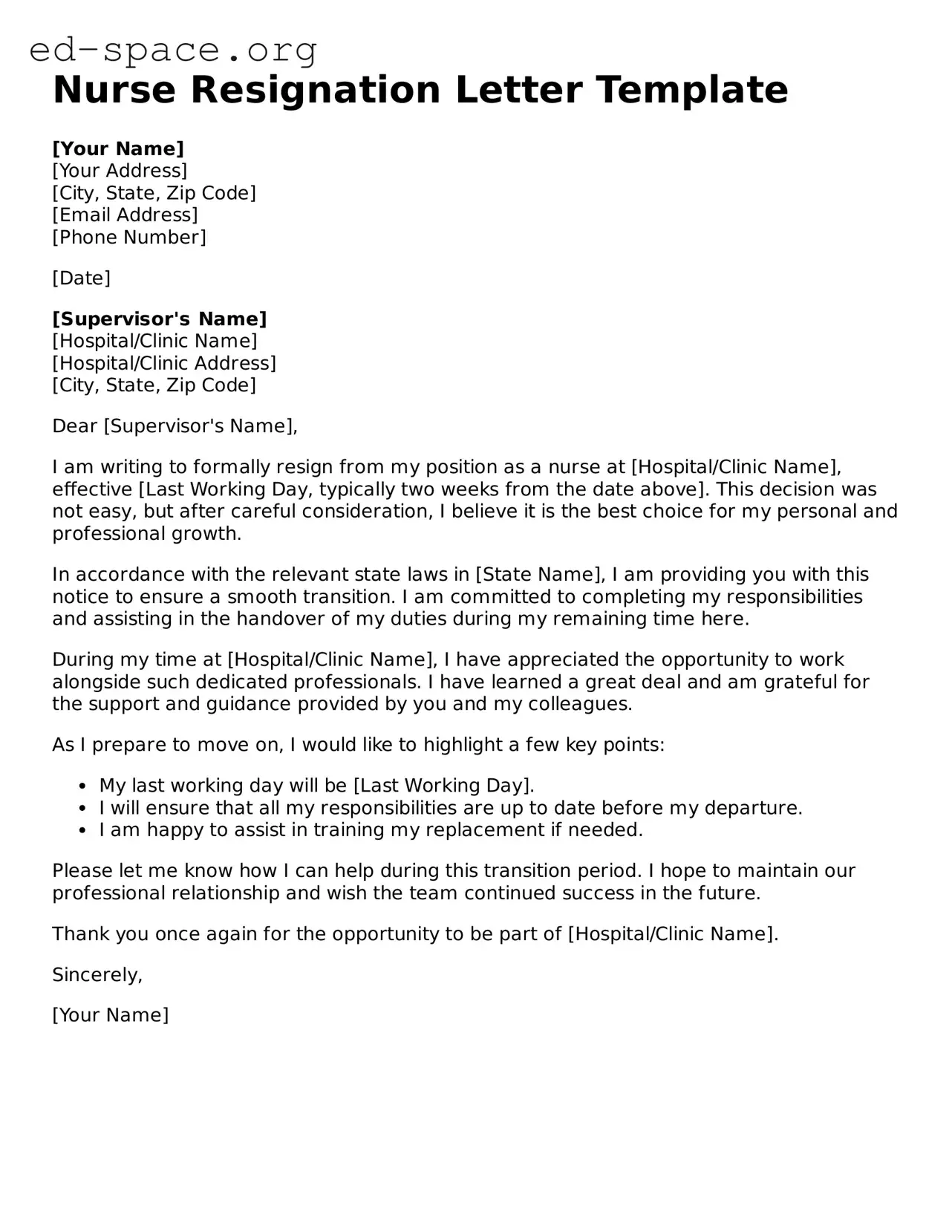
The Nurse Resignation Letter form serves as a crucial document for healthcare professionals who have decided to leave their positions. This form typically includes essential elements such as the nurse's name, the date of resignation, and the intended last day of work. It often provides space for a brief explanation of the reasons for leaving, although this is not mandatory. Additionally, the form may include a section for expressing gratitude towards colleagues and the institution, fostering a sense of professionalism even in departure. Clarity and professionalism are key, as the letter not only communicates the resignation but also maintains relationships within the healthcare community. In many cases, submitting this form is a necessary step in adhering to institutional policies regarding notice periods and exit procedures. Overall, the Nurse Resignation Letter form is an important tool that facilitates a smooth transition for both the departing nurse and the healthcare facility.
Nurse Resignation Letter Template
[Your Name]
[Your Address]
[City, State, Zip Code]
[Email Address]
[Phone Number]
[Date]
[Supervisor's Name]
[Hospital/Clinic Name]
[Hospital/Clinic Address]
[City, State, Zip Code]
Dear [Supervisor's Name],
I am writing to formally resign from my position as a nurse at [Hospital/Clinic Name], effective [Last Working Day, typically two weeks from the date above]. This decision was not easy, but after careful consideration, I believe it is the best choice for my personal and professional growth.
In accordance with the relevant state laws in [State Name], I am providing you with this notice to ensure a smooth transition. I am committed to completing my responsibilities and assisting in the handover of my duties during my remaining time here.
During my time at [Hospital/Clinic Name], I have appreciated the opportunity to work alongside such dedicated professionals. I have learned a great deal and am grateful for the support and guidance provided by you and my colleagues.
As I prepare to move on, I would like to highlight a few key points:
Please let me know how I can help during this transition period. I hope to maintain our professional relationship and wish the team continued success in the future.
Thank you once again for the opportunity to be part of [Hospital/Clinic Name].
Sincerely,
[Your Name]
| Fact Name | Description |
|---|---|
| Purpose | The Nurse Resignation Letter form is used by nurses to formally resign from their positions. |
| Format | The letter should be typed and signed, ensuring clarity and professionalism. |
| Notice Period | Most employers require a notice period, typically two weeks, before the resignation takes effect. |
| State-Specific Requirements | Some states may have specific requirements or forms that must be used for resignations. |
| Governing Law | In states like California, the resignation process is governed by the California Business and Professions Code. |
| Professional Tone | The letter should maintain a professional tone, expressing gratitude and providing a reason for leaving, if appropriate. |
| Submission | The resignation letter should be submitted to the nurse's immediate supervisor or human resources department. |
| Documentation | It is advisable to keep a copy of the resignation letter for personal records. |
| Exit Interview | Some employers may conduct an exit interview to discuss the resignation and gather feedback. |
After obtaining the Nurse Resignation Letter form, you will need to complete it accurately to ensure a smooth resignation process. The information provided will help your employer understand your intent to resign and facilitate any necessary follow-up actions.
What is a Nurse Resignation Letter form?
A Nurse Resignation Letter form is a document that a nurse uses to formally notify their employer about their decision to leave their job. This letter serves as a professional way to communicate the resignation and typically includes the last working day and a brief reason for leaving, if desired.
Why is it important to submit a resignation letter?
Submitting a resignation letter is important because it provides a clear record of your intent to resign. It helps maintain a positive relationship with your employer and colleagues. Additionally, it ensures that you fulfill any contractual obligations and allows for a smoother transition for both you and your employer.
What should I include in my Nurse Resignation Letter?
Your Nurse Resignation Letter should include your name, the date, and the name of your supervisor or manager. Clearly state your intention to resign and provide your last working day. You may also want to express gratitude for the opportunities you had during your employment and offer to assist with the transition.
How much notice should I give before resigning?
Typically, a notice period of two weeks is standard in many workplaces. However, check your employment contract or company policy, as some organizations may require more notice. Giving adequate notice helps your employer plan for your departure and find a replacement if necessary.
Can I email my resignation letter instead of handing it in personally?
Yes, you can email your resignation letter, especially if you are unable to deliver it in person. However, if possible, it is best to have a conversation with your supervisor first. Follow up with a formal email to document your resignation.
What if I have a negative experience at work?
If you had a negative experience, it's still best to keep your resignation letter professional and positive. Focus on your future plans rather than detailing grievances. This approach helps preserve your professional reputation and relationships.
Is it necessary to provide a reason for my resignation?
No, it is not necessary to provide a reason for your resignation. If you prefer to keep it private, you can simply state that you are resigning. However, if you feel comfortable sharing a brief reason, it can sometimes help your employer understand your decision better.
What should I do after submitting my resignation letter?
After submitting your resignation letter, prepare for your final days at work. Complete any outstanding tasks and assist in the transition process. Consider scheduling an exit interview if your employer offers one. This can be an opportunity to provide feedback and leave on good terms.
Neglecting to Include a Clear Date: One common mistake is failing to specify the effective date of resignation. Without this, the employer may not know when to expect the nurse's departure.
Using a Generic Template: Many individuals rely on generic templates without personalizing them. A tailored letter reflects professionalism and respect for the employer.
Being Vague About Reasons for Leaving: While it’s not necessary to provide detailed reasons, being overly vague can lead to misunderstandings. It's often helpful to be clear yet diplomatic.
Forgetting to Express Gratitude: Omitting a note of thanks can come off as ungrateful. A simple acknowledgment of the opportunities received can leave a positive impression.
Not Including Contact Information: Some forget to add their contact details. This can hinder future communication, especially if the employer wishes to reach out for references.
Neglecting to Proofread: Spelling and grammatical errors can undermine the professionalism of the letter. A careful review helps ensure clarity and respect.
Failing to Follow Company Protocol: Each organization may have specific procedures for resigning. Ignoring these can create unnecessary complications.
Not Providing Adequate Notice: Many workplaces expect a two-week notice. Leaving without sufficient notice can strain relationships and impact future job references.
When a nurse decides to resign from their position, several other forms and documents may be required to ensure a smooth transition. Each of these documents serves a specific purpose and helps facilitate the resignation process. Below is a list of commonly used forms that accompany the Nurse Resignation Letter.
In conclusion, these documents play a vital role in ensuring that the resignation process is handled professionally and efficiently. Each form addresses specific aspects of the transition, helping to protect both the nurse's interests and the employer's responsibilities.
When filling out the Nurse Resignation Letter form, it is important to keep certain guidelines in mind. Here are five things you should do and five things you shouldn't do.
Things You Should Do:
Things You Shouldn't Do:
When it comes to the Nurse Resignation Letter form, several misconceptions can lead to confusion among nursing professionals. Understanding these misconceptions can help ensure a smoother transition when leaving a position. Here are five common misunderstandings:
By addressing these misconceptions, nurses can approach their resignation process with clarity and professionalism, ultimately facilitating a more positive transition.
When it comes to resigning from a nursing position, a well-crafted resignation letter is crucial. Here are some key takeaways to keep in mind when filling out and using the Nurse Resignation Letter form:
By following these key points, you can ensure that your resignation process is smooth and professional. A thoughtful resignation letter can leave a lasting positive impression.