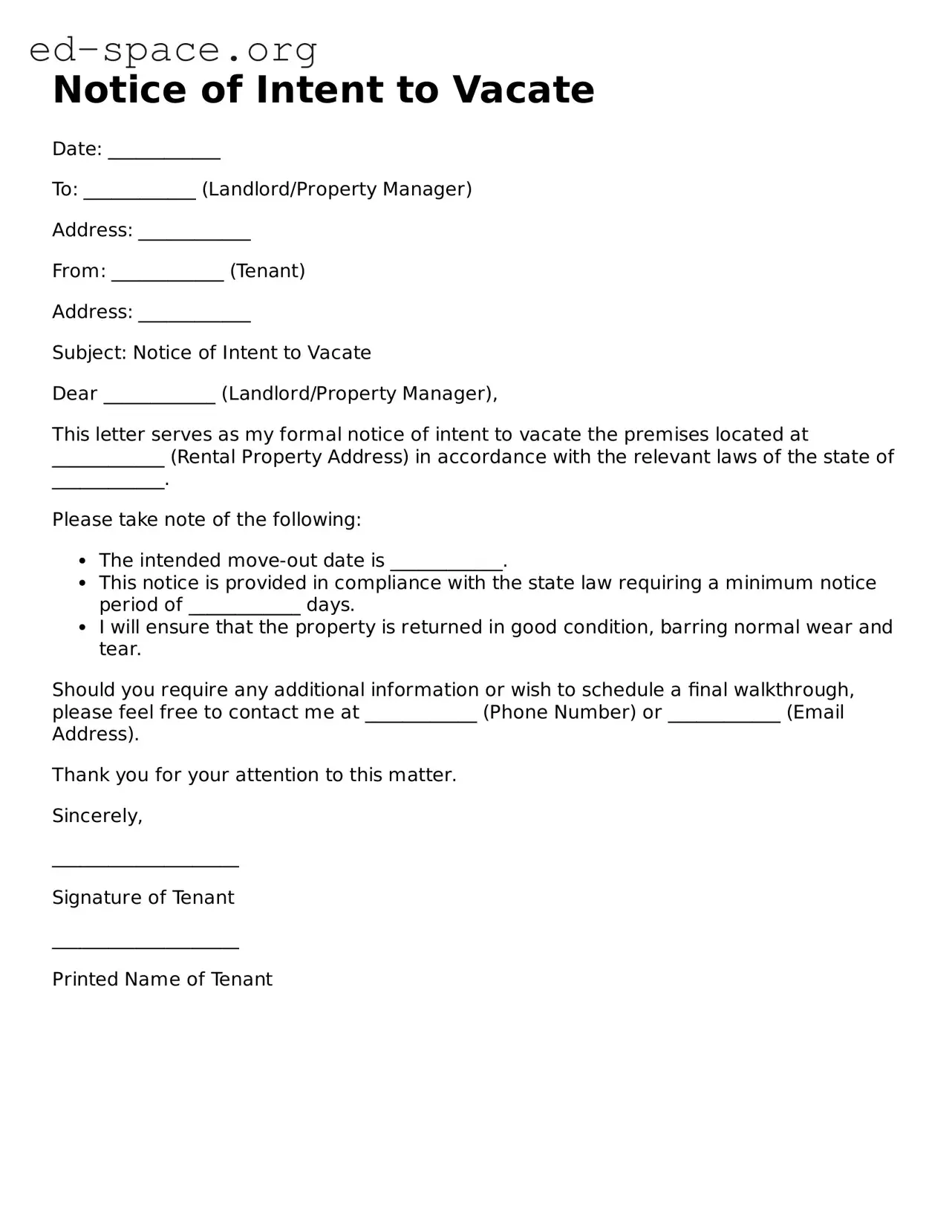
The Notice of Intent to Vacate form serves as a crucial document in the rental process, signaling a tenant's intention to leave a rental property. This form typically outlines the tenant's name, the address of the rental unit, and the intended move-out date. It is essential for both landlords and tenants, as it establishes clear communication regarding the end of the lease agreement. By providing a written notice, tenants fulfill their obligation to inform landlords ahead of time, which is often required by lease agreements. Additionally, this form helps landlords prepare for the upcoming vacancy, allowing them to plan for inspections, repairs, and re-listing the property. Understanding the details of this form can prevent misunderstandings and disputes, ensuring a smoother transition for both parties involved. Properly completing and submitting the Notice of Intent to Vacate is a vital step in the moving process, safeguarding the rights and responsibilities of tenants while facilitating the landlord's ability to manage their property effectively.
Notice of Intent to Vacate
Date: ____________
To: ____________ (Landlord/Property Manager)
Address: ____________
From: ____________ (Tenant)
Address: ____________
Subject: Notice of Intent to Vacate
Dear ____________ (Landlord/Property Manager),
This letter serves as my formal notice of intent to vacate the premises located at ____________ (Rental Property Address) in accordance with the relevant laws of the state of ____________.
Please take note of the following:
Should you require any additional information or wish to schedule a final walkthrough, please feel free to contact me at ____________ (Phone Number) or ____________ (Email Address).
Thank you for your attention to this matter.
Sincerely,
____________________
Signature of Tenant
____________________
Printed Name of Tenant
| Fact Name | Description |
|---|---|
| Purpose | The Notice of Intent to Vacate form is used by tenants to inform landlords of their decision to leave the rental property. |
| State-Specific Forms | Different states have their own versions of this form, which may include specific requirements for notice periods. |
| Governing Laws | In California, for example, the form must comply with California Civil Code Section 1946. |
| Delivery Methods | The form can typically be delivered via mail, email, or in person, depending on state regulations. |
| Consequences of Non-Compliance | Failure to properly submit this notice may result in the tenant being held responsible for rent beyond their intended move-out date. |
Once you have your Notice of Intent to Vacate form ready, it's time to fill it out accurately. This form is essential for notifying your landlord of your decision to move out. After completing the form, ensure you deliver it to your landlord according to the lease agreement terms.
After completing these steps, make a copy of the form for your records. Deliver the original to your landlord, and keep a record of how and when you sent it. This will serve as proof of your notice.
What is a Notice of Intent to Vacate form?
The Notice of Intent to Vacate form is a document that a tenant submits to inform their landlord of their intention to leave the rental property. This notice typically includes the planned move-out date and serves as a formal communication to initiate the end of the lease agreement.
How much notice do I need to give?
The required notice period can vary based on your lease agreement and local laws. Generally, a 30-day notice is standard, but some leases may require more or less time. Always check your lease terms for specific requirements.
Do I need to provide a reason for vacating?
Can I send the Notice of Intent to Vacate via email?
What happens after I submit the Notice of Intent to Vacate?
Will I lose my security deposit if I vacate?
Can I change my mind after submitting the Notice of Intent to Vacate?
What if I forget to submit the Notice of Intent to Vacate?
Failing to provide the correct date of intent. It's crucial to specify the exact date when you plan to vacate the premises. Without this, your notice may be considered incomplete.
Not including your current address. Ensure that your current address is clearly stated. This helps the landlord or property manager identify your lease agreement.
Omitting your contact information. Include a phone number or email address. This allows for easier communication regarding your move-out process.
Neglecting to sign the form. A signature is necessary to validate your notice. Without it, the document may not be recognized.
Using unclear language. Be direct and concise. Ambiguity can lead to misunderstandings about your intentions.
Not checking the notice period required by your lease. Different leases have varying requirements. Familiarize yourself with these to avoid penalties.
Forgetting to keep a copy of the submitted form. Retain a copy for your records. This can serve as proof of your notice in case of disputes.
Submitting the notice late. Ensure you provide the notice within the required timeframe. Late submissions may result in financial repercussions.
When tenants decide to move out of a rental property, they often need to complete a Notice of Intent to Vacate form. This form serves as an official notification to the landlord about the tenant's plans to leave. However, several other documents may also be necessary during this process to ensure a smooth transition. Here’s a list of commonly used forms and documents that accompany the Notice of Intent to Vacate.
Each of these documents plays a vital role in the moving process. They help clarify responsibilities, protect rights, and ensure that both tenants and landlords are on the same page. Being organized and informed can make a significant difference during this transition.
When filling out the Notice of Intent to Vacate form, it's essential to approach the task thoughtfully. Here are some important do's and don'ts to keep in mind:
The Notice of Intent to Vacate form is an important document in the rental process, but there are several misconceptions surrounding it. Understanding these misconceptions can help tenants and landlords navigate the process more effectively.
This is not true. While tenants typically use the form to notify landlords of their intent to leave, landlords may also need to provide notice in certain situations, such as when they intend to terminate a lease.
Submitting the Notice of Intent to Vacate does not automatically ensure that the security deposit will be returned. Landlords can withhold part or all of the deposit for valid reasons, such as damage beyond normal wear and tear.
Notice periods can vary by state and lease agreement. Some areas may require 30 days' notice, while others may have different timeframes. Always check local laws and the lease for specific requirements.
While some landlords may prefer in-person delivery, many accept electronic submissions or mailed copies. Always confirm the preferred method with the landlord.
The Notice of Intent to Vacate is not a contract but rather a notification. It informs the landlord of the tenant's plans but does not change the terms of the lease unless both parties agree.
Most leases require tenants to stay until the end of the notice period. Leaving before that could result in penalties or loss of the security deposit.
When filling out and using the Notice of Intent to Vacate form, it is essential to keep several key points in mind: