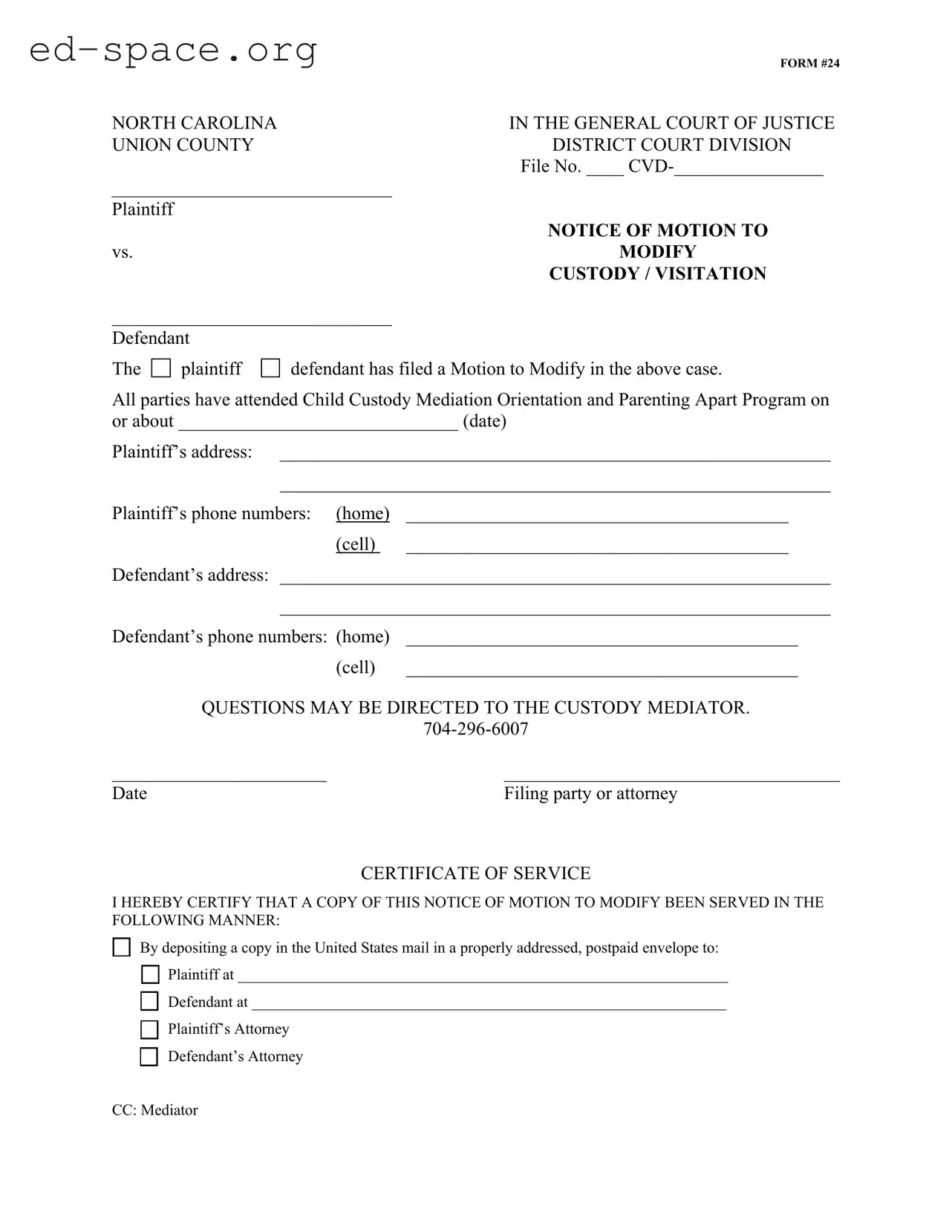
In North Carolina, the 24 form plays a crucial role in family law, specifically when it comes to modifying custody or visitation arrangements. This form is utilized in cases where one party seeks to change existing custody agreements, highlighting the importance of effective communication and cooperation between parents. The process begins with the filing of a Motion to Modify, which must be completed by the plaintiff and served to the defendant. Both parties are required to attend Child Custody Mediation Orientation and the Parenting Apart Program, ensuring they are equipped with the necessary tools to navigate the complexities of co-parenting. The form captures essential information such as the addresses and contact numbers for both the plaintiff and defendant, facilitating direct communication throughout the process. Additionally, it includes a Certificate of Service section, confirming that all parties have received the necessary documentation. This form not only serves as a legal document but also emphasizes the commitment to the well-being of the child involved, making it an integral part of the custody modification journey.

|
FORM #24 |
NORTH CAROLINA |
IN THE GENERAL COURT OF JUSTICE |
UNION COUNTY |
DISTRICT COURT DIVISION |
|
File No. ____ |
______________________________ |
|
Plaintiff |
|
|
NOTICE OF MOTION TO |
vs. |
MODIFY |
|
CUSTODY / VISITATION |
______________________________ |
|
Defendant |
|
The
plaintiff
defendant has filed a Motion to Modify in the above case.
All parties have attended Child Custody Mediation Orientation and Parenting Apart Program on or about ______________________________ (date)
Plaintiff’s address: ___________________________________________________________
___________________________________________________________
Plaintiff’s phone numbers: (home) _________________________________________
(cell) _________________________________________
Defendant’s address: ___________________________________________________________
___________________________________________________________
Defendant’s phone numbers: (home) |
__________________________________________ |
(cell) |
__________________________________________ |
QUESTIONS MAY BE DIRECTED TO THE CUSTODY MEDIATOR. |
|
|
|
_______________________ |
____________________________________ |
Date |
Filing party or attorney |
CERTIFICATE OF SERVICE
I HEREBY CERTIFY THAT A COPY OF THIS NOTICE OF MOTION TO MODIFY BEEN SERVED IN THE FOLLOWING MANNER:
By depositing a copy in the United States mail in a properly addressed, postpaid envelope to:
Plaintiff at _______________________________________________________________
Defendant at _____________________________________________________________
Plaintiff’s Attorney
Defendant’s Attorney
CC: Mediator
| Fact Name | Description |
|---|---|
| Form Title | This form is officially known as the "Notice of Motion to Modify Custody/Visitation." It is used in custody cases. |
| Governing Law | The form is governed by North Carolina General Statutes, specifically Chapter 50, which covers custody and visitation laws. |
| Filing Party | The party seeking to change custody or visitation is referred to as the plaintiff. This person initiates the motion. |
| Defendant | The other party involved in the case is called the defendant. This person responds to the plaintiff's motion. |
| Mediation Requirement | All parties must attend Child Custody Mediation Orientation and Parenting Apart Program before filing the motion. |
| Contact Information | The form requires the addresses and phone numbers for both the plaintiff and defendant, ensuring clear communication. |
| Filing Date | The date of filing is important. It should be clearly indicated in the designated space on the form. |
| Certificate of Service | A section at the end certifies that a copy of the notice has been sent to the other party and their attorney. |
| Mediator Contact | Questions regarding the motion can be directed to the custody mediator, with a contact number provided on the form. |
Filling out the North Carolina 24 form is an important step in your custody or visitation modification process. After completing the form, you will need to submit it to the court and ensure all parties involved receive a copy. Here are the steps to help you fill out the form accurately.
What is the North Carolina 24 form?
The North Carolina 24 form is a legal document used to notify the court and involved parties of a motion to modify custody or visitation arrangements. It is filed in the District Court Division of the General Court of Justice in North Carolina.
Who can file the North Carolina 24 form?
Either the plaintiff or the defendant in a custody case can file the North Carolina 24 form. This form is typically used when one party seeks to change existing custody or visitation orders.
What information is required on the form?
The form requires basic information, including the names of the parties involved, their addresses, phone numbers, and the date of the Child Custody Mediation Orientation and Parenting Apart Program attendance. It also includes a section for the case file number.
What is the purpose of the notice of motion?
The notice of motion informs all parties involved that a motion to modify custody or visitation has been filed. This ensures that everyone is aware of the request and can prepare for any upcoming court proceedings.
Is mediation required before filing the form?
Yes, all parties must attend Child Custody Mediation Orientation and the Parenting Apart Program before filing the motion. This requirement aims to encourage amicable resolutions and reduce court involvement.
How do I serve the notice of motion?
You must serve the notice of motion by mailing a copy to the involved parties. The form includes a certificate of service section where you confirm that the notice has been sent to the plaintiff, defendant, and their attorneys, if applicable.
What happens after I file the North Carolina 24 form?
After filing the form, the court will schedule a hearing to review the motion. Both parties will have the opportunity to present their cases, and the judge will make a decision based on the best interests of the child.
Can I modify custody or visitation without filing this form?
No, you cannot legally modify custody or visitation arrangements without filing the North Carolina 24 form. Changes must be documented and approved by the court to be enforceable.
What if I need help completing the form?
If you need assistance with the North Carolina 24 form, consider consulting with a family law attorney. They can provide guidance on how to fill out the form correctly and help you understand the modification process.
Where do I file the North Carolina 24 form?
The form should be filed at the District Court in the county where the original custody order was issued. Make sure to check with the court for any specific filing requirements or fees.
Failing to include the file number. This is crucial for the court to identify your case.
Not providing accurate contact information for both the plaintiff and defendant. Ensure all addresses and phone numbers are current.
Missing the date of attendance for the Child Custody Mediation Orientation. This detail is essential for the court's records.
Neglecting to sign the form. A missing signature can delay the processing of your motion.
Inaccurate or incomplete information in the Certificate of Service section. Make sure to specify how and to whom the notice was served.
Forgetting to notify the mediator of any changes in contact information. Keeping the mediator informed is important for communication.
Using outdated forms. Always ensure you are using the most current version of the North Carolina 24 form.
In family law, particularly in North Carolina, various forms and documents often accompany the North Carolina 24 form, which pertains to modifying custody or visitation arrangements. Each document serves a specific purpose in the legal process, ensuring that all parties are informed and that the court has the necessary information to make decisions. Below is a list of relevant forms that may be used alongside the North Carolina 24 form.
Understanding these documents is crucial for anyone navigating the complexities of custody and visitation modifications in North Carolina. Each form plays a vital role in the legal process, helping to ensure that the best interests of the child are prioritized while also providing a fair opportunity for all parties to be heard.
The North Carolina 24 form, which is a Notice of Motion to Modify Custody/Visitation, shares similarities with several other legal documents commonly used in family law. Each of these documents serves a specific purpose in the process of modifying custody arrangements or addressing visitation issues. Below are ten documents that are similar to the North Carolina 24 form:
When filling out the North Carolina 24 form, it's essential to follow specific guidelines to ensure accuracy and compliance. Here are five things you should and shouldn't do:
Following these guidelines will help streamline the process and reduce potential issues with your motion to modify custody or visitation.
Misconceptions about the North Carolina 24 form can lead to confusion. Here are ten common misunderstandings:
Understanding these misconceptions can help individuals navigate the process more effectively.
Understanding the North Carolina 24 form is essential for anyone involved in custody and visitation modification cases. Here are some key takeaways to keep in mind: