In today's fast-paced business environment, protecting sensitive information has become more crucial than ever. A Non-disclosure Agreement (NDA) serves as a vital tool in safeguarding confidential data, ensuring that parties involved in a business relationship maintain the privacy of shared information. Typically utilized in various contexts, such as employment relationships, partnerships, or joint ventures, this legal document outlines the obligations of the parties regarding the handling of proprietary information. Key elements of an NDA include the definition of what constitutes confidential information, the duration of the confidentiality obligation, and the specific circumstances under which information can be disclosed. Furthermore, the agreement may also stipulate the consequences of breaching the terms, thereby emphasizing the importance of adherence to the outlined commitments. By establishing clear boundaries and expectations, an NDA fosters trust and encourages open communication, which can ultimately lead to successful collaborations while minimizing the risk of information leaks.
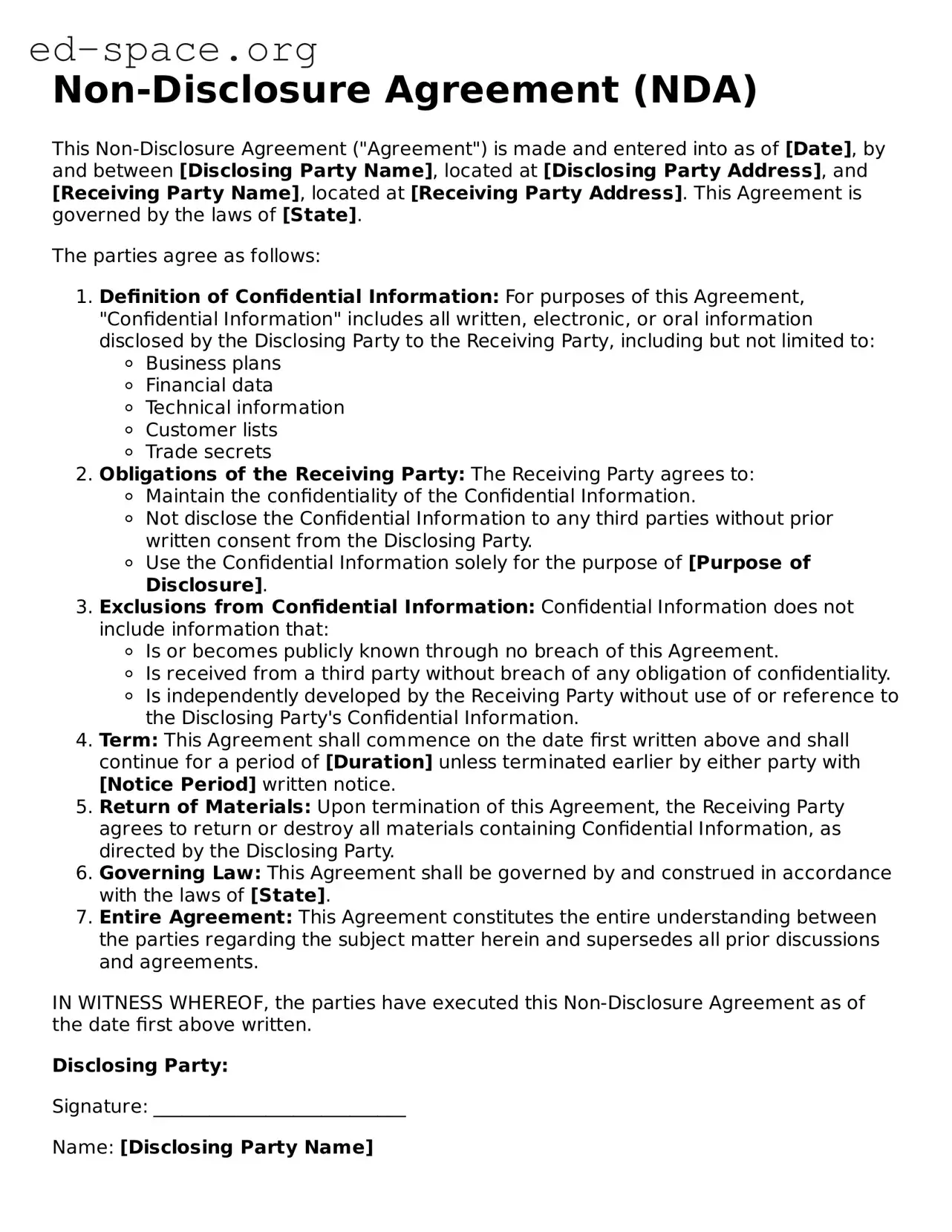
Non-Disclosure Agreement (NDA)
This Non-Disclosure Agreement ("Agreement") is made and entered into as of [Date], by and between [Disclosing Party Name], located at [Disclosing Party Address], and [Receiving Party Name], located at [Receiving Party Address]. This Agreement is governed by the laws of [State].
The parties agree as follows:
IN WITNESS WHEREOF, the parties have executed this Non-Disclosure Agreement as of the date first above written.
Disclosing Party:
Signature: ___________________________
Name: [Disclosing Party Name]
Date: _________________________________
Receiving Party:
Signature: ___________________________
Name: [Receiving Party Name]
Date: _________________________________
| Fact Name | Description |
|---|---|
| Definition | A Non-Disclosure Agreement (NDA) is a legally binding contract that establishes a confidential relationship between parties to protect sensitive information. |
| Purpose | The primary purpose of an NDA is to prevent the unauthorized sharing of confidential information, trade secrets, or proprietary data. |
| Types of NDAs | There are two main types of NDAs: unilateral, where one party discloses information, and mutual, where both parties share confidential information. |
| Governing Law | The governing law of an NDA typically depends on the state in which the agreement is executed. For example, California law may apply to NDAs executed in California. |
| Duration | NDAs can specify a duration for confidentiality, which may range from a few years to indefinitely, depending on the nature of the information. |
| Enforcement | If a party breaches an NDA, the injured party may seek legal remedies, including injunctions and monetary damages, to enforce the agreement. |
Completing the Non-disclosure Agreement (NDA) form is an important step in protecting confidential information. After filling out the form, it will be ready for signatures, ensuring that both parties understand their obligations regarding the information shared.
What is a Non-disclosure Agreement (NDA)?
A Non-disclosure Agreement, often referred to as an NDA, is a legal contract that establishes a confidential relationship between parties. It ensures that any sensitive information shared during a business relationship remains private. NDAs are commonly used in various situations, such as during negotiations, partnerships, or when sharing proprietary information.
Why would I need an NDA?
If you’re sharing confidential information with another party—be it a business partner, employee, or contractor—an NDA protects your interests. It helps prevent the unauthorized disclosure of sensitive information, such as trade secrets, business strategies, or client lists. By having an NDA in place, you can feel more secure when discussing important details.
What types of information are typically covered by an NDA?
NDAs generally cover any information that is not publicly available and is deemed confidential by the disclosing party. This can include business plans, financial data, customer information, marketing strategies, and technical specifications. However, the specific information covered will depend on the terms outlined in the NDA itself.
Are there different types of NDAs?
Yes, there are two main types of NDAs: unilateral and mutual. A unilateral NDA involves one party disclosing information to another party, while a mutual NDA involves both parties sharing confidential information with each other. The choice between the two depends on the nature of the relationship and the information being exchanged.
How long does an NDA last?
The duration of an NDA can vary. Some agreements specify a fixed term, such as one or two years, while others may last indefinitely, especially if the information shared remains confidential for an extended period. It’s essential to clearly outline the duration in the NDA to avoid confusion later.
What happens if someone breaches an NDA?
If a party breaches an NDA, the affected party may seek legal remedies. This could involve filing a lawsuit for damages or seeking an injunction to prevent further disclosure. The specific consequences will depend on the terms of the NDA and the nature of the breach. Legal action can be costly and time-consuming, so it’s always best to adhere to the agreement.
Can I modify an NDA?
Yes, NDAs can be modified, but any changes must be agreed upon by all parties involved. It’s important to document any modifications in writing to ensure clarity and enforceability. If you’re unsure about how to modify an NDA, consulting with a legal professional can be beneficial.
Do I need a lawyer to draft an NDA?
While it’s not strictly necessary to hire a lawyer to draft an NDA, doing so can provide significant advantages. A legal professional can ensure that the agreement is tailored to your specific needs and complies with applicable laws. This can help avoid potential pitfalls and ensure that your interests are adequately protected.
Is an NDA enforceable in court?
Generally, NDAs are enforceable in court as long as they meet certain legal requirements. These include having clear terms, mutual consent from all parties, and a legitimate business interest in protecting the information. However, enforceability can depend on the specifics of the case and the jurisdiction, so it’s wise to seek legal advice if you have concerns.
Not Clearly Identifying the Parties: One common mistake is failing to accurately name all parties involved in the agreement. It is essential to specify who is disclosing information and who is receiving it. Omitting a party can lead to confusion and potential legal issues.
Vague Definition of Confidential Information: Some individuals do not provide a clear definition of what constitutes confidential information. This can create ambiguity. A well-defined scope helps ensure that all parties understand what information is protected.
Ignoring the Duration of the Agreement: People often overlook specifying how long the confidentiality obligations last. Without a defined duration, the agreement may be unenforceable or lead to misunderstandings about when information can be shared.
Failing to Include Permitted Disclosures: Many forget to outline circumstances under which disclosure is allowed. For example, if the information must be shared due to legal requirements, this should be explicitly stated to avoid complications.
Not Seeking Legal Review: Lastly, some individuals neglect to have the agreement reviewed by a legal professional. A legal expert can provide valuable insights and help identify potential issues, ensuring the document serves its intended purpose.
A Non-disclosure Agreement (NDA) is a crucial document that protects sensitive information shared between parties. However, several other forms and documents often accompany an NDA to ensure comprehensive legal protection and clarity in business relationships. Below is a list of these commonly used documents.
These documents collectively help to establish clear expectations and protect sensitive information in various business contexts. Understanding their purpose can enhance the effectiveness of an NDA and contribute to more secure business relationships.
A Non-disclosure Agreement (NDA) is a legal document designed to protect sensitive information. Several other documents serve similar purposes in safeguarding confidential information or outlining specific obligations. Here are six documents that share similarities with an NDA:
When filling out a Non-disclosure Agreement (NDA) form, attention to detail is crucial. Here are some important dos and don'ts to consider:
Non-disclosure Agreements (NDAs) are often misunderstood. Here are four common misconceptions:
When considering a Non-disclosure Agreement (NDA), it is essential to understand its purpose and how to effectively fill it out. Here are some key takeaways:
Taking the time to carefully fill out the NDA can help protect your interests and foster trust between parties. Understanding these key elements is crucial for effective use of the agreement.