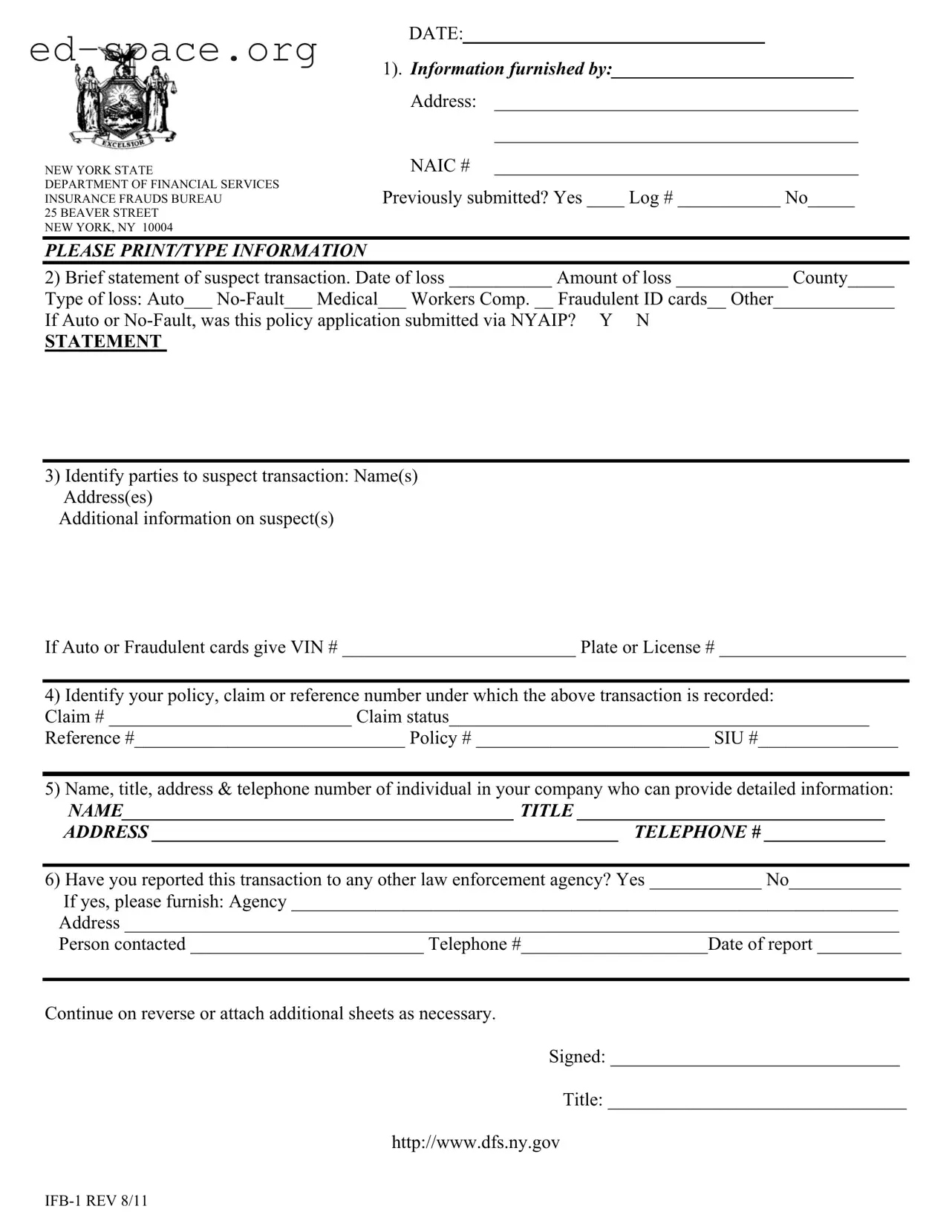
The New York Ifb 1 form serves as a crucial tool for reporting suspected insurance fraud to the New York State Department of Financial Services' Insurance Frauds Bureau. This form collects essential information regarding the nature of the suspected fraudulent transaction, including the date and amount of loss, as well as the type of loss, such as auto, no-fault, medical, or workers' compensation. It requires detailed identification of the parties involved in the transaction, including names, addresses, and any relevant vehicle identification numbers or license plate information. Additionally, the form prompts the reporter to provide their policy, claim, or reference numbers associated with the incident, ensuring that all pertinent details are linked to the correct records. The individual reporting the fraud must also supply their contact information, making it easier for investigators to reach out for further clarification. Furthermore, if the transaction has been reported to other law enforcement agencies, this information must be disclosed, enhancing the collaborative efforts to combat insurance fraud. Timely and accurate completion of the Ifb 1 form is vital in the fight against fraudulent activities, as it helps streamline investigations and protect consumers.
NEW YORK STATE
DEPARTMENT OF FINANCIAL SERVICES INSURANCE FRAUDS BUREAU
25 BEAVER STREET
NEW YORK, NY 10004
DATE:
1). Information furnished by:__________________________
Address: _______________________________________
_______________________________________
NAIC # _______________________________________
Previously submitted? Yes ____ Log # ___________ No_____
PLEASE PRINT/TYPE INFORMATION
2)Brief statement of suspect transaction. Date of loss ___________ Amount of loss ____________ County_____
Type of loss: Auto___
If Auto or
STATEMENT
3)Identify parties to suspect transaction: Name(s) Address(es)
Additional information on suspect(s)
If Auto or Fraudulent cards give VIN # _________________________ Plate or License # ____________________
4) Identify your policy, claim or reference number under which the above transaction is recorded:
Claim # __________________________ Claim status_____________________________________________
Reference #_____________________________ Policy # _________________________ SIU #_______________
5)Name, title, address & telephone number of individual in your company who can provide detailed information:
NAME__________________________________________ TITLE _________________________________
ADDRESS __________________________________________________ TELEPHONE # _____________
6)Have you reported this transaction to any other law enforcement agency? Yes ____________ No____________
If yes, please furnish: Agency _________________________________________________________________
Address ___________________________________________________________________________________
Person contacted _________________________ Telephone #____________________Date of report _________
Continue on reverse or attach additional sheets as necessary.
Signed: _______________________________
Title: ________________________________
http://www.dfs.ny.gov
| Fact Name | Description |
|---|---|
| Governing Authority | The New York IFB-1 form is governed by the New York State Department of Financial Services. |
| Purpose | This form is utilized to report suspected insurance fraud to the Insurance Frauds Bureau. |
| Submission Requirements | Information must be printed or typed, including details about the suspect transaction and parties involved. |
| Law Enforcement Notification | Submitters must indicate if they have reported the transaction to any other law enforcement agency. |
| Contact Information | The form requires the name, title, address, and phone number of a company representative who can provide further details. |
Filling out the New York IFB 1 form requires careful attention to detail. This form is essential for reporting suspected insurance fraud, and it's important to provide accurate information to facilitate the investigation. Follow these steps to complete the form correctly.
Once you have completed the form, review it for accuracy before submitting. Make sure all necessary information is included, and if more space is needed, continue on the reverse side or attach additional sheets. Properly submitting this form can help address potential fraud effectively.
What is the New York Ifb 1 form?
The New York Ifb 1 form is a document used to report suspected insurance fraud to the New York State Department of Financial Services. It collects information about fraudulent transactions, including details about the parties involved and the nature of the fraud. This form is crucial for helping authorities investigate and address insurance fraud effectively.
Who should fill out the Ifb 1 form?
The Ifb 1 form should be filled out by individuals or companies that suspect fraudulent activity related to insurance claims. This may include insurance companies, claims adjusters, or other parties who have knowledge of suspicious transactions. It is important that the information provided is accurate and complete to facilitate a thorough investigation.
What information is required on the Ifb 1 form?
The form requires several key pieces of information. You must provide details about the suspect transaction, including the date of loss, amount of loss, and type of loss. Additionally, you need to identify the parties involved, provide policy and claim numbers, and include contact information for someone who can offer further details. If applicable, information about any other law enforcement agencies contacted should also be included.
What types of fraud can be reported using the Ifb 1 form?
The Ifb 1 form can be used to report various types of insurance fraud. This includes auto fraud, no-fault fraud, medical fraud, workers' compensation fraud, and fraudulent identification cards. If you suspect other types of fraud, you can specify them in the “Other” section of the form.
Is it necessary to report the transaction to other law enforcement agencies?
How do I submit the Ifb 1 form?
You can submit the Ifb 1 form by mailing it to the New York State Department of Financial Services at the address provided on the form. Ensure that all sections are filled out completely and accurately before sending it. If you have additional information, you may attach extra sheets as necessary.
What happens after I submit the Ifb 1 form?
After submission, the Department of Financial Services will review the information provided. They may reach out for additional details or clarification if needed. The department will then investigate the claim and take appropriate action based on their findings. You may not receive updates on the investigation due to privacy and confidentiality regulations.
Can I remain anonymous when reporting fraud?
The Ifb 1 form does require your contact information, but you may choose not to provide your name if you feel uncomfortable. However, providing your contact details can help authorities reach you for more information, which may be vital for the investigation.
What should I do if I have more questions about the Ifb 1 form?
If you have further questions, you can contact the New York State Department of Financial Services directly. They can provide guidance on completing the form and answer any specific questions you may have regarding the reporting process.
Incomplete Information: Failing to fill out all required fields can lead to delays. Ensure every section is addressed, especially the name and address sections.
Illegible Handwriting: If you choose to handwrite the form, make sure your writing is clear. Illegible text can cause confusion and might require resubmission.
Incorrect Dates: Double-check the date of loss. An incorrect date can affect the investigation and may lead to the form being rejected.
Missing Claim or Policy Numbers: Not providing the correct claim or policy number can hinder the processing of your report. Always verify these numbers before submission.
Omitting Additional Information: If there are details about the suspect or the transaction that could be relevant, include them. This helps the authorities better understand the situation.
Failure to Sign: Remember to sign the form at the end. A missing signature can result in the form being considered incomplete.
Not Reporting to Other Agencies: If you have reported the incident to another law enforcement agency, be sure to include that information. This can provide valuable context.
Ignoring the Instructions: Each section has specific requirements. Read the instructions carefully to avoid common pitfalls.
The New York Ifb 1 form is a critical document used to report suspected insurance fraud. It is often accompanied by several other forms and documents that provide additional context and information related to the fraud investigation. Below is a list of commonly used forms that complement the Ifb 1.
These forms and documents collectively enhance the reporting process and facilitate a comprehensive investigation into suspected insurance fraud. Each plays a unique role in ensuring that all relevant information is available for review by authorities.
The New York IFB 1 form is a vital document used for reporting insurance fraud. It serves a specific purpose, but there are several other documents that share similarities in terms of function and structure. Here’s a list of ten documents that are comparable to the IFB 1 form:
Each of these documents plays a role in documenting transactions and reporting potential fraud, reflecting the importance of transparency and accountability in the insurance industry.
When filling out the New York IFB 1 form, it’s important to follow certain guidelines to ensure accuracy and compliance. Below are ten things you should and shouldn’t do during this process.
Understanding the New York IFB 1 form is crucial for those involved in reporting insurance fraud. However, several misconceptions often arise. Here are six common misunderstandings about this form:
By addressing these misconceptions, individuals can better navigate the reporting process and contribute to the fight against insurance fraud in New York.
When filling out and using the New York IFB 1 form, keep the following key takeaways in mind: