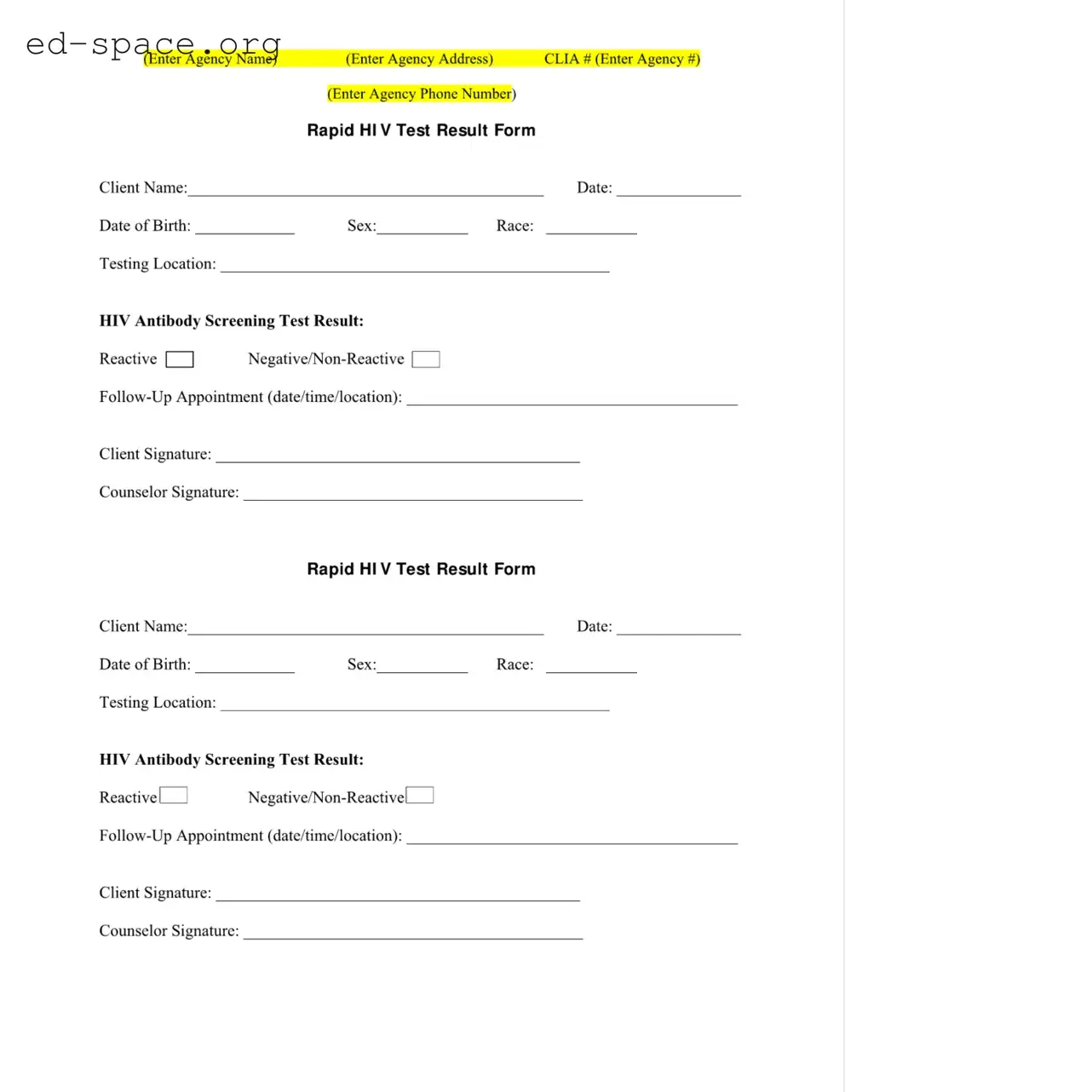
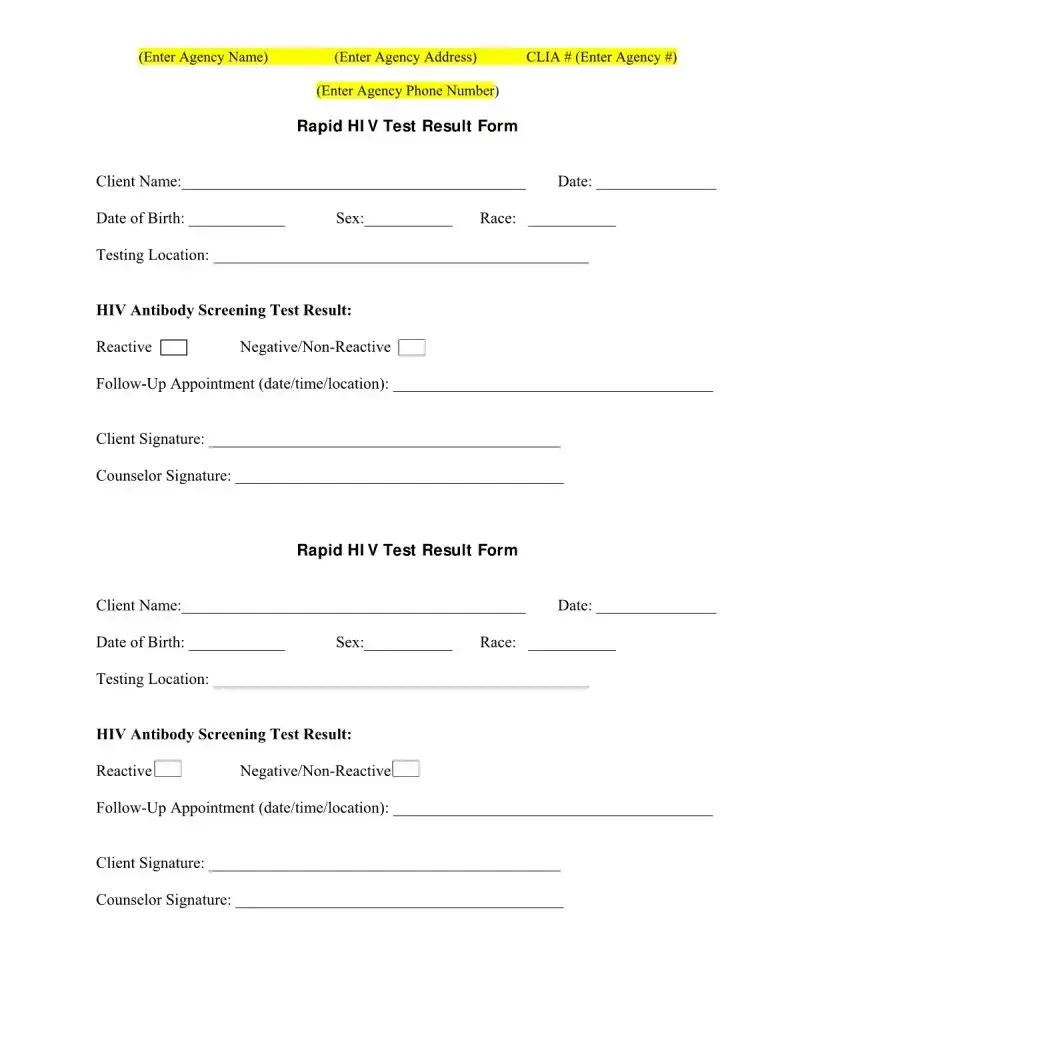
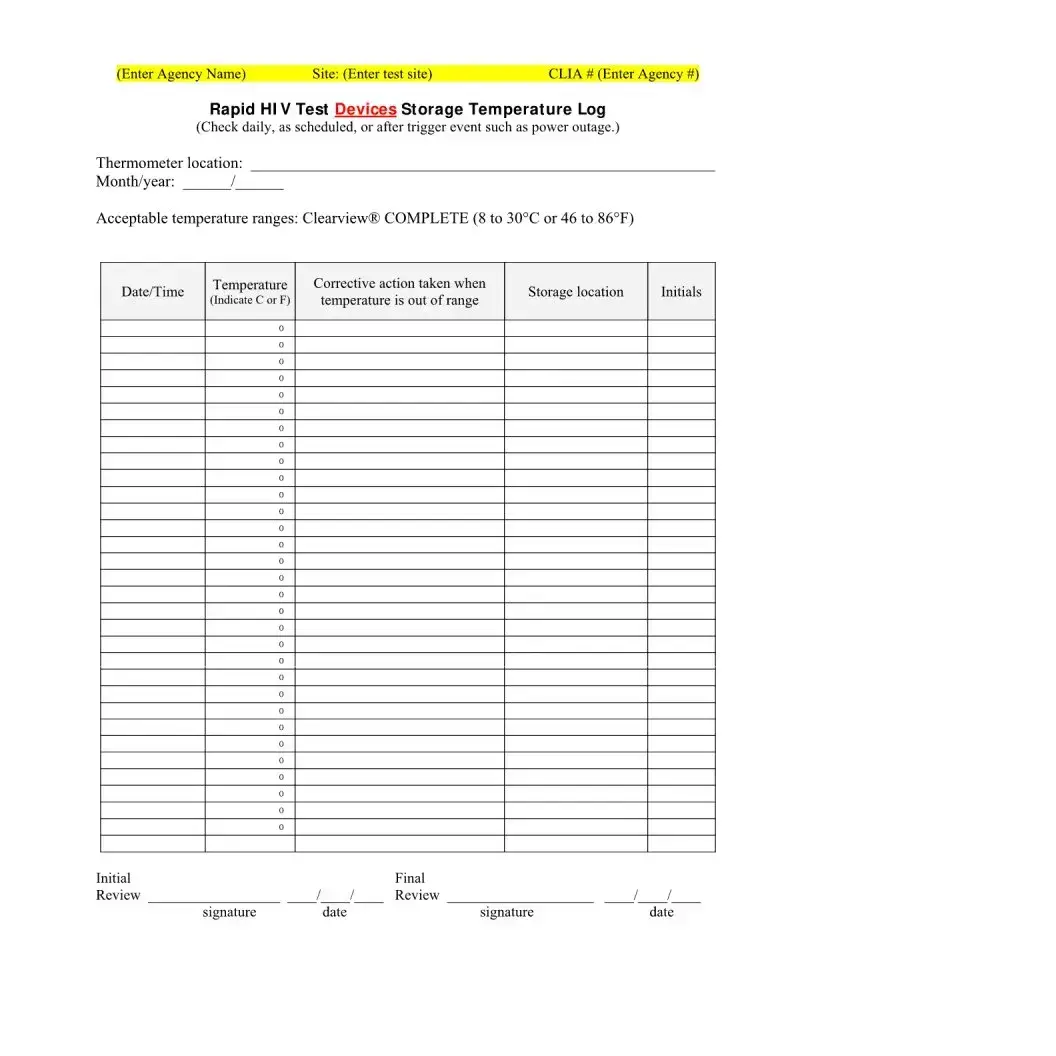
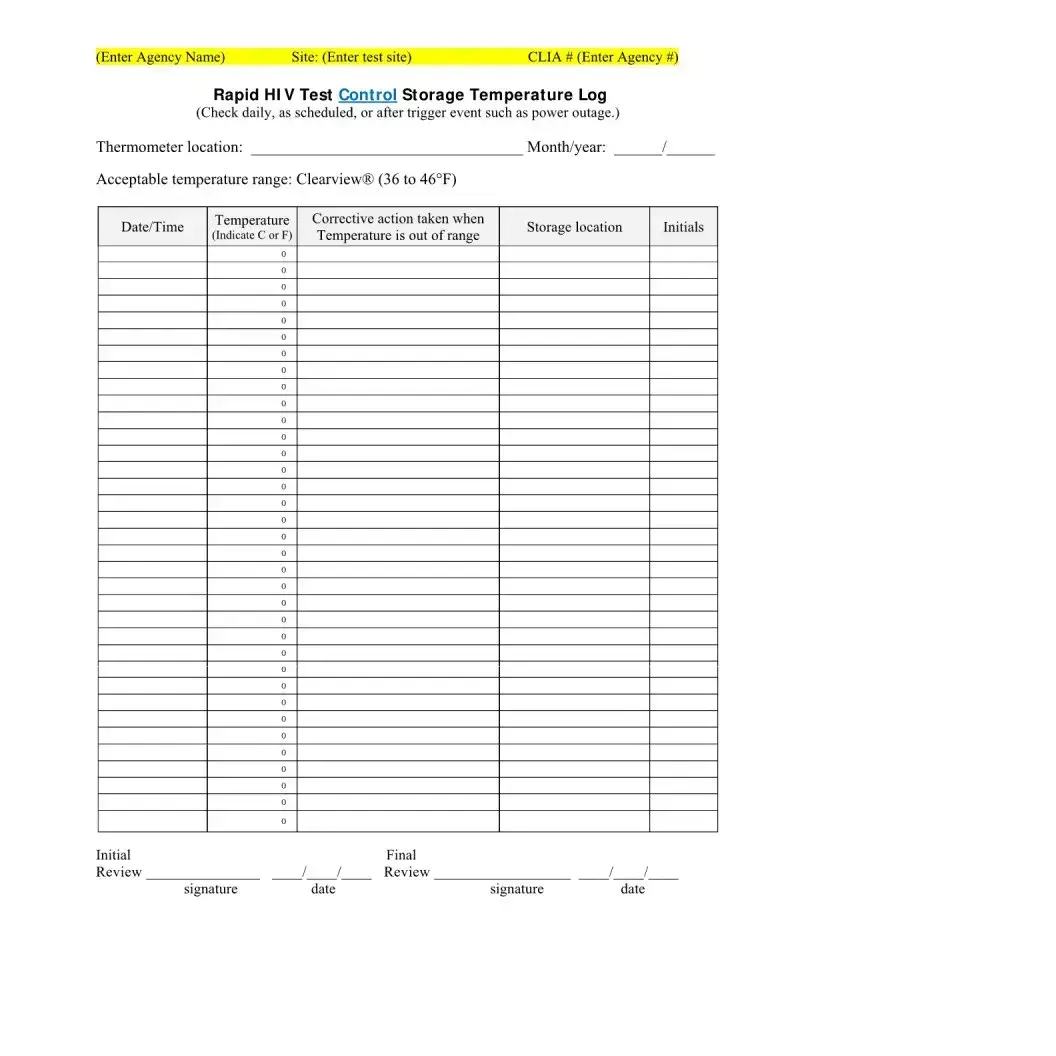
The Negative HIV Test form is a crucial document in the process of HIV testing, serving both clients and healthcare providers. This form captures essential information such as the client’s name, date of birth, race, and the testing location. It also indicates the result of the HIV antibody screening, clearly marking whether the outcome is reactive or negative/non-reactive. Alongside these details, the form includes spaces for follow-up appointments, ensuring that clients have the opportunity for further consultation if needed. Signatures from both the client and counselor are required, adding a layer of accountability and confirming that the information has been accurately conveyed. Additionally, the form incorporates temperature logs for the storage of rapid HIV test devices and controls, emphasizing the importance of maintaining proper conditions for accurate test results. By documenting the acceptable temperature ranges and corrective actions taken when deviations occur, the form helps ensure the reliability of the testing process. Overall, this document plays a vital role in the management of HIV testing, promoting transparency and trust between clients and healthcare providers.

| Fact Name | Fact Description |
|---|---|
| Agency Information | The form requires the name and address of the testing agency, ensuring clients know where the test was conducted. |
| CLIA Number | A unique CLIA number must be included, indicating that the testing facility meets federal standards for laboratory testing. |
| Client Identification | Clients must provide their name, date of birth, and race to ensure accurate record-keeping and demographic tracking. |
| Testing Location | The form specifies where the testing occurred, which is important for both legal and logistical reasons. |
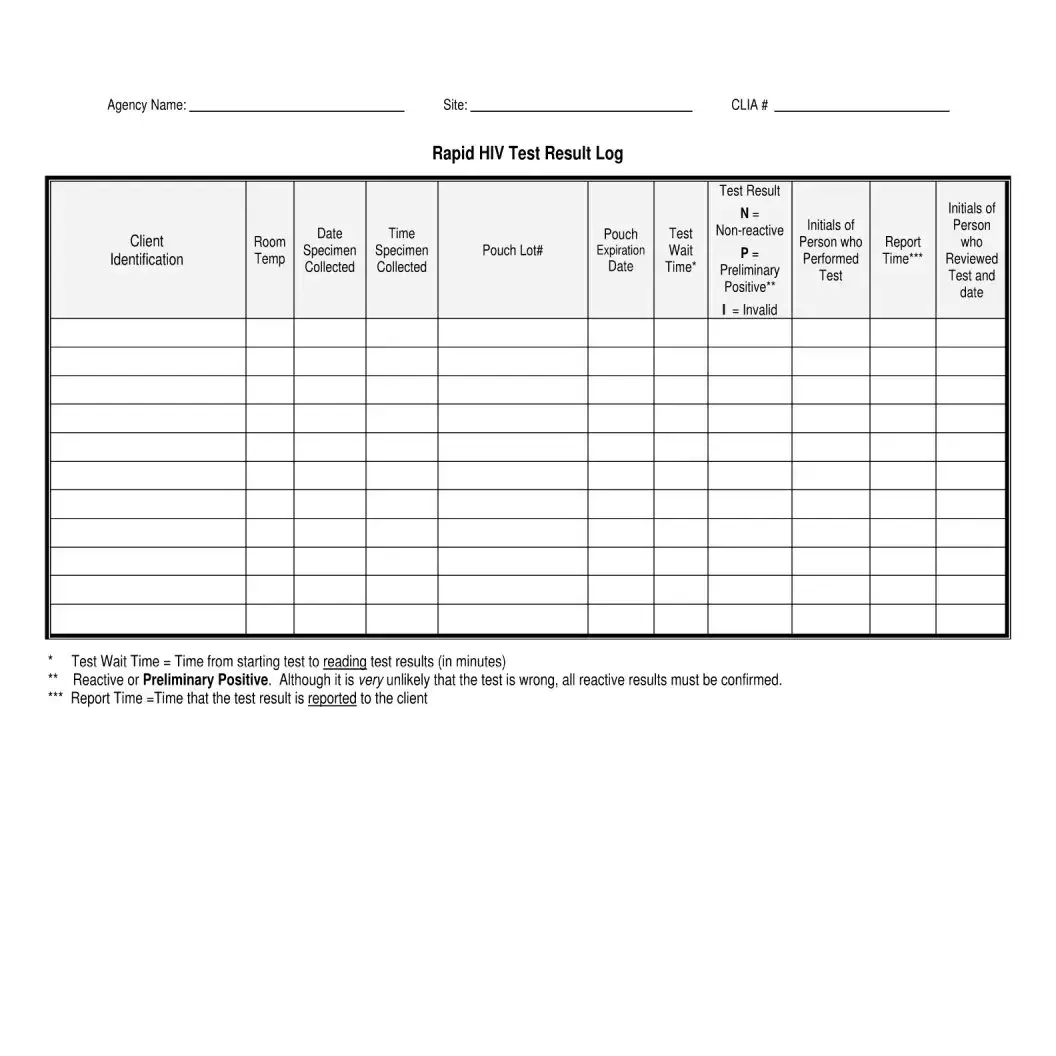
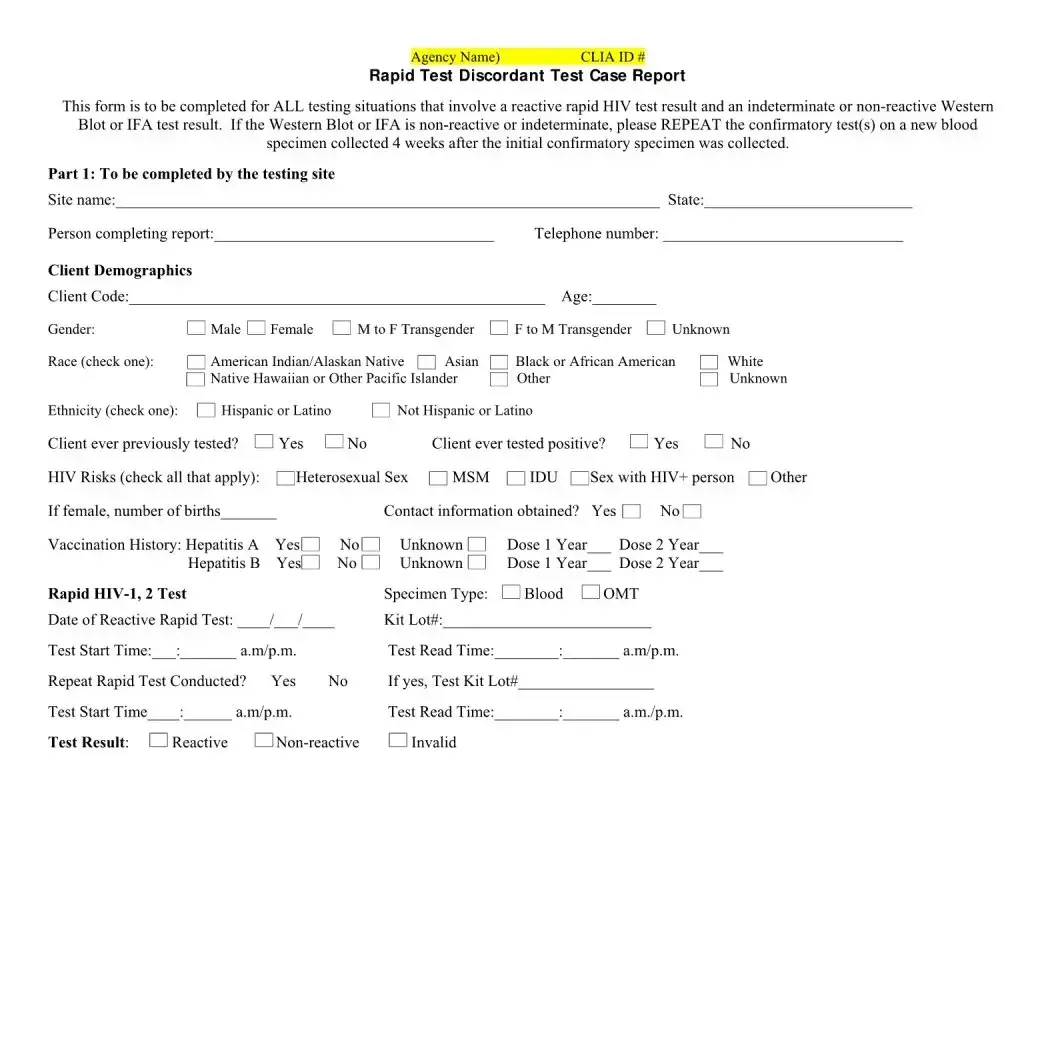
| Test Result | The form records the HIV antibody screening test result, which can be either reactive or non-reactive. |
| Follow-Up Appointment | Clients are encouraged to schedule a follow-up appointment, which is crucial for ongoing care and support. |
| Client and Counselor Signatures | Both the client and the counselor must sign the form, providing acknowledgment and consent for the testing process. |
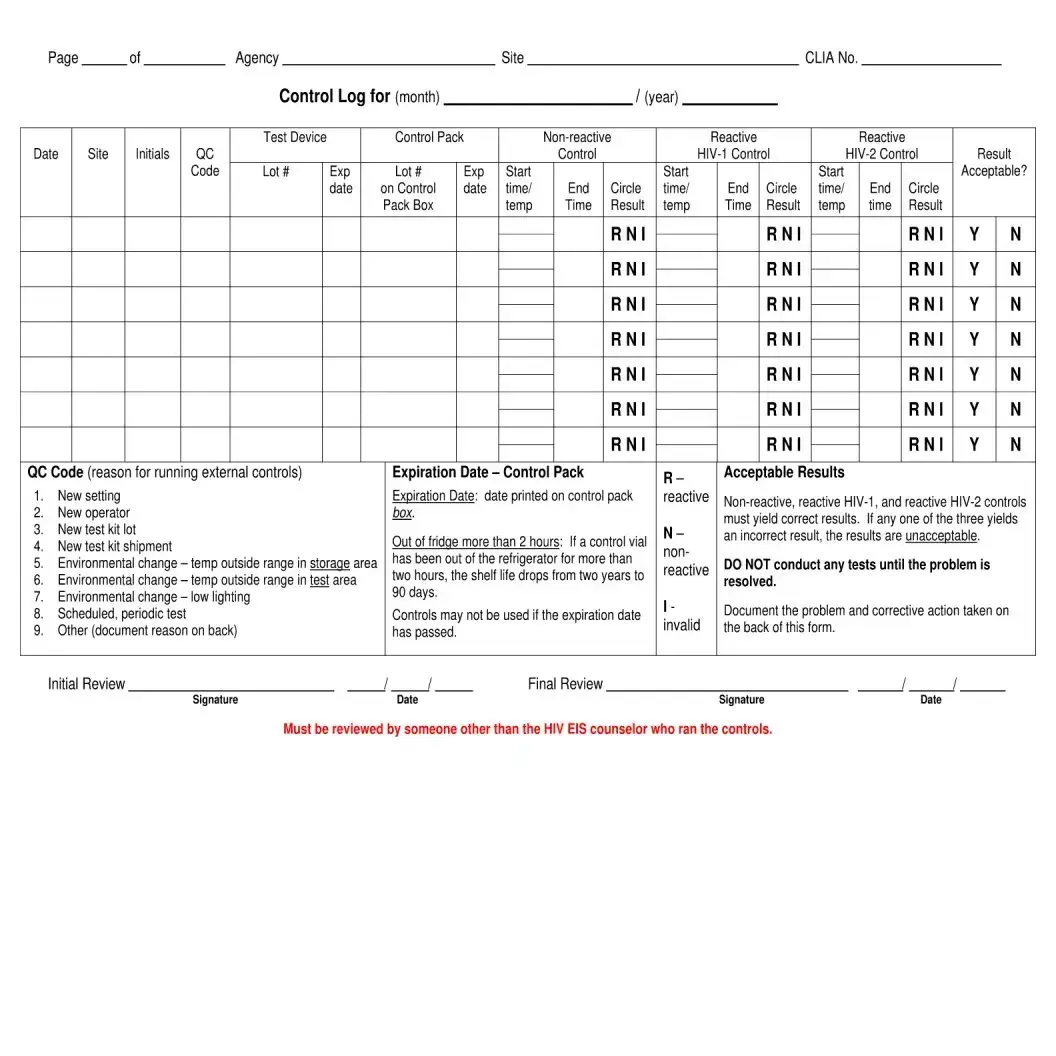
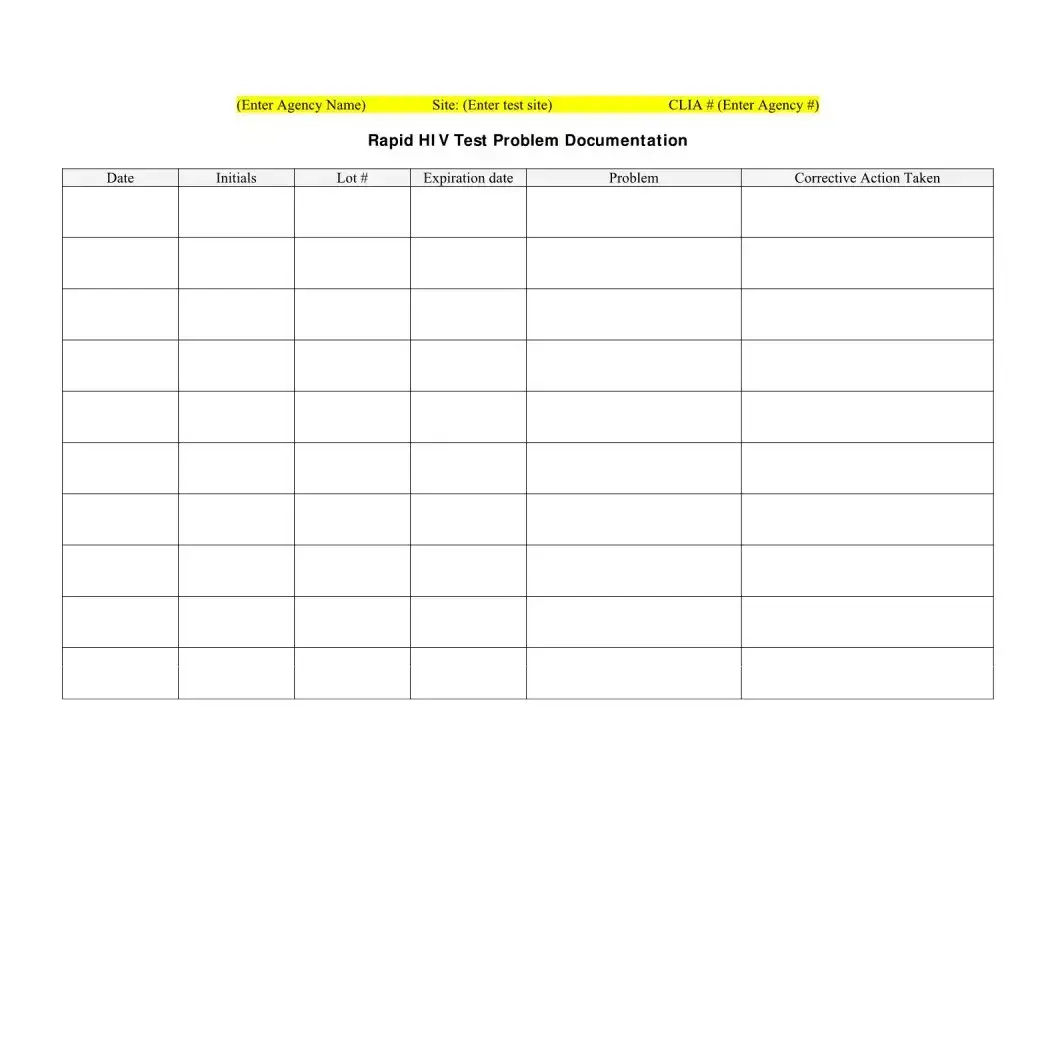
| Temperature Log | A storage temperature log is included to ensure that test devices are kept within the acceptable temperature range. |
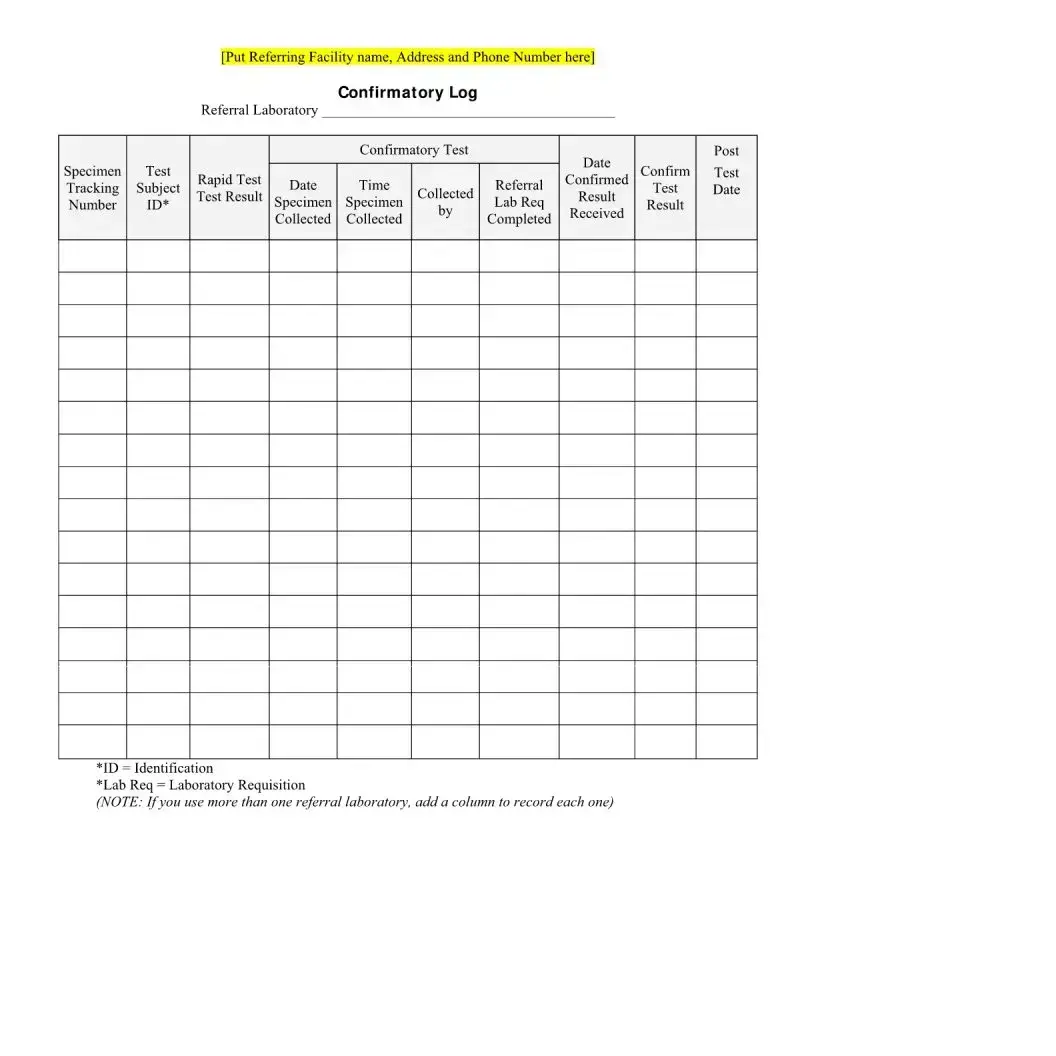
| Test Result Log | The form includes a section for logging test results, ensuring that all data is accurately recorded for future reference. |
| Governing Laws | State-specific laws govern the use of this form, including regulations related to patient confidentiality and reporting requirements. |
Completing the Negative HIV Test form is an important step in documenting test results. Once the form is filled out accurately, it will be used for record-keeping and follow-up purposes. Here are the steps to ensure the form is completed correctly:
What is a Negative HIV Test Form?
A Negative HIV Test Form is a document that indicates a person has tested negative for HIV antibodies. This form typically includes essential details such as the client's name, date of birth, testing location, and the results of the HIV antibody screening test. It serves as an official record of the test result and may be required for various purposes, including medical treatment or employment screening.
What information is included on the form?
The form contains several key pieces of information. This includes the client's name, date of birth, race, and the location where the test was conducted. It also provides the specific result of the HIV antibody screening, which can be either reactive or negative/non-reactive. Additionally, the form may include a follow-up appointment date and signatures from both the client and the counselor, ensuring accountability and clarity.
How is the test result determined?
The HIV antibody screening test result is determined through a rapid testing process. A sample of the client’s blood is collected and analyzed for the presence of HIV antibodies. If the test shows no antibodies, the result will be marked as negative/non-reactive. In cases where the test shows reactive results, further confirmation testing is required to ensure accuracy.
Why is a follow-up appointment mentioned on the form?
A follow-up appointment is crucial for clients who receive a reactive test result. It allows for further testing and counseling to confirm the initial result and discuss next steps. Even for those who test negative, a follow-up may provide an opportunity for additional education about HIV prevention and testing options.
What should I do if I lose my Negative HIV Test Form?
If you lose your Negative HIV Test Form, it is important to contact the testing agency or location where you received the test. They can typically provide a duplicate form or assist in verifying your test results. Keeping a copy of your results is advisable for your records and any future medical or employment needs.
Can a Negative HIV Test Form be used for employment purposes?
Yes, a Negative HIV Test Form may be required for certain employment opportunities, especially in healthcare settings or positions involving potential exposure to blood or bodily fluids. Employers may request this documentation to ensure a safe working environment. Always check with the specific employer for their requirements regarding HIV testing and documentation.
Incomplete Personal Information: One common mistake is failing to fill out all required personal details. This includes the client's name, date of birth, and race. Omitting any of these details can lead to delays or complications in processing the test results.
Incorrect Test Result Selection: Clients sometimes select the wrong option for the HIV antibody screening test result. It's crucial to accurately mark either "Reactive" or "Negative/Non-Reactive" to ensure proper follow-up procedures.
Missing Follow-Up Appointment Details: Not providing the date, time, and location for the follow-up appointment can lead to confusion. This information is vital for ensuring that clients receive the necessary support and guidance after their test results.
Signature Errors: Clients may forget to sign the form, or they might sign in the wrong place. Both the client and the counselor must provide their signatures to validate the test result and the counseling process.
Temperature Log Oversights: When filling out the storage temperature log, individuals often neglect to check daily temperatures or record corrective actions. Maintaining proper storage conditions is essential for the accuracy of the test.
Failure to Record Testing Location: Not indicating the testing location can cause issues with tracking and accountability. Each test must be linked to a specific site for regulatory compliance and quality assurance.
When dealing with HIV testing, several documents are often used alongside the Negative HIV Test form. Each document serves a specific purpose and helps ensure accurate record-keeping and follow-up care. Here is a list of common forms and documents associated with HIV testing.
These documents work together to provide a comprehensive approach to HIV testing and care. They help ensure clients receive the support and information they need throughout the testing process.
Medical Test Result Form: Similar to the Negative HIV Test form, this document records the results of various medical tests, including patient details, testing location, and result interpretation.
Consent Form: Like the Negative HIV Test form, a consent form requires patient signatures to authorize testing and ensure that clients understand the process and implications of the test.
Patient Intake Form: This document gathers essential information about the client, such as personal details and medical history, similar to the client information section of the Negative HIV Test form.
Follow-Up Appointment Notice: This notice, much like the follow-up appointment section in the Negative HIV Test form, schedules future appointments and outlines necessary steps after receiving test results.
Laboratory Report: A laboratory report summarizes test results and findings, paralleling the result section of the Negative HIV Test form, which indicates whether the test was reactive or non-reactive.
Quality Control Log: This document tracks the storage conditions of testing materials, similar to the temperature log in the Negative HIV Test form, ensuring proper testing protocols are followed.
Test Administration Record: This record documents who performed the test and when, akin to the personnel details included in the Negative HIV Test form.
Emergency Contact Form: Like the Negative HIV Test form, this document collects important contact information for clients, ensuring that healthcare providers can reach them if necessary.
Patient Education Handout: This handout provides information about HIV testing and results, similar to the educational components often included with the Negative HIV Test form.
Referral Form: A referral form directs clients to additional services or specialists, much like the follow-up recommendations provided in the Negative HIV Test form.
When filling out the Negative HIV Test form, attention to detail is crucial. Here are some important dos and don'ts to keep in mind:
Misconceptions about the Negative HIV Test form can lead to confusion and misinformation. Here are four common misconceptions explained:
When filling out and using the Negative HIV Test form, consider the following key takeaways: