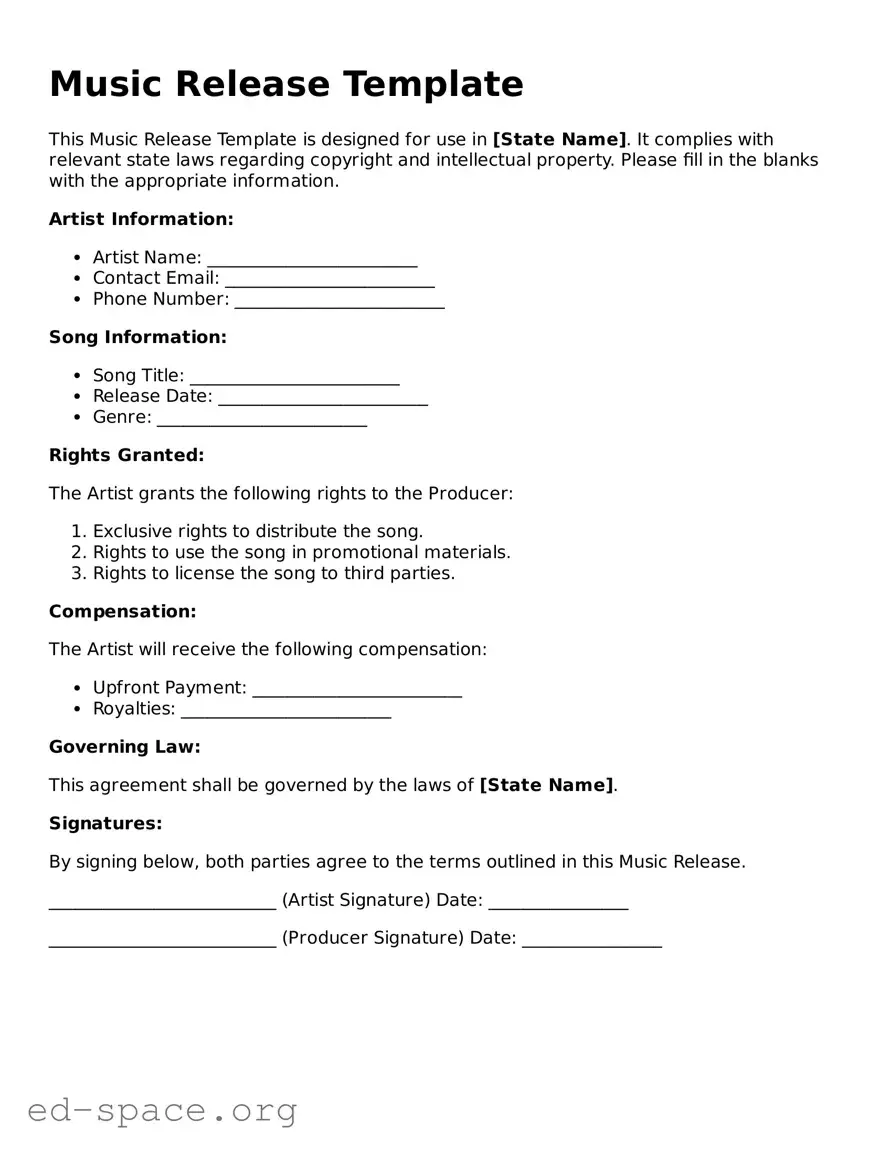
When it comes to sharing music, clarity and consent are essential. The Music Release form serves as a vital tool for artists, producers, and anyone involved in the music industry. This form outlines the permissions granted by the artist, ensuring that their work can be used in various ways, such as for distribution, promotion, or inclusion in media projects. It typically includes details about the rights being transferred, the scope of use, and any compensation involved. By using this form, all parties can establish a mutual understanding, reducing the risk of misunderstandings down the line. Whether you are a seasoned professional or just starting out, having a clear agreement in place can protect your creative work and foster positive relationships within the industry.
Music Release Template
This Music Release Template is designed for use in [State Name]. It complies with relevant state laws regarding copyright and intellectual property. Please fill in the blanks with the appropriate information.
Artist Information:
Song Information:
Rights Granted:
The Artist grants the following rights to the Producer:
Compensation:
The Artist will receive the following compensation:
Governing Law:
This agreement shall be governed by the laws of [State Name].
Signatures:
By signing below, both parties agree to the terms outlined in this Music Release.
__________________________ (Artist Signature) Date: ________________
__________________________ (Producer Signature) Date: ________________
| Fact Name | Description |
|---|---|
| Purpose | The Music Release form is used to grant permission for the use of a musical work in various contexts, such as film, advertising, or public performances. |
| Parties Involved | This form typically involves two parties: the creator of the music (the Licensor) and the individual or organization seeking to use the music (the Licensee). |
| Governing Law | The governing laws may vary by state. For example, in California, the relevant laws include the California Civil Code Section 980. |
| Scope of Use | The form outlines how the music can be used, specifying whether it's for commercial or non-commercial purposes. |
| Compensation | It may include details about any fees or royalties that the Licensee must pay to the Licensor for the use of the music. |
| Duration | The Music Release form specifies the length of time the Licensee has the rights to use the music. |
| Termination Clause | There is often a termination clause that allows either party to end the agreement under certain conditions. |
After obtaining the Music Release form, you will need to complete it accurately to ensure all necessary information is provided. This will help facilitate the next steps in the process.
What is a Music Release form?
A Music Release form is a legal document that grants permission for the use of a musical work. This form is essential for artists, producers, and anyone involved in the creation or distribution of music. It outlines the rights and responsibilities of both the creator and the party seeking to use the music. By signing this form, the artist allows their music to be used in various ways, such as in films, commercials, or online platforms.
Why is it important to have a Music Release form?
Having a Music Release form is crucial for protecting the rights of the artist. It ensures that the creator retains control over how their music is used and prevents unauthorized use. Without this form, there could be misunderstandings or disputes regarding ownership and usage rights. It also provides legal recourse if the terms of the agreement are violated, helping to safeguard the artist's work and financial interests.
Who should sign the Music Release form?
The Music Release form should be signed by the creator of the music, such as the songwriter or composer, as well as the party who wishes to use the music, like a producer or filmmaker. If there are multiple contributors to the music, each person who has rights to the work should also sign the form. This ensures that all parties are in agreement and that the usage rights are clearly defined.
What happens if the Music Release form is not signed?
If the Music Release form is not signed, the use of the music could lead to legal complications. The party wanting to use the music may not have the legal right to do so, which can result in copyright infringement claims. This could lead to lawsuits or financial penalties. Additionally, the artist may miss out on potential revenue and opportunities for exposure. Therefore, it is always advisable to have a signed Music Release form before using someone else's music.
Filling out a Music Release form can be a straightforward process, but mistakes can lead to complications. Here are nine common errors people often make:
By being aware of these common mistakes, you can ensure that your Music Release form is filled out correctly, paving the way for smoother collaborations and clearer agreements.
When working with music projects, several documents often accompany the Music Release form. Each of these forms plays a crucial role in protecting the rights of the artists and ensuring a smooth collaboration. Here are four important documents you should be aware of:
Understanding these documents can help ensure that your music projects proceed without legal complications. Each form serves a specific purpose, and having them in place is crucial for protecting your rights and interests in the music industry.
When filling out the Music Release form, it is essential to approach the process thoughtfully. Here are some key points to consider.
By following these guidelines, you can ensure that your Music Release form is filled out correctly and efficiently.
When it comes to music release forms, several misconceptions can cloud understanding. Here are eight common myths that often arise, along with clarifications to help set the record straight.
This is not true. Music release forms can vary significantly based on the specific needs of the artist, the type of music, and the nature of the agreement. Each form should be tailored to fit the situation.
Many believe that only established musicians need to worry about release forms. However, anyone sharing their music publicly, regardless of their status, should consider using one to protect their rights.
This misconception can be misleading. A well-drafted release form typically outlines specific rights that are granted, allowing artists to retain ownership while permitting others to use their work under agreed terms.
While it is true that changes can be complicated, it is not impossible. Parties involved can negotiate amendments to the original agreement if both sides agree to the changes.
This is a common misunderstanding. Release forms can also apply to live performances, ensuring that artists are protected when their music is played in public settings.
Relying solely on verbal agreements can lead to disputes. Written forms provide clear documentation, making it easier to resolve any misunderstandings that may arise later.
Many people think that once a release form is signed, it is only valid for a single instance. In reality, some forms can cover multiple uses or be structured to last for a specific duration.
While many release forms are designed to be legally binding, not all are enforceable. The validity often depends on factors such as clarity, mutual consent, and whether the parties involved have the legal capacity to enter into an agreement.
Understanding these misconceptions can help artists and collaborators navigate the world of music release forms more effectively. Clarity in agreements fosters better relationships and protects everyone involved.
When it comes to using a Music Release form, understanding its importance can make a significant difference for artists and producers alike. Here are some key takeaways to keep in mind:
By keeping these takeaways in mind, you can navigate the world of music releases with confidence and clarity. Protecting your creative work is essential, and a well-prepared Music Release form is a key step in that process.