Homepage Blank Move Out Notice Letter PDF Form
Article Guide

When preparing to vacate a rental property, tenants must provide their landlord with a formal notification of their intent to move out. This is typically accomplished through a Move Out Notice Letter, which serves multiple purposes. First and foremost, it communicates the tenant's planned departure date, ensuring that both parties are aligned on the timeline. The letter also outlines the tenant's commitment to adhere to the move-out cleaning instructions, which may be stipulated in the lease agreement. Additionally, it includes a forwarding address for the return of the security deposit, an important financial consideration for both the tenant and landlord. Sending this letter via Certified Mail provides proof of delivery, reinforcing the tenant's professionalism and responsibility. It is advisable for tenants to retain a copy of the letter for their records, safeguarding their interests as they transition to their next residence. Overall, the Move Out Notice Letter is a critical document that facilitates a smooth exit process and helps ensure that all parties fulfill their obligations under the lease agreement.

Document Preview

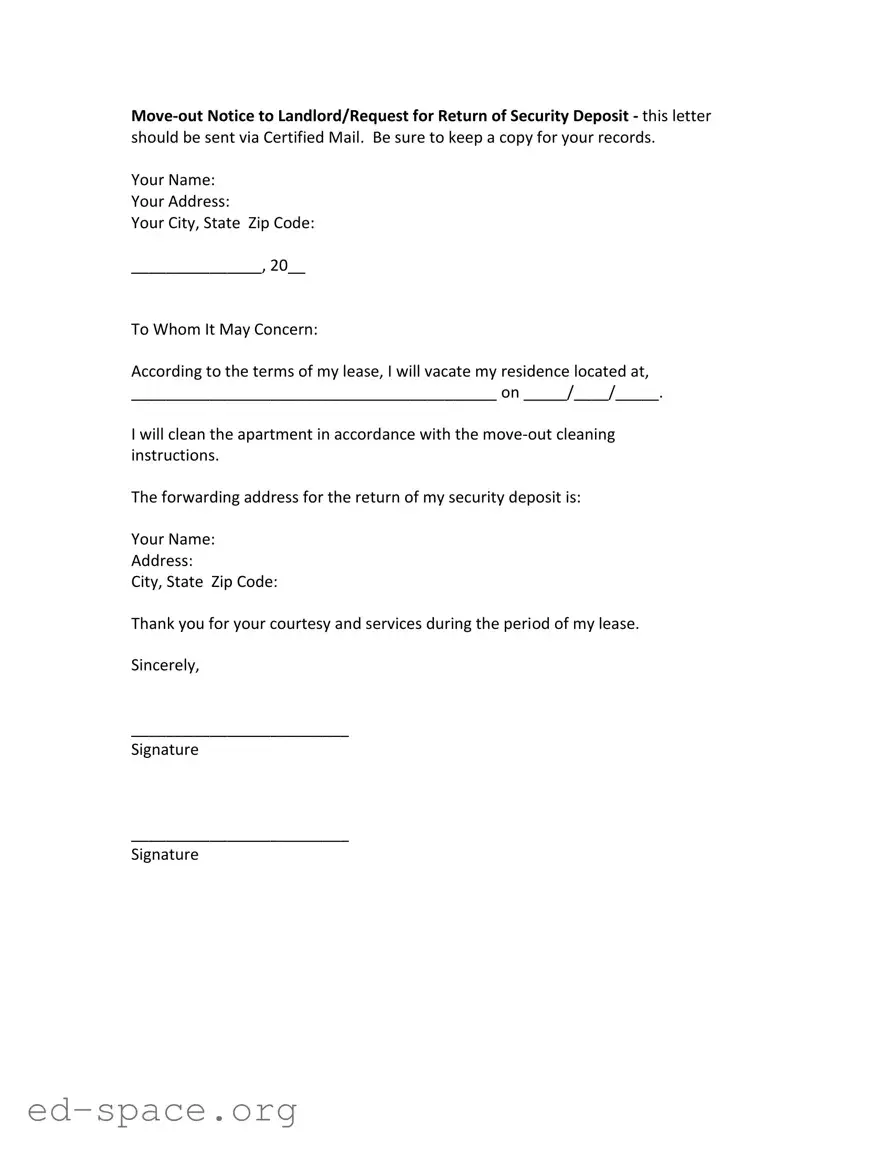
Move-out Notice to Landlord/Request for Return of Security Deposit - this letter

should be sent via Certified Mail. Be sure to keep a copy for your records.

Your Name:

Your Address:

Your City, State Zip Code:

_______________, 20__

To Whom It May Concern:

According to the terms of my lease, I will vacate my residence located at,

__________________________________________ on _____/____/_____.

I will clean the apartment in accordance with the move-out cleaning instructions.

The forwarding address for the return of my security deposit is:

Your Name:

Address:

City, State Zip Code:

Thank you for your courtesy and services during the period of my lease.

Sincerely,

_________________________

Signature

_________________________

Signature

Form Specifications

Fact Name Description
Purpose The Move Out Notice Letter is used to formally notify a landlord of a tenant's intention to vacate the rental property.
Delivery Method This letter should be sent via Certified Mail to ensure there is proof of delivery.
Record Keeping Tenants should keep a copy of the letter for their records after sending it.
Cleaning Responsibilities The tenant agrees to clean the apartment according to the move-out cleaning instructions provided in the lease.
Security Deposit The letter includes a request for the return of the security deposit, along with a forwarding address.
State-Specific Forms Each state may have its own specific requirements for the Move Out Notice, governed by local landlord-tenant laws.
Lease Terms The notice must comply with the terms outlined in the tenant's lease agreement regarding notice periods.

Move Out Notice Letter: Usage Guidelines

Completing the Move Out Notice Letter form is a straightforward process. This letter serves as a formal notification to your landlord about your intention to vacate the property. Following these steps will ensure that you provide all necessary information clearly and correctly.

  1. Begin by entering Your Name at the top of the form.
  2. Next, fill in Your Address on the following line.
  3. Include your City, State, and Zip Code beneath your address.
  4. Write the current date, formatted as _______________, 20__.
  5. Address the letter to Whom It May Concern.
  6. State your intention to vacate by writing: "According to the terms of my lease, I will vacate my residence located at, __________________________________________ on _____/____/_____." Fill in the address of the residence and your move-out date.
  7. Indicate that you will clean the apartment by including: "I will clean the apartment in accordance with the move-out cleaning instructions."
  8. Provide your forwarding address for the return of your security deposit. Include Your Name, Address, City, State, and Zip Code.
  9. Express gratitude by writing: "Thank you for your courtesy and services during the period of my lease."
  10. Sign the letter in the designated space.
  11. Print your name below your signature.

Once completed, send the letter via Certified Mail to ensure it is received. Retain a copy for your records, as this will be important for future reference.

Your Questions, Answered

What is a Move Out Notice Letter?

A Move Out Notice Letter is a formal communication that a tenant sends to their landlord to inform them of their intention to vacate the rental property. This letter typically includes the tenant's name, address, the date they plan to move out, and a request for the return of their security deposit. It serves as a written record of the tenant's notice, which is often required by lease agreements.

Why is it important to send the Move Out Notice Letter via Certified Mail?

Sending the Move Out Notice Letter via Certified Mail provides proof that the landlord received the notice. This can be crucial if any disputes arise regarding the move-out date or the return of the security deposit. Certified Mail also ensures that the tenant has a record of the date the notice was sent, which can help in confirming compliance with lease terms.

What should be included in the Move Out Notice Letter?

The letter should include several key elements. First, the tenant's name and current address should be clearly stated. Next, it should specify the date the tenant intends to vacate the property. Additionally, the letter should mention that the apartment will be cleaned according to the move-out instructions provided in the lease. Finally, the tenant should provide a forwarding address for the return of the security deposit. A courteous closing statement thanking the landlord for their services is also recommended.

What happens after I send the Move Out Notice Letter?

After sending the Move Out Notice Letter, the landlord is expected to acknowledge receipt of the notice. The landlord may schedule a move-out inspection to assess the condition of the property. This inspection can help determine if any deductions will be made from the security deposit for damages or cleaning. It is advisable for tenants to keep a copy of the letter and any correspondence with the landlord for their records.

Common mistakes

  1. Failing to send the letter via Certified Mail. This method provides proof of delivery, which is crucial for any disputes.

  2. Not keeping a copy of the letter for personal records. It’s essential to have documentation of the notice you provided.

  3. Leaving out the date of the move-out. This date is important for both you and the landlord to establish timelines.

  4. Omitting the full address of the residence. Ensure you include the complete address to avoid confusion.

  5. Neglecting to specify a forwarding address for the return of the security deposit. This information is necessary for the landlord to return your funds.

  6. Not mentioning the cleaning obligations. Referencing the move-out cleaning instructions shows your intention to leave the property in good condition.

  7. Using vague language in the letter. Be clear and direct about your intentions to move out.

  8. Forgetting to include a signature. A signed letter adds authenticity and is often required for legal documents.

  9. Failing to address the letter properly. Use "To Whom It May Concern" or the landlord's name to ensure it reaches the right person.

Documents used along the form

When preparing to move out of a rental property, several important documents often accompany the Move Out Notice Letter. These forms help ensure a smooth transition and protect the rights of both tenants and landlords. Below is a list of common documents that may be useful during this process.

  • Lease Agreement: This document outlines the terms and conditions of the rental arrangement. It includes information about the duration of the lease, rent payments, and responsibilities of both parties.
  • Move-Out Checklist: A checklist can help tenants ensure they complete all necessary cleaning and repairs before leaving. It serves as a guide to meet the expectations set by the landlord.
  • Condition Report: Often completed at the start of the lease, this report details the condition of the property. Tenants can reference it when moving out to dispute any claims about damages.
  • Security Deposit Receipt: This document proves the amount of the security deposit paid at the beginning of the lease. It is essential for tenants to have this for reference when requesting the return of their deposit.
  • Forwarding Address Form: This simple form provides the landlord with a new address where they can send the security deposit and any other important correspondence after the move.
  • Utility Transfer Forms: Tenants should complete forms to transfer or cancel utility services. This ensures that services are disconnected on the move-out date and can help avoid extra charges.
  • Inspection Request: A request for a final inspection allows tenants to schedule a walk-through with the landlord. This meeting can help address any issues before moving out.
  • Written Communication Log: Keeping a record of all communications with the landlord can be beneficial. This log can include emails, texts, or notes from conversations regarding the move-out process.

Having these documents ready can make the moving process easier and help avoid disputes. Being organized and informed is key to a successful transition from one home to another.

Similar forms

The Move Out Notice Letter form shares similarities with several other documents commonly used in rental agreements and tenant-landlord communications. Each of these documents serves a specific purpose and typically contains key information regarding the rental relationship. Below is a list of eight documents that are similar to the Move Out Notice Letter form:

  • Lease Termination Letter: This document notifies the landlord of the tenant's intention to end the lease agreement. It specifies the end date and may outline the reasons for termination.
  • Security Deposit Return Request: This letter requests the return of the security deposit after the tenant has vacated the property. It often includes a forwarding address for the deposit to be sent.
  • Notice of Intent to Vacate: Similar to the Move Out Notice, this notice informs the landlord of the tenant's planned move-out date and may include cleaning expectations.
  • Move-In Inspection Report: This document records the condition of the rental unit at the start of the lease. It can be referenced when discussing the return of the security deposit.
  • Rental Application: This form is completed by prospective tenants to provide personal information and rental history. It establishes the initial tenant-landlord relationship.
  • Lease Agreement: This is the formal contract between the landlord and tenant outlining the terms of the rental arrangement, including duration, rent amount, and responsibilities.
  • Notice of Non-Renewal: This document informs the tenant that the landlord will not renew the lease at its expiration. It specifies the last date of tenancy.
  • Tenant Complaint Letter: This letter is used by tenants to formally address issues with the rental property or landlord. It may request repairs or other actions to be taken.

Dos and Don'ts

When completing the Move Out Notice Letter form, it's important to follow specific guidelines to ensure clarity and compliance. Here are five things to do and not to do:

  • Do send the letter via Certified Mail to ensure it is received and you have proof of delivery.
  • Do keep a copy of the letter for your records, as it may be needed for future reference.
  • Do provide your forwarding address clearly for the return of your security deposit.
  • Do specify the exact date you plan to vacate the residence in the letter.
  • Do follow the move-out cleaning instructions outlined in your lease agreement.
  • Don't forget to include your full name and address at the beginning of the letter.
  • Don't use informal language; maintain a professional tone throughout the letter.
  • Don't leave out the date you intend to move out; this is crucial information for your landlord.
  • Don't skip the closing statement; thanking your landlord is courteous and leaves a positive impression.
  • Don't neglect to sign the letter; an unsigned letter may not be considered valid.

Misconceptions

Here are some common misconceptions about the Move Out Notice Letter form:

  • It's not necessary to send it via Certified Mail. Some people believe that any form of delivery is acceptable. However, using Certified Mail provides proof that the letter was sent and received.
  • You don’t need to keep a copy of the letter. Many tenants think they can just forget about it after sending. Keeping a copy is important for your records and may be needed later.
  • The letter must be complicated. Some assume that a formal letter needs to be filled with legal terms. In reality, a simple and clear letter is all that's required.
  • It's only about notifying the landlord. While notifying the landlord is crucial, the letter also serves as a request for the return of your security deposit.
  • You can send it anytime before moving out. Some tenants think they can send the notice at any time. However, most leases require a specific notice period, often 30 days.
  • Cleaning is optional. A misconception exists that cleaning the apartment is not necessary. In fact, it's important to clean according to the move-out instructions to avoid deductions from your deposit.
  • There's no need to provide a forwarding address. Many believe that this is not necessary. Providing a forwarding address ensures that your security deposit can be returned promptly.
  • Signing the letter is unimportant. Some people think that a signature isn’t needed. However, signing the letter adds a personal touch and confirms your intent.

Key takeaways

When it comes to moving out of a rental property, a Move Out Notice Letter is an essential tool. Here are some key takeaways to keep in mind when filling out and using this form:

  • Send it via Certified Mail: Always send your Move Out Notice Letter using certified mail. This provides proof that your landlord received your notice.
  • Keep a Copy: Retain a copy of the letter for your records. This will be helpful if any disputes arise regarding your security deposit or lease terms.
  • Follow Lease Terms: Ensure that your notice complies with the terms outlined in your lease agreement. This may include specific notice periods or methods of communication.
  • Provide Forwarding Address: Clearly include your forwarding address for the return of your security deposit. This ensures that your landlord knows where to send your funds.
  • Clean Before You Leave: Commit to cleaning the apartment according to the move-out cleaning instructions provided in your lease. A clean apartment can help secure the full return of your deposit.
  • Express Gratitude: Consider thanking your landlord for their services during your lease. A polite tone can leave a positive impression, which may be beneficial in future interactions.

Filling out the Move Out Notice Letter accurately and thoughtfully can make the transition to your next home smoother. Remember, a little preparation goes a long way!