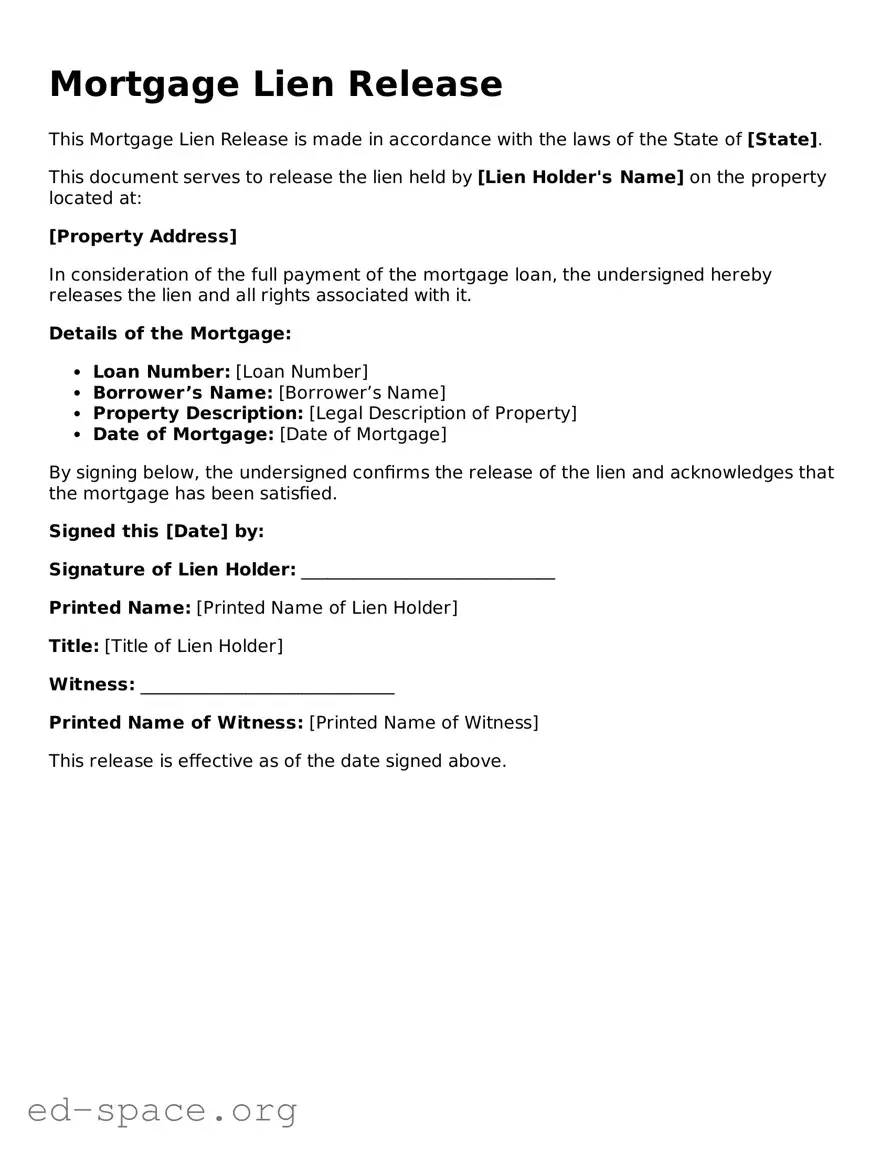
The Mortgage Lien Release form plays a crucial role in the real estate landscape, signaling the end of a borrower's obligation to repay a mortgage loan. When a homeowner pays off their mortgage in full, this form is essential for officially releasing the lender's claim on the property. Without it, the lien remains attached, potentially complicating future transactions or sales. This document typically includes important details such as the names of the parties involved, the property description, and the original loan information. Once executed, the form must be recorded with the appropriate county office to ensure public records reflect the lien's release. Understanding this process is vital for homeowners looking to clear their title and move forward with their financial plans.
Mortgage Lien Release
This Mortgage Lien Release is made in accordance with the laws of the State of [State].
This document serves to release the lien held by [Lien Holder's Name] on the property located at:
[Property Address]
In consideration of the full payment of the mortgage loan, the undersigned hereby releases the lien and all rights associated with it.
Details of the Mortgage:
By signing below, the undersigned confirms the release of the lien and acknowledges that the mortgage has been satisfied.
Signed this [Date] by:
Signature of Lien Holder: _____________________________
Printed Name: [Printed Name of Lien Holder]
Title: [Title of Lien Holder]
Witness: _____________________________
Printed Name of Witness: [Printed Name of Witness]
This release is effective as of the date signed above.
| Fact Name | Description |
|---|---|
| Definition | A Mortgage Lien Release form is a document that removes a lien from a property once a mortgage has been paid off. |
| Purpose | The form serves to officially notify the public and relevant parties that the mortgage obligation has been satisfied. |
| State-Specific Forms | Each state may have its own version of the form, so it's important to use the correct one for your state. |
| Governing Law | In most states, the release is governed by state property laws, which can vary significantly. |
| Filing Requirements | Some states require the form to be filed with a county recorder or similar office to be effective. |
| Signatures | The form typically requires the signature of the lender or mortgage holder to validate the release. |
| Timing | It is advisable to file the release promptly after the mortgage is paid off to avoid future complications. |
| Potential Fees | Some jurisdictions may charge a fee for filing the release form. |
| Importance for Homeowners | Homeowners should keep a copy of the release for their records as proof of ownership free of liens. |
| Legal Advice | Consulting with a legal professional can help ensure that the form is completed and filed correctly. |
After completing the Mortgage Lien Release form, you will need to submit it to the appropriate county office where the original mortgage was recorded. This will officially remove the lien from the property records, ensuring that you have clear title to your property.
What is a Mortgage Lien Release form?
A Mortgage Lien Release form is a legal document that signifies the removal of a lien from a property. When a homeowner pays off their mortgage, this form is used to officially release the lender's claim to the property. It ensures that the homeowner has full ownership without any encumbrances related to the mortgage debt.
Why is a Mortgage Lien Release important?
This form is crucial because it clears the title of the property. When a lien is released, it prevents any future claims by the lender, allowing the homeowner to sell, refinance, or otherwise manage their property without any complications arising from unpaid debts.
Who needs to file a Mortgage Lien Release?
The lender or mortgage holder typically files the Mortgage Lien Release after the borrower has paid off the mortgage. However, homeowners should ensure that this form is filed to protect their ownership rights fully.
How do I obtain a Mortgage Lien Release form?
Homeowners can often obtain a Mortgage Lien Release form from their lender or mortgage company. Additionally, many online legal resources offer templates that can be customized. It's essential to ensure that the form complies with state laws.
What information is included in a Mortgage Lien Release?
A Mortgage Lien Release generally includes the names of the parties involved (the borrower and the lender), the property address, the original loan amount, and a statement confirming that the mortgage has been paid in full. It may also require signatures from both parties to validate the release.
Do I need to notarize the Mortgage Lien Release?
In many cases, yes. Notarization adds an extra layer of authenticity to the document. Some states may require a notary's signature for the Mortgage Lien Release to be legally binding, so it's wise to check local requirements.
How long does it take to process a Mortgage Lien Release?
The processing time can vary. Once the lender submits the release to the appropriate local authority, it may take anywhere from a few days to several weeks for it to be officially recorded. Homeowners should follow up to ensure the release is filed correctly.
What happens if the Mortgage Lien Release is not filed?
If the Mortgage Lien Release is not filed, the lender may still have a claim against the property. This can complicate future transactions, such as selling or refinancing the home. It's important for homeowners to ensure this form is filed to avoid potential legal issues.
Can I file a Mortgage Lien Release myself?
Yes, homeowners can file the Mortgage Lien Release themselves, but it is advisable to seek guidance to ensure that all necessary steps are followed correctly. If there are any doubts, consulting with a legal professional can help prevent mistakes.
What should I do after the Mortgage Lien Release is filed?
Once the Mortgage Lien Release is filed, homeowners should keep a copy for their records. It’s also wise to check the property records to confirm that the release has been officially recorded. This documentation will be important for any future property transactions.
Failing to provide accurate property information. Ensure that the address and legal description of the property are correct.
Not including the correct loan number. This number is essential for identifying the specific mortgage being released.
Omitting signatures. All required parties must sign the form to validate the release.
Neglecting to date the form. The date of signing is important for record-keeping and processing.
Using the wrong form. Different states may have specific requirements, so ensure you have the correct version.
Not providing a notary signature when required. Some jurisdictions may require notarization for the release to be valid.
Forgetting to attach supporting documents. Include any necessary paperwork that proves the mortgage has been paid off.
Leaving out contact information. Providing a phone number or email can help facilitate any follow-up questions.
Submitting the form to the wrong office. Ensure you know where to send the completed form for processing.
Ignoring state-specific requirements. Each state may have unique regulations that must be followed.
A Mortgage Lien Release form is a crucial document that signifies the release of a mortgage lien on a property. When a borrower pays off their mortgage, this form is filed to indicate that the lender no longer has a claim on the property. Several other documents may accompany this form during the mortgage discharge process. Below is a list of commonly used forms and documents.
Understanding these documents is essential for both borrowers and lenders. They help ensure that all parties are clear on the terms of the mortgage and the process of releasing the lien when the loan is paid off.
When filling out a Mortgage Lien Release form, it’s important to get it right. Here are some tips on what to do and what to avoid:
Understanding the Mortgage Lien Release form is essential for homeowners and lenders alike. However, several misconceptions can lead to confusion. Below are eight common misconceptions about this form, along with clarifications.
By addressing these misconceptions, homeowners can better understand the importance of the Mortgage Lien Release form and ensure their property records are accurate and up to date.
When dealing with a Mortgage Lien Release form, it’s essential to understand its purpose and how to fill it out correctly. Here are some key takeaways to guide you through the process:
By following these key points, you can effectively navigate the process of completing and utilizing a Mortgage Lien Release form, ensuring that your property is free from any encumbrances related to the mortgage.