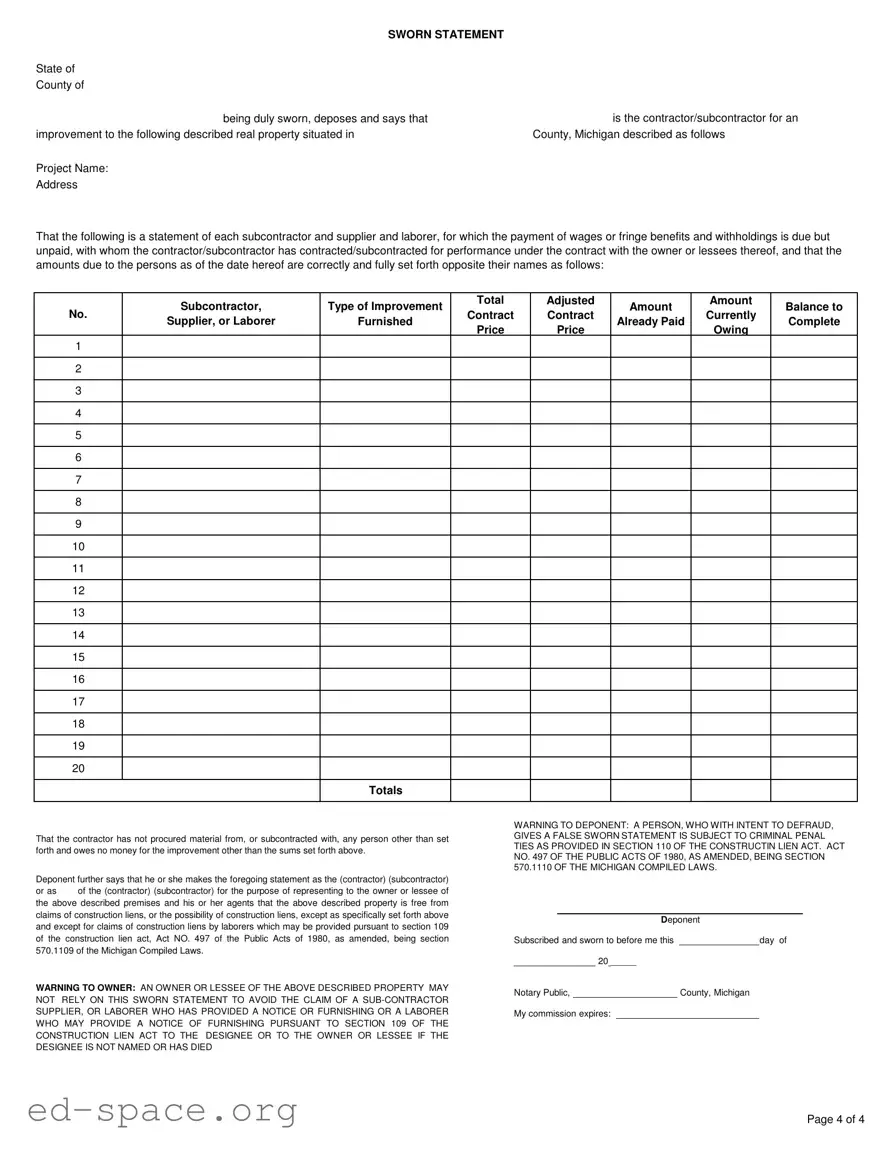
The Michigan Sworn Form is a crucial document in the construction industry, ensuring transparency and accountability among contractors, subcontractors, and suppliers. This form serves as a sworn statement, where the contractor or subcontractor affirms their role in a specific improvement project on real property within Michigan. It outlines the names of all subcontractors, suppliers, and laborers involved, along with the amounts due for work performed, making it clear what payments are outstanding. Importantly, the form also asserts that no additional parties have been contracted outside of those listed, thus protecting the property owner from unexpected claims. The contractor must affirm that the property is free from claims of construction liens, except as specifically noted. However, a warning is included, reminding owners that relying solely on this statement does not eliminate the risk of claims from subcontractors or suppliers who have provided proper notice. Additionally, the document emphasizes the seriousness of providing false information, as it carries criminal penalties. This form is not just a formality; it plays a vital role in maintaining trust and integrity in construction projects across the state.
SWORN STATEMENT |
|
State of |
|
County of |
|
being duly sworn, deposes and says that |
is the contractor/subcontractor for an |
improvement to the following described real property situated in |
County, Michigan described as follows |
Project Name: |
|
Address |
|
That the following is a statement of each subcontractor and supplier and laborer, for which the payment of wages or fringe benefits and withholdings is due but unpaid, with whom the contractor/subcontractor has contracted/subcontracted for performance under the contract with the owner or lessees thereof, and that the amounts due to the persons as of the date hereof are correctly and fully set forth opposite their names as follows:
|
Subcontractor, |
Type of Improvement |
Total |
Adjusted |
Amount |
Amount |
Balance to |
|
No. |
Contract |
Contract |
Currently |
|||||
Supplier, or Laborer |
Furnished |
Already Paid |
Complete |
|||||
|
Price |
Price |
Owing |
|||||
|
|
|
|
|
||||
1 |
|
|
|
|
|
|
|
|
|
|
|
|
|
|
|
|
|
2 |
|
|
|
|
|
|
|
|
|
|
|
|
|
|
|
|
|
3 |
|
|
|
|
|
|
|
|
|
|
|
|
|
|
|
|
|
4 |
|
|
|
|
|
|
|
|
|
|
|
|
|
|
|
|
|
5 |
|
|
|
|
|
|
|
|
|
|
|
|
|
|
|
|
|
6 |
|
|
|
|
|
|
|
|
|
|
|
|
|
|
|
|
|
7 |
|
|
|
|
|
|
|
|
|
|
|
|
|
|
|
|
|
8 |
|
|
|
|
|
|
|
|
|
|
|
|
|
|
|
|
|
9 |
|
|
|
|
|
|
|
|
|
|
|
|
|
|
|
|
|
10 |
|
|
|
|
|
|
|
|
|
|
|
|
|
|
|
|
|
11 |
|
|
|
|
|
|
|
|
|
|
|
|
|
|
|
|
|
12 |
|
|
|
|
|
|
|
|
|
|
|
|
|
|
|
|
|
13 |
|
|
|
|
|
|
|
|
|
|
|
|
|
|
|
|
|
14 |
|
|
|
|
|
|
|
|
|
|
|
|
|
|
|
|
|
15 |
|
|
|
|
|
|
|
|
|
|
|
|
|
|
|
|
|
16 |
|
|
|
|
|
|
|
|
|
|
|
|
|
|
|
|
|
17 |
|
|
|
|
|
|
|
|
|
|
|
|
|
|
|
|
|
18 |
|
|
|
|
|
|
|
|
|
|
|
|
|
|
|
|
|
19 |
|
|
|
|
|
|
|
|
|
|
|
|
|
|
|
|
|
20 |
|
|
|
|
|
|
|
|
|
|
|
|
|
|
|
|
|
|
|
Totals |
|
|
|
|
|
|
|
|
|
|
|
|
|
|
That the contractor has not procured material from, or subcontracted with, any person other than set forth and owes no money for the improvement other than the sums set forth above.
Deponent further says that he or she makes the foregoing statement as the (contractor) (subcontractor)
or as of the (contractor) (subcontractor) for the purpose of representing to the owner or lessee of the above described premises and his or her agents that the above described property is free from claims of construction liens, or the possibility of construction liens, except as specifically set forth above and except for claims of construction liens by laborers which may be provided pursuant to section 109 of the construction lien act, Act NO. 497 of the Public Acts of 1980, as amended, being section 570.1109 of the Michigan Compiled Laws.
WARNING TO OWNER: AN OWNER OR LESSEE OF THE ABOVE DESCRIBED PROPERTY MAY NOT RELY ON THIS SWORN STATEMENT TO AVOID THE CLAIM OF A
WARNING TO DEPONENT: A PERSON, WHO WITH INTENT TO DEFRAUD, GIVES A FALSE SWORN STATEMENT IS SUBJECT TO CRIMINAL PENAL TIES AS PROVIDED IN SECTION 110 OF THE CONSTRUCTIN LIEN ACT. ACT NO. 497 OF THE PUBLIC ACTS OF 1980, AS AMENDED, BEING SECTION 570.1110 OF THE MICHIGAN COMPILED LAWS.
|
|
|
Deponent |
||
Subscribed and sworn to before me this |
|
day of |
|||
|
20 _____ |
|
|
||
Notary Public, |
|
County, Michigan |
|||
My commission expires: |
|
|
|
||
Page 4 of 4
| Fact Name | Description |
|---|---|
| Purpose | The Michigan Sworn Statement is used to declare the status of payments owed to subcontractors, suppliers, and laborers involved in a construction project. |
| Governing Law | This form is governed by the Michigan Construction Lien Act, Act No. 497 of the Public Acts of 1980. |
| Parties Involved | The form involves contractors, subcontractors, suppliers, laborers, and property owners or lessees. |
| Statement of Payments | It includes a statement detailing unpaid wages, fringe benefits, and withholdings owed to subcontractors and laborers. |
| Notary Requirement | The form must be signed and sworn before a notary public to be considered valid. |
| Criminal Penalties | Providing false information on the form can lead to criminal penalties under Section 110 of the Construction Lien Act. |
| Owner's Warning | Owners or lessees are warned that reliance on the sworn statement does not protect against claims from subcontractors or laborers who provide proper notice. |
| Information Required | The form requires details such as project name, address, and amounts owed to each subcontractor and supplier. |
| Claims of Construction Liens | The statement aims to assure that the property is free from claims of construction liens, except as noted in the form. |
| Expiration of Notary Commission | The notary public's commission expiration date must be included on the form to ensure its validity. |
Completing the Michigan Sworn form is essential for contractors and subcontractors involved in construction projects. This form requires accurate information about payments owed to subcontractors, suppliers, and laborers. Follow the steps below to ensure the form is filled out correctly.
After completing the form, it is crucial to review all entries for accuracy. Once finalized, submit the form to the appropriate parties involved in the construction project to ensure compliance and protect against potential claims.
What is the Michigan Sworn Form?
The Michigan Sworn Form is a legal document used by contractors and subcontractors to provide a sworn statement regarding payments owed to subcontractors, suppliers, and laborers for construction projects. This form helps ensure that all parties involved in a project are aware of any outstanding payments and serves to protect property owners from potential construction liens.
Who needs to complete the Michigan Sworn Form?
Typically, the contractor or subcontractor responsible for a construction project must complete this form. It is essential for those who have contracted with the owner or lessee of the property to disclose any unpaid amounts owed to subcontractors, suppliers, or laborers.
What information is required on the form?
The form requires detailed information about the project, including the project name, address, and a list of subcontractors, suppliers, and laborers. For each entity listed, the form asks for the type of improvement, total contract price, amounts already paid, and the balance still owing. This transparency helps ensure that all financial obligations are clear.
What are the consequences of providing false information?
Providing false information on the Michigan Sworn Form can lead to serious legal consequences. If someone knowingly submits a false sworn statement with the intent to defraud, they may face criminal penalties under the Michigan Construction Lien Act. This underscores the importance of accuracy and honesty when filling out the form.
How does this form protect property owners?
The Michigan Sworn Form serves as a protective measure for property owners by documenting that all subcontractors, suppliers, and laborers have been paid or that any outstanding claims are specifically noted. However, owners should be aware that relying solely on this document may not fully protect them from claims if proper notice has not been provided by subcontractors or laborers.
Is notarization required for the Michigan Sworn Form?
Yes, notarization is a crucial part of the Michigan Sworn Form. The individual completing the form must sign it in the presence of a notary public, who will then verify the identity of the signer and affix their seal. This adds an extra layer of authenticity and legal standing to the document.
Can the form be modified or customized?
While the Michigan Sworn Form has a standard structure, it may be tailored to fit specific project needs. However, any modifications should still comply with Michigan law and maintain the essential elements required by the Construction Lien Act. Consulting with a legal professional before making changes is advisable.
Where can I obtain the Michigan Sworn Form?
The Michigan Sworn Form can typically be obtained from various legal resources, including online legal document providers, local government offices, or legal aid organizations. It’s important to ensure that you are using the most current version of the form to comply with legal requirements.
Failing to provide accurate information about the contractor or subcontractor. Ensure that the names and details are correct and match official records.
Omitting the project name and address. This information is crucial for identifying the specific work being referenced.
Not listing all subcontractors, suppliers, and laborers. Every entity that has provided services or materials must be included to avoid legal complications.
Incorrectly calculating the total adjusted amount or amount currently owing. Double-check all figures to ensure accuracy.
Failing to sign the document in the appropriate section. The deponent must sign to validate the statement.
Neglecting to have the document notarized. A notary public must witness the signing to give it legal weight.
Overlooking the warnings provided in the form. Understanding these warnings is essential to avoid potential legal issues.
Not keeping a copy of the sworn statement for personal records. Retaining a copy can help resolve any disputes that may arise later.
When dealing with construction projects in Michigan, several forms and documents are often used alongside the Michigan Sworn Statement. These documents help clarify obligations, protect rights, and ensure compliance with state laws. Below is a list of some commonly associated documents.
Understanding these documents is crucial for anyone involved in construction projects in Michigan. They help ensure that all parties are aware of their rights and responsibilities, ultimately contributing to a smoother construction process.
When filling out the Michigan Sworn form, attention to detail is crucial. The accuracy of the information provided can have significant implications for all parties involved. Here are five essential do's and don'ts to consider:
This form does not guarantee payment. It simply states what is owed as of the date it is signed.
Signing the form does not eliminate the possibility of claims from subcontractors or suppliers who have provided notice under the Construction Lien Act.
Both contractors and subcontractors may be required to complete this form depending on their role in the project.
The amounts can change if there are adjustments or additional claims made after the form is completed.
Owners may still face claims from laborers or subcontractors who have not been properly notified, despite having this form.
In many situations, especially in construction projects, this form is required to ensure compliance with state laws.
A notary is essential to verify the identity of the signer and to make the document legally binding.
This form should be completed while the project is ongoing to accurately reflect any outstanding payments.
Providing false information on this form can lead to serious criminal penalties, regardless of the contractor's intent.
Not all contractors may understand the legal implications of the form, making it essential to seek guidance when needed.
Filling out the Michigan Sworn form is an important step for contractors and subcontractors involved in construction projects. Here are some key takeaways to keep in mind:
By keeping these points in mind, you can navigate the process of filling out and using the Michigan Sworn form more effectively, ensuring compliance and protecting your interests.