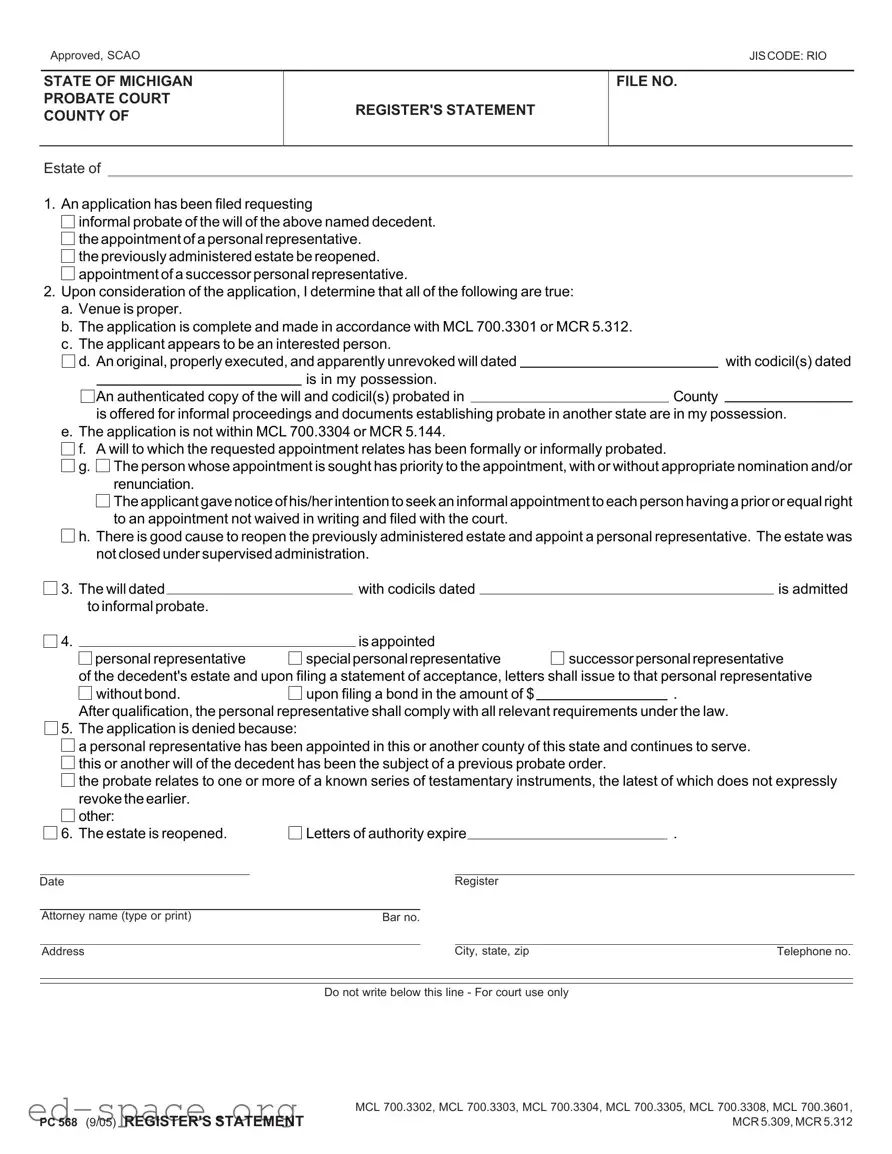
The Michigan PC 568 form serves as a critical document within the probate process, specifically designed for informal probate proceedings. This form facilitates the application for the informal probate of a decedent's will, the appointment of a personal representative, or the reopening of a previously administered estate. Key aspects of the form include the verification of proper venue, the completeness of the application, and the identification of interested parties. It also confirms the possession of an original will and any relevant codicils, ensuring that they are unrevoked and properly executed. The form outlines the criteria for appointing a personal representative, including their priority status and the requirement for notice to other interested parties. If the application meets all necessary conditions, the court admits the will to informal probate and appoints the designated personal representative. Conversely, the form also provides grounds for denial, such as the existence of another appointed personal representative or prior probate orders concerning the same will. Overall, the Michigan PC 568 form plays a vital role in streamlining the probate process while ensuring compliance with state laws.

Approved, SCAO |
JISCODE: RIO |
STATE OF MICHIGAN PROBATE COURT COUNTY OF
REGISTER'S STATEMENT
FILE NO.
Estate of
1. An application has been filed requesting |
|
informal probate of the will of the above named decedent. |
|
theappointment ofa personal representative. |
|
the previously administered estate be reopened. |
|
appointment of a successor personal representative. |
|
2. Upon consideration of the application, I determine that all of the following are true: |
|
a. Venue is proper. |
|
b. The application is complete and made in accordance with MCL 700.3301 or MCR 5.312. |
|
c. The applicant appears to be an interested person. |
|
d. An original, properly executed, and apparently unrevoked will dated |
with codicil(s) dated |
is in my possession. |
|
An authenticated copy of the will and codicil(s) probated in |
County |
is offered for informal proceedings and documents establishing probate in another state are in my possession. e. The application is not within MCL 700.3304 or MCR 5.144.
f. A will to which the requested appointment relates has been formally or informally probated.
g. The person whose appointment is sought has priority to the appointment, with or without appropriate nomination and/or renunciation.
Theapplicantgavenoticeofhis/herintentiontoseekaninformalappointmenttoeachpersonhavingapriororequalright to an appointment not waived in writing and filed with the court.
h. There is good cause to reopen the previously administered estate and appoint a personal representative. The estate was
|
not closed under supervised administration. |
|
|
|
||||||||||
3. |
The will dated |
|
|
|
with codicils dated |
|
|
|
is admitted |
|||||
|
to informal probate. |
|
|
|
|
|
|
|
|
|
|
|
||
4. |
|
|
|
|
|
is appointed |
|
|
|
|||||
|
personal representative |
specialpersonalrepresentative |
successorpersonalrepresentative |
|||||||||||
|
of the decedent's estate and upon filing a statement of acceptance, letters shall issue to that personal representative |
|||||||||||||
|
withoutbond. |
upon filing a bond in the amount of $ |
|
|
. |
|
||||||||
|
After qualification, the personal representative shall comply with all relevant requirements under the law. |
|||||||||||||
5. |
The application is denied because: |
|
|
|
|
|
|
|
|
|
|
|
||
|
a personal representative has been appointed in this or another county of this state and continues to serve. |
|||||||||||||
|
this or another will of the decedent has been the subject of a previous probate order. |
|||||||||||||
|
the probate relates to one or more of a known series of testamentary instruments, the latest of which does not expressly |
|||||||||||||
|
revoketheearlier. |
|
|
|
|
|
|
|
|
|
|
|
||
|
other: |
|
|
|
|
|
|
|
|
|
|
|
||
6. |
The estate is reopened. |
Letters of authority expire |
|
|
|
. |
|
|||||||
|
|
|
|
|
|
|
|
|
|
|
|
|
||
Date |
|
|
|
|
|
|
|
Register |
|
|
|
|||
|
|
|
|
|
|
|
|
|
|
|
|
|||
Attorney name (type or print) |
|
|
Bar no. |
|
|
|
||||||||
|
|
|
|
|
|
|
|
|
|
|
|
|||
Address |
|
|
|
|
City, state, zip |
|
|
Telephone no. |
||||||
|
|
|
|
|
|
|
|
|
|
|
|
|||
|
|
|
|
|
|
|
|
|
|
|
|
|||
|
|
|
|
Do not write below this line - For court use only |
|
|
|
|||||||
|
MCL 700.3302, MCL 700.3303, MCL 700.3304, MCL 700.3305, MCL 700.3308, MCL 700.3601, |
PC 568 (9/05) REGISTER'S STATEMENT |
MCR 5.309, MCR 5.312 |
| Fact Name | Details |
|---|---|
| Purpose of Form | The Michigan PC 568 form is used to request informal probate of a will, the appointment of a personal representative, or the reopening of a previously administered estate. |
| Governing Laws | This form is governed by several laws including MCL 700.3301, MCL 700.3302, MCL 700.3303, MCL 700.3304, MCL 700.3305, MCL 700.3308, and MCR 5.312. |
| Eligibility Criteria | To use this form, the applicant must be an interested person, and the application must meet specific criteria outlined in the governing laws. |
| Filing Requirements | The applicant must provide an original will, any codicils, and documents establishing probate in another state, if applicable, along with the completed form. |
| Outcome of Application | The court may either admit the will to informal probate and appoint a personal representative or deny the application based on certain conditions. |
Filling out the Michigan PC 568 form requires careful attention to detail. This form is used in probate court matters, and it is essential to ensure that all information is accurate and complete. Once the form is filled out, it will be submitted to the probate court for consideration. Following the steps outlined below will help facilitate this process.
What is the purpose of the Michigan PC 568 form?
The Michigan PC 568 form is used in probate court to request informal probate of a decedent's will. It allows interested parties to apply for the appointment of a personal representative, reopen a previously administered estate, or appoint a successor personal representative. The form ensures that the application meets legal requirements and provides necessary documentation for the court's consideration.
Who can file the Michigan PC 568 form?
Any interested person can file the Michigan PC 568 form. This includes individuals who may benefit from the estate, such as heirs or beneficiaries. The applicant must ensure that they have the original will and any relevant codicils in their possession, as well as provide notice to other parties who may have equal or prior rights to the appointment.
What happens after the Michigan PC 568 form is filed?
Once the Michigan PC 568 form is filed, the probate court will review the application. If all requirements are met, the court will admit the will to informal probate and appoint a personal representative. This person will manage the estate according to Michigan law. If the application is denied, the court will provide reasons for the denial, which may include the appointment of another personal representative or issues with the will.
What are the consequences of not following the requirements outlined in the Michigan PC 568 form?
Failure to adhere to the requirements of the Michigan PC 568 form can lead to the denial of the application. If the court finds that the application is incomplete or that the applicant does not have the proper standing, it may reject the request. This could delay the probate process and affect the distribution of the estate. It is crucial to ensure that all necessary documents and notifications are in order before submission.
Incomplete Information: One of the most common mistakes is failing to provide all necessary details. Each section of the form must be filled out completely to ensure the application is processed without delays.
Incorrect Venue: Applicants often overlook the importance of the correct venue. The probate must be filed in the county where the decedent resided, and selecting the wrong location can lead to rejection.
Missing Signatures: A form without the required signatures will not be accepted. Ensure that all necessary parties have signed the application before submission.
Failure to Notify Interested Parties: Not providing notice to all interested persons can result in complications. The applicant must notify anyone who has a right to be involved in the probate process.
Improper Will Documentation: Submitting a will that is not properly executed or is believed to be revoked can lead to denial. Ensure that the will is original, properly signed, and dated.
Ignoring Previous Probate Orders: If the decedent's will has already been probated, this must be disclosed. Failing to mention previous probate orders can result in complications and potential legal issues.
Not Meeting Legal Requirements: The application must comply with specific legal standards outlined in Michigan law. Familiarizing oneself with these requirements is crucial for a successful application.
Inaccurate Personal Representative Information: Providing incorrect details about the proposed personal representative can create problems. Ensure that the name and contact information are accurate and up to date.
Neglecting to Follow Up: After submitting the form, applicants sometimes forget to follow up with the court. It is important to check on the status of the application to address any issues promptly.
The Michigan PC 568 form is a critical document used in the probate process, particularly for informal probate proceedings. When dealing with estate matters, several other forms and documents often accompany the PC 568 to ensure a comprehensive approach to the legal requirements. Below is a list of these commonly used documents.
Understanding these forms can help streamline the probate process. Each document plays a vital role in ensuring that the estate is handled according to the law and the wishes of the deceased. Being informed about these requirements can alleviate some of the stress associated with managing an estate.
The Michigan PC 568 form is a document used in the probate process, specifically for informal probate of a will. It shares similarities with several other legal documents related to estate management. Here are five documents that are comparable to the Michigan PC 568 form:
When filling out the Michigan PC 568 form, it is essential to follow specific guidelines to ensure your application is processed smoothly. Here are six things you should and shouldn't do:
By adhering to these guidelines, you can help ensure a more efficient and effective application process.
Misconceptions about the Michigan PC 568 form can lead to confusion regarding its purpose and requirements. Below are seven common misconceptions explained.
When filling out the Michigan PC 568 form, it's important to keep several key points in mind. Understanding these can help ensure a smoother process.
By keeping these points in mind, individuals can navigate the process of filling out and using the Michigan PC 568 form more effectively.