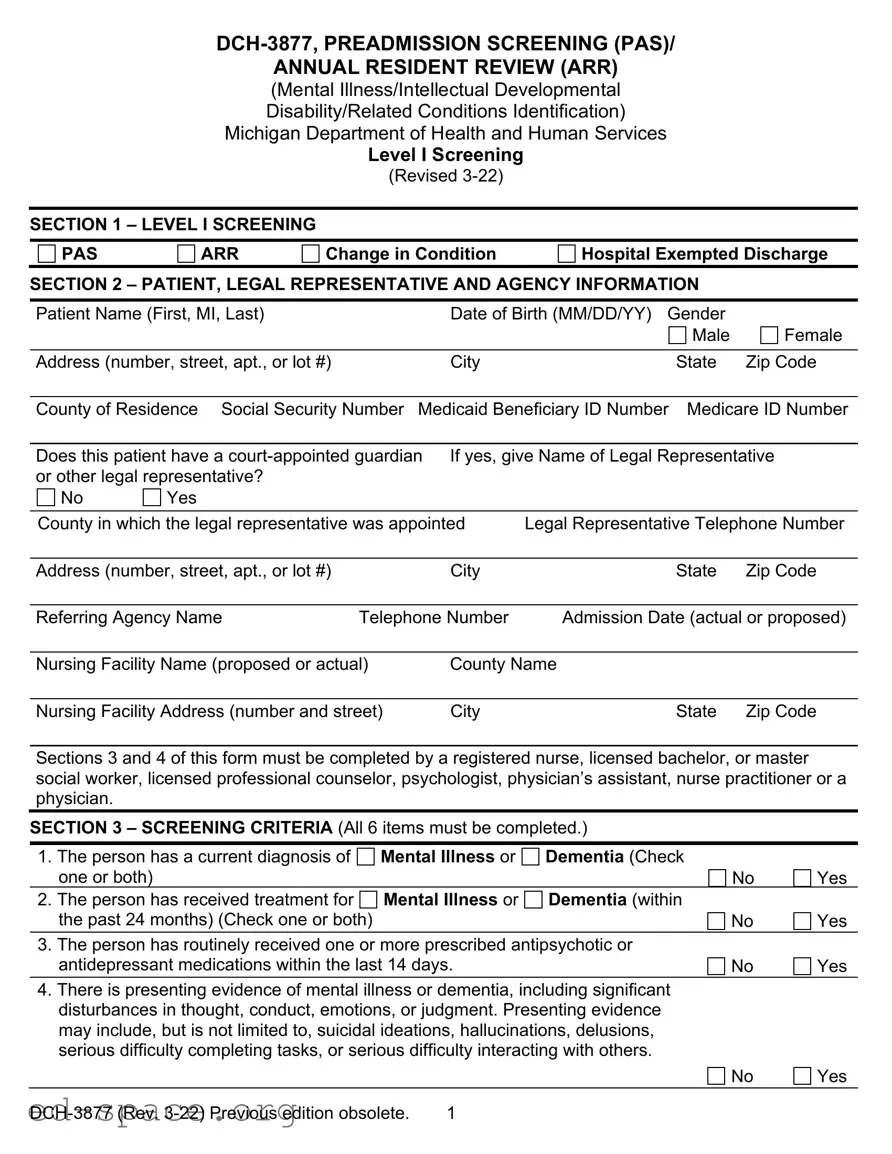
The Michigan DCH 3877 form is a critical document used in the assessment and admission process for individuals seeking care in nursing facilities. This form, part of the Preadmission Screening and Annual Resident Review (PASARR) process, helps identify potential mental illnesses or developmental disabilities among prospective residents. It is essential for ensuring that individuals receive appropriate mental health services if needed. Key revisions to the DCH 3877 include updates to terminology, such as changing "exception" to "exemption" and aligning diagnostic references with the latest edition of the Diagnostic and Statistical Manual of Mental Disorders. The form requires completion by qualified professionals, such as registered nurses or social workers, who evaluate various criteria related to mental health and developmental disabilities. Additionally, the DCH 3877 works in conjunction with the DCH 3878 form, which certifies exemption criteria for certain conditions. Understanding the purpose and requirements of the DCH 3877 is vital for healthcare providers involved in the admission process and ensures compliance with Medicaid regulations.
ANNUAL RESIDENT REVIEW (ARR)
(Mental Illness/Intellectual Developmental
Disability/Related Conditions Identification)
Michigan Department of Health and Human Services
Level I Screening
(Revised
SECTION 1 – LEVEL I SCREENING
PAS |
|
ARR |
Change in Condition |
Hospital Exempted Discharge |
||
SECTION 2 – PATIENT, LEGAL REPRESENTATIVE AND AGENCY INFORMATION |
|
|||||
Patient Name (First, MI, Last) |
|
Date of Birth (MM/DD/YY) Gender |
|
|||
|
|
|
|
|
Male |
Female |
Address (number, street, apt., or lot #) |
City |
State |
Zip Code |
|||
|
|
|||||
County of Residence |
Social Security Number Medicaid Beneficiary ID Number Medicare ID Number |
|||||
|
|
|||||
Does this patient have a |
If yes, give Name of Legal Representative |
|||||
or other legal representative? |
|
|
|
|
||
No |
Yes |
|
|
|
|
|
County in which the legal representative was appointed |
Legal Representative Telephone Number |
|||||
|
|
|
|
|||
Address (number, street, apt., or lot #) |
City |
State |
Zip Code |
|||
|
|
|
||||
Referring Agency Name |
Telephone Number |
Admission Date (actual or proposed) |
||||
|
|
|
||||
Nursing Facility Name (proposed or actual) |
County Name |
|
||||
|
|
|
|
|||
Nursing Facility Address (number and street) |
City |
State |
Zip Code |
|||
Sections 3 and 4 of this form must be completed by a registered nurse, licensed bachelor, or master social worker, licensed professional counselor, psychologist, physician’s assistant, nurse practitioner or a physician.
SECTION 3 – SCREENING CRITERIA (All 6 items must be completed.)
1. |
The person has a current diagnosis of |
Mental Illness or |
Dementia (Check |
|
|
||
|
one or both) |
|
|
|
No |
|
Yes |
|
|
|
|
|
|||
2. |
The person has received treatment for |
Mental Illness or |
Dementia (within |
|
|
|
|
|
the past 24 months) (Check one or both) |
|
|
|
No |
|
Yes |
3. |
The person has routinely received one or more prescribed antipsychotic or |
|
|
||||
|
antidepressant medications within the last 14 days. |
|
|
No |
|
Yes |
|
4.There is presenting evidence of mental illness or dementia, including significant disturbances in thought, conduct, emotions, or judgment. Presenting evidence may include, but is not limited to, suicidal ideations, hallucinations, delusions, serious difficulty completing tasks, or serious difficulty interacting with others.
No |
Yes |
1 |
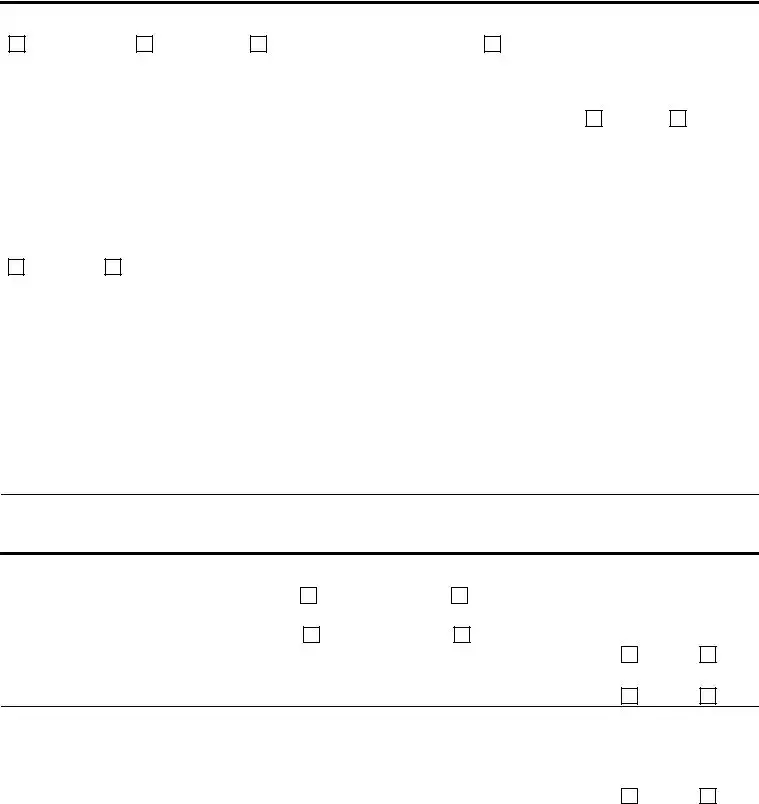
5.The person has a diagnosis of an intellectual/developmental disability or a related condition including, but not limited to, epilepsy, autism, or cerebral palsy and this
diagnosis manifested before the age of 22. |
No |
Yes |
6.There is presenting evidence of deficits in intellectual functioning or adaptive behavior which suggests that the person may have an intellectual/developmental disability or a related condition. These deficits appear to have manifested before
the age of 22. |
No |
Yes |
Note: If you checked “Yes” to items 1 and/or 2, checked the word “Mental Illness” and/or “Dementia.”
If yes, please explain
Note: The person screened shall be determined to require a comprehensive Level II OBRA evaluation if any of the above items are "Yes" UNLESS a physician, nurse practitioner or physician’s assistant certifies on form
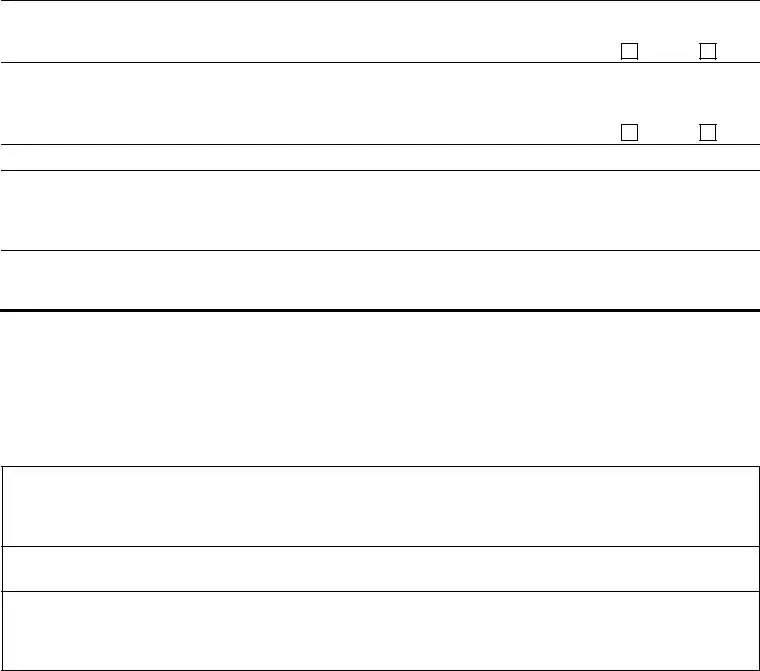
SECTION 4 - CLINICIAN’S STATEMENT: I certify to the best of my knowledge that the above information is accurate.
Clinician Signature |
Date |
Name (type or print) |
|
|
|
Degree/License |
|
Telephone Number |
|
|
|
The Michigan Department of Health and Human Services will not exclude from participation in, deny benefits of, or discriminate against any individual or group because of race, sex, religion, age, national origin, color, height, weight, marital status, partisan considerations, or a disability or genetic information that is unrelated to the person’s eligibility.
AUTHORITY: Title XIX of the Social Security Act
COMPLETION: Is voluntary, however, if NOT completed, Medicaid will not reimburse the nursing facility.
DISTRIBUTION: If any answer to items 1 – 6 in SECTION 3 is "Yes", send ONE copy to the local Community Mental Health Services Program (CMHSP), with a copy of form
2 |
PREADMISSION SCREENING (PAS)/ANNUAL RESIDENT REVIEW (ARR)
Mental Illness/Intellectual Developmental Disability/Related Conditions Identification
Instructions for Completing Level I Screening
This form is used to identify prospective and current nursing facility residents who meet the criteria for possible mental illness or intellectual/developmental disability, or a related condition and who may be in need of mental health services.
Sections II and III must be completed by a registered nurse, licensed bachelor, or master social worker, licensed professional counselor, psychologist, physician’s assistant, nurse practitioner or physician.
Preadmission Screening or Hospital Exempted Discharge: The referral source completing the Level I Screening
Annual Resident Review or Change in Condition: This form must be completed by the nursing facility.
Check the appropriate box in the upper
Section II – Screening Criteria – All 6 items in this section must be completed. The following provides additional explanation of the items.
1.Mental Illness: A current primary diagnosis of a mental disorder as defined in the American Psychiatric Association Diagnostic and Statistical Manual of Mental Disorders.
Current Diagnosis means that a clinician has established a diagnosis of a mental disorder within the past 24 months. Do NOT mark “Yes” for an individual cited as having a diagnosis "by history" only.
2.Receipt of treatment for mental illness or dementia within the past 24 months means any of the following: inpatient psychiatric hospitalization; outpatient services such as psychotherapy, day program, or mental health case management; or referral for psychiatric consultation, evaluation, or prescription of psychopharmacological medications.
3.Antidepressant and antipsychotic medications mean any currently prescribed medication classified as an antidepressant or antipsychotic, plus Lithium Carbonate and Lithium Citrate.
4.Presenting evidence means the individual currently manifests symptoms of mental illness or dementia, which suggests the need for further evaluation to establish causal factors, diagnosis, and treatment recommendations. Further evaluation may need to be completed if evidence of suicidal ideation, hallucinations, delusion, serious difficulty completing tasks or serious difficulty interacting with others.
5.Intellectual/Developmental Disability/Related Condition: An individual is considered to have a severe, chronic disability that meets ALL 4 of the following conditions:
a.It is manifested before the person reaches age 22.
b.It is likely to continue indefinitely.
c.It results in substantial functional limitations in 3 or more of the following areas of major life activity:
d.It is attributable to:
•Intellectual/Developmental Disability such that the person has significant subaverage general intellectual functioning existing concurrently with deficits in adaptive behavior and manifested during the developmental period;
•cerebral palsy, epilepsy, autism; or
3 |
•any condition other than mental illness found to be closely related to Intellectual/ Developmental Disability because this condition results in impairment in general intellectual functioning OR adaptive behavior similar to that of persons with Intellectual/Developmental Disability and requires treatment or services similar to those required for these persons.
6.Presenting evidence means the individual manifests deficits in intellectual functioning or adaptive behavior, which suggests the need for further evaluation to determine the presence of a developmental disability, causal factors, and treatment recommendations. These deficits appear to have manifested before the age of 22.
Note: When there are one or more "Yes" answers to items 1 – 6 under SECTION II, complete form
4 |
| Fact Name | Details |
|---|---|
| Form Purpose | The DCH-3877 is used for preadmission screening and annual resident review for mental illness or developmental disability. |
| Governing Law | Authority is provided under P.A. 280 of 1939 and Title XIX of the Social Security Act. |
| Issuance Date | This form was issued on July 1, 2003. |
| Distribution | The form is distributed to nursing facilities, hospitals, and community mental health services programs. |
| Revisions | The DCH-3877 has been revised to reflect changes in terminology and diagnostic criteria. |
| Who Completes It | A registered nurse, certified social worker, psychologist, physician’s assistant, or physician must complete the form. |
| Form Availability | Providers can order the form from the Michigan Department of Community Health or download it from their website. |
| Retention Policy | Nursing facilities must retain the original form in the patient record until the manual is updated. |
Filling out the Michigan DCH-3877 form requires careful attention to detail. This form is essential for assessing individuals who may need mental health services. Once completed, the form should be submitted to the appropriate local Community Mental Health Services Program or retained in the patient's record as required.
What is the Michigan DCH 3877 form?
The Michigan DCH 3877 form is a Preadmission Screening (PAS) and Annual Resident Review (ARR) form used to identify individuals who may have mental illnesses or developmental disabilities. This form is essential for determining if a prospective resident of a nursing facility requires mental health services. It is typically completed by qualified professionals such as registered nurses or social workers.
Who is required to complete the DCH 3877 form?
The DCH 3877 form must be completed by a registered nurse, certified or registered social worker, psychologist, physician's assistant, or physician. This ensures that the screening is performed by someone with the appropriate training and expertise to assess the individual’s mental health needs.
When should the DCH 3877 form be completed?
This form should be completed during the discharge planning process from a hospital or when an individual is being admitted to a nursing facility from a non-acute care setting. It is also necessary for annual reviews of current residents to reassess their mental health status and needs.
What information is required on the DCH 3877 form?
The form requires detailed information about the patient, including their name, date of birth, gender, address, Social Security number, and Medicaid or Medicare ID numbers. Additionally, it asks about the presence of a court-appointed guardian or legal representative, as well as the referring agency's details and the nursing facility's information.
What happens if a "YES" answer is given to any screening criteria?
If any of the six screening criteria in Section II are answered with a "YES," the individual is deemed to require a comprehensive Level II screening. In such cases, the DCH 3878 form must also be completed to determine if any exemption criteria apply.
How can I obtain the DCH 3877 form?
The DCH 3877 form can be ordered from the Michigan Department of Community Health's Forms Distribution office. Alternatively, providers can download the form directly from the Michigan Department of Community Health website by navigating to the Medicaid Provider Forms section.
What are the key changes made to the DCH 3877 form?
Recent revisions to the DCH 3877 form include updates to terminology, such as changing "exception" to "exemption" and updating diagnostic criteria to reflect the latest edition of the Diagnostic and Statistical Manual of Mental Disorders (DSM IV). The form now also incorporates reworded dementia diagnoses and additional criteria for exemption.
Where should completed DCH 3877 forms be sent?
Once completed, one copy of the DCH 3877 form should be sent to the local Community Mental Health Services Program (CMHSP). The original form must be retained in the patient’s record at the nursing facility, and a copy should be provided to the patient or their authorized representative.
What should I do if I have questions about the DCH 3877 form?
If you have questions regarding the DCH 3877 form or its completion, you can contact the Provider Inquiry division of the Michigan Department of Community Health. They can be reached via mail or email, and a toll-free phone number is also available for immediate assistance.
Incomplete Patient Information: Many people forget to fill out all required fields, such as the patient's name, date of birth, and social security number. This can delay processing and create confusion.
Incorrect Guardian Information: If the patient has a court-appointed guardian, it’s crucial to provide accurate details. Failing to do so may lead to issues with consent and representation.
Misunderstanding Screening Criteria: Some individuals do not fully understand the screening questions. It's important to read each question carefully and answer truthfully, as this determines the need for further evaluation.
Missing Clinician's Signature: The form must be signed by a qualified clinician. Omitting this signature can result in the form being rejected.
Not Following Submission Guidelines: Submitting the form without following the distribution instructions can cause delays. Ensure that copies are sent to the correct agencies and that the original is retained in the patient’s file.
The Michigan DCH-3877 form is an essential document used in the preadmission screening process for nursing facility residents. It identifies individuals who may have mental illness or developmental disabilities and need mental health services. Alongside this form, several other documents are often required to ensure a comprehensive evaluation and proper processing of care. Below is a list of related forms that may be used in conjunction with the DCH-3877.
Utilizing the Michigan DCH-3877 form alongside these related documents ensures a thorough evaluation process for individuals entering nursing facilities. Each form plays a vital role in addressing the unique needs of patients and facilitating their transition into care.
The Michigan DCH-3877 form is a critical document used for Preadmission Screening (PAS) and Annual Resident Review (ARR) for individuals potentially requiring mental health services. Several other documents serve similar purposes in different contexts or jurisdictions. Below is a list of nine documents that share similarities with the DCH-3877 form:
When filling out the Michigan DCH-3877 form, it is crucial to follow specific guidelines to ensure accuracy and compliance. Here’s a list of things you should and shouldn’t do:
Understanding the Michigan DCH-3877 form is crucial for providers involved in the care of individuals with mental illness or developmental disabilities. However, several misconceptions can lead to confusion. Here are four common misunderstandings regarding this important document:
By clarifying these misconceptions, providers can better navigate the complexities of the DCH-3877 form, ensuring that individuals receive the care and support they need.
The DCH-3877 form is used for Preadmission Screening (PAS) and Annual Resident Review (ARR) to assess mental illness or developmental disabilities in nursing facility residents.
It must be completed by qualified professionals such as registered nurses, social workers, psychologists, physician assistants, or physicians.
Sections II and III of the form require specific information about the patient, including their diagnosis and treatment history.
Providers should check the PAS box for hospital discharges and the ARR box for annual reviews.
Patients may need a comprehensive Level II OBRA screening if any of the six screening criteria in Section II are answered "YES."
Exemptions to the Level II screening can be certified by a physician using the DCH-3878 form.
Forms can be ordered from the Michigan Department of Community Health or downloaded from their website.
Providers must retain the original DCH-3877 in the patient record and provide a copy to the patient or their representative.
It is important to discard obsolete bulletins and retain the current bulletin until the Nursing Facility Manual is updated.
Questions regarding the form can be directed to the Provider Inquiry at the Department of Community Health.