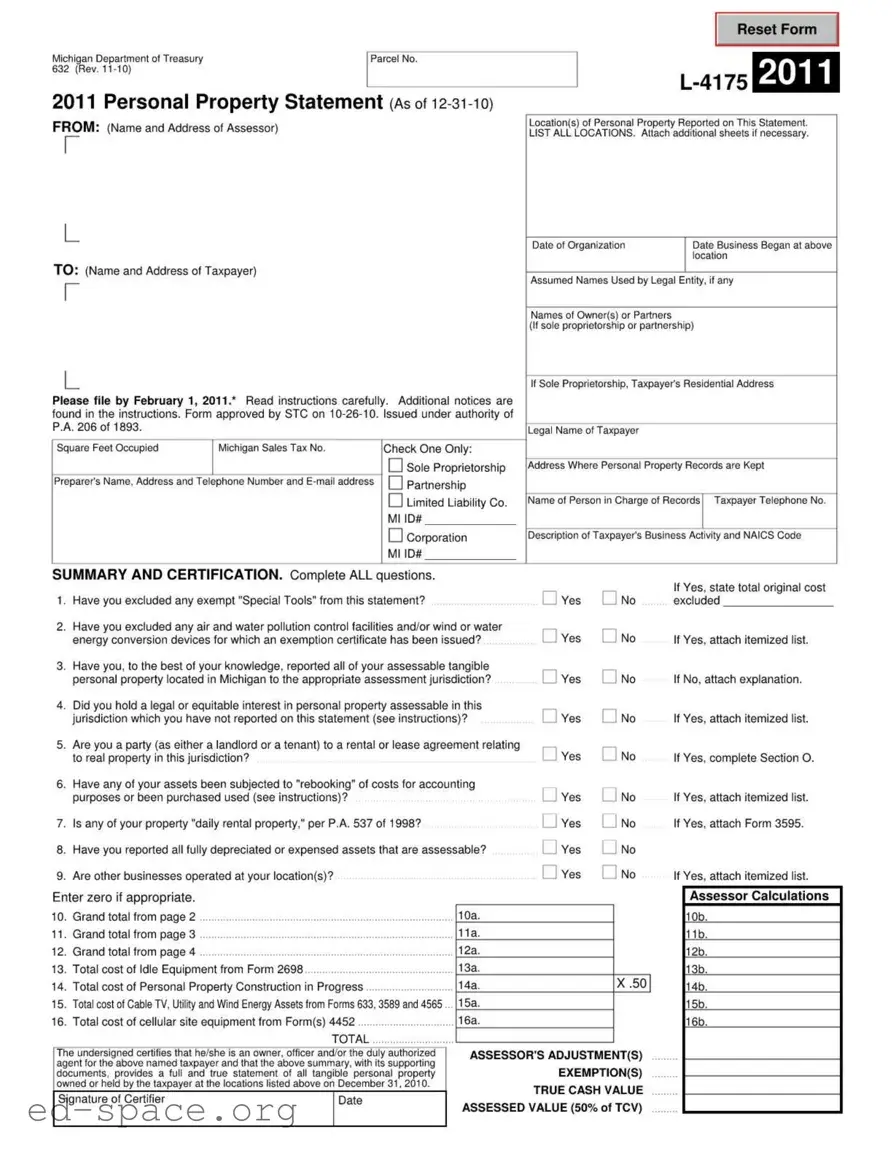
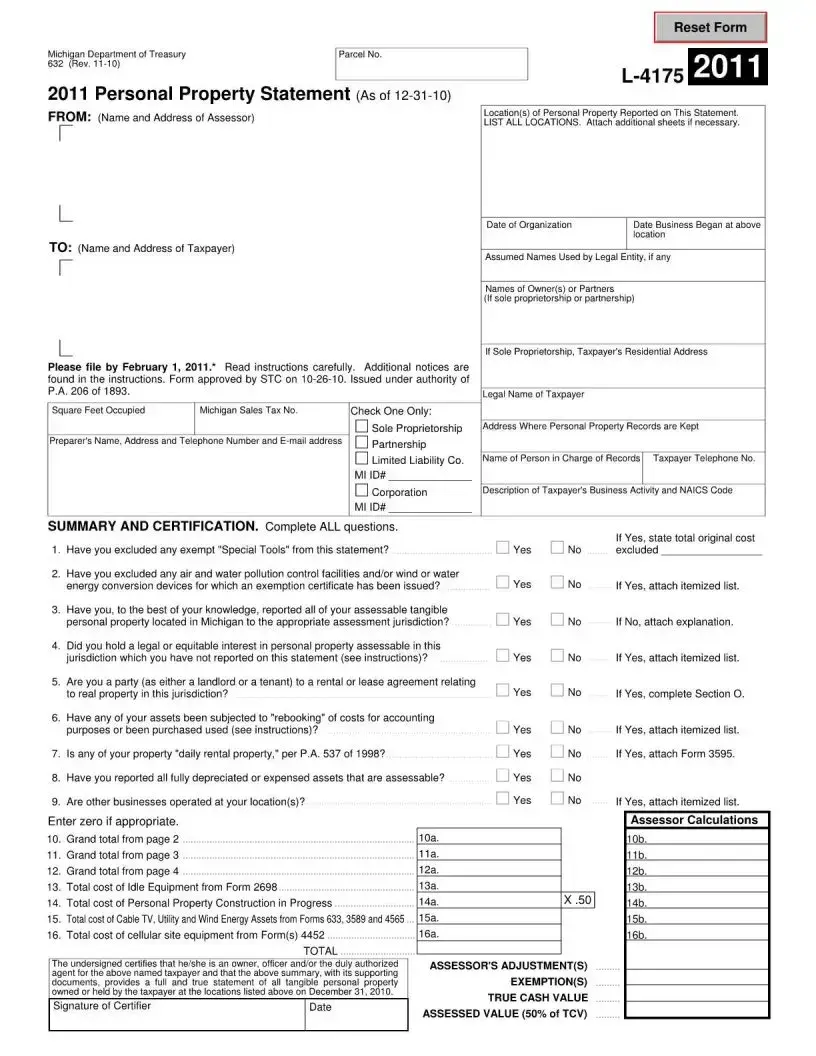
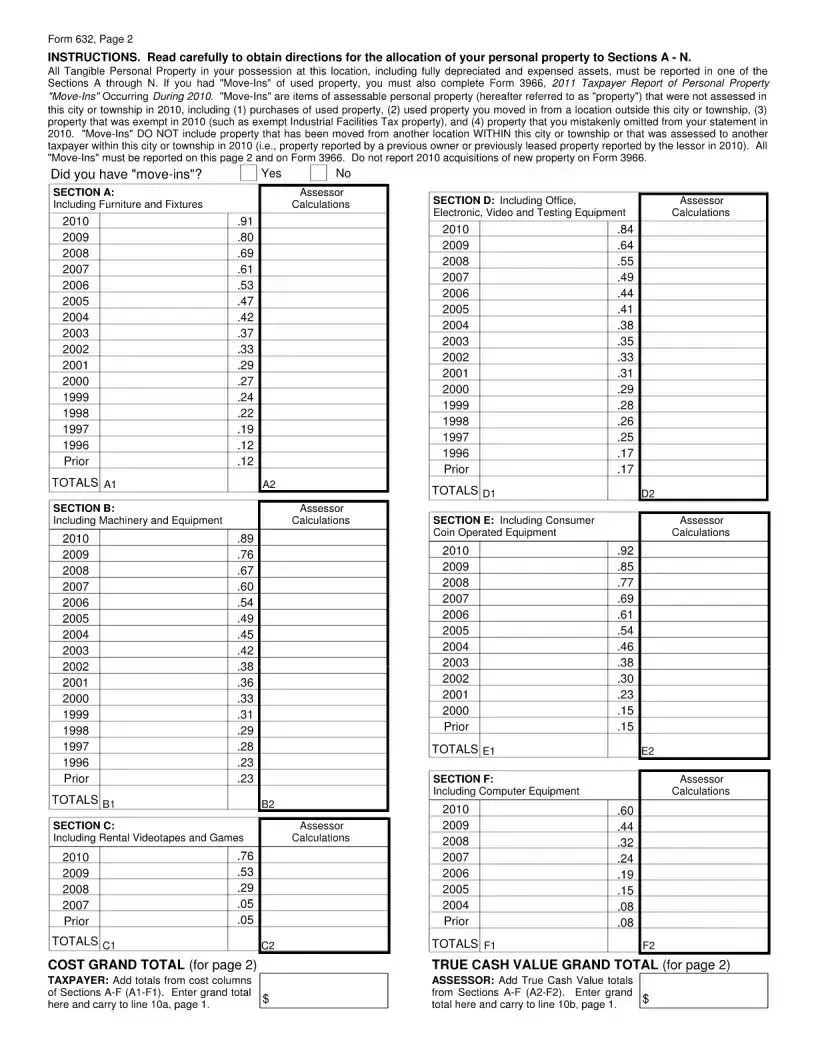
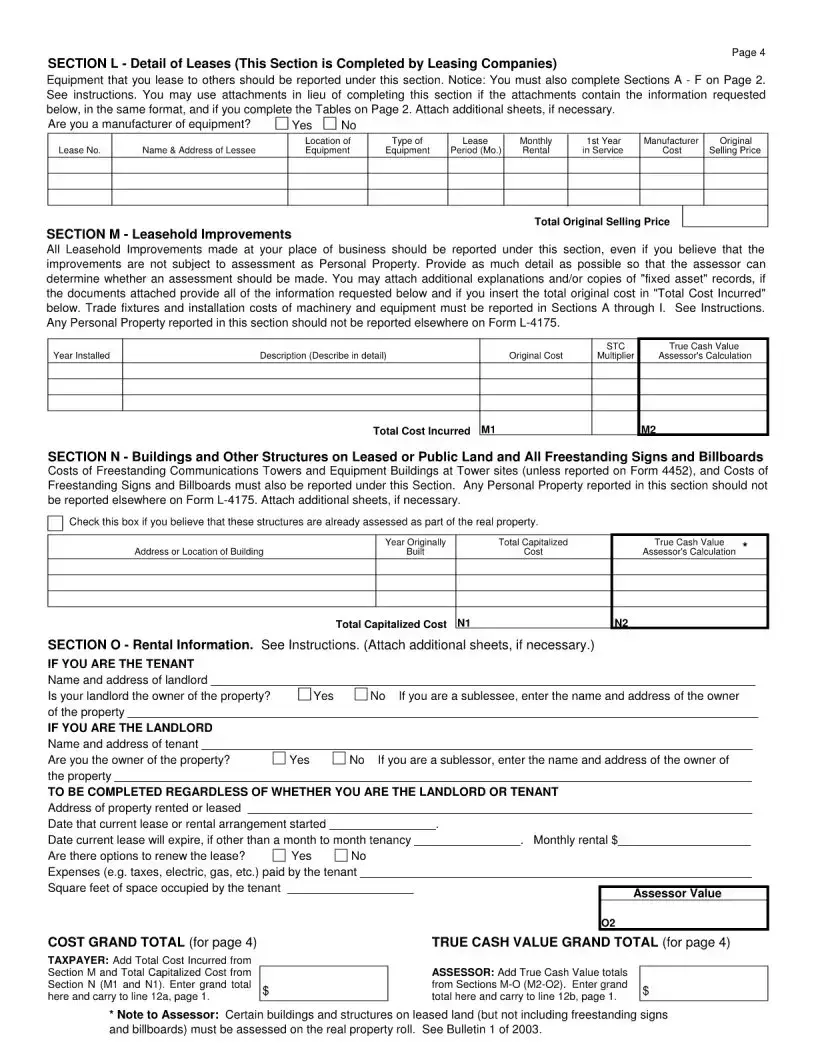
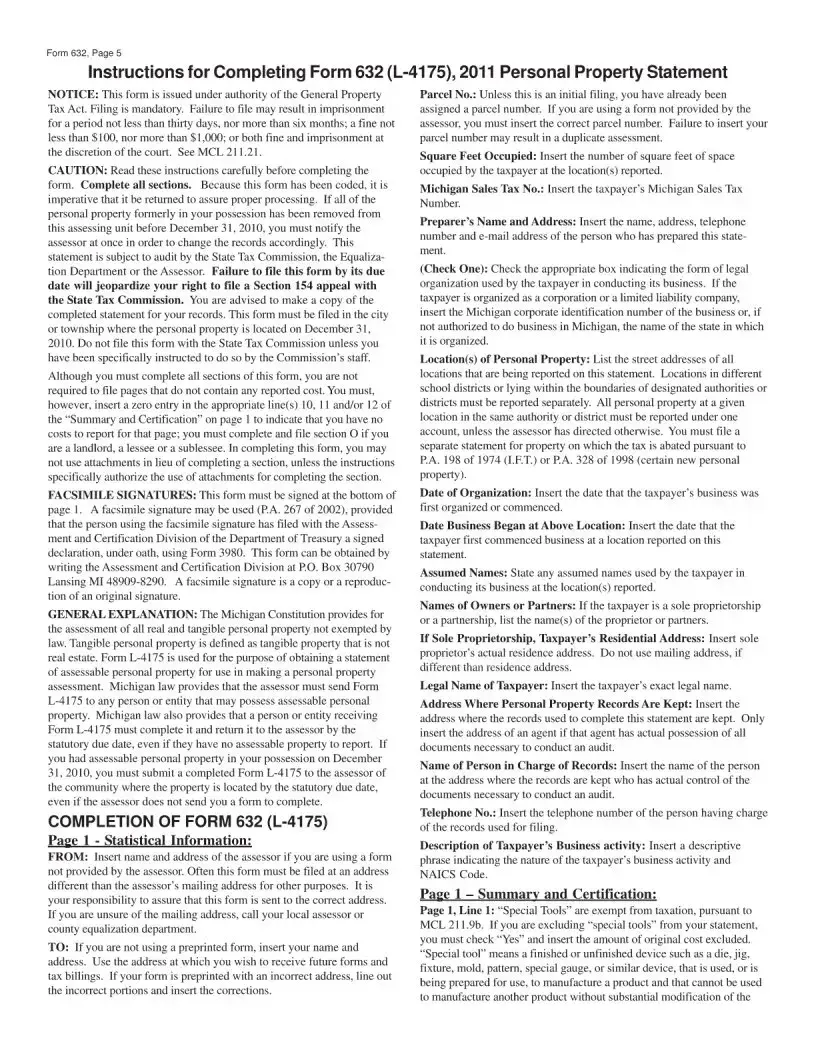
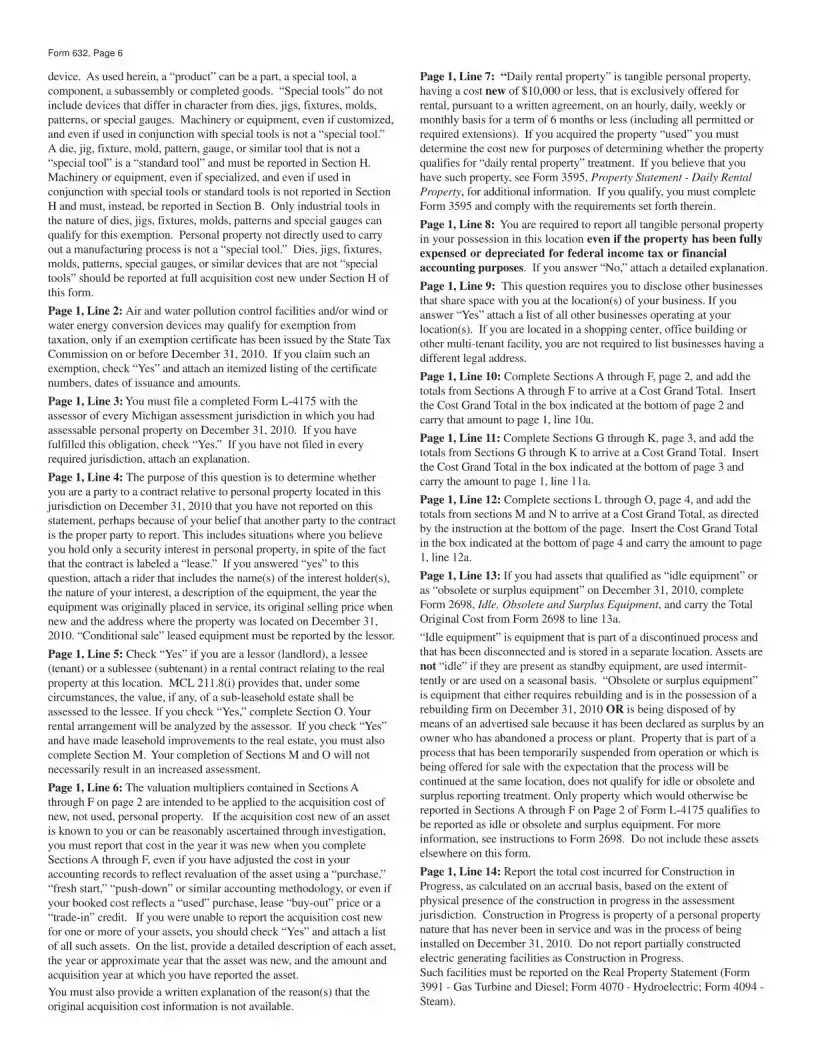
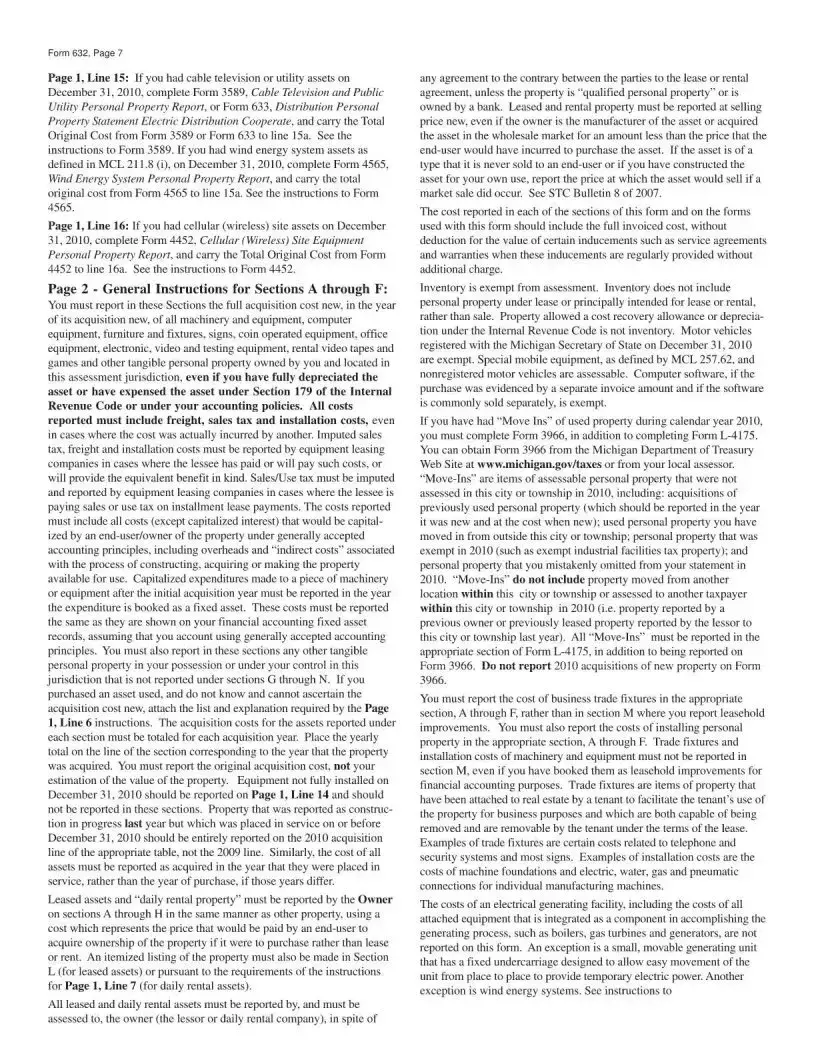
The Michigan 632 form is an essential document for businesses that own personal property in the state. This form, known as the Personal Property Statement, must be filed annually by February 1. It requires taxpayers to report all assessable tangible personal property located in Michigan as of December 31 of the previous year. The form gathers crucial information, including the name and address of the taxpayer, the type of business entity—whether a sole proprietorship, partnership, corporation, or limited liability company—and details about the business activities. Taxpayers must also disclose the locations of their personal property, any assumed names used, and the names of owners or partners. Furthermore, the form includes a summary and certification section, where the taxpayer certifies the accuracy of the information provided. Questions regarding exemptions, such as special tools and pollution control facilities, must be answered thoroughly. The instructions accompanying the form guide users on how to allocate personal property into specific sections and address any "move-ins" of used property. Completing the Michigan 632 form accurately is vital for compliance and ensuring the correct assessment of personal property taxes.
| Fact Name | Details |
|---|---|
| Form Purpose | The Michigan 632 form is used to report personal property owned by businesses as of December 31 each year. |
| Filing Deadline | Taxpayers must submit the form by February 1 of the following year to avoid penalties. |
| Governing Law | This form is issued under the authority of Public Act 206 of 1893, which governs property taxation in Michigan. |
| Types of Entities | The form accommodates various business structures, including sole proprietorships, partnerships, corporations, and limited liability companies. |
| Exemptions | Taxpayers can exclude certain exempt items, such as special tools and pollution control facilities, from their reported personal property. |
| Location Reporting | Businesses must list all locations where personal property is held, and additional sheets can be attached if necessary. |
| Certification Requirement | The form requires a certification from the taxpayer or an authorized agent, affirming the accuracy of the reported information. |
| Assessment Process | The assessor will use the information provided to determine the true cash value and assessed value of the reported property. |
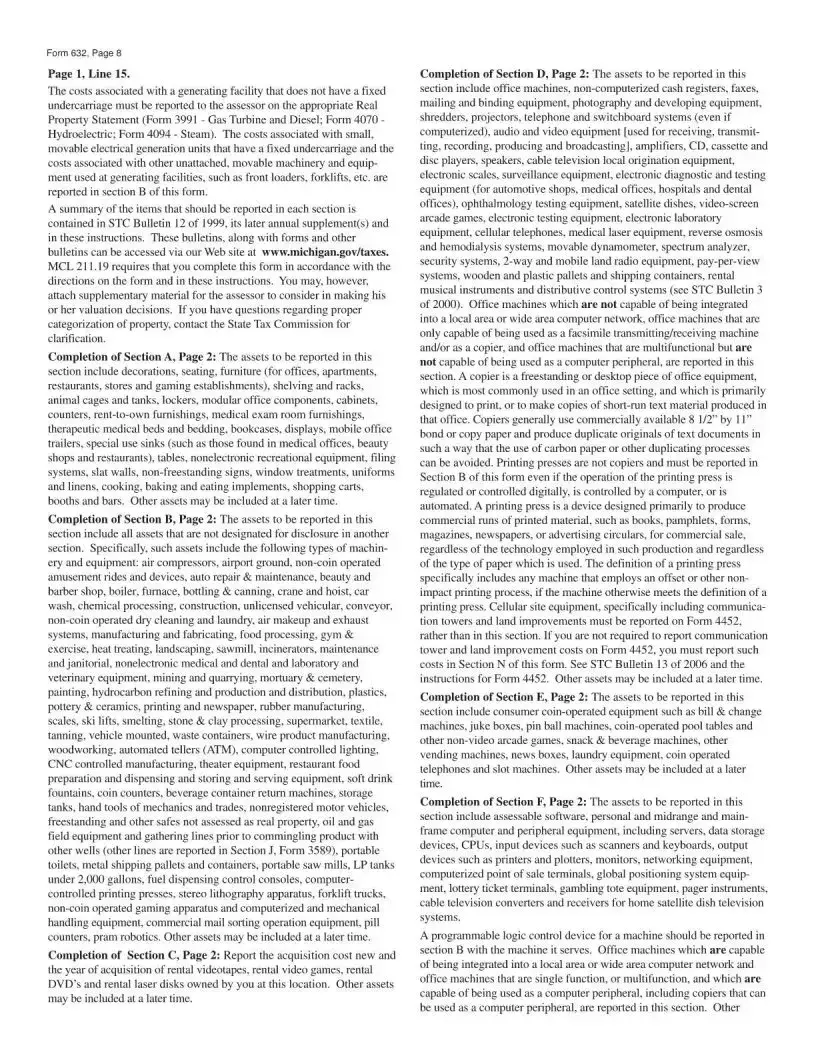
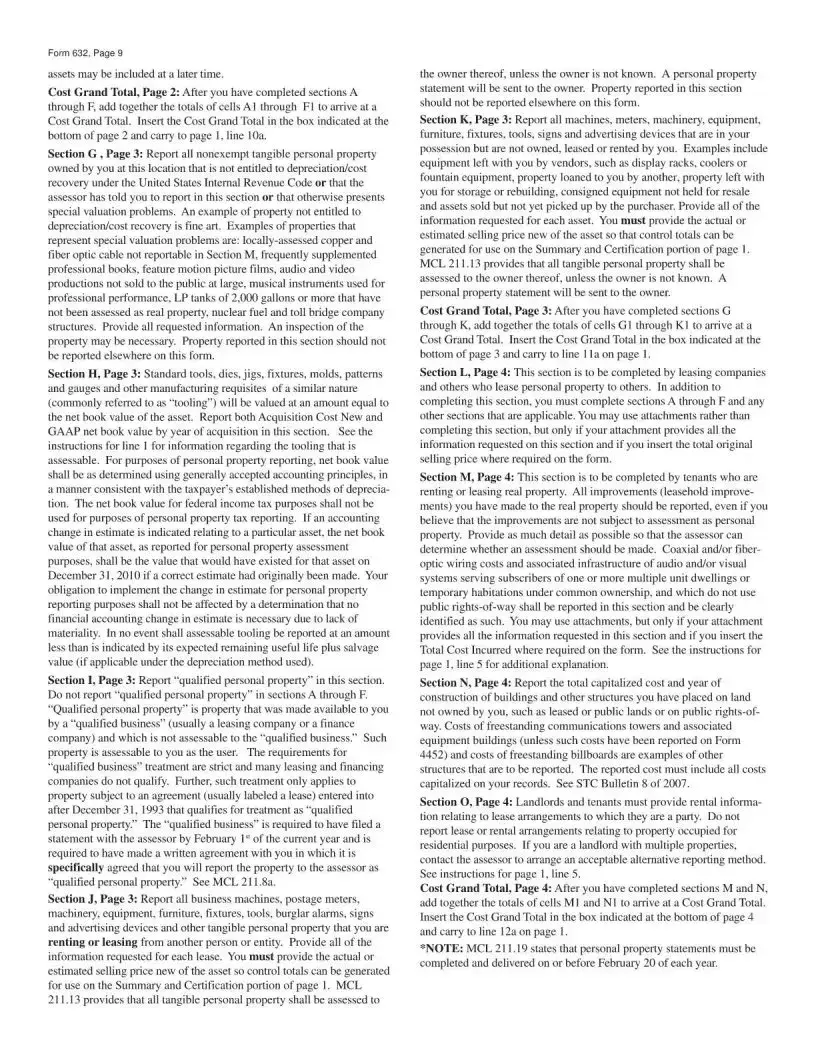
Completing the Michigan 632 form is an essential task for accurately reporting personal property for tax purposes. Follow these steps to ensure that you fill out the form correctly and submit it by the deadline.
Once the form is filled out, ensure that it is submitted by the deadline of February 1, 2011. Keep a copy for your records, and be prepared to provide any additional information if requested by the assessor's office.
What is the Michigan 632 form and who needs to file it?
The Michigan 632 form, also known as the Personal Property Statement, is a document required by the Michigan Department of Treasury. It must be filed by businesses that own or possess tangible personal property in Michigan as of December 31 of the previous year. This includes items such as equipment, furniture, and other physical assets used in business operations. If your business operates in Michigan and you have personal property that is assessable, you need to file this form by February 1 each year to report your assets accurately.
What information is required on the Michigan 632 form?
The form requires detailed information about the taxpayer and the personal property being reported. You will need to provide your business name, address, and type of business entity (such as sole proprietorship, partnership, or corporation). Additionally, you must list all locations where personal property is kept, describe your business activities, and provide the North American Industry Classification System (NAICS) code. There are also specific questions regarding exempt property, rental agreements, and any property that may have been acquired during the year. Completing the form accurately is crucial for ensuring compliance with local tax regulations.
What happens if I do not file the Michigan 632 form on time?
Failing to file the Michigan 632 form by the February 1 deadline can lead to penalties. The local assessor may impose a late filing penalty, which could be a percentage of the taxes owed on the unreported property. Additionally, if you do not file, the assessor may estimate your property’s value, which might not be in your favor. It is always best to file on time to avoid these potential issues and ensure that your property is assessed accurately.
Can I amend my Michigan 632 form after it has been submitted?
Yes, if you realize that you need to make changes to your Michigan 632 form after submission, you can file an amendment. It is important to do this as soon as you identify the need for a correction. You will need to provide the updated information and explain the changes being made. This can help prevent complications with your property assessment and ensure that you are complying with state regulations. Always keep records of your submissions and any amendments for your own reference.
Incomplete Information: Many individuals fail to provide all required details, such as the legal name of the taxpayer or the address where personal property records are kept. This can lead to delays or issues with processing the form.
Missing Attachments: Some taxpayers neglect to attach necessary documentation, like itemized lists for reported assets or exemption certificates. This oversight can result in incomplete submissions.
Incorrect Reporting of Property: It's common for people to misclassify their assets. For example, failing to report fully depreciated or expensed assets can lead to penalties or incorrect assessments.
Ignoring Deadlines: Submitting the form after the February 1 deadline can incur late fees. Timeliness is crucial to avoid unnecessary financial repercussions.
Failure to Review Instructions: Many individuals do not read the instructions carefully. Ignoring specific requirements or guidelines can lead to significant errors in the submission.
The Michigan 632 form, also known as the Personal Property Statement, is a critical document used by taxpayers to report tangible personal property located in Michigan. Alongside this form, several other documents may be required to ensure compliance with state regulations. Each of these forms serves a specific purpose in the assessment and taxation process. Below is a list of additional forms and documents that are often used in conjunction with the Michigan 632 form.
Understanding these additional forms and documents can significantly aid taxpayers in navigating the complexities of property assessment in Michigan. Properly completing and submitting all required forms ensures compliance and can help avoid potential penalties or issues with local tax authorities.
The Michigan 632 form is a Personal Property Statement that serves specific purposes in the context of property taxation. There are several other documents that share similar functions or requirements. Below are four documents that are comparable to the Michigan 632 form:
When filling out the Michigan 632 form, there are important steps to follow and common pitfalls to avoid. Here are four key dos and don'ts:
By adhering to these guidelines, you can help ensure that your submission is complete and accurate, which may prevent potential issues with your property tax assessments.
Here are seven common misconceptions about the Michigan 632 form:
This form is used by various business structures, including sole proprietorships, partnerships, and limited liability companies. All types of businesses must file if they own personal property in Michigan.
Filing the Michigan 632 form is mandatory for businesses that own assessable personal property. Failure to file can lead to penalties and additional taxes.
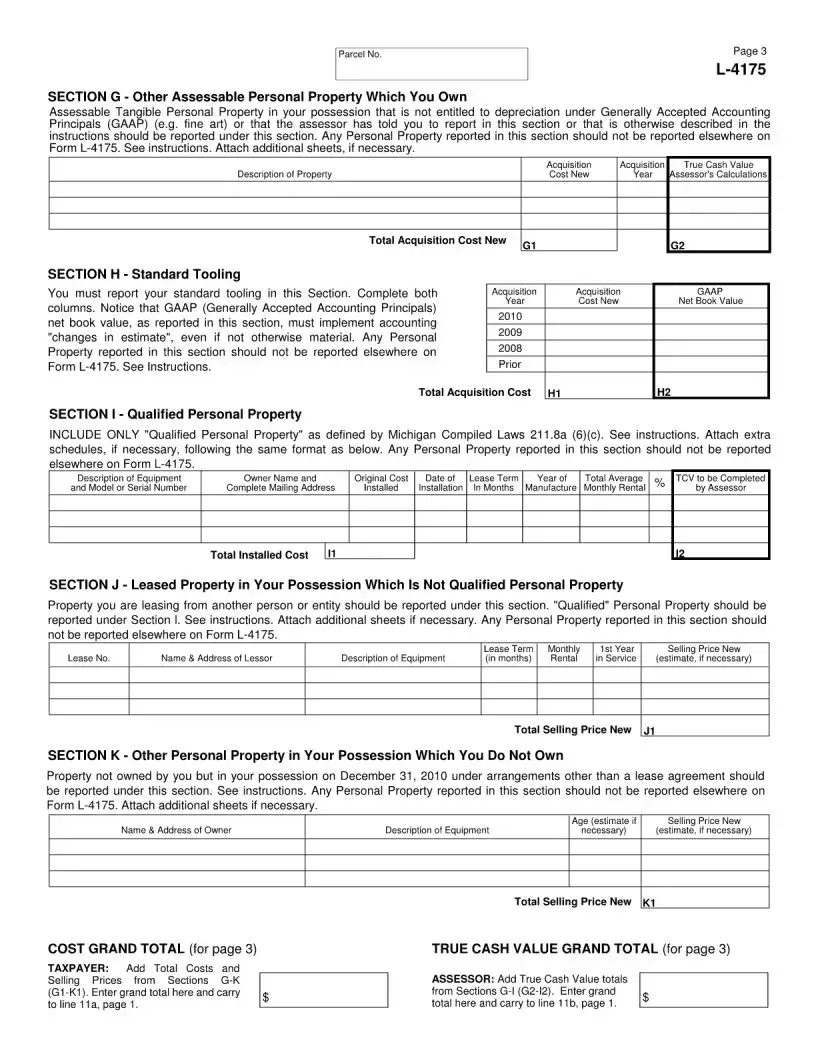
All assessable personal property must be reported, including fully depreciated assets and used property. This includes items that may not hold significant value but are still assessable.
The Michigan 632 form has a specific deadline. It must be filed by February 1 each year, reflecting the property owned as of December 31 of the previous year.
It is crucial to read and follow the instructions carefully. They provide essential guidance on how to accurately report your property and avoid mistakes.
Leased property must be reported on the form, specifically in the designated sections for leased property. This includes any equipment or assets you are leasing.
The Michigan 632 form may change from year to year. Always check for the latest version and any updates to the instructions or requirements.
The Michigan 632 form is an essential document for reporting personal property for tax purposes. Understanding how to fill it out correctly can help ensure compliance and avoid potential penalties.
Completing the Michigan 632 form accurately is vital for ensuring compliance with state tax regulations. By following these key takeaways, taxpayers can navigate the process more effectively.