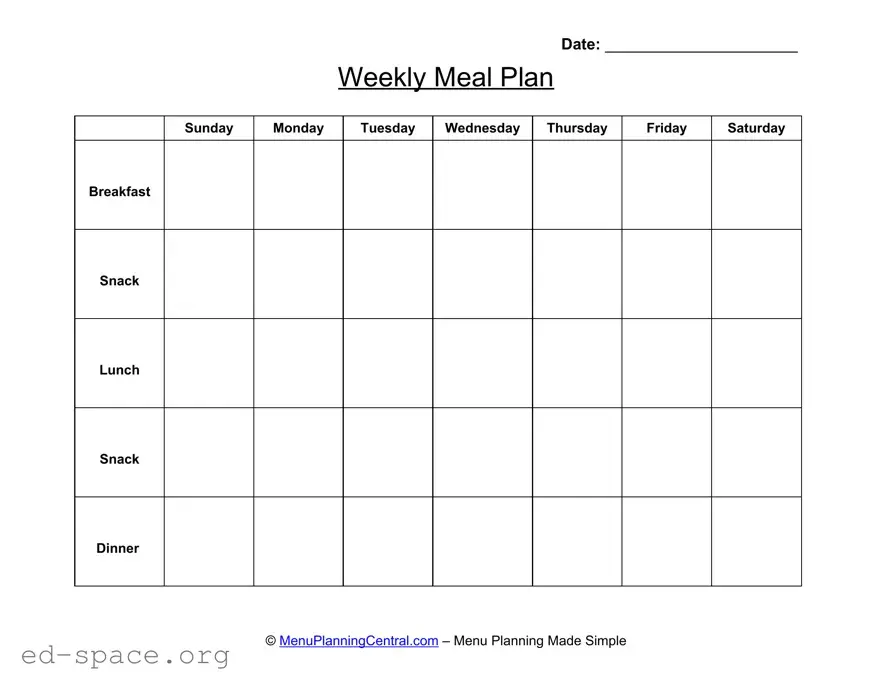
When it comes to organizing meals for the week, the Menu Planner form serves as a valuable tool for families and individuals alike. This handy resource simplifies the process of meal preparation by providing a structured layout for planning out each day's meals, including breakfast, lunch, dinner, and snacks. Users can easily jot down their meal ideas for each day of the week, from Sunday through Saturday, ensuring that every meal is accounted for. By filling out the date at the top, planners can keep track of their weekly menus and make adjustments as needed. The form encourages thoughtful meal planning, which can lead to healthier eating habits and reduced food waste. With the Menu Planner, planning meals becomes not just a task, but an enjoyable and creative process.
Date: ______________________
Weekly Meal Plan
Sunday
Monday
Tuesday
Wednesday
Thursday
Friday
Saturday
Breakfast
Snack
Lunch
Snack
Dinner
©MenuPlanningCentral.com – Menu Planning Made Simple
| Fact Name | Description |
|---|---|
| Date | The form includes a space for the date, allowing users to specify when the meal plan is applicable. |
| Weekly Meal Plan | This form is designed to outline meals for an entire week, promoting organized meal preparation. |
| Daily Sections | Each day of the week has designated sections for breakfast, snacks, lunch, and dinner. |
| User-Friendly Design | The layout is straightforward, making it easy for anyone to fill out and follow the meal plan. |
| Governing Laws | State-specific forms may be governed by local health and nutrition regulations, which vary by state. |
Once you have the Menu Planner form in front of you, it's time to start organizing your meals for the week. This process will help streamline your grocery shopping and ensure you have balanced meals prepared. Follow the steps below to fill out the form efficiently.
What is the Menu Planner form used for?
The Menu Planner form is designed to help individuals and families organize their meals for the week. By filling out the form, you can plan your breakfast, lunch, dinner, and snacks for each day. This can simplify grocery shopping and ensure that you have a balanced diet throughout the week.
How do I fill out the Menu Planner form?
To fill out the Menu Planner form, start by writing the date at the top. Then, for each day of the week, list your meal plans in the designated sections for breakfast, lunch, dinner, and snacks. You can use the form to jot down specific dishes or ingredients you want to include. Feel free to be creative and plan meals that everyone in your household will enjoy!
Can I customize the Menu Planner form?
Yes! While the form provides a basic structure for meal planning, you can customize it to fit your needs. If you have specific dietary requirements or preferences, you can adjust the meals accordingly. You might also want to add notes or reminders in the margins to help with your grocery shopping or meal prep.
Is the Menu Planner form suitable for special diets?
Absolutely! The Menu Planner form can be used for any dietary plan. Whether you are following a vegetarian, vegan, gluten-free, or any other specific diet, you can tailor your meal choices accordingly. This flexibility makes it a useful tool for anyone looking to maintain a healthy eating routine.
Incomplete Date Entry: Many individuals forget to fill in the date at the top of the form. This can lead to confusion when referencing the meal plan later.
Neglecting Snack Options: Some users overlook the snack sections entirely. Snacks play an important role in maintaining energy levels throughout the day.
Not Planning for Variety: A common mistake is repeating the same meals throughout the week. This can make meal times less enjoyable and lead to a lack of balanced nutrition.
Failing to Consider Dietary Needs: Individuals often forget to take into account any dietary restrictions or preferences. This can result in meals that are not suitable for everyone in the household.
Using the Menu Planner form effectively can help streamline meal preparation and ensure a balanced diet. By avoiding these common mistakes, you can create a more organized and enjoyable meal planning experience.
When it comes to meal planning, the Menu Planner form is a vital tool, but it's not the only document that can enhance your planning process. Several other forms and documents can complement the Menu Planner, making your meal preparation smoother and more organized. Here’s a brief overview of five such documents.
By utilizing these complementary documents alongside the Menu Planner form, you can create a comprehensive meal planning system that promotes efficiency and supports your dietary goals. Embrace the process, and enjoy the benefits of well-organized meals!
The Menu Planner form serves as a helpful tool for organizing meals throughout the week. Several other documents share similarities with this form in terms of structure and purpose. Here are nine documents that are similar to the Menu Planner form:
When filling out the Menu Planner form, keep these tips in mind to ensure a smooth process.
By following these guidelines, you can create an effective and enjoyable meal plan for the week.
Here are six common misconceptions about the Menu Planner form:
This form is designed for anyone looking to organize their meals, not just professionals in the nutrition field.
You can use the form flexibly. If you prefer to plan only certain meals, that is perfectly acceptable.
The Menu Planner is straightforward and can be completed quickly. It simplifies meal planning rather than complicating it.
Individuals can also benefit from using the form. It helps anyone stay organized with their meals.
The Menu Planner is a guide. Feel free to adjust your meals as needed throughout the week.
The Menu Planner encourages creativity. You can plan meals and still leave room for last-minute changes or new ideas.
Using the Menu Planner form effectively can streamline your meal preparation and ensure balanced nutrition throughout the week. Here are some key takeaways to consider:
By following these tips, you can maximize the benefits of the Menu Planner form and create a more organized and enjoyable meal planning experience.