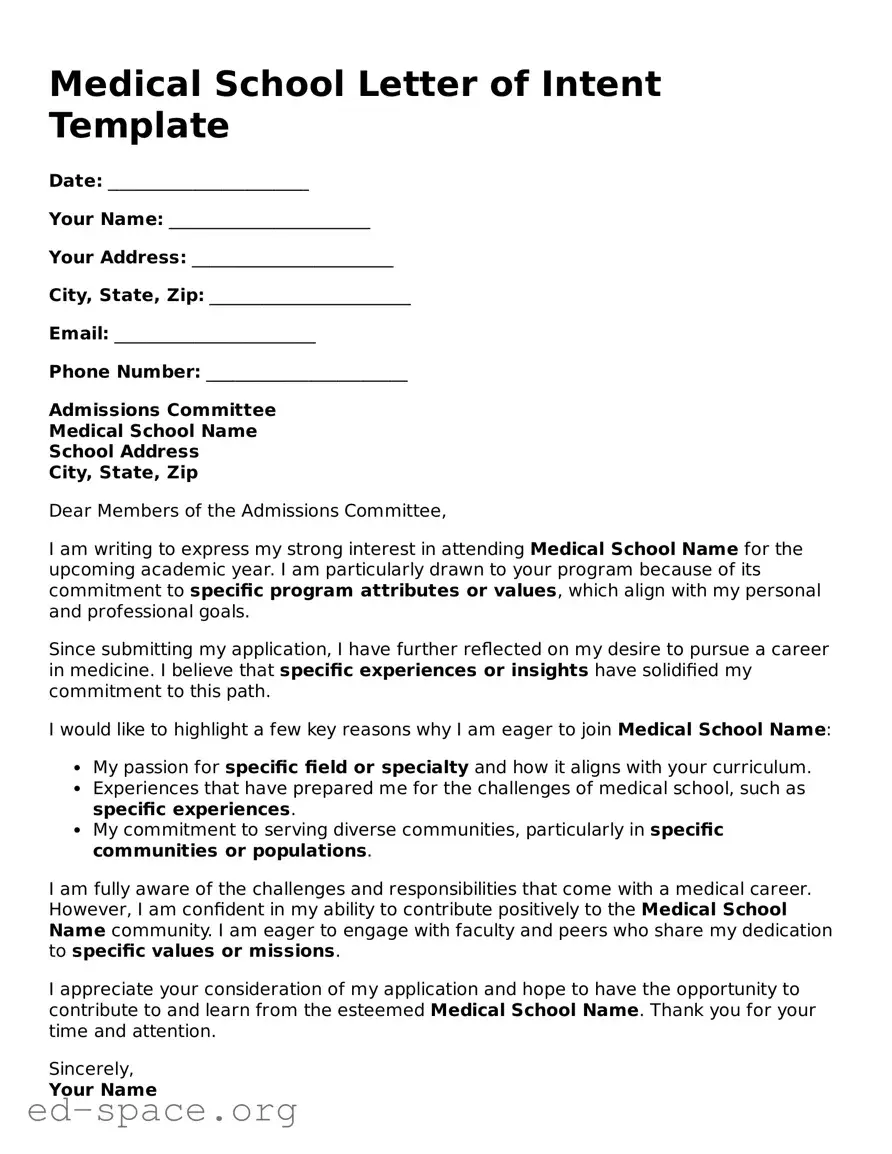
Applying to medical school is a significant step in one's educational journey, and the Letter of Intent plays a crucial role in this process. This document serves as a formal expression of a candidate's desire to attend a specific medical school. It typically includes key elements such as a statement of interest, reasons for choosing the school, and a summary of the applicant's qualifications and experiences. Additionally, it often highlights the applicant's commitment to the institution and their future contributions to the medical field. Crafting a compelling Letter of Intent can enhance an application, demonstrating enthusiasm and dedication. Understanding the components and purpose of this letter is essential for aspiring medical students aiming to make a lasting impression on admissions committees.
Medical School Letter of Intent Template
Date: _______________________
Your Name: _______________________
Your Address: _______________________
City, State, Zip: _______________________
Email: _______________________
Phone Number: _______________________
Admissions Committee
Medical School Name
School Address
City, State, Zip
Dear Members of the Admissions Committee,
I am writing to express my strong interest in attending Medical School Name for the upcoming academic year. I am particularly drawn to your program because of its commitment to specific program attributes or values, which align with my personal and professional goals.
Since submitting my application, I have further reflected on my desire to pursue a career in medicine. I believe that specific experiences or insights have solidified my commitment to this path.
I would like to highlight a few key reasons why I am eager to join Medical School Name:
I am fully aware of the challenges and responsibilities that come with a medical career. However, I am confident in my ability to contribute positively to the Medical School Name community. I am eager to engage with faculty and peers who share my dedication to specific values or missions.
I appreciate your consideration of my application and hope to have the opportunity to contribute to and learn from the esteemed Medical School Name. Thank you for your time and attention.
Sincerely,
Your Name
| Fact Name | Description |
|---|---|
| Purpose | The Medical School Letter of Intent is a formal expression of a candidate's commitment to attend a specific medical school if offered admission. |
| Timing | Applicants typically submit this letter after receiving an interview invitation or during the waitlist period. |
| Content | The letter should include a clear statement of intent, reasons for choosing the school, and any updates on the applicant's qualifications. |
| Length | A well-crafted letter of intent is usually one page long, concise, and to the point. |
| State-Specific Forms | Some states may have specific guidelines or requirements for letters of intent, governed by state medical board regulations. |
| Submission Method | Applicants can typically submit the letter via email or through the medical school's application portal, depending on the institution's preferences. |
Completing the Medical School Letter of Intent form is a crucial step in your application process. This document allows you to express your commitment to a specific medical school and highlight your qualifications. After submitting the form, the admissions committee will review your intent alongside your application materials.
What is a Medical School Letter of Intent?
A Medical School Letter of Intent is a formal communication from a prospective medical student to a medical school expressing their strong interest in attending that institution. It serves as a way for applicants to reaffirm their commitment and highlight any recent achievements or updates in their application. This letter can help applicants stand out in a competitive admissions process.
When should I submit my Letter of Intent?
The best time to submit your Letter of Intent is after you have received an interview invitation but before final decisions are made. It’s crucial to send this letter at a time when it can still influence the admissions committee's decision. If you have been waitlisted, sending a Letter of Intent can also demonstrate your continued interest.
What should I include in my Letter of Intent?
Your Letter of Intent should include several key components. Start by expressing your enthusiasm for the medical school and why it is your top choice. Mention any specific programs or faculty that attract you. Additionally, highlight any new accomplishments, experiences, or insights you’ve gained since your application. Finally, reiterate your commitment to attending if offered a spot.
Is there a specific format I should follow?
While there is no strict format, it’s best to keep your Letter of Intent professional and concise. Use a standard business letter format, including your contact information at the top, followed by the date and the admissions office’s address. Aim for one page in length, and make sure to proofread for spelling and grammatical errors.
Can I send a Letter of Intent to multiple schools?
While it is technically possible to send Letters of Intent to multiple schools, it’s not advisable. Doing so can dilute your message and make it seem less genuine. Admissions committees appreciate sincerity, so it’s best to focus on one school where you truly wish to attend. If you are waitlisted at another school, consider sending a different letter that expresses your interest without calling it a Letter of Intent.
Will a Letter of Intent guarantee me admission?
Unfortunately, a Letter of Intent does not guarantee admission. However, it can positively influence the admissions committee by reinforcing your interest and commitment to the school. It’s one piece of the larger puzzle that includes your application, interview performance, and other factors. Think of it as an opportunity to make a lasting impression.
How should I follow up after sending my Letter of Intent?
After sending your Letter of Intent, it’s wise to wait a few weeks before following up. You can send a polite email to the admissions office to confirm they received your letter and to express your continued interest. Be respectful of their time, and avoid overwhelming them with frequent inquiries. Patience is key during the admissions process.
Neglecting to personalize the letter. Many applicants fail to tailor their letter to the specific medical school. A generic letter does not convey genuine interest. Each school has unique values and programs that should be highlighted.
Being overly vague. Some applicants write in broad terms about their passion for medicine without providing specific examples. Concrete experiences and achievements make a stronger impression than general statements.
Ignoring formatting guidelines. Applicants often overlook the importance of following any provided formatting instructions. Adhering to guidelines shows attention to detail and professionalism.
Failing to proofread. Typos and grammatical errors can undermine an otherwise strong letter. A careful review can catch mistakes that may distract from the overall message.
Not expressing commitment. A lack of clear intent can lead to confusion. Applicants should explicitly state their desire to attend the school and why they believe it is the right fit for them.
When applying to medical school, a variety of documents complement the Medical School Letter of Intent. Each plays a crucial role in presenting your qualifications and intentions clearly. Here’s a list of commonly used forms and documents that you may encounter in the application process.
Each of these documents contributes to a well-rounded application. Make sure to prepare them carefully to strengthen your case for admission.
The Medical School Letter of Intent form shares similarities with several other important documents. Each serves a unique purpose but has common elements in their structure and intent. Below is a list of documents that are similar:
When filling out the Medical School Letter of Intent form, it's essential to approach the task thoughtfully. Here are ten important tips to consider:
By following these guidelines, you can create a strong and effective Letter of Intent that enhances your application.
When applying to medical school, the Letter of Intent (LOI) is an important document that can significantly impact your application. However, many applicants harbor misconceptions about this form. Here are ten common misunderstandings:
Understanding these misconceptions can help you craft a more effective Letter of Intent, potentially increasing your chances of success in the competitive medical school admissions process.
When filling out and using the Medical School Letter of Intent form, keep the following key takeaways in mind:
These points can enhance the effectiveness of your Letter of Intent and strengthen your application.